Croatia occupies a crescent-shaped territory bridging Central European continental plains with the sun-drenched islands and limestone cliffs of the Adriatic Sea. Influenced by centuries of Roman imperial rule, Venetian maritime dominance, and Austro-Hungarian royal governance, Croatian cities present an astonishing architectural diversity. According to demographic figures maintained by the Croatian Bureau of Statistics (DZS), roughly fifty-eight percent of the national populace resides in urban settlements, with metropolitan Zagreb anchoring continental commerce while coastal ports govern maritime trade.
Urban life in Croatia balances classical Roman monuments and Venetian waterfronts with lush inland river valleys and historic military border fortifications. Beyond famous coastal cruise destinations, regional capitals preserve Baroque churches, university campuses, and manufacturing sectors that sustain regional economies throughout the seasons. Examining the ten largest cities provides insight into how coastal traditions and continental heritage shape modern Croatian society.
10. Varaždin (approx. 43,800 residents)
Located in northern Croatia near the Drava river, Varaždin is widely acclaimed as the best-preserved Baroque city in Central Europe. Between 1756 and 1776, the town served as the official capital of Croatia, leaving behind elegant pastel palaces, manicured town gardens, and the gleaming white Stari Grad fortress surrounded by defensive earthworks. A devastating fire in 1776 forced the royal parliament to return to Zagreb, which unintentionally preserved Varaždin’s eighteenth-century architectural harmony.
Today, Varaždin is celebrated for the Spancirfest, an annual street festival celebrating historical music, acrobatic performances, and traditional artisanal crafts. The city also operates modern industrial technology parks and software development agencies.
9. Karlovac (approx. 49,300 residents)
Founded in 1579 by Archduke Charles II of Austria as a Renaissance military star fortress, Karlovac was constructed to defend the Habsburg Empire against Ottoman incursions. The historic town core, known as the Star (Zvijezda), features a six-pointed geometric street plan framed by defensive moats and bastions. Karlovac is known across Croatia as the City of Four Rivers, positioned where the Korana, Kupa, Mrežnica, and Dobra rivers converge.
The city’s abundant waterways support freshwater fishing, riverside parks, and the unique freshwater aquarium Aquatika. Karlovac is also synonymous with Croatian brewing tradition, home to the historic Karlovacko brewery that has operated along the riverbanks since 1854.
8. Slavonski Brod (approx. 50,000 residents)
Positioned on the northern bank of the Sava river in eastern Slavonia directly opposite the Bosnian border, Slavonski Brod has served as a strategic river crossing for millennia. During Roman times, the settlement operated as the fortified postal station of Marsonia, later developing around the colossal eighteenth-century Brod Fortress, a massive star fortification constructed by the Austrian military to guard against Ottoman forces.
Today, Slavonski Brod anchors regional transport and heavy mechanical engineering, home to the Djuro Djakovic industrial conglomerate, which produces locomotives, bridges, and defense equipment. The city center features the Franciscan monastery, one of the most imposing baroque monastic complexes in Slavonia.
7. Pula (approx. 52,200 residents)
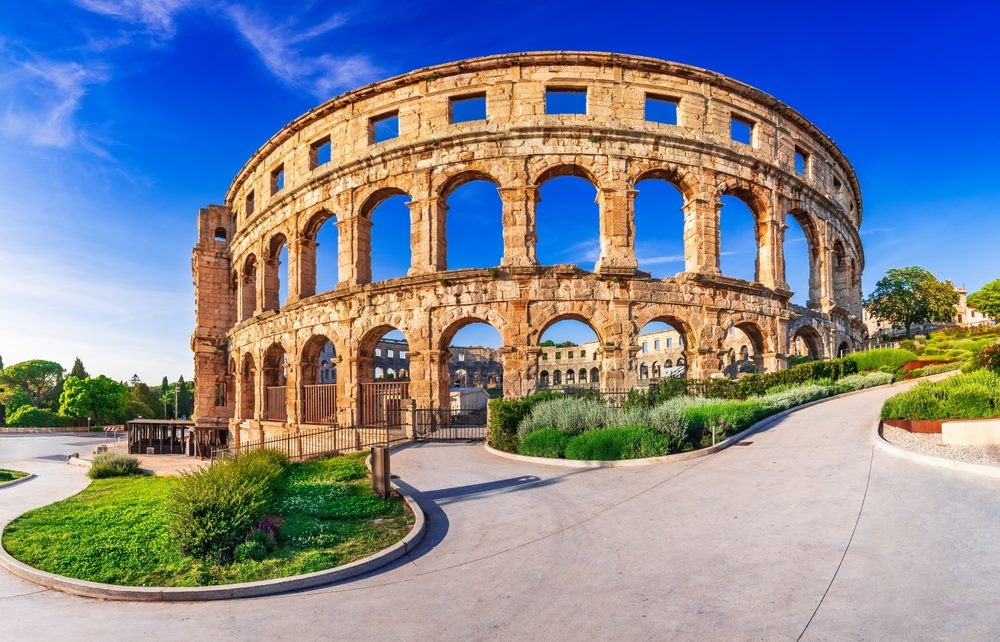
Resting on the southern tip of the Istrian peninsula, Pula is world-famous for its remarkable Roman antiquity, best exemplified by the Pula Arena, one of the six largest and best-preserved ancient Roman amphitheaters in existence. Constructed in the first century AD under Emperor Vespasian, this limestone colosseum once hosted gladiatorial battles and now serves as an open-air venue for international film festivals and concerts. Downtown streets preserve the triumphal Arch of the Sergii and the Temple of Augustus on the ancient Roman Forum.
Pula historically served as the chief naval base and shipbuilding center of the Austro-Hungarian Navy, represented by the Uljanik shipyard on the bay. Today, the city is an essential cultural gateway to the Brijuni Islands National Park, blending ancient history with coastal tourism and marine biology research.
6. Velika Gorica (approx. 61,100 residents)
Situated in the fertile Turopolje lowlands just fifteen kilometers south of central Zagreb, Velika Gorica functions as the largest and fastest-growing municipality in Zagreb County. The town developed from a quiet agricultural community into a thriving residential and commercial hub, driven by its strategic location adjacent to Franjo Tudjman International Airport, Croatia’s primary aviation hub.
Despite modern suburban expansion, the region preserves deep cultural heritage in its unique traditional Turopolje wooden architecture, including the seventeenth-century wooden chapel of Saint Barbara. The city is home to logistics centers, aviation maintenance academies, and sprawling city parks.
5. Zadar (approx. 70,700 residents)
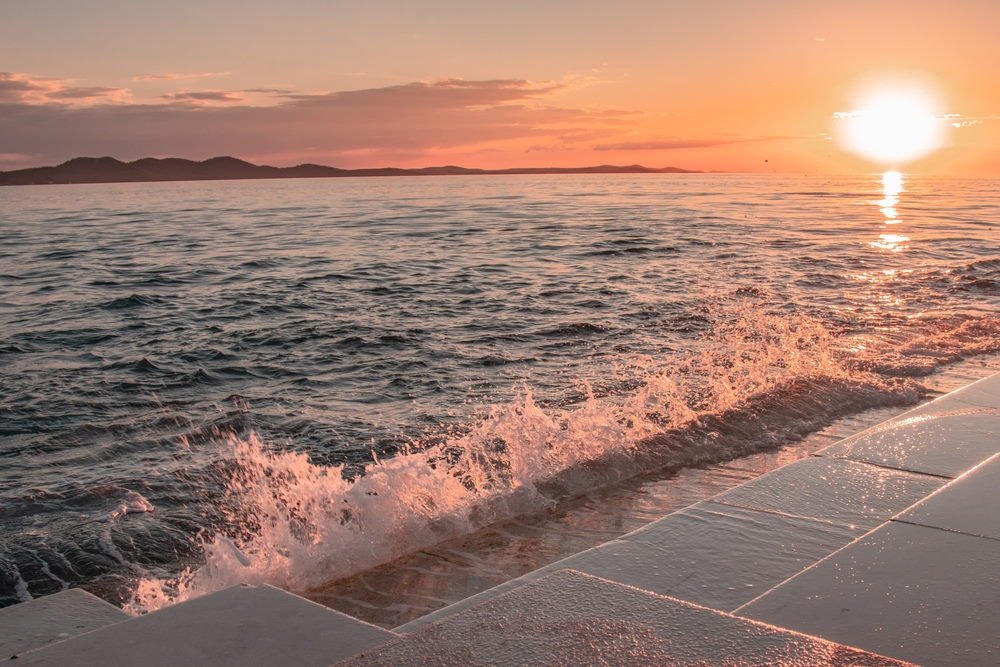
Occupying a narrow peninsula on the northern Dalmatian coast, Zadar possesses more than three thousand years of continuous urban history, having witnessed Roman, Byzantine, Venetian, and Austrian rule. The historic quarter is crowned by the circular ninth-century pre-Romanesque Church of Saint Donatus and the Roman forum. The city’s modern waterfront has gained global acclaim for two extraordinary architectural installations designed by Nikola Basic: the Sea Organ, which creates ethereal musical chords from the motion of ocean waves, and the Sun Salutation, a solar glass disc that illuminates the quayside at dusk.
Zadar is home to the University of Zadar, founded in 1396 as one of the oldest tertiary academic institutions in Europe. The city also operates deep-water passenger and ferry terminals connecting travelers to the Kornati Islands National Park archipelago.
4. Osijek (approx. 96,800 residents)
Stretching along the right bank of the Drava river near its confluence with the Danube, Osijek reigns as the administrative, cultural, and industrial capital of Slavonia. The historic focal point of the city is Tvrdja, an imposing eighteenth-century Habsburg military citadel filled with cobblestone squares, baroque military headquarters, and vaulted wine taverns. Downriver, the red-brick neo-Gothic Church of Saint Peter and Saint Paul dominates the Upper Town skyline with its ninety-meter spire.
Osijek is famous for its leafy riverside promenades, extensive tramway network, and rich culinary traditions featuring fiery freshwater fish paprikas and deer stews seasoned with local red paprika. As a major university city, Osijek leads eastern Croatia in digital software development and agricultural biotechnology.
3. Rijeka (approx. 108,000 residents)
Curving around the deep blue waters of Kvarner Bay, Rijeka stands as the principal commercial seaport of Croatia and an important maritime logistics hub for Central Europe. Historically governed by the Habsburgs as an autonomous royal port, Rijeka developed grand neoclassical palaces, shipping offices, and the sweeping pedestrian boulevard of the Korzo. The hilltop fortress of Trsat overlooks the city and bay, containing a revered Franciscan pilgrimage sanctuary with centuries of maritime votive offerings.
Rijeka holds a unique place in naval engineering history as the birthplace of the modern torpedo, invented here in 1866 by naval officer Giovanni Luppis and British engineer Robert Whitehead. Designated a European Capital of Culture in 2020, the city is famous for its lively alternative rock scene and the flamboyant Rijeka Carnival, the largest masquerade festival in Croatia.
2. Split (approx. 161,000 residents)
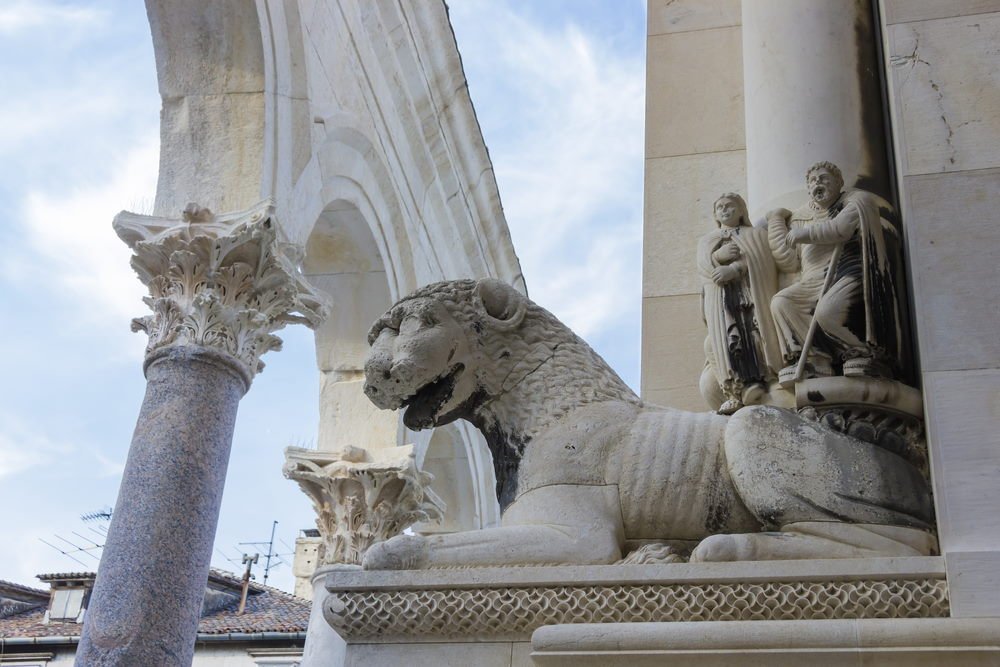
Split is the glorious coastal capital of Dalmatia and the second-largest city in Croatia, dramatically set against the limestone ridges of Mount Mosor and Mount Kozjak. The heart of the city lives directly inside the sprawling Roman palace built in 305 AD by Emperor Diocletian as his retirement fortress. Today, this living UNESCO World Heritage site is filled with bustling open-air cafes, shops, and apartments built into ancient Roman peristyles, cellars, and temples, centered on the Cathedral of Saint Domnius, one of the oldest cathedral structures in the world.
Along the palm-lined Riva waterfront promenade, locals engage in the sacred Dalmatian ritual of slow coffee drinking while watching ferries depart for Hvar, Brac, and Vis. Split is celebrated as an athletic powerhouse, having produced dozens of Olympic medalists, football legends at HNK Hajduk Split, and Wimbledon champions.
1. Zagreb (approx. 769,900 residents)
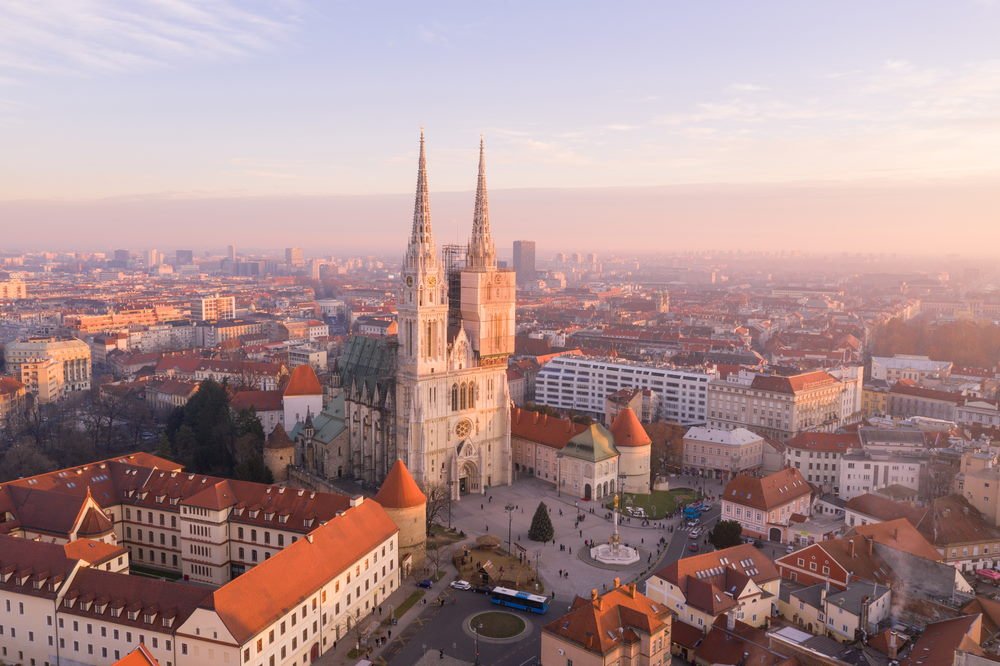
Zagreb, the stately continental capital of Croatia, rests between the southern slopes of Mount Medvednica and the banks of the Sava river. The historic core is divided between the medieval hilltops of Gradec, centered on the colorful tiled roof of Saint Mark’s Church, and Kaptol, crowned by the twin neo-Gothic spires of Zagreb Cathedral. Below, the Lower Town (Donji Grad) presents an elegant horseshoe of green public parks, botanical gardens, and nineteenth-century Austro-Hungarian museums known as the Lenuci Horseshoe.
While the central municipality counts around 770,000 residents, the broader metropolitan area accommodates over 1.1 million citizens, driving national governance, finance, and higher education. Zagreb is internationally famous for its lively outdoor cafe culture around Ban Jelacic Square, the bustling Dolac open-air farmers market, and world-class cultural institutions like the Museum of Broken Relationships.
Conclusion
Croatia’s largest cities capture an exceptional harmony between ancient Roman monuments, Venetian coastal harbors, and Central European Baroque architecture. From the living palace walls of Split and the quays of Rijeka to the cultural boulevards of Zagreb, these ten urban centers anchor the cultural and economic life of the Adriatic and Balkan regions.