Austria combines alpine landscapes with deep imperial history and modern industrial innovation. Located in the heart of Central Europe along the Danube River basin, the country balances grand baroque architecture with world-class public infrastructure.
Official demographic registers compiled by Statistik Austria record precise resident counts across the nine federal states. Further civic data from the City of Vienna official portal demonstrates the strong concentration of population in the federal capital. From Tyrolean mountain valleys to fertile Styrian wine hills, here are the ten largest cities in Austria ranked by population.
10. Wiener Neustadt (Lower Austria): ~48,000 Residents
Located roughly fifty kilometers south of Vienna in the Steinfeld plain, Wiener Neustadt was founded in 1194 as a fortified frontier outpost.
The city is famous as the home of the Theresian Military Academy, the world’s oldest active military academy, established by Empress Maria Theresa in 1751. In the modern era, Wiener Neustadt has reinvented itself as a major center for aviation engineering, medical technology, and applied sciences research.
9. Sankt Polten (Lower Austria): ~58,000 Residents
Sankt Polten is the official capital of Lower Austria, securing its status in 1986 to become Austria’s youngest provincial capital.
Despite its modern administrative role, it is one of the oldest chartered settlements in the country, with roots dating back to Roman Aelium Cetium. The city features a harmonious blend of baroque townhouses around the Rathausplatz and striking contemporary architecture in the provincial government district along the Traisen River.
8. Wels (Upper Austria): ~64,000 Residents
Situated in Upper Austria along the Traun River, Wels is a thriving commercial and trade fair city located west of Linz.
Wels flourished as a vital Roman settlement named Ovilava, which served as the capital of the province of Noricum Ripense. Modern Wels is an important railway junction and industrial center, celebrated for its extensive annual trade exhibitions and green energy technology manufacturers.
7. Villach (Carinthia): ~65,000 Residents
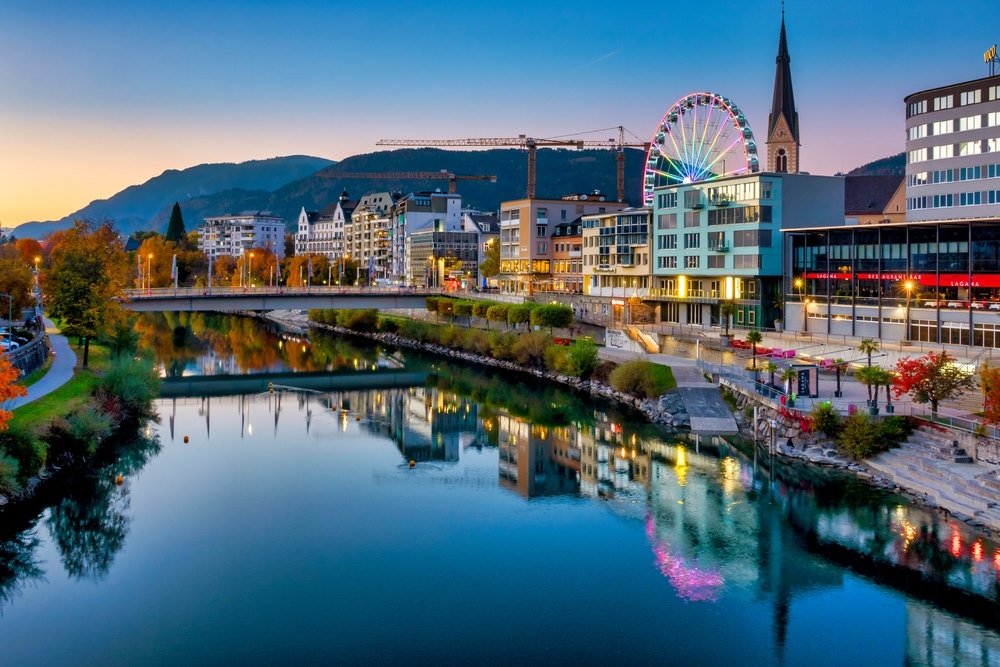
Located in southern Austria near the tripoint borders with Slovenia and Italy, Villach is Carinthia’s second largest city.
Framed by the dramatic peaks of the Gailtal Alps and the Karawanks, Villach serves as an essential international railway gateway. The city is famous for its lively annual carnival (Villacher Fasching), natural thermal springs at Warmbad-Villach, and semiconductor microelectronics factories.
6. Klagenfurt (Carinthia): ~104,000 Residents
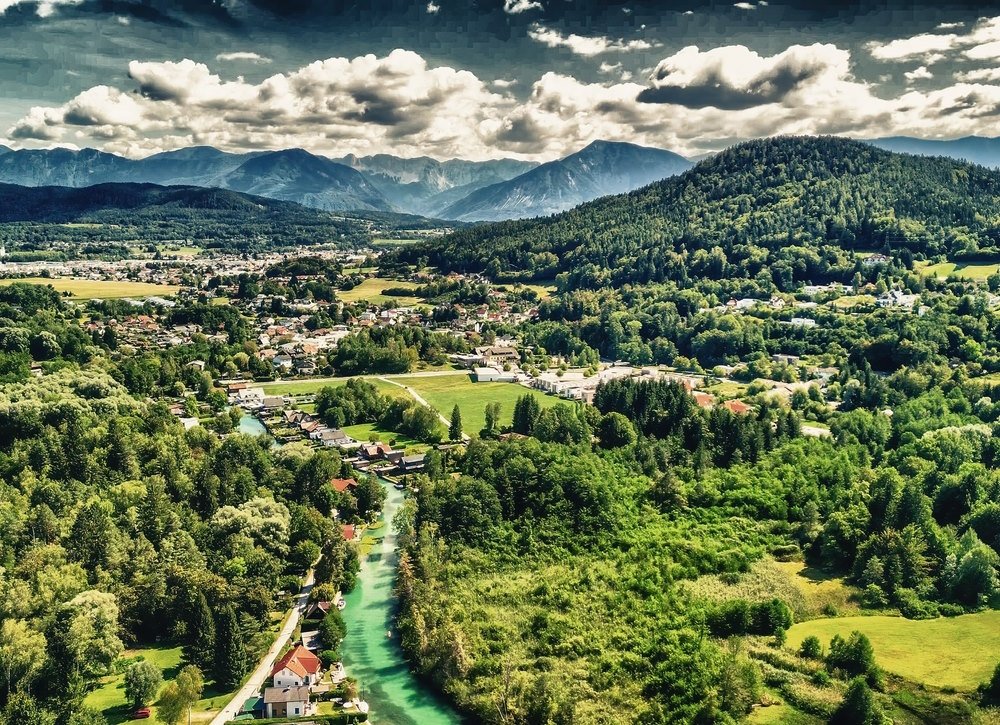
Klagenfurt am Worthersee is the provincial capital of Carinthia, located on the eastern shore of Lake Worthersee, one of Austria’s warmest alpine lakes.
The city’s historic center features elegant Italian-style renaissance arcades and the famous Lindwurm fountain, which depicts the mythical winged dragon said to have inhabited local marshes. Klagenfurt is an attractive cultural center, hosting the prestigious Ingeborg Bachmann literary competition every summer.
5. Innsbruck (Tyrol): ~131,000 Residents
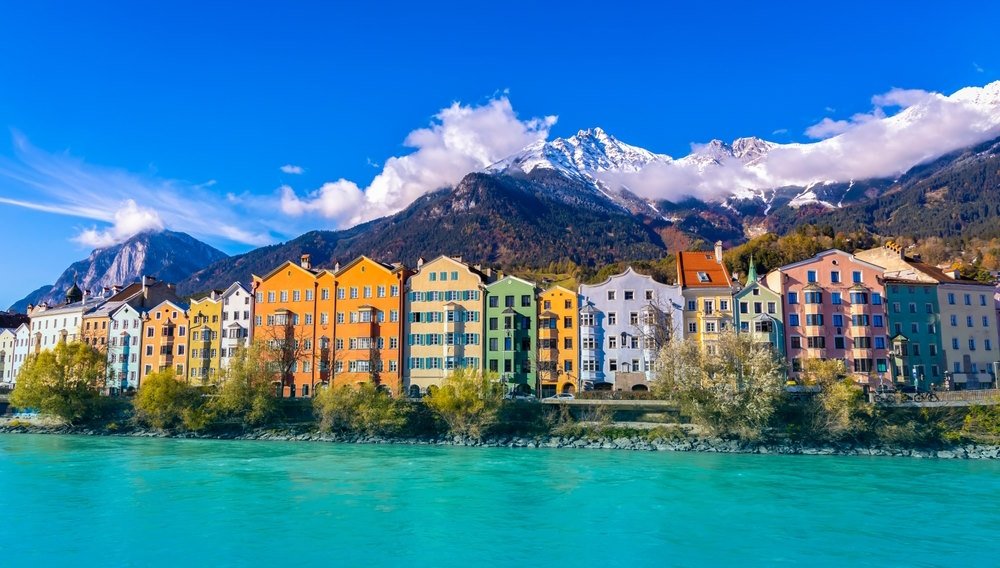
Innsbruck is the capital of Tyrol, located in the broad Inn River valley surrounded by the towering limestone peaks of the Nordkette range.
The city served as an imperial residence under Emperor Maximilian I, who commissioned the famous Golden Roof (Goldenes Dachl) adorned with 2,657 fire-gilded copper tiles. A two-time host of the Winter Olympic Games, Innsbruck seamlessly merges medieval mountain history with world-class winter sports resorts accessible directly by funicular from downtown.
4. Salzburg: ~157,000 Residents
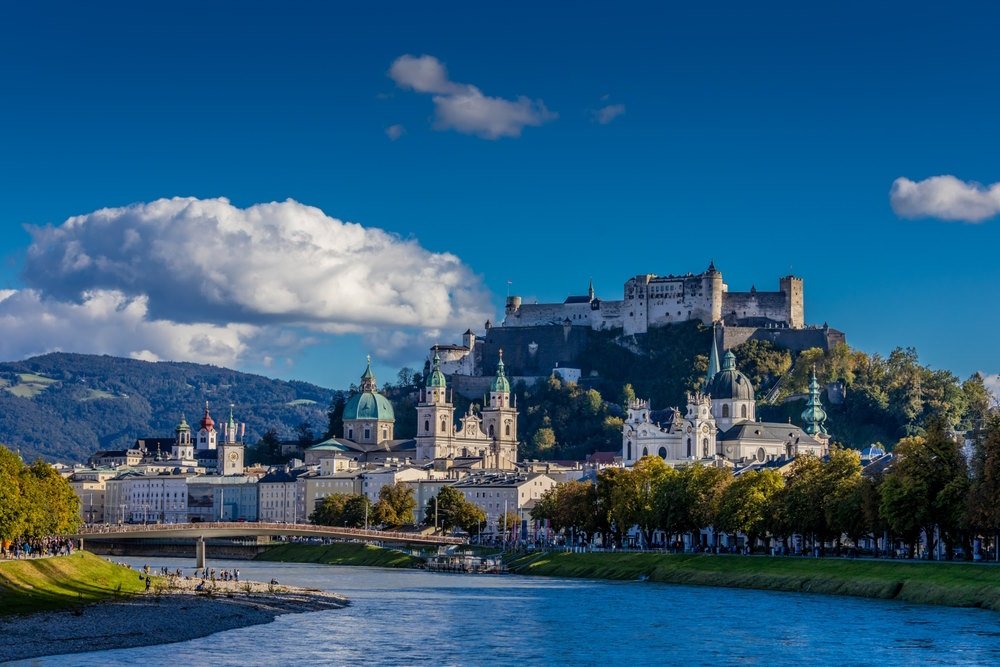
Salzburg is internationally renowned as the birthplace of Wolfgang Amadeus Mozart and the setting for The Sound of Music.
Overlooked by the colossal Hohensalzburg Fortress atop Festungsberg mountain, the city’s baroque Old Town is an exceptionally preserved UNESCO World Heritage site. Salzburg gained historic wealth through salt trading along the Salzach River and continues to draw global classical music connoisseurs to the world-famous Salzburg Festival.
3. Linz (Upper Austria): ~210,000 Residents
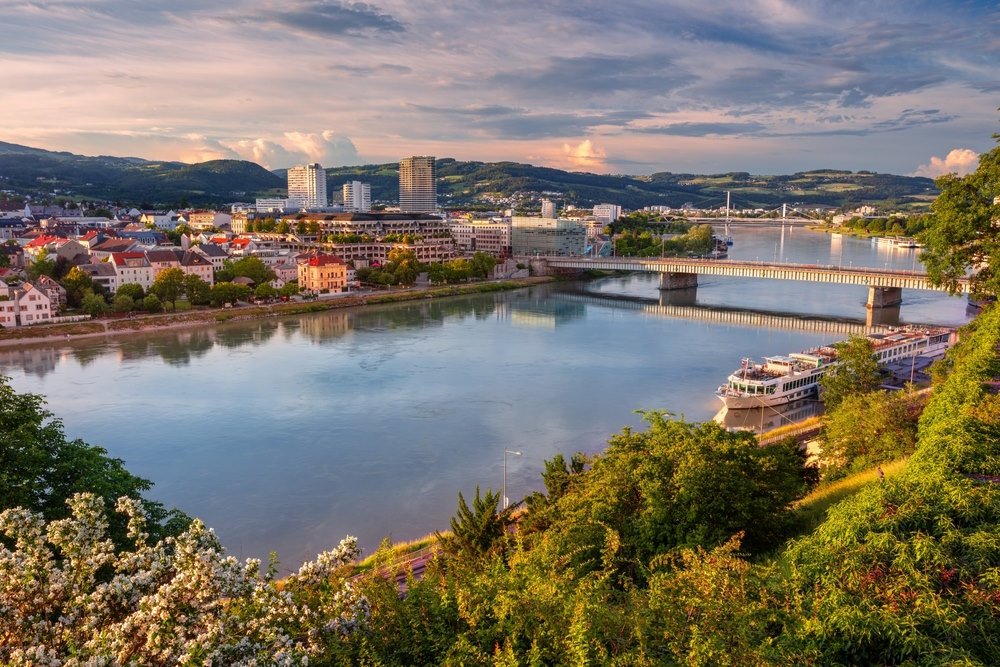
Stretching along both banks of the Danube River, Linz is Upper Austria’s provincial capital and the country’s primary industrial and steelmaking heavyweight.
Rather than relying solely on heavy industry, Linz has transformed into a global pioneer in digital arts and technology, anchored by the renowned Ars Electronica Center and annual festival. Its expansive baroque main square (Hauptplatz) ranks among the largest enclosed urban squares in Central Europe.
2. Graz (Styria): ~302,000 Residents
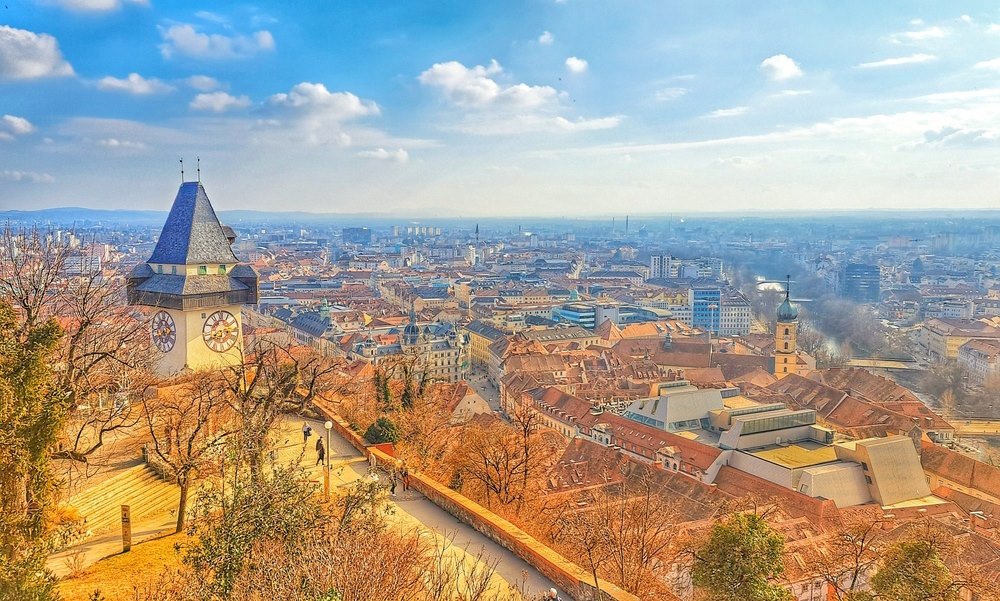
Graz is Austria’s second largest city and the capital of the green province of Styria, situated along the Mur River.
The city’s historic center is dominated by the forested Schlossberg hill and its beloved Uhrturm clock tower, which features inverted clock hands. Graz is a dynamic student capital with four major universities, celebrated for progressive design architecture like the futuristic Kunsthaus Graz (Friendly Alien) and modern automotive manufacturing plants.
1. Vienna: ~2.00 Million Residents

Vienna is the federal capital of Austria and by far its largest metropolis, housing nearly one-quarter of the country’s entire population within its boundaries.
For centuries the imperial seat of the Habsburg monarchy, Vienna displays grand architectural monuments along the Ringstrasse, including the Hofburg Palace, Schonbrunn Palace, and Saint Stephen’s Cathedral. Consistently ranked at the top of global quality-of-life rankings, Vienna offers affordable public housing, immaculate municipal parks, historic coffeehouse traditions, and major United Nations headquarters.
Austria’s most populous municipalities balance alpine geography, storied imperial architecture, and advanced modern industry. From the musical corridors of Salzburg to the research campuses of Graz and Linz, these regional centers demonstrate that sustainable public transit and historic preservation can thrive side by side.