Greece stands at the historic crossroads of Europe, Asia, and Africa, blending thousands of years of classical antiquity, Byzantine heritage, and Ottoman influence across a mountainous peninsula and hundreds of sun-drenched Aegean and Ionian islands. As the birthplace of western philosophy, democratic governance, and theatrical arts, Greek cities carry an extraordinary density of archaeological monuments within their bustling modern districts. According to official municipal census data published by the Hellenic Statistical Authority (ELSTAT), the national populace is heavily concentrated around the Attica basin and the northern coastal arc of Macedonia.
Greek urban life is characterized by lively outdoor social culture, seaside waterfronts, and bustling pedestrian squares where locals gather late into the evening. While metropolitan Athens and Thessaloniki dominate national commerce, governance, and academia, secondary regional capitals across Crete, Thessaly, and the Peloponnese anchor thriving agricultural trade, university research, and maritime transport. Examining the ten most populous municipalities provides an authentic snapshot of modern Greece beyond its famous island holiday resorts.
10. Kalamaria (approx. 92,000 residents)
Bordering the southeastern coastal flank of Thessaloniki along the Thermaic Gulf, Kalamaria functions as one of the most sought-after residential municipalities in Northern Greece. The town experienced rapid population expansion during the 1920s, serving as a sanctuary for tens of thousands of Greek refugees fleeing Asia Minor and the Pontus region following the Greco-Turkish War. That resilient Pontic cultural identity remains preserved today through local folklore clubs, cultural institutions, and annual traditional commemorations.
Kalamaria’s scenic waterfront features leafy walking promenades, modern yacht marinas, and the celebrated seaside seafood tavernas of Aretsou. Residents from across the greater Thessaloniki metropolitan area travel here to escape urban traffic, enjoying gentle sea breezes and open seaside views across the gulf.
9. Kallithea (approx. 98,000 residents)
Strategically positioned between central Athens and the maritime port of Piraeus, Kallithea, meaning Beautiful View, ranks among the most densely populated municipalities in Greece. Covering just under four and a half square kilometers, the city developed rapidly in the twentieth century, absorbing substantial waves of refugees who established thriving commercial avenues and neighborhood quarters. The municipality hosts prestigious academic institutions, notably the Panteion University of Social and Political Sciences.
On its southern perimeter fronting the Bay of Faliro, Kallithea houses the monumental Stavros Niarchos Foundation Cultural Center (SNFCC). Designed by renowned architect Renzo Piano, this landmark hosts the Greek National Opera and National Library of Greece, crowned by an expansive sloping public park overlooking the Saronic Gulf.
8. Acharnes (approx. 100,000 residents)
Situated at the northern foot of Mount Parnitha roughly eleven kilometers north of central Athens, Acharnes represents one of the oldest continuously inhabited districts in Attica. In classical antiquity, the ancient deme of Menidi was celebrated for its resilient hoplite soldiers who defended Athens, immortalized by comic playwright Aristophanes in his famous fifth-century BC comedy The Acharnians. Modern archaeological digs have unearthed prehistoric vaulted tholos tombs and classical ruins across the municipality.
Today, Acharnes forms a dynamic link between the dense Athens urban basin and the wild slopes of Mount Parnitha National Park. Pine forests, alpine hiking trails, and herds of wild red deer on the mountain peaks provide a striking natural backdrop to the bustling residential neighborhoods and logistics parks below.
7. Peristeri (approx. 133,000 residents)
Spanning the western plains of the Attica basin, Peristeri stands as the largest suburban municipality of Greater Athens by population. The area expanded dramatically after 1922 when thousands of refugees from Asia Minor settled here, establishing a proud working-class community that grew through small manufacturing workshops and industrial enterprise. Over the past three decades, civic renewal initiatives transformed the city into a thriving urban center with extensive pedestrian shopping avenues, green parks, and direct connections to the Athens metro network.
The district around Bournazi Square has evolved into one of the most famous entertainment quarters in western Athens, packed with bustling cafes, popular bars, and late-night music venues. Peristeri also supports active municipal theaters, athletic facilities, and cultural arts centers that serve the broader regional population.
6. Larissa (approx. 146,000 residents)
Set in the center of the vast Thessalian plain along the banks of the Pineios river, Larissa serves as the undisputed agricultural, administrative, and economic capital of Central Greece. The region has functioned as the breadbasket of the nation since prehistoric times, boasting an uninterrupted history of human settlement spanning more than four thousand years. According to ancient tradition, Hippocrates, the founding father of western medicine, lived and died in the city.
Right in the heart of Larissa’s pedestrianized commercial center lies the Ancient First Theatre, a grand Hellenistic marble amphitheater constructed in the third century BC. With extensive university faculties, major medical research hospitals, and one of the highest concentrations of cafes per capita in Europe, Larissa maintains an exceptionally energetic civic atmosphere.
5. Piraeus (approx. 168,000 residents)
Located twelve kilometers southwest of central Athens, Piraeus has served as the historic port of the capital since the golden age of classical antiquity, when statesman Themistocles constructed the Long Walls to protect the lifeline between the two cities. Today, Piraeus ranks as the busiest passenger ferry port in Europe and one of the largest commercial container hubs in the Mediterranean. Millions of international vacationers pass through its deep-water terminals each year en route to islands across the Aegean.
Beyond maritime logistics, Piraeus retains authentic character in its historic harbors. The circular marina of Zea Marina hosts sleek yachts alongside ancient naval ship sheds, while the amphitheater-like cove of Mikrolimano is lined with traditional fish tavernas serving fresh catches directly over the water.
4. Heraklion (approx. 150,000 residents)
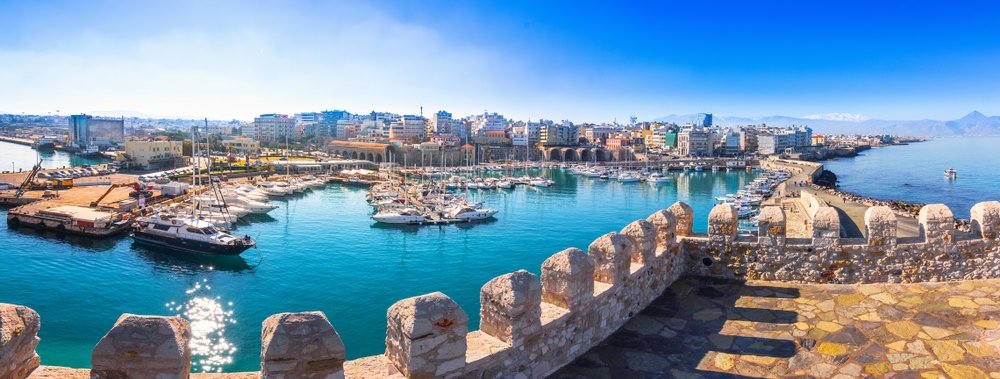
Situated on the northern coast of Crete, Heraklion functions as the commercial, maritime, and administrative capital of Greece’s largest island. The city’s entrance is guarded by the imposing sixteenth-century Venetian fortress of Koules, set against defensive stone ramparts and historic harbor walls. Just five kilometers south of downtown lie the monumental ruins of the Palace of Knossos, the heart of the Minoan civilization that flourished four thousand years ago as Europe’s oldest advanced society.
The Heraklion Archaeological Museum houses the most comprehensive Minoan art and artifact collection in existence, including the enigmatic Phaistos Disc and delicate snake goddess figurines. As an active university and research hub, Heraklion balances archaeological tourism with agricultural commerce and Mediterranean culinary traditions.
3. Patras (approx. 170,000 residents)
Positioned on the Gulf of Patras in the northwestern Peloponnese, Patras serves as Greece’s primary gateway to Western Europe, handling daily passenger ferries connecting to Italian ports across the Ionian Sea. The city rises from its busy coastal wharves up to a Byzantine castle perched upon the ancient acropolis, with streets laid out in a nineteenth-century neoclassical grid. Just north of the city, the monumental Rio-Antirrio cable-stayed bridge spans the Gulf of Corinth, connecting the Peloponnese with mainland Greece.
Patras is renowned across the Mediterranean for hosting Greece’s largest and most flamboyant carnival celebration, the Patras Carnival, attracting hundreds of thousands of masqueraders every spring. The city also hosts a major university campus that anchors prominent technology research institutes and pharmaceutical development.
2. Thessaloniki (approx. 319,000 residents)
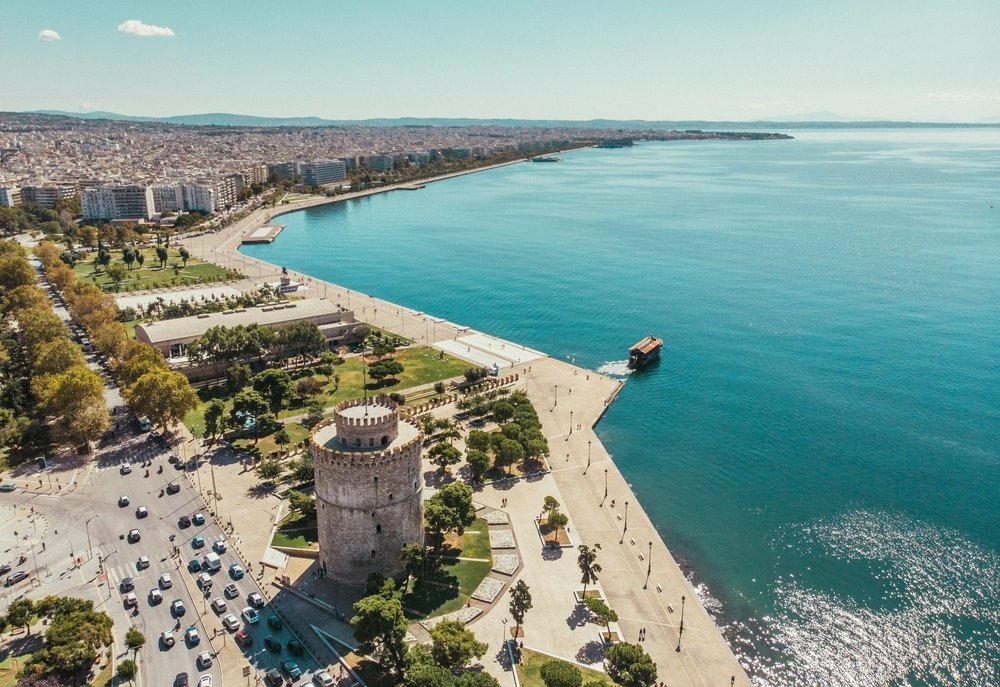
Founded in 315 BC by King Cassander of Macedon and named after Alexander the Great’s half-sister, Thessaloniki is Greece’s dynamic second city and the historic co-capital of the Byzantine Empire. The waterfront is anchored by the sixteenth-century White Tower, standing beside a scenic seaside promenade that looks out across the Thermaic Gulf toward Mount Olympus. The city boasts early Christian and Byzantine monuments designated as UNESCO World Heritage sites, including the Rotunda, the Arch of Galerius, and the church of Saint Demetrius.
With Aristotle University of Thessaloniki educating tens of thousands of young scholars, the city maintains a legendary culinary and cultural reputation. Aristotelous Square, buzzing open-air markets, and waterfront tavernas make Thessaloniki one of the most culturally dynamic urban destinations in southeastern Europe.
1. Athens (approx. 643,000 residents)
Athens, the historic cradle of western civilization, reigns as the political, economic, and cultural capital of Greece. While the central municipality accommodates approximately six hundred and forty thousand citizens, the broader urban conurbation of Greater Athens houses more than 3.3 million people, representing nearly a third of the country’s total population. The Acropolis, crowned by the fifth-century BC Parthenon, towers over the urban basin as an enduring symbol of classical architecture, philosophy, and democracy.
Beneath the ancient citadel, charming historic quarters like Plaka and Monastiraki feature maze-like alleys filled with neoclassical houses, bougainvillea blooms, and lively tavernas. Modern Athens combines these ancient wonders with cutting-edge cultural complexes, an efficient underground metro network, and thriving commercial avenues that establish the capital as a leading Mediterranean metropolis.
Conclusion
Greece’s largest cities capture a compelling balance of classical antiquity, maritime vitality, and modern civic energy. From the ancient citadel of Athens and the Byzantine promenades of Thessaloniki to the historic ports of Piraeus, Patras, and Heraklion, these urban centers demonstrate how modern Greek society honors its heritage while building dynamic regional economies.