The Republic of Serbia occupies a strategic continental position in the heart of the Balkan Peninsula, where the vast agricultural plains of the Pannonian Basin meet the rugged mountain ranges of the Dinaric Alps and the Balkans. Sliced by major international waterways like the Danube, Sava, and Morava rivers, Serbian cities served for millennia as a contested frontier between Roman, Byzantine, Ottoman, and Austro-Hungarian empires. According to demographic figures released by the Statistical Office of the Republic of Serbia (RZS), roughly sixty percent of the Serbian population resides in urban municipalities, with Belgrade acting as the primary political, economic, and cultural locomotive.
Serbian urban life balances centuries-old riverside fortress bastions and Habsburg baroque squares with monumental socialist-realist modernist architecture and a flourishing modern cafe culture. Beyond the bustling confluence of rivers in Belgrade, regional capitals anchor thriving university communities, automotive manufacturing plants, and rich culinary traditions celebrated for roasted meats and plum rakija. Examining the ten largest cities provides insight into how history and regional character define modern Serbian society.
10. Zrenjanin (approx. 67,100 residents)
Located in the eastern Vojvodina region along the banks of the Begej River, Zrenjanin serves as the cultural and economic center of the Central Banat District. Historically named Veliki Beckerek and later Petrovgrad, the city features an elegant central square lined with pastel Austro-Hungarian neoclassical palaces, dominated by the City Hall and the Roman Catholic Cathedral of Saint John of Nepomuk. The dry bed of the Begej River in the center was creatively transformed into three artificial lakes spanned by picturesque pedestrian bridges.
Zrenjanin has historically thrived on food processing, brewing, and oilseed agriculture across the fertile Banat plains. In modern times, the city has attracted substantial international industrial investment, notably constructing massive automotive tire manufacturing complexes.
9. Kruševac (approx. 68,100 residents)
Situated in central Serbia along the Rasina River near the West Morava, Kruševac holds sacred historical significance in Serbian medieval memory. Founded in 1371 by Prince Lazar Hrebeljanovic as the fortified royal capital of Moravian Serbia, it was here that Prince Lazar gathered the Serbian nobility before departing for the legendary Battle of Kosovo in 1389. The historic Lazar Town complex preserves the ruins of Lazar’s fortress and the Lazarica Church, an exquisite masterwork of the Morava architectural school adorned with stone rose windows.
Modern Kruševac functions as a vital industrial manufacturing center for heavy machinery, lubricants, and chemical synthesis. The city center features the Monument to the Kosovo Heroes, a bronze masterpiece crafted by sculptor Djordje Jovanovic that serves as the focal point of Vidovdan national commemorations.
8. Čačak (approx. 69,600 residents)
Positioned along the West Morava River in central Serbia, Čačak is framed by the dramatic limestone ridges of the Ovcar and Kablar mountains. Nearby lies the Ovcar-Kablar Gorge, celebrated as the Serbian Mount Athos due to more than ten medieval monasteries tucked into the cliffs, offering spiritual retreat and scenic river cruises. In national history, the town is renowned for the Battle of Ljubic during the Second Serbian Uprising in 1815, where Tanasko Rajic heroically defended his cannons against Ottoman forces.
Čačak is famous across the Balkans as a basketball powerhouse, having produced legendary coaches like Zeljko Obradovic and dozens of national team athletes. The city also operates thriving engineering faculties, fruit growing orchards, and metalworking plants.
7. Novi Pazar (approx. 71,500 residents)
Located in the mountainous Raska region of southwestern Serbia, Novi Pazar, meaning New Marketplace, represents an extraordinary crossroads of Christian and Islamic heritage. In the Middle Ages, the settlement of Ras functioned as the earliest capital of the medieval Serbian Nemanjic dynasty, preserved today at the UNESCO World Heritage site of Stari Ras and the ancient Church of the Holy Apostles Peter and Paul, the oldest surviving religious building in Serbia. Right nearby stands the Sopocani Monastery, world-famous for thirteenth-century Byzantine frescoes.
Within the city itself, the Ottoman heritage shines in the Altun-Alem Mosque, the historic hamam bathhouse, and the bustling bazaar of the Stara Carsija. Novi Pazar is universally celebrated across the region for its culinary trademarks, particularly authentic cevapi and mantije (meat-filled pastry dumplings), alongside a booming private denim and footwear manufacturing industry.
6. Pančevo (approx. 73,400 residents)
Situated in southern Vojvodina where the Tamis River flows into the Danube, Pančevo lies just fourteen kilometers northeast of central Belgrade. Originating as a strategic trade port between the Habsburg Military Frontier and Ottoman lands, the city retains charming central avenues filled with classical Central European architecture, shaded riverfront promenades, and the twin stone lighthouses at the mouth of the Tamis, unique along the entire course of the Danube.
Pančevo developed into Serbia’s heavy industrial powerhouse during the twentieth century, operating the nation’s premier petroleum refinery, petrochemical plants, and aircraft manufacturing. The city also possesses a rich cultural tradition, celebrated for the Pančevo Wehkamp choir founded in 1838, one of the oldest choral societies in the Balkans.
5. Subotica (approx. 105,700 residents)
Resting in northern Vojvodina just ten kilometers from the Hungarian border, Subotica is celebrated across Europe as a fairytale open-air museum of Hungarian Art Nouveau (Secession) architecture. The city’s architectural crowning glory is the monumental Subotica City Hall, completed in 1912 with elaborate wrought-iron balconies, floral wood carvings, and colorful Zsolnay ceramic roof tiles, and the magnificent Subotica Synagogue, one of the finest Jewish temples in Central Europe.
Subotica is a multi-ethnic city where Serbian, Hungarian, and Croatian cultures blend harmoniously. Just eight kilometers north lies Lake Palic, a historic nineteenth-century spa resort featuring decorative lakeside villas, thermal mineral waters, and vineyard cellars producing crisp white wines.
4. Kragujevac (approx. 169,000 residents)
Situated in the heart of the Sumadija region, Kragujevac served as the first modern capital of liberated Serbia under Prince Milos Obrenovic from 1818 to 1841. During this golden era, the city established Serbia’s first modern court, its first gymnasium high school, its first theater, and the historic Sretenje Constitution in 1835. The Memorial Park Sumarice commemorates the tragic civilian massacre carried out by occupying Nazi forces in October 1941, honored by the famous V3 Monument to Interrupted Flight.
Kragujevac is internationally recognized as the automotive capital of Serbia. Historically home to the Zastava automotive factory that produced the iconic Yugo car, modern Kragujevac hosts a state-of-the-art manufacturing plant for Stellantis (Fiat), producing electric vehicles for international export.
3. Niš (approx. 246,800 residents)
Positioned along the Nisava River in southeastern Serbia, Niš has functioned for millennia as the crossroads of the Balkans, where routes between Central Europe and Istanbul diverge. Known in antiquity as Naissus, the city is world-famous as the birthplace of Roman Emperor Constantine the Great, who legalized Christianity throughout the empire in 313 AD, commemorated at the archaeological palace ruins of Mediana. Downtown is commanded by the massive eighteenth-century Turkish fortress of Nis Fortress.
Niš contains powerful historical monuments, including the Skull Tower (Cele Kula), a stone tower embedded with the skulls of rebellious Serbian soldiers built by Ottoman commander Hurshid Pasha after the 1809 Battle of Cegar. Modern Niš is an energetic university hub, renowned for its hospitable kafanas serving barbecue meats (Niski rostilj) and the international Nisville Jazz Festival.
2. Novi Sad (approx. 325,500 residents)
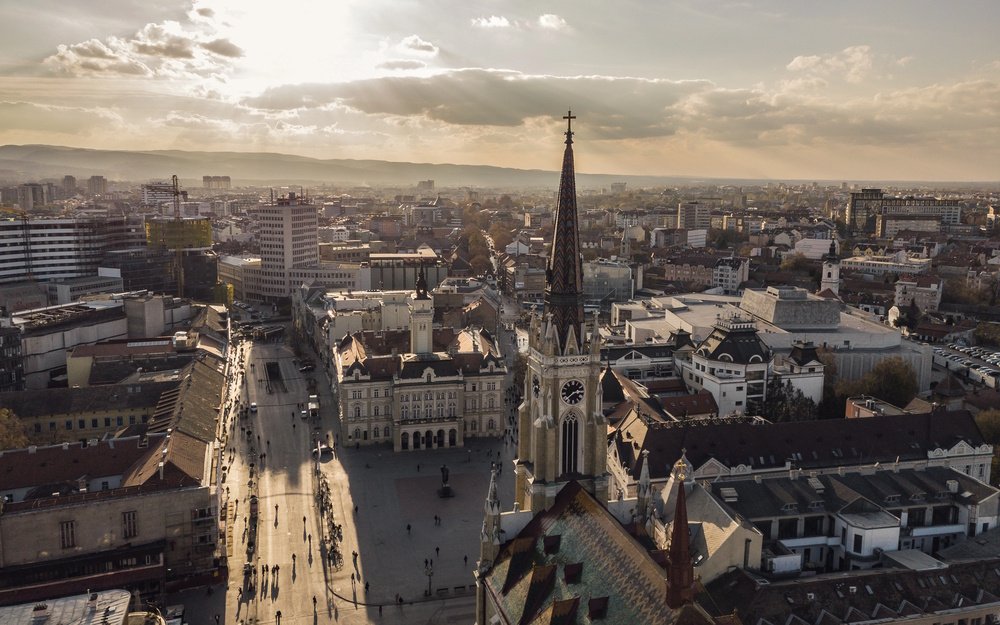
Resting gracefully along the Danube in the fertile province of Vojvodina, Novi Sad is celebrated as the Serbian Athens due to its historic role as the cultural and literary capital of Serbs under the Habsburg monarchy. The city skyline is dominated by the colossal eighteenth-century Petrovaradin Fortress, dubbed the Gibraltar of the Danube, featuring a famous clock tower whose hour and minute hands are reversed so fishermen on the river can tell time from afar. Every July, the fortress bastions host EXIT Festival, one of Europe’s premier international music festivals.
Designated a European Capital of Culture in 2022, Novi Sad features an impeccably preserved pastel downtown centered on Freedom Square and the neo-Gothic Name of Mary Church. The sandy shores of Strand beach along the Danube offer open-air recreation, while the nearby slopes of Fruska Gora mountain house sixteen historic medieval Serbian Orthodox monasteries.
1. Belgrade (approx. 1,197,100 residents)
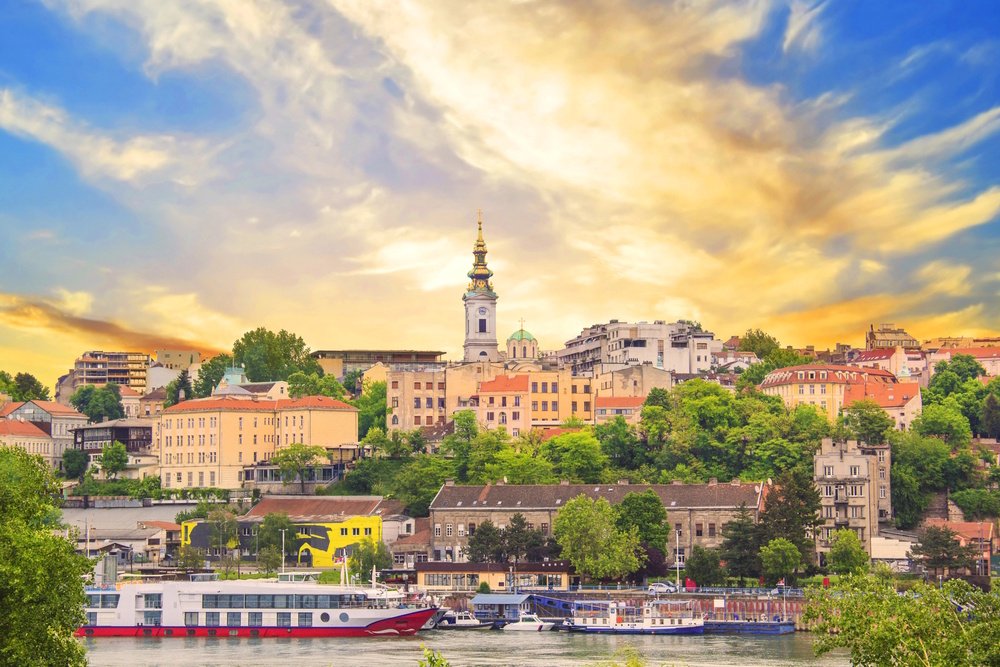
Belgrade, meaning White City, stands supreme as the historic capital, financial powerhouse, and cultural locomotive of Serbia, resting dramatically at the confluence of the Sava and Danube rivers. With over seven millennia of human settlement dating back to the prehistoric Vinca culture, the city has been fought over in more than one hundred and fifteen wars and rebuilt from ashes dozens of times. The monumental Kalemegdan Fortress overlooks the river junction, guarded by Ivan Mestrovic’s famous bronze Victor monument (Pobednik).
The city skyline is commanded by the Church of Saint Sava, one of the largest Orthodox church buildings in the world, whose interior is adorned with fifteen thousand square meters of gleaming gold mosaics. Belgrade is world-famous for its boundless nightlife and cafe culture, from the bohemian cobblestone alleys of Skadarlija to the splavovi, floating river clubs anchored along the riverbanks, alongside the soaring modern skyscrapers of the Belgrade Waterfront development.
Conclusion
Serbia’s largest cities illustrate a captivating balance between Roman imperial roots, Ottoman frontier struggles, Habsburg architectural charm, and modern European cultural vitality. From the historic river confluences of Belgrade and the baroque music fortresses of Novi Sad to the Roman palaces of Niš and the Art Nouveau facades of Subotica, these ten urban centers represent the resilience and proud spirit of the Serbian nation.