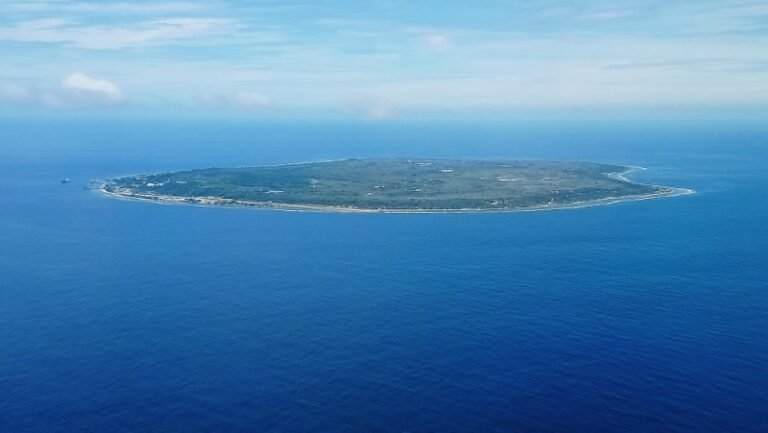
Indonesia is the fourth most populous nation in the world, home to more than 275 million citizens scattered across thousands of tropical islands. Rapid urban migration over recent decades has transformed regional provincial capitals into immense economic engines and sprawling megacities.
Official demographic monitoring from Badan Pusat Statistik tracks population growth inside administrative city boundaries (kota), separate from surrounding suburban regencies. Urban planning records maintained by the Government of Jakarta illustrate the vast scale of modern Indonesian metropolitan centers. From historic Javanese trading ports to booming manufacturing centers in Sumatra, here are the ten largest cities in Indonesia ranked by population.
10. Palembang (South Sumatra): ~1.70 Million Residents
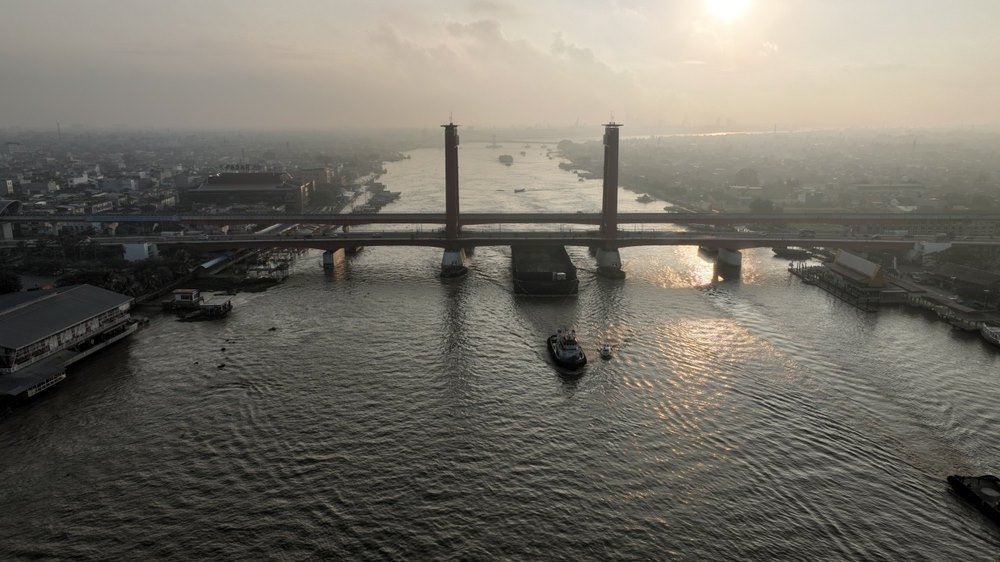
Palembang is one of the oldest cities in Southeast Asia, historically serving as the glorious capital of the Srivijaya maritime empire from the seventh to the eleventh centuries.
Bisected by the broad Musi River, the city is connected by the red Ampera Bridge, a prominent civic landmark built in the 1960s. Palembang is celebrated across Indonesia for its culinary specialty pempek, a savory fishcake served with a spicy vinegar sauce, and operates modern light rail transit connecting to its international airport.
9. South Tangerang (Banten): ~1.40 Million Residents
Formed as an autonomous city in 2008 from the southeastern portion of Tangerang Regency, South Tangerang has expanded into a prosperous residential and commercial center.
The city contains major master-planned developments like Bumi Serpong Damai (BSD City) and Bintaro Jaya, which feature modern shopping complexes, private universities, and business parks. Its modern infrastructure appeals strongly to middle-class families commuting into central Jakarta via electrified commuter rail.
8. Batam (Riau Islands): ~1.25 Million Residents
Situated just twenty kilometers south of Singapore across the Singapore Strait, Batam was deliberately developed in the 1970s as a designated free trade zone.
The island city has grown into a major international manufacturing and shipbuilding center, attracting substantial foreign investment in electronics assembly and marine engineering. Frequent fast ferry connections link Batam directly to Singapore and Johor in Malaysia, forming a key node in the Indonesia-Malaysia-Singapore Growth Triangle.
7. Semarang (Central Java): ~1.70 Million Residents
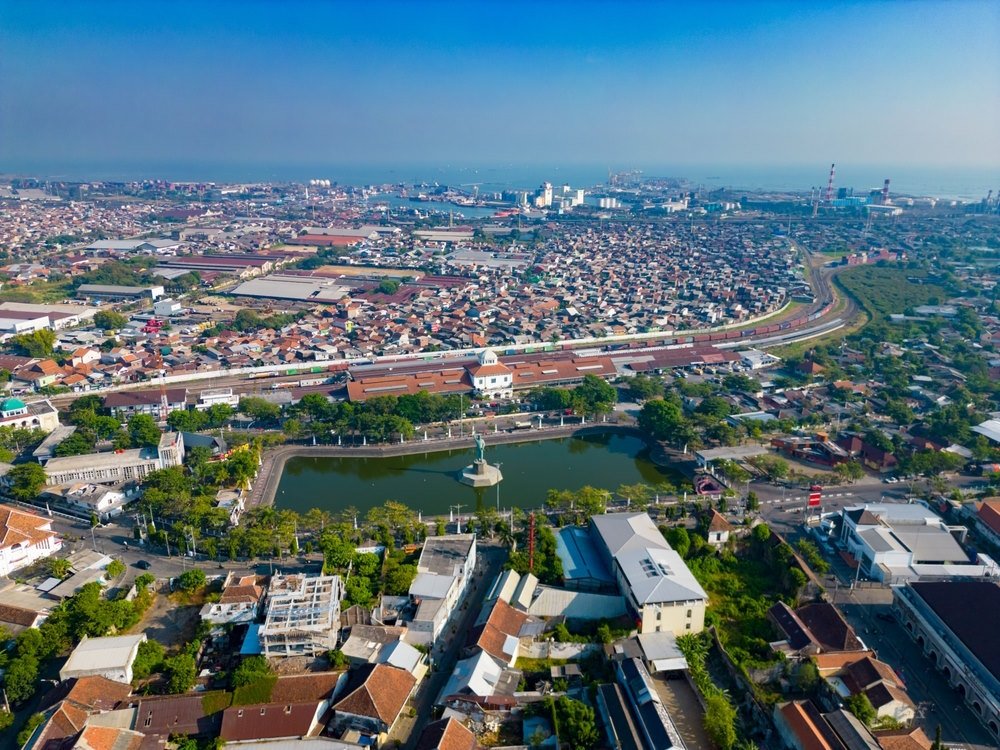
Semarang is the bustling capital of Central Java province, positioned along the northern coastal highway linking Jakarta and Surabaya.
The city reflects a fascinating blend of Javanese, Chinese, and Dutch colonial influences, visible in the restored Old Town (Kota Lama) and the historic Lawang Sewu railway headquarters. Semarang functions as an essential maritime trade gateway for agricultural exports from the fertile volcanic plains of central Java.
6. Tangerang (Banten): ~1.90 Million Residents
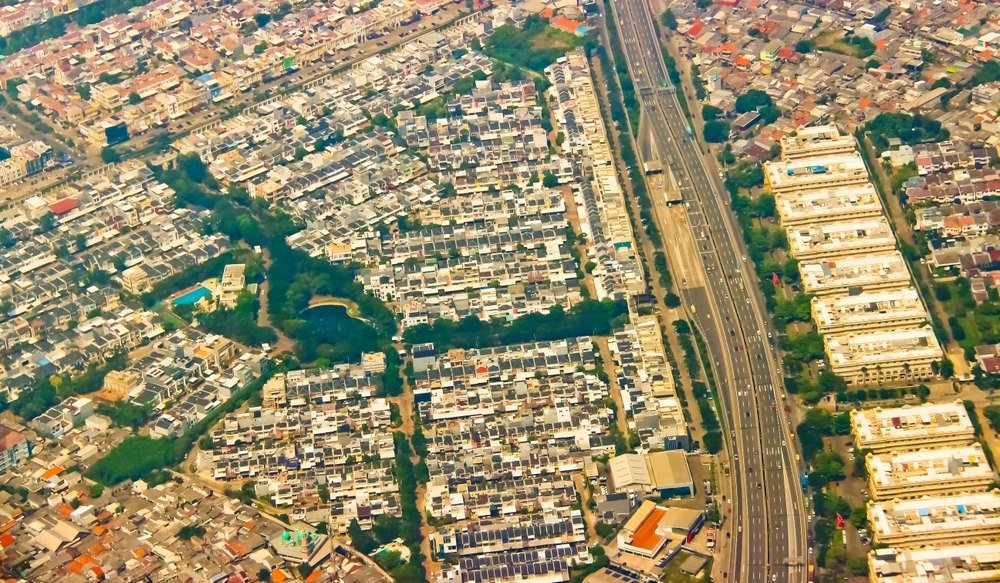
Located immediately west of Jakarta, Tangerang is the largest urban center in Banten province and a major industrial center of western Java.
The city is home to Soekarno-Hatta International Airport, the main international aviation gateway serving the entire Greater Jakarta region. Tangerang hosts hundreds of international manufacturing factories producing textiles, footwear, and consumer electronics, alongside a historic Chinese Indonesian community known as the Benteng Chinese.
5. Depok (West Java): ~2.10 Million Residents

Bordering southern Jakarta, Depok has evolved from a sleepy suburban town into an immense city of more than two million inhabitants.
Depok is celebrated nationally as Indonesia’s premier university town, hosting the massive main campus of the University of Indonesia. Thousands of students and academics patronize the bookstores, cafes, and creative spaces along Margonda Raya, the city’s lively main commercial thoroughfare.
4. Medan (North Sumatra): ~2.45 Million Residents
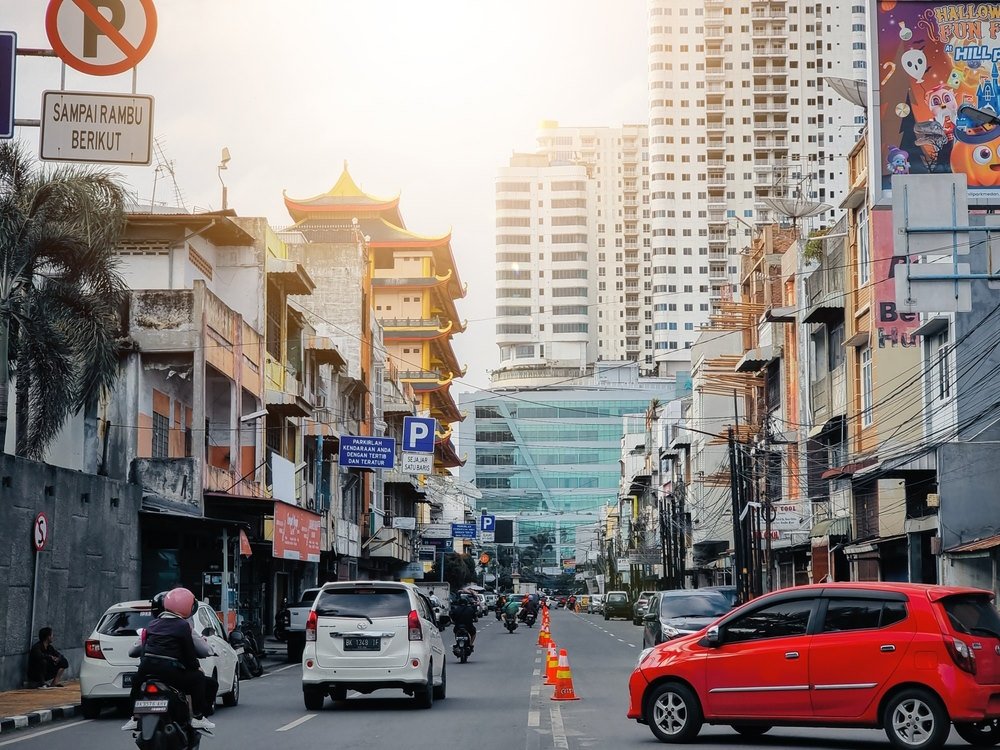
Medan is the largest city in Sumatra and the fourth most populous in Indonesia, serving as the commercial capital of western Indonesia.
Historically propelled by lucrative tobacco, palm oil, and rubber plantations during the colonial era, Medan is celebrated for its multicultural population comprising Batak, Javanese, Chinese, Malay, and Indian communities. Landmarks like the grand Maimun Palace and the Great Mosque of Medan showcase eclectic architectural styles that fuse Moorish, Spanish, and Malay traditions.
3. Bandung (West Java): ~2.55 Million Residents
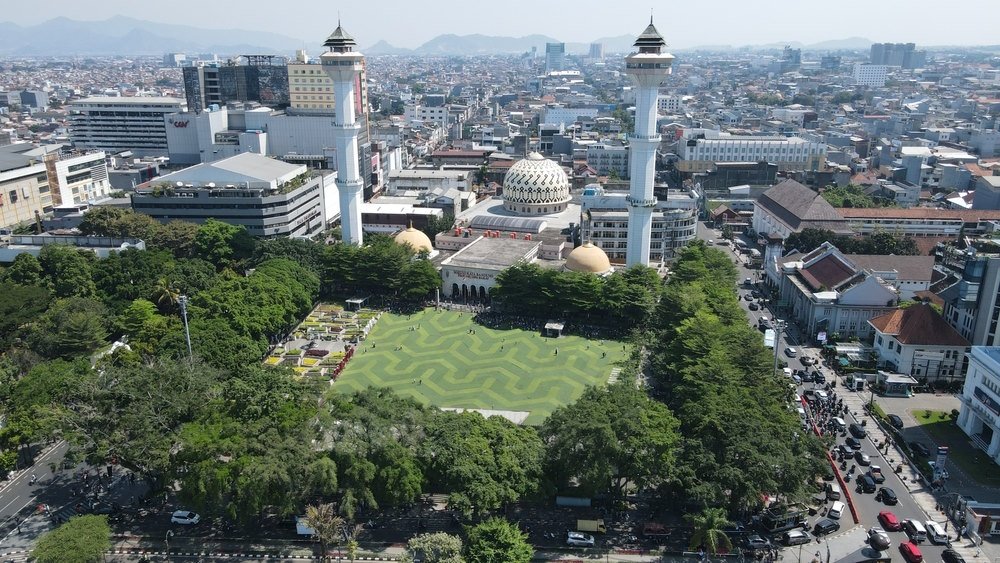
Surrounded by volcanic mountain ranges at an altitude of 768 meters, Bandung enjoys a refreshingly cool climate compared to coastal cities.
Nicknamed the Paris of Java during the Dutch colonial period for its European-style boulevards and Art Deco architecture, Bandung hosted the historic 1955 Asian-African Conference. Today, the city is a leading creative center, renowned for independent fashion boutiques, prestigious engineering universities, and high-speed rail connections to Jakarta.
2. Surabaya (East Java): ~3.00 Million Residents
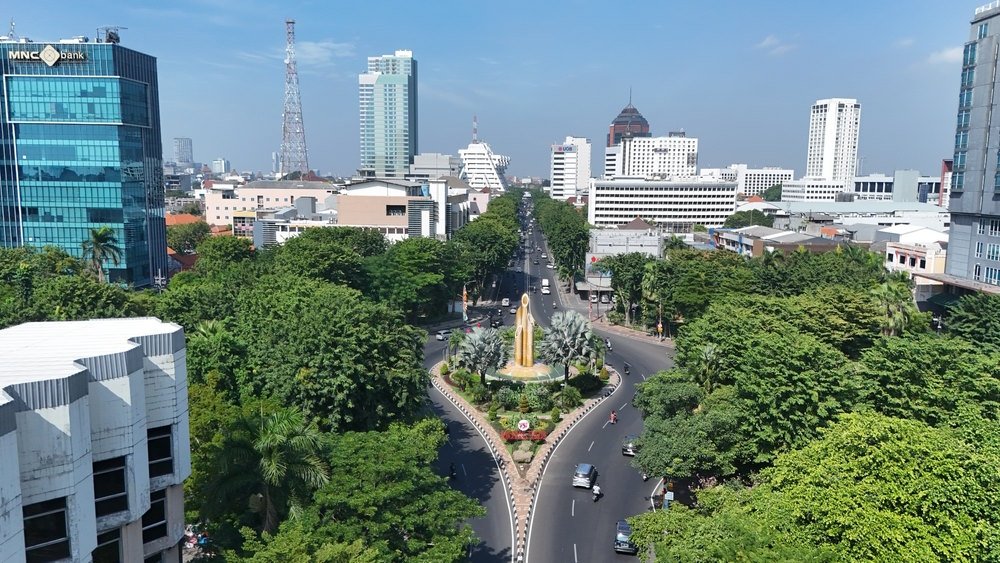
Surabaya is Indonesia’s second largest city and the economic center of East Java, known throughout the country as the City of Heroes.
The city earned its moniker during the fierce Battle of Surabaya in November 1945, which galvanized national and international support for Indonesian independence. As a maritime port facing the Madura Strait, Surabaya manages busy container terminals, naval shipyards, and heavy manufacturing facilities.
1. Jakarta: ~10.60 Million Residents
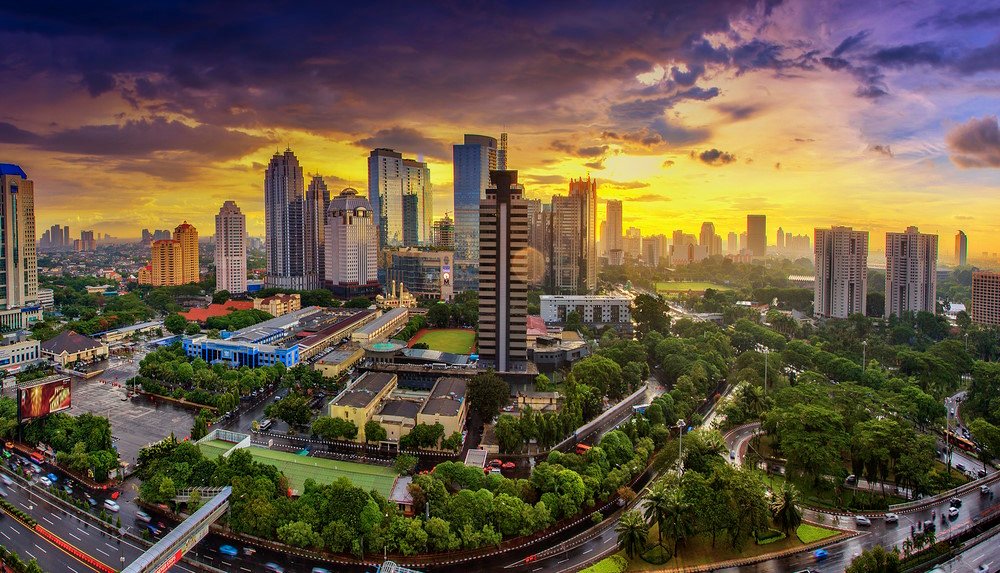
Jakarta is the immense capital and financial heartbeat of Indonesia. While the Special Capital Region contains roughly 10.6 million residents, its wider contiguous urban conurbation (Jabodetabek) houses over thirty-five million people, ranking as the second most populous metropolitan area on the planet after Tokyo.
Rising around the National Monument (Monas) in Merdeka Square, Jakarta features towering commercial skyscrapers, modern mass rapid transit lines, and luxury shopping centers alongside traditional kampung neighborhoods. To address severe land subsidence and traffic congestion, Indonesia is building a new administrative capital named Nusantara in East Kalimantan, but Jakarta will remain the nation’s premier commercial and financial titan.
Indonesia’s largest cities reflect the immense scale, economic ambition, and cultural diversity of Southeast Asia’s largest archipelago. As Java balances dense urbanization and the national government prepares to shift administrative duties to Nusantara in East Kalimantan, managing urban infrastructure and environmental sustainability will define the nation’s 21st century development.