The Kingdom of Morocco occupies a strategic northwestern corner of Africa, bordered by both the Atlantic Ocean and the Mediterranean Sea, with the snow-capped Atlas Mountain ranges separating fertile coastal plains from the Sahara Desert. Centuries of indigenous Amazigh (Berber) heritage, Arab dynasties, Andalusian immigrant craftsmanship, and European maritime trade established four celebrated imperial capitals alongside bustling oceanic ports. According to official municipal population census data compiled by the High Commission for Planning of Morocco (HCP), over sixty-four percent of Moroccans reside in urban areas, with modern commerce centered along the Casablanca-Rabat Atlantic corridor.
Moroccan urban geography is characterized by historic medinas, labyrinthine car-free walled cities filled with vaulted souks, ornate tiled mosques, and fragrant spice squares, paired with twentieth-century Ville Nouvelle colonial quarters. From Atlantic surfing bays to ancient inland desert caravan oases, regional capitals anchor thriving craft guilds, phosphate processing, automotive assembly, and cultural festivals. Examining the ten largest cities provides insight into how royal tradition and modern enterprise shape the kingdom.
10. Agadir (approx. 504,800 residents)
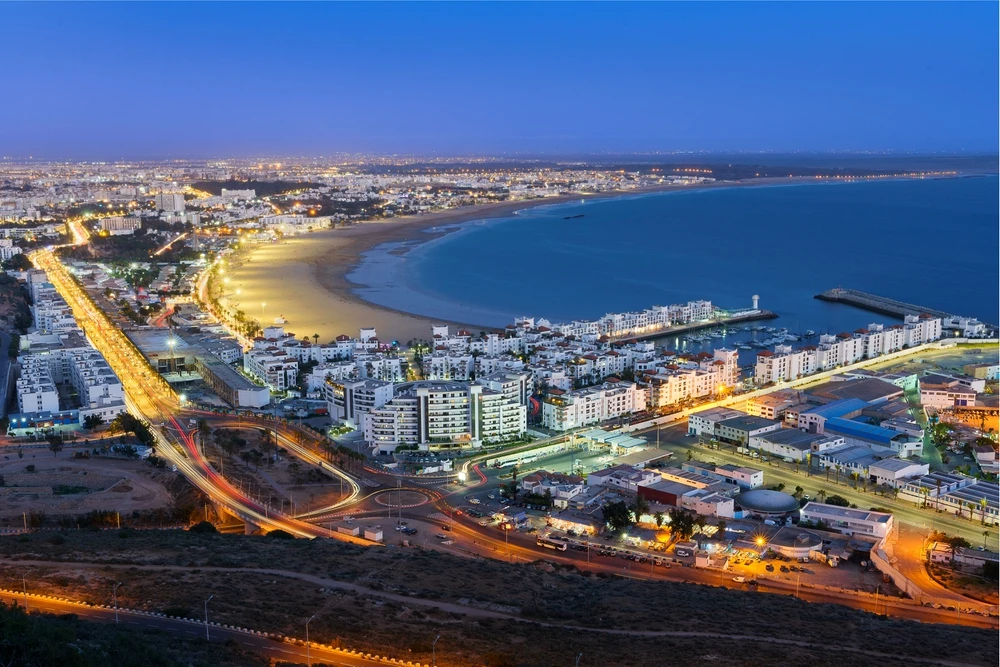
Curving along a crescent-shaped bay on the southern Atlantic coast where the Souss River valley meets the sea, Agadir is Morocco’s premier beach resort and commercial fishing capital. Completely destroyed in 1960 by a catastrophic earthquake that lasted only fifteen seconds, the city was completely rebuilt from scratch on modern seismic principles under King Mohammed V, creating a clean, modern city with wide palm-lined boulevards, whitewashed architecture, and open seaside promenades. The ancient Kasbah ruins perched high on the hill above the port still display the Arabic inscription: God, King, Country.
Agadir is the undisputed capital of the Souss-Massa region, serving as the commercial gateway for the world’s primary argan oil reserves and agricultural greenhouse vegetables. The city’s sunny year-round climate and sweeping sandy beaches attract hundreds of thousands of international vacationers, sailors, and surfers each winter.
9. Oujda (approx. 506,200 residents)
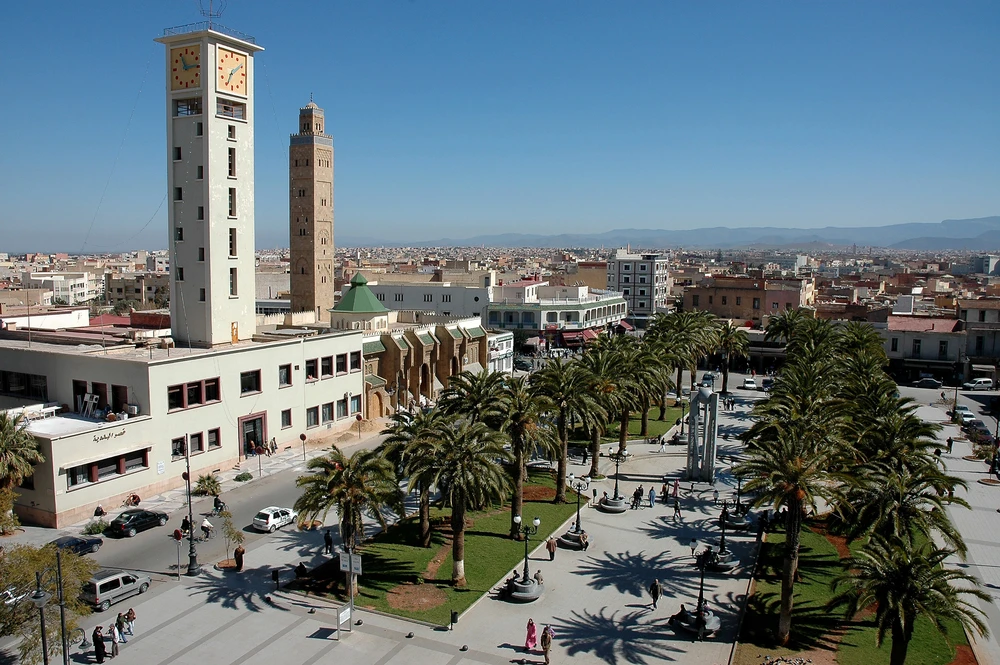
Situated in northeastern Morocco near the border with Algeria, Oujda has served for over a thousand years as an indispensable trading bridge between Morocco, the Maghreb interior, and the Mediterranean. Founded in 994 AD by Ziri ibn Atiyya, chief of the Zenata Amazigh tribe, the city preserves its historic core within defensive walls pierced by monumental stone gates like Bab Sidi Abdelwahab, outside which local storytellers and musicians traditionally gather.
Oujda is universally recognized as the Moroccan capital of gharnati music, an exquisite Andalusian classical musical style preserved by refugees who fled Granada in the late fifteenth century. Anchored by Mohammed First University, the city functions as a key regional transport and commercial hub for the Oriental Region.
8. Kénitra (approx. 507,700 residents)
Located forty kilometers north of Rabat on the southern bank of the Sebou River roughly twelve kilometers from the Atlantic Ocean, Kénitra is one of Morocco’s primary industrial and agricultural logistics centers. Established in 1912 by French resident-general Hubert Lyautey as a modern military river port named Port Lyautey, the city served as an Allied landing site during Operation Torch in World War II, later operating as an American naval air station until the late 1970s.
In modern Morocco, Kénitra has experienced phenomenal industrial growth, developing the Atlantic Free Zone, which hosts a massive automotive assembly complex for Stellantis (Peugeot-Citroën). Connected to Tangier and Casablanca via the Al Boraq high-speed train, the city is home to young industrial engineers and university researchers.
7. Rabat (approx. 509,900 residents)
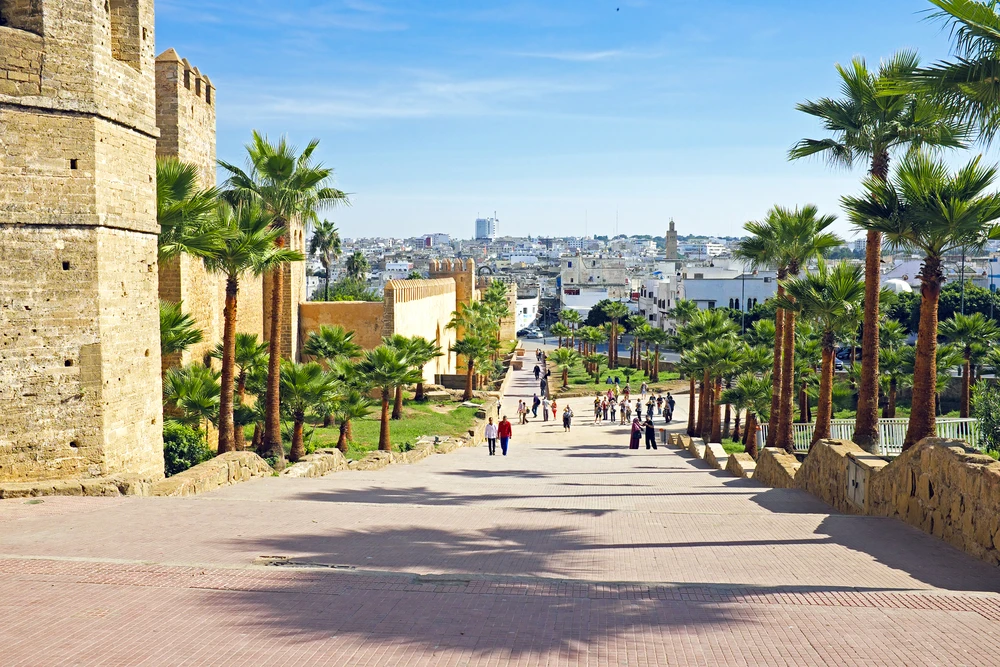
Rabat stands as the stately political and administrative capital of Morocco, resting on the Atlantic coast at the mouth of the Bouregreg River. Founded in the twelfth century by the Almohad Caliphate as a fortified military camp (Ribat al-Fath), the city is crowned by the monumental unfinished red-sandstone Hassan Tower and the Kasbah of the Udayas, an idyllic whitewashed cliffside fortress overlooking the ocean. The entire city is recognized as a UNESCO World Heritage site for its harmonious synthesis of twelfth-century Almohad heritage and twentieth-century French garden-city urban planning.
Facing the historic Hassan Tower stands the grand white-marble Mausoleum of Mohammed V, guarded by royal cavalrymen in traditional red robes. As the royal seat of King Mohammed VI, Rabat is an epicenter of diplomacy, higher learning at Mohammed V University, and contemporary arts, anchored by the futuristic Grand Theatre of Rabat designed by Zaha Hadid.
6. Meknès (approx. 551,500 residents)
Resting on the fertile Saïss plain in northern Morocco, Meknès is one of the four historic Imperial Cities of Morocco, having served as the royal seat of Sultan Moulay Ismail in the seventeenth century. Moulay Ismail transformed the town into an imposing fortified royal complex surrounded by twenty-five kilometers of massive rammed-earth walls, pierced by Bab Mansour, widely considered the most magnificent monumental gateway in North Africa, adorned with elaborate green zellij tiles and marble columns taken from nearby Roman Volubilis.
The city’s historic medina is a UNESCO World Heritage site, famous for the sprawling subterranean royal granaries and stables of Heri es-Souani, which once housed twelve thousand royal horses. Meknès remains an agricultural capital, surrounded by lush olive groves, fruit orchards, and the premier wine-producing terroirs of the kingdom.
5. Salé (approx. 945,100 residents)
Positioned on the northern bank of the Bouregreg River directly across from Rabat, Salé is one of the oldest cities on Morocco’s Atlantic coast. In the seventeenth century, the town achieved international notoriety as the independent Republic of Salé, an autonomous city-state of corsairs and privateers known across Europe as the Sallee Rovers, who raided European shipping and coastal settlements across the Atlantic. The fourteenth-century Medersa of Salé, constructed by the Marinid dynasty, displays exquisite carved cedarwood and geometric zellij tilework.
In modern times, Salé functions as the populous residential neighbor of Rabat, linked by modern tramway bridges spanning the river. The city preserves ancient artisanal traditions, particularly pottery, woven rush mats, and traditional stone masonry at the Oulja artisan complex.
4. Marrakesh (approx. 1,002,700 residents)
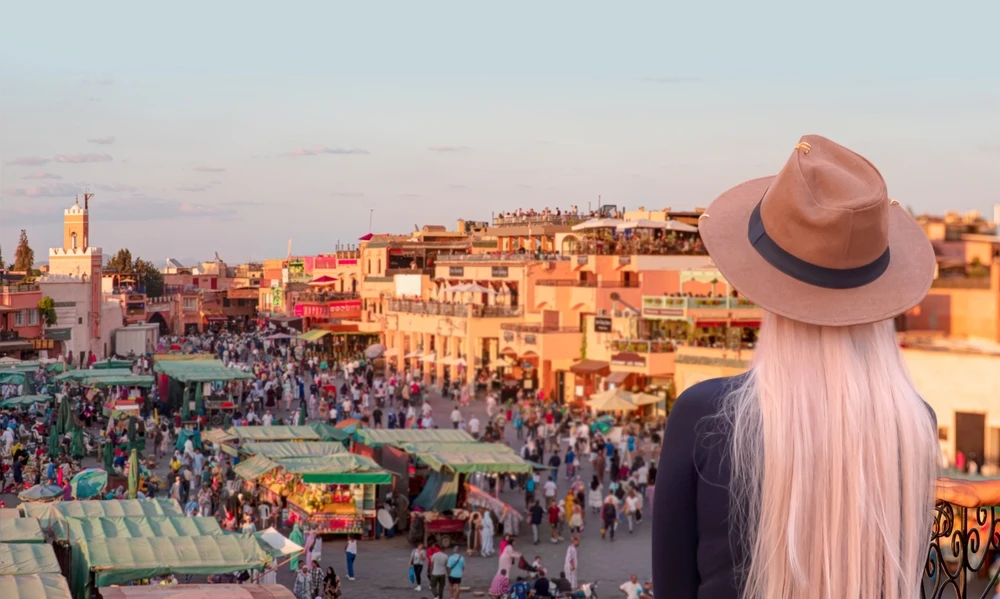
Known across the globe as the Red City (Al-Hamra) due to the rosy clay of its ancient ramparts, Marrakesh rests in the shadow of the snow-peaked High Atlas Mountains. Founded in 1070 by Youssef ibn Tachfine as the capital of the Almoravid Empire, the city is commanded by the majestic twelfth-century Koutoubia Mosque minaret, which provided the architectural model for Seville’s Giralda. The beating heart of the city is Jemaa el-Fnaa, a legendary open-air square inscribed by UNESCO, where snake charmers, acrobats, henna artists, and storytellers perform nightly amid sizzling barbecue food stalls.
Behind the square lies the sprawling medina, a labyrinth of bustling souks where leather tanners, copper smiths, and carpet weavers practice ancient crafts. Marrakesh is also a global design and fashion capital, celebrated for tranquil garden sanctuaries like the Majorelle Garden, restored by French fashion designer Yves Saint Laurent, and luxurious traditional riad palaces.
3. Fès (approx. 1,167,800 residents)
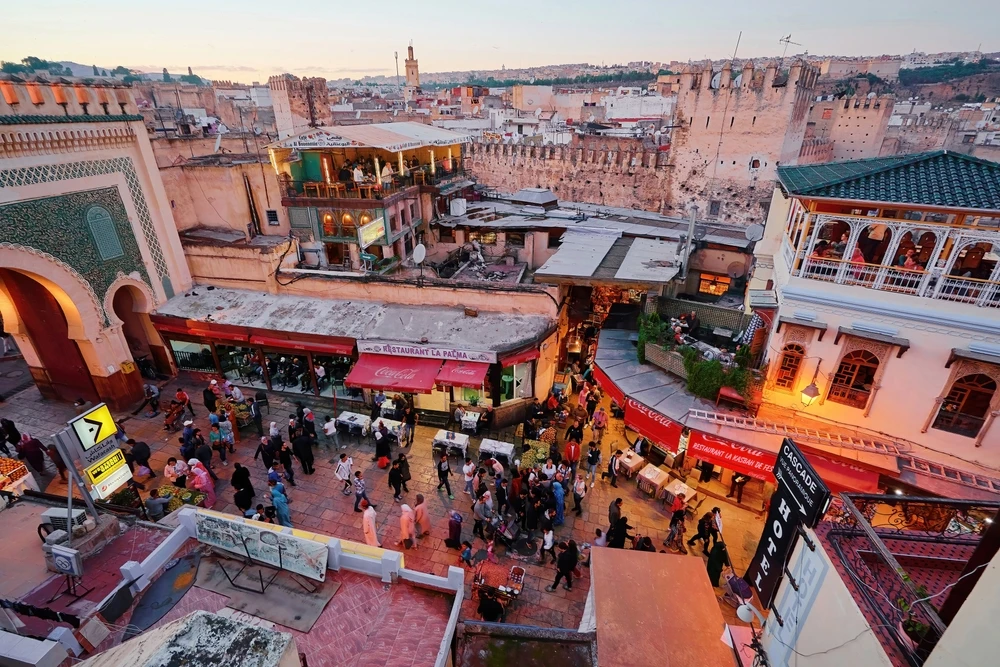
Fès is the spiritual, intellectual, and cultural capital of Morocco, founded in 789 AD by Moulay Idriss I. The historic core of Fès el-Bali is the largest surviving car-free urban zone on Earth, an intoxicating maze of nine thousand narrow alleys where donkeys remain the primary mode of transport. At its center stands the University of al-Qarawiyyin, founded in 859 AD by Fatima al-Fihri, recognized by UNESCO and the Guinness World Records as the oldest continuously operating higher education institution in the world.
The city is famous for the ancient Chouara Tannery, where leather hides have been cured and dyed in stone vats using natural pigments like saffron, indigo, and cedar for almost a thousand years. Fès is universally renowned as the capital of Moroccan craftsmanship, producing world-famous blue-and-white Fassi ceramics, embossed brass lanterns, and hand-woven silks.
2. Tangier (approx. 1,275,400 residents)
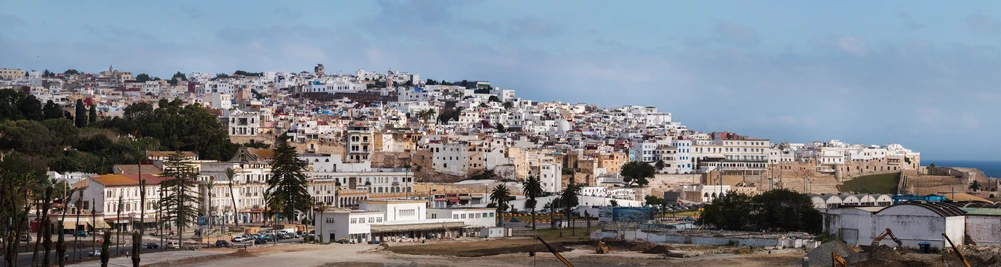
Perched on the northernmost tip of Africa where the Atlantic Ocean meets the Mediterranean Sea across the Strait of Gibraltar, Tangier has served as a legendary maritime crossroads for millennia. During the mid-twentieth century, the city existed as an autonomous International Zone, becoming a haven for eccentric European millionaires, secret agents, and famous American Beat Generation writers like Paul Bowles and William S. Burroughs. The whitewashed medina rises up to the historic Kasbah fortress, looking directly across the water to the Spanish coastline.
In modern times, Tangier has transformed into a colossal commercial and logistics powerhouse. Just east of the city lies Tanger Med, the largest container shipping port in the Mediterranean and Africa, handling millions of shipping containers annually, alongside massive industrial factories for automakers like Renault.
1. Casablanca (approx. 3,215,900 residents)
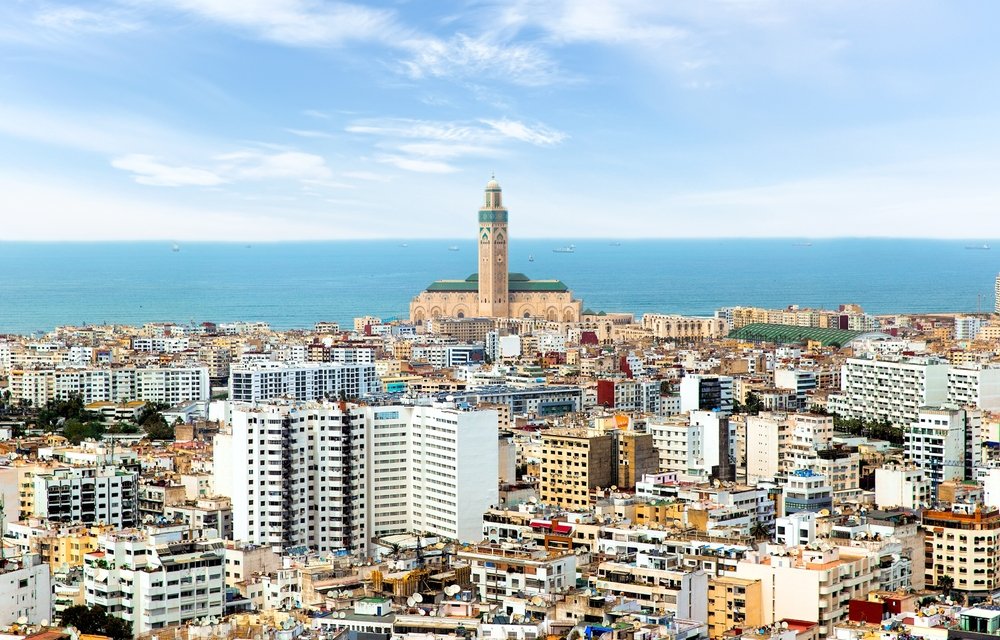
Casablanca stands supreme as the economic capital, financial engine, and largest metropolis in the Kingdom of Morocco, resting along the central Atlantic coast. Immortally romanticized by the 1942 Hollywood classic, the modern city is a dynamic, fast-paced commercial titan that generates nearly a third of the country’s gross domestic product. The city’s crowning architectural jewel is the Hassan II Mosque, an engineering marvel completed in 1993 whose two-hundred-and-ten-meter minaret is the tallest in Africa, standing on a rocky outcrop directly over the crashing waves of the Atlantic.
Casablanca boasts an extraordinary heritage of twentieth-century Mauresque architecture, an elegant fusion of French Art Deco and traditional Moroccan Moorish ornamentation, visible around Mohammed V Square and along Boulevard Mohammed V. With the Casablanca Finance City skyscraper district attracting international multinational corporations and the bustling Port of Casablanca handling domestic trade, the metropolis embodies the ambitious modern future of Morocco.
Conclusion
Morocco’s largest cities capture an exceptional harmony between ancient Islamic scholarship, royal imperial palaces, and dynamic modern maritime infrastructure. From the spiritual madrasas of Fès and the festive squares of Marrakesh to the financial high-rises of Casablanca and the global docks of Tangier, these ten urban centers define the rich cultural heritage and future of the Moroccan kingdom.