Looking at a modern world map, it is easy to assume that today’s geopolitical heavyweights have always dominated global affairs. Yet history is full of modest-sized countries and sparsely populated nations that once ruled vast stretches of the globe.
Through naval innovation, royal marriages, military tactics, or control of lucrative trade routes, these ten relatively small countries built empires that shaped the borders, languages, and cultures of the modern world.
10. Sweden (The Swedish Empire)
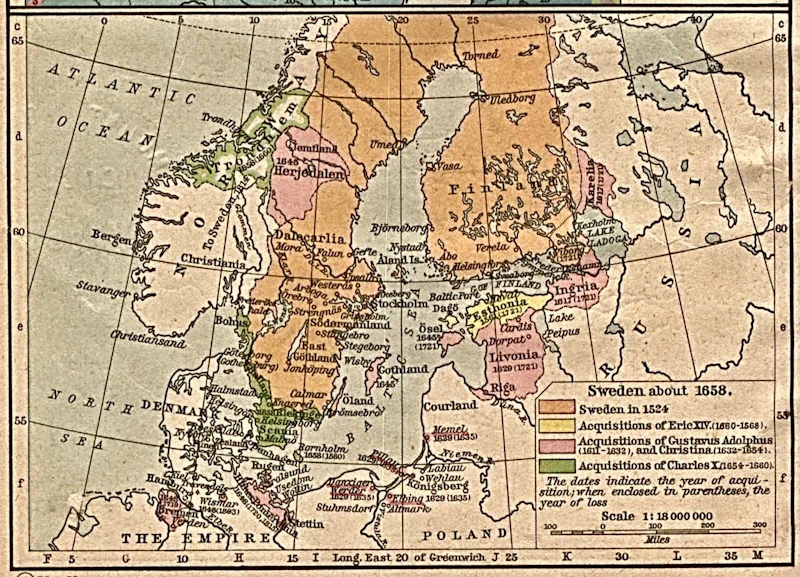
Today Sweden is known for peaceful neutrality, flat-pack furniture, and Scandinavian design. During the seventeenth century, however, the Era of Great Power (Stormaktstiden) saw Sweden transform into one of Europe’s most feared military empires under warrior kings such as Gustavus Adolphus and Charles X Gustav.
At its peak around 1658, the Swedish Empire encircled almost the entire Baltic Sea, ruling all of modern Finland, Estonia, and Latvia, along with parts of Russia, Poland, Norway, and northern Germany. Even with a tiny domestic population, Sweden’s disciplined conscript army dominated northern Europe until its defeat in the Great Northern War in 1721.
9. North Macedonia and Greece (The Macedonian Empire)
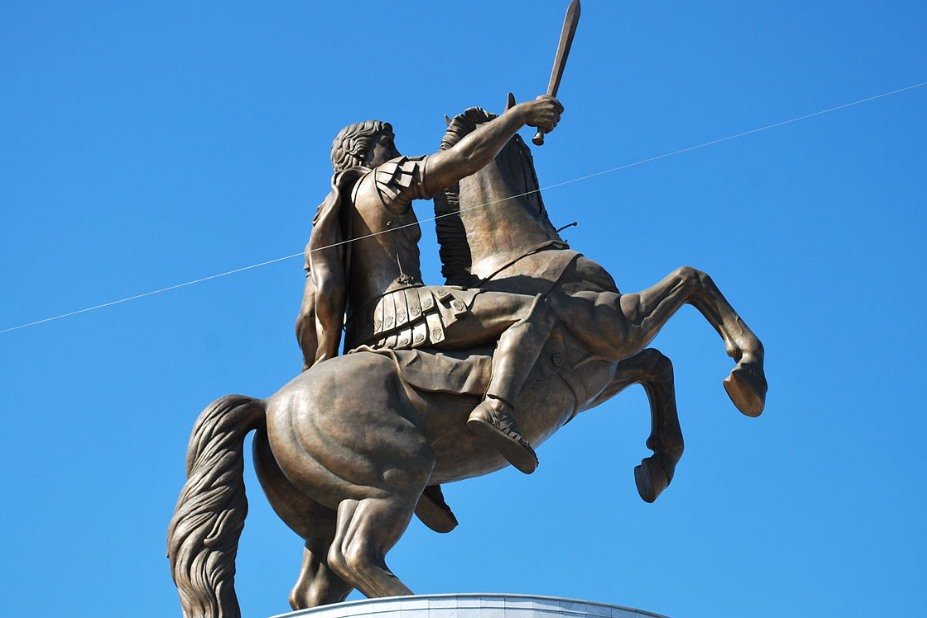
In the fourth century BC, the ancient Kingdom of Macedon sat on the northern edge of the Greek world, spanning territory now shared by northern Greece and North Macedonia. King Philip II reformed the Macedonian army with the famous phalanx formation and long sarissa pikes, uniting the Greek city-states under his banner.
His son, Alexander the Great, then led a twelve-year campaign that toppled the Persian Empire and stretched Macedonian rule from the Ionian Sea across Egypt, Mesopotamia, and Persia all the way to the Indus River in modern Pakistan. Although the empire fractured among rival generals immediately after Alexander’s death in 323 BC, it spread Greek language and culture across the ancient world for centuries.
8. Denmark (North Sea Empire and the Kalmar Union)
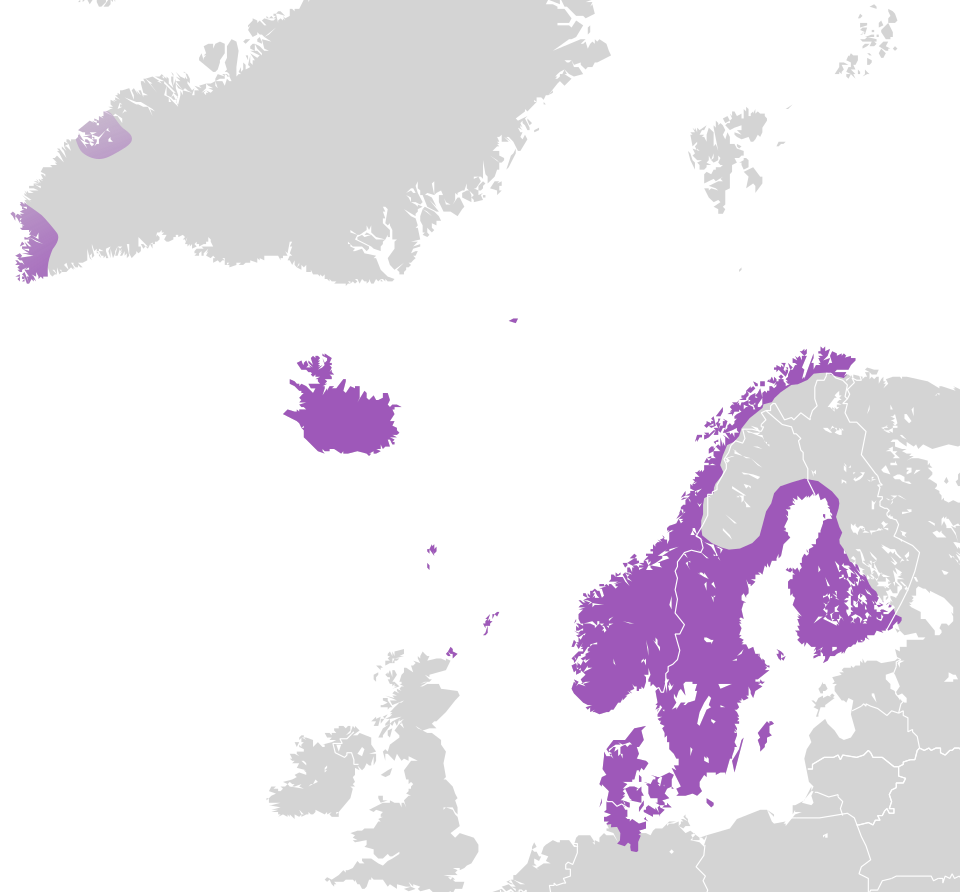
Modern Denmark occupies the compact Jutland peninsula and surrounding islands, yet Danish monarchs twice ruled vast northern realms. In the early eleventh century, King Cnut the Great forged the North Sea Empire, uniting Denmark, England, and Norway into a single maritime domain.
Nearly four centuries later, Queen Margaret I united Denmark, Norway, and Sweden (including Finland) under the Kalmar Union of 1397, along with Iceland, Greenland, and the Faroe Islands. Conducted from Copenhagen, Danish rule over Norway lasted until 1814, and Greenland and the Faroe Islands remain autonomous territories within the Kingdom of Denmark today.
7. Oman (The Omani Empire)
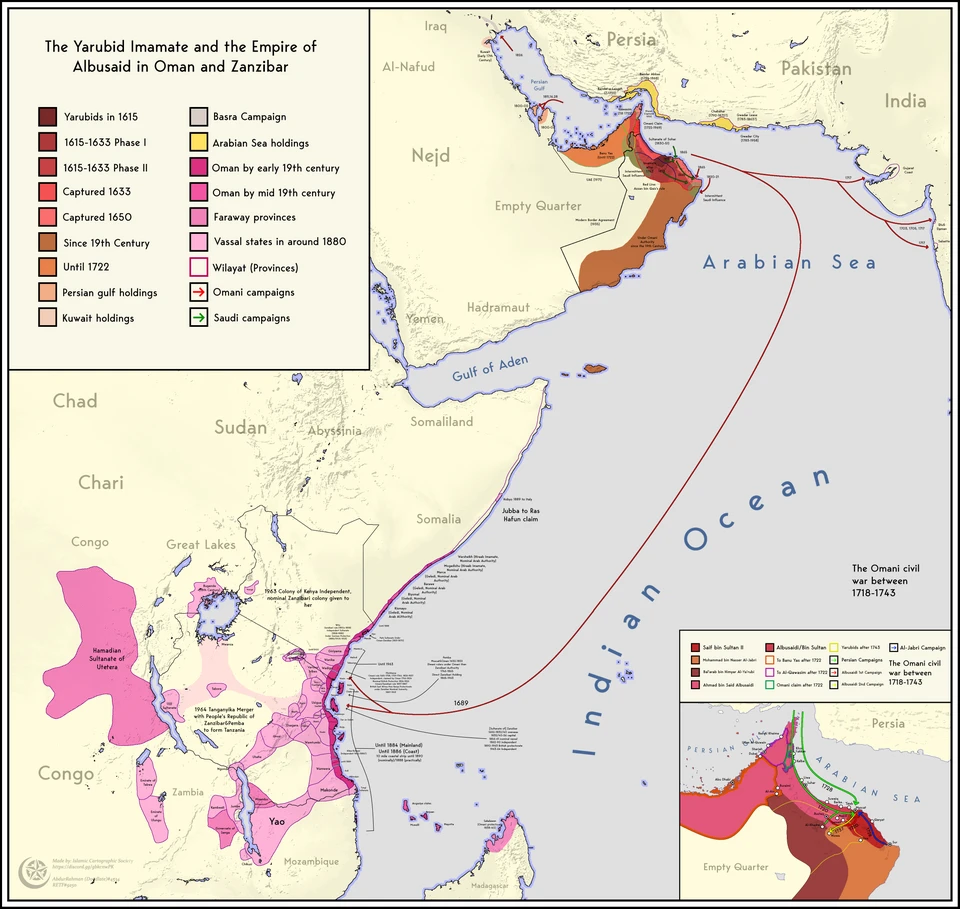
Tucked into the southeastern corner of the Arabian Peninsula, the Sultanate of Oman is a quiet, diplomatic nation today. From the late seventeenth through the nineteenth centuries, however, the Omani Empire was a formidable Indian Ocean naval power that expelled the Portuguese from Muscat and eastern Africa.
At its height under Sultan Said bin Sultan in the 1800s, Oman controlled the Persian Gulf coast, parts of southern Iran and Pakistan, and the Swahili Coast of East Africa from Mogadishu to northern Mozambique. Trade in cloves, ivory, and spices made the East African island of Zanzibar so wealthy that the Sultan moved his royal court from Muscat to Zanzibar in 1840.
6. Mongolia (The Mongol Empire)
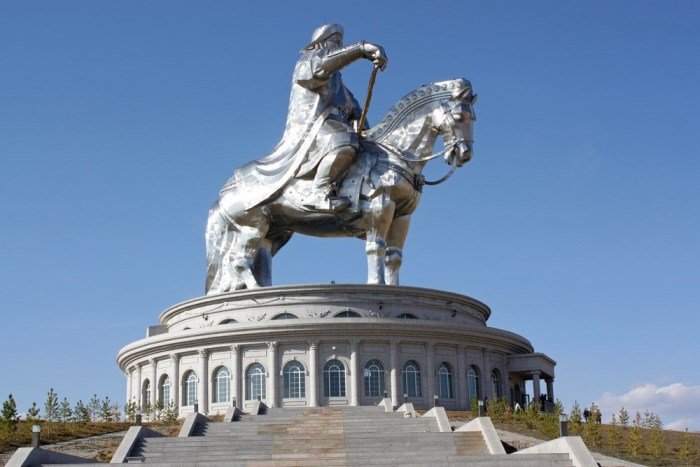
Home to roughly 3.4 million people today, landlocked Mongolia is the most sparsely populated sovereign country on Earth. In 1206, nomadic steppe chieftain Temujin united the warring Mongol tribes and took the title Genghis Khan, launching a wave of conquests that reshaped Eurasia.
Using unmatched horse archery, mobility, and psychological warfare, Genghis Khan and his descendants built the largest contiguous land empire in human history. Covering 24 million square kilometers at its peak, the Mongol Empire stretched from the Sea of Japan across China, Central Asia, Persia, and Russia to the gates of Central Europe.
5. Austria (The Habsburg Empire)
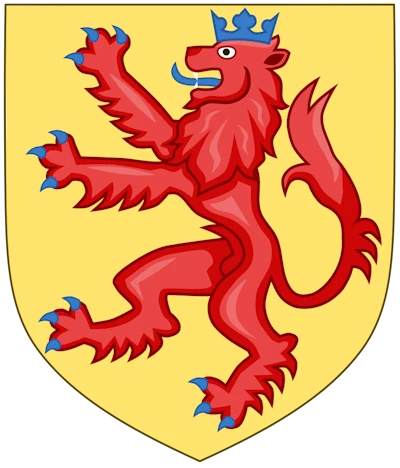
Modern Austria is a landlocked Alpine republic of nine million people, famous for Mozart, ski resorts, and Viennese coffeehouses. For more than six centuries, however, Vienna was the seat of the House of Habsburg, a dynasty famous for expanding its realm through strategic royal marriages as much as battlefield victories.
In the sixteenth century under Emperor Charles V, Habsburg territories spanned Austria, Spain, the Low Countries, parts of Italy, and vast colonies across the Americas. Even after the Spanish branch split off, the Austrian Empire and later Austria-Hungary ruled tens of millions of people across Central and Eastern Europe until collapsing at the end of World War I in 1918.
4. Lithuania (The Grand Duchy of Lithuania)
Today Lithuania is a Baltic nation of fewer than three million citizens, but in the late Middle Ages it was the largest state in Europe. Beginning in the thirteenth century, the Grand Duchy of Lithuania expanded rapidly across eastern Europe as neighboring Slavic principalities weakened following the Mongol invasions.
By the early fifteenth century under Grand Duke Vytautas the Great, Lithuania’s borders stretched from the Baltic Sea all the way to the Black Sea, encompassing modern Belarus, most of Ukraine, and parts of Poland and western Russia. It later united with Poland to form the Polish-Lithuanian Commonwealth, a major European power until the late 1700s.
3. Belgium (The Belgian Colonial Empire)
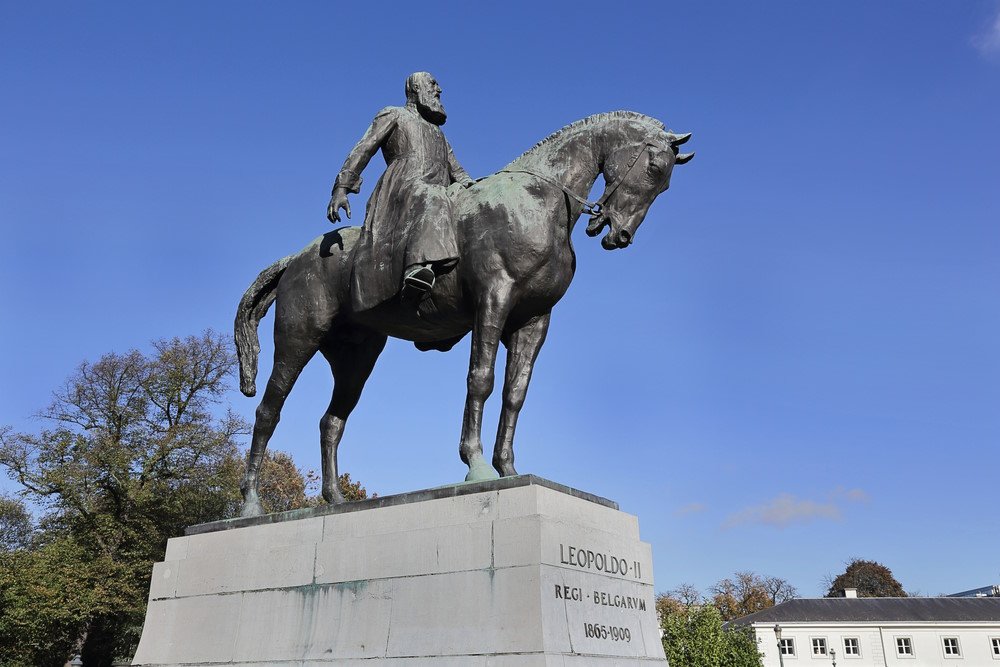
Having gained independence in 1830, Belgium covers barely 30,000 square kilometers in Western Europe. In 1885, however, King Leopold II secured personal ownership of the Congo Free State at the Berlin Conference, acquiring an African territory more than 75 times the size of Belgium itself.
Leopold’s private regime ruthlessly exploited the Congo for rubber and ivory, causing millions of deaths and sparking one of the first international human-rights outcries, which forced the Belgian state to take over the colony in 1908. Alongside the Belgian Congo, Belgium also administered Ruanda-Urundi (modern Rwanda and Burundi) after World War I until granting independence in the early 1960s.
2. Portugal (The Portuguese Empire)
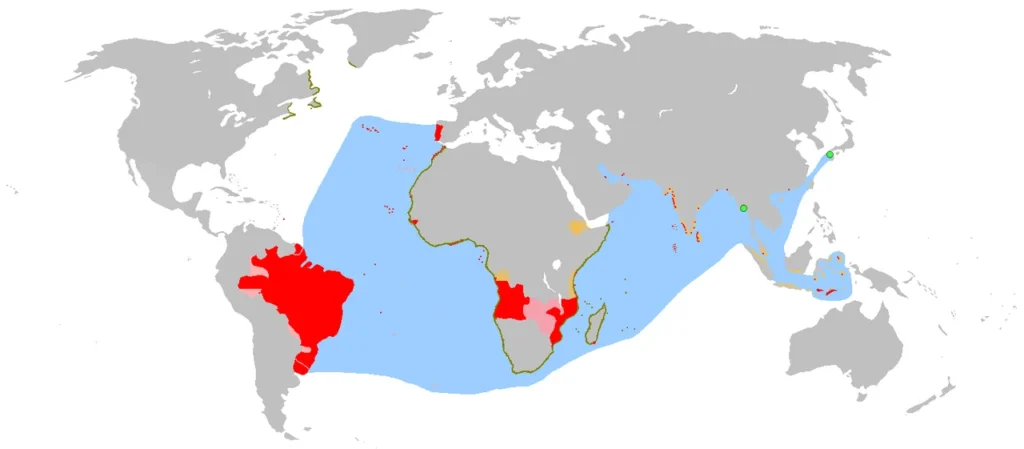
Occupying a narrow strip of the western Iberian Peninsula, Portugal launched the European Age of Discovery in the fifteenth century. Beginning with the capture of Ceuta in 1415 and the maritime expeditions sponsored by Prince Henry the Navigator, Portuguese sailors rounded Africa’s Cape of Good Hope, reached India under Vasco da Gama, and claimed Brazil in 1500.
Spanning nearly six centuries until the handover of Macau to China in 1999, the Portuguese Empire was the longest-lived of the modern European colonial empires. Covering more than 10 million square kilometers including Brazil, Angola, Mozambique, Goa, and East Timor, it explains why more than 250 million people around the world speak Portuguese today.
1. The Netherlands (The Dutch Colonial Empire)
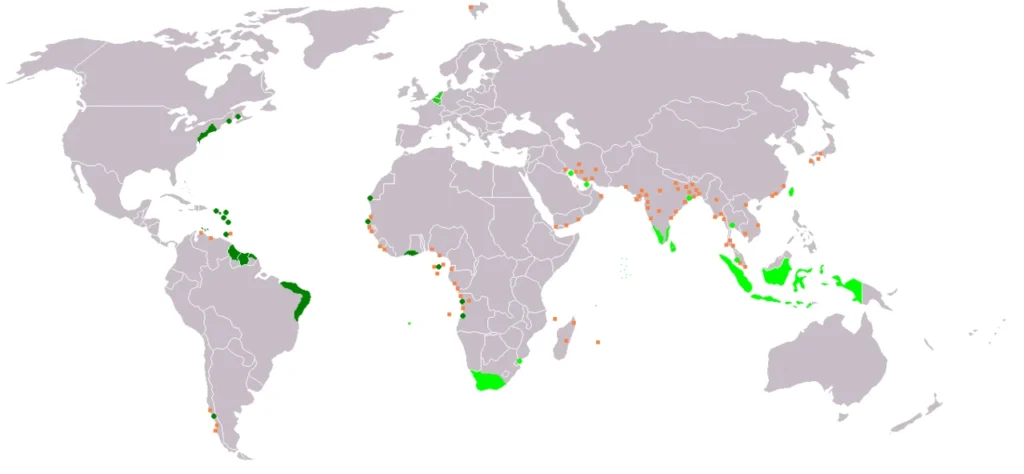
Despite having to reclaim much of its own homeland from the sea, the Netherlands rose in the seventeenth century to become the world’s premier maritime and commercial superpower. Founded in 1602, the Dutch East India Company (VOC) became the first publicly traded multinational corporation in history, backed by its own fleet of warships and private army.
Along with the Dutch West India Company (WIC), the Dutch established a global network of colonies and trading posts spanning the Dutch East Indies (modern Indonesia), Suriname, the Caribbean, South Africa, Sri Lanka, Taiwan, and New Amsterdam (later New York). That seventeenth-century Golden Age turned Amsterdam into the financial capital of the world.