You probably use some of these words regularly without thinking twice. But each of them is named after a real person. Such words are called eponyms. Once you know the stories behind them, you may never pronounce them the same way again. For the people involved, it brought eternal fame, though not always the kind they would have wanted.
10. Boycott: Charles Boycott
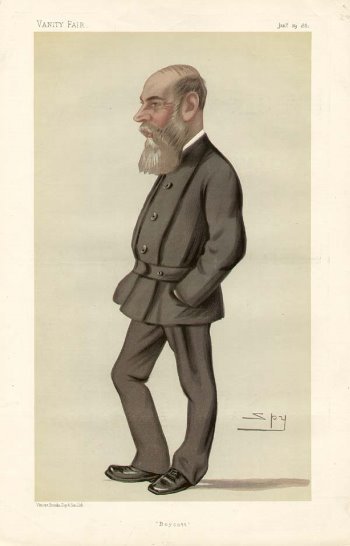
In the 19th century, Irish tenant farmers had to pay high rents to often absent landlords. Captain Charles Boycott was a land agent who collected rents in County Mayo for the Earl of Erne.
In 1880, after a bad harvest, the tenants asked for lower rents. When Boycott refused and tried to evict tenants, the local community, encouraged by the Irish Land League, decided to isolate him completely. Workers refused to harvest his crops, shops refused to serve him and even the mailman stopped delivering his letters. Within months, his name had become a word for this kind of collective, peaceful protest.
9. Chauvinism: Nicolas Chauvin
According to the story, Nicolas Chauvin was a French soldier who served in Napoleon’s army, was wounded seventeen times and was left severely disabled, with only a tiny pension. Yet he remained a fanatical admirer of Napoleon, even after the emperor’s fall.
His exaggerated patriotism made him a stock comic character in French plays of the 19th century. Historians now doubt whether Nicolas Chauvin ever really existed, or whether he was a legend. Either way, “chauvinism” has since come to mean an exaggerated, aggressive form of patriotism, and later also an attitude of superiority of one group over another, as in “male chauvinism”.
8. Decibel: Alexander Graham Bell
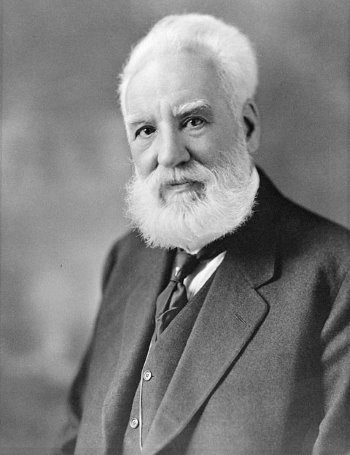
The Scottish-born inventor Alexander Graham Bell is best known for patenting the telephone in 1876. He dedicated much of his life to sound and speech, partly because both his mother and his wife were deaf, and he worked as a teacher of deaf students.
A unit for comparing sound levels and signal strength was named after him: the “bel”. Because a bel is a rather large unit, we almost always use the decibel in practice, one tenth of a bel. So his name lives on in every measurement of noise.
7. Saxophone: Adolphe Sax
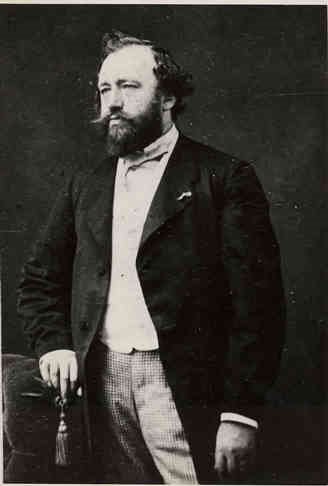
Antoine-Joseph “Adolphe” Sax was born in 1814 into a family of instrument makers in Belgium. He was a brilliant craftsman and musician who was always looking for new sounds. In the early 1840s, he invented an instrument that combined the power of a brass instrument with the agility of a woodwind: the saxophone. He patented it in Paris in 1846.
Sax had a difficult life: jealous competitors sued him repeatedly over his patents, he went bankrupt more than once and, according to some accounts, even survived assassination attempts. Ironically, the saxophone only became truly popular decades after his death, thanks to jazz.
6. Nicotine: Jean Nicot
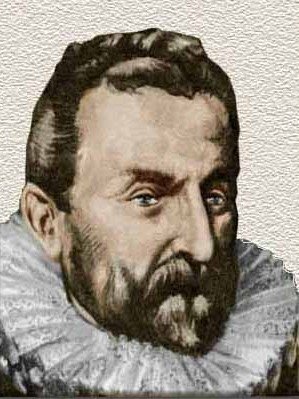
Jean Nicot was the French ambassador to Portugal in the 16th century. During his stay in Lisbon, he became acquainted with the tobacco plant, which had been brought from the Americas, and believed in its medicinal properties.
He sent tobacco to the French queen Catherine de’ Medici, reportedly to treat her son’s headaches. Tobacco became fashionable at the French court, and the plant was named Nicotiana in his honor. When chemists isolated the active substance in tobacco in 1828, they named it after him: nicotine.
5. Sadism: the Marquis de Sade

The word “sadism” comes from the French aristocrat Donatien Alphonse François, Marquis de Sade (1740 to 1814). He led a scandalous life and spent around 32 years in various prisons and asylums because of his violent sexual behavior and his controversial writings.
During his imprisonment, he wrote novels and plays in which sexual pleasure was linked to cruelty and pain. His work was so explicit and notorious that, in the 19th century, his name became the basis of the term for taking pleasure in the pain of others.
4. Lynching: Charles Lynch
The verb “to lynch” is most likely named after Charles Lynch, a planter and judge in Virginia. During the American Revolution, he led an unofficial court that punished supporters of the British without a proper trial.
At the time, “Lynch’s law” usually meant flogging or imprisonment, not execution. Only in the 19th century did the word take on its current, grim meaning: a violent killing by a mob outside the law, which in the United States was used above all as a tool of racist terror against Black Americans.
3. Silhouette: Étienne de Silhouette
A silhouette is a portrait or image that shows only the dark outline of a figure. The word comes from Étienne de Silhouette, who in 1759 was the French Minister of Finance for just eight months. He was extremely unpopular because of the harsh cost-cutting and taxes he imposed on the wealthy to fill the empty treasury.
Shadow portraits were the cheapest way to have a portrait made at the time. The expression “à la Silhouette” became a mocking way of describing anything cheap or done on the cheap. In the end, the word stuck as the name for the black outline of a figure. According to another explanation, Silhouette himself liked to make such cut-out portraits as a hobby.
2. Braille: Louis Braille
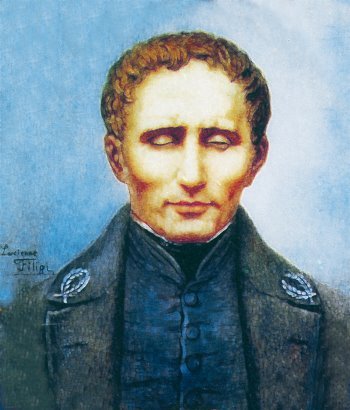
Louis Braille lost his sight at the age of three, after an accident with a sharp tool in his father’s saddlery workshop. At the school for the blind in Paris, he discovered that blind students could only read by slowly feeling large raised letters.
At the age of only fifteen, he developed a system of six raised dots, inspired by a military code for communicating at night without light. His braille alphabet made it possible for blind and visually impaired people to read and write independently. It was only officially adopted in France after his death in 1852, but today it is used all over the world.
1. Sandwich: John Montagu, Earl of Sandwich
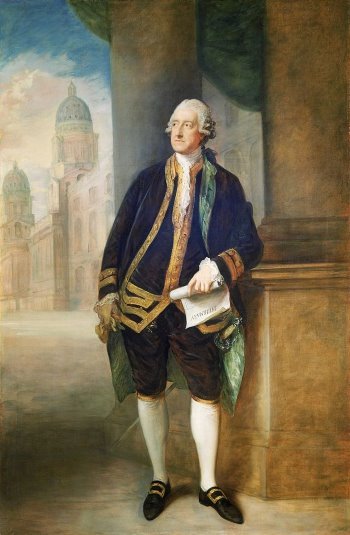
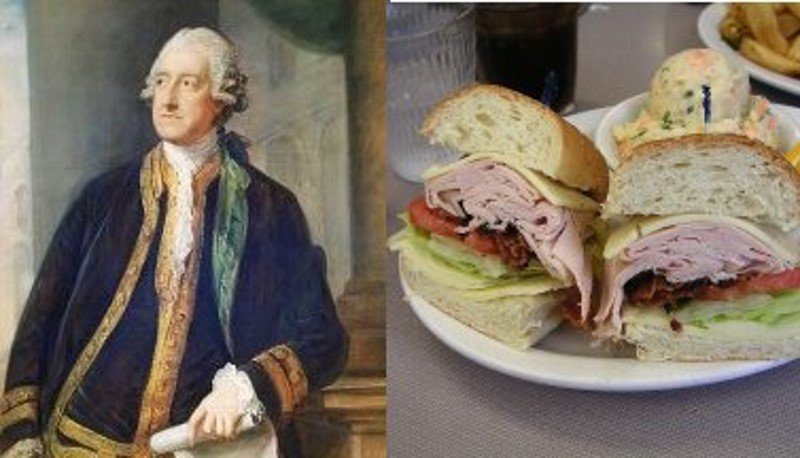
John Montagu, the 4th Earl of Sandwich (1718 to 1792), was an influential British statesman and First Lord of the Admiralty. According to the most popular legend, he was a passionate gambler who did not want to leave the card table, not even to eat. He asked for a piece of meat between two slices of bread, so that he could eat with one hand without getting his cards greasy. His biographer suggests that he more likely ate this way at his desk while working.
Of course, people had been eating bread with fillings long before, but thanks to the earl’s fame, his friends began ordering “the same as Sandwich”. And so the name of a small town in Kent became famous worldwide as one of the most popular lunches on Earth. The Hawaiian Islands, which Captain Cook named the Sandwich Islands in his honor, also briefly carried his name.