While eating insects (entomophagy) has long been viewed with a mixture of trepidation and skepticism in Western cuisine, they are a completely everyday source of food for more than two billion people worldwide. The United Nations and the World Health Organization have been encouraging the consumption of insects for years as a sustainable alternative to traditional livestock meat: insects emit hardly any greenhouse gases and use only a fraction of the water and feed that cattle need. The market is also rapidly gaining ground in Europe now that the European Food Safety Authority (EFSA) is officially approving more and more types as safe food. These are the ten most popular and eaten insect species in the world.
Which one of these deserves the top spot? Cast your votes below and let us know your personal ranking in the comments!
Cast your vote - the ranking shifts live based on the votes.
Crickets
Crickets are the most popular entry-level insect for curious gourmets. In Thailand and Vietnam they are widely grown on special farms under the name ching reed. The insects are briefly stir-fried with soy sauce, chili and kaffir lime leaves, resulting in a savory, nutty snack that is in great demand at local night markets. The house cricket (Acheta domesticus) has now also been approved for human consumption by the European Food Safety Authority. Increasingly, crickets are not eaten whole, but dried and finely ground into cricket flour. This powder has a neutral taste and is used by innovative food manufacturers to enrich pasta, protein bars and bakery bread with high-quality animal proteins.
Mealworms
The mealworm, the larva of the mealworm beetle (Tenebrio molitor), is the absolute leader in western insect farming. In 2021, the yellow mealworm made history by becoming the very first insect ever to receive official approval from the EFSA as a safe food for the European market. The cultivation of mealworms is extremely sustainable: they can be fed with residual flows from agriculture, hardly use any water and have a minimal ecological footprint. Thanks to their mild, nutty taste, mealworms are extremely versatile in their preparation. Roasted with a pinch of salt, they are a crunchy alternative to nuts, while in ground form they are used in vegetarian burgers, meat substitutes and energy bars. With a nutritional profile rich in omega-3 fatty acids, fiber, iron and complete proteins, the mealworm is considered the figurehead of the food of the future.
Log in to post a comment.
Grasshoppers
Grasshoppers are among the most prized edible insects in the world. In Mexico, chapulines (small grasshoppers) have been a cultural icon since the time of the Aztecs. They are roasted on a traditional clay plate with garlic, chili pepper, lime juice and salt, after which they are sprinkled over guacamole as a crispy topping or rolled into warm corn tortillas. The locust now also has official status in Europe: the European Commission approved the African migratory locust (Locusta migratoria) as a safe food ingredient. Grasshoppers consist of more than seventy percent pure protein and contain significant amounts of calcium and zinc, making them a complete alternative to traditional meat sources.
Log in to post a comment.
Sago caterpillars (Palm beetle larvae)
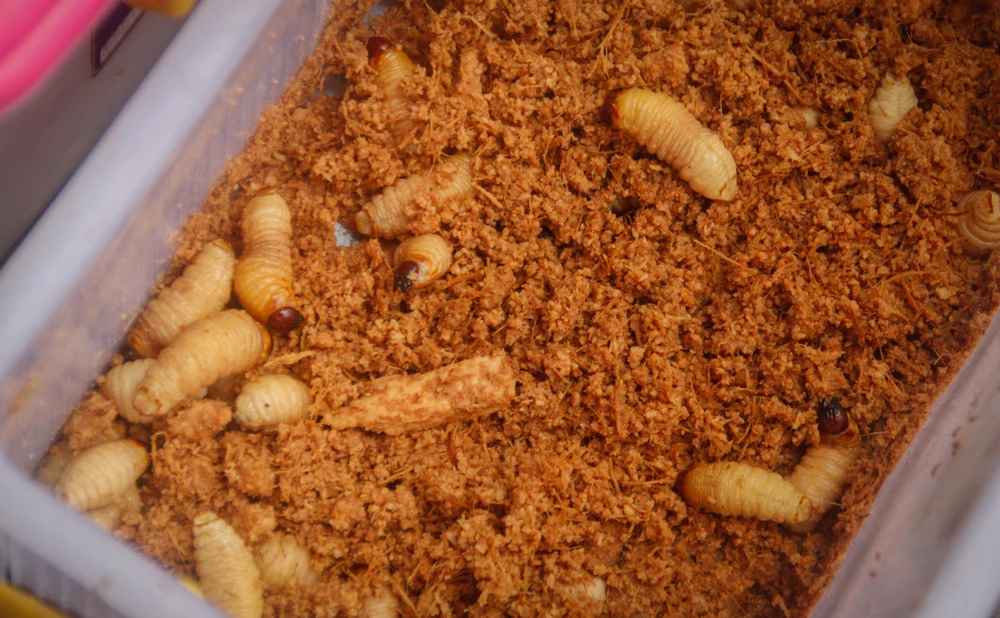
The fat, fleshy larva of the red palm beetle (Rhynchophorus ferrugineus), better known in Southeast Asia as the sago caterpillar, is considered an absolute top delicacy in countries such as Malaysia, Indonesia and Thailand. The larvae feed on the soft starchy pith of fallen sago palm trees and can grow to the thickness of a thumb. Gourmets praise the exceptional taste and texture of this larva. When eaten raw, the sago caterpillar has a creamy substance that is strongly reminiscent of sweet coconut milk. After baking or grilling over hot coals, the outside gets a crispy skin with a rich flavor that many people compare to smoked bacon.
Log in to post a comment.
Silkworms
In East Asia, particularly South Korea, China and Vietnam, the silkworm pupa (Bombyx mori) is one of the most ubiquitous snacks. This consumption emerged as an extremely efficient form of reuse: after the fine silk threads of the cocoon have been unwound for the textile industry, the protein-rich pupa remains for the food market. In South Korea, the dish is known as beondegi, which is sold on virtually every street corner from steaming cauldrons in which the dolls are boiled and seasoned with soy sauce and spices. The taste is distinctly earthy, nutty and slightly salty. Because silkworms are packed with amino acids and minerals, they are now also available in canned form in Asian supermarkets.
Log in to post a comment.
Beetles
With hundreds of thousands of described species, beetles are the largest order in the animal kingdom, and that translates directly to the plate. According to official figures from the UN Food and Agriculture Organization (FAO), as many as 31 percent of all insects consumed worldwide are beetle species, including dung beetles, cockchafers and greater rhinoceros beetles. Beetles are mainly eaten in the Amazon region and on the African continent. Both the adult beetles and their fleshy larvae are an excellent source of protein, iron and healthy fatty acids. Due to their hard shell, adults are usually roasted over charcoal for a long time or stripped of their elytra before being used in curries or stews.
Log in to post a comment.
Cicadas
Cicadas have been eaten for centuries in large parts of Asia, Africa and Central America. The best time to harvest them is just after the nymphs emerge from the ground and break out of their old exoskeleton. At that time, the insects are still soft, pale and tender, which has earned them the meaningful nickname 'shrimp of the land' among gourmets. Although some North American species live underground for thirteen to seventeen years, most species worldwide are simply abundant annually. Boiled, fried in garlic butter or stir-fried with soy sauce, cicadas have a mild taste that is somewhere between asparagus and crustaceans. In Mexico they increasingly end up as a crispy filling in tacos.
Log in to post a comment.
Termites
While termites are mainly feared in Western countries because of the damage they can cause to wooden structures, in Africa and South America they are a valued part of the traditional menu. Especially at the beginning of the rainy season, when winged queens and males fly out en masse to establish new colonies, the animals are harvested in large quantities in the evening using bright lights and water troughs. Termites naturally have a rich, creamy and nutty taste due to their high fat content. They are usually briefly roasted in a dry pan with some salt until the wings fall off and the shell turns golden brown. In addition to an instant snack, dried termites are ground in many villages into a nutritious flour to enrich traditional porridge or bread.
Log in to post a comment.
Ants
Of the thousands of ant species that inhabit our earth, hundreds are eaten. The best-known culinary characteristic of ants is formic acid, a natural defense substance that gives the creatures a noticeably fresh, citrus-like taste when heated. Roasted leafcutter ants (known in Colombia as hormigas culonas) are salted and eaten as a crunchy snack similar in texture to popcorn or pistachios. Ant larvae and ant pupae are a true delicacy. In Mexico, the eggs of the giant gold ant are known as escamoles, which are also called 'Mexican caviar' because of their buttery soft texture and high price per kilo. In Thailand and China, the eggs of weaver ants are used in spicy soups and salads, where they provide a soft, nutty touch.
Log in to post a comment.
Dragonflies
Due to their agility and high flying speed, dragonflies are among the most difficult insects to catch. In parts of Southeast Asia, especially on the Indonesian island of Bali and in Laos, hunters have developed an ingenious method for this. They dip the end of a long reed stem in sticky palm sap and wave it deftly through the air, causing resting dragonflies to stick to the stem. Both the adult insects and their submerged nymphs end up in the pan. After the wings have been removed, the dragonflies are usually briefly stewed in coconut milk with ginger and garlic, or fried until crispy in a thin layer of batter. They have a light, nutty taste and provide lots of high-quality protein with a very low fat content.
Log in to post a comment.
Missing an item in this list?
Log in or create a free account to add an item yourself.
Log in / create account
Log in to post a comment.