 Brian Minkoff / Shutterstock.com
When you hear the word 'Trappist' you immediately think of an exceptional type of beer. Right? One that clatters 24 carat liquid gold onto your taste buds. But actually 'Trappist' is not a type of beer at all. Go figure. La Trappe Quadrupel, Westmalle Tripel and Orval differ from each other like night and day. Yet all three are Trappist beers that proudly carry the hexagonal 'ATP' logo: 'Authentic Trappist Product'. But why is that so? Because all three are brewed by Trappist monks according to the rules of the 'International Trappist Association'. That club watches with suspicion whether a Trappist brewery really makes Trappist beer. There are three vital conditions for this. Trappist monks brew the beer – or at least keep an eye on it. This takes place within (or close to) the abbey walls. The sales proceeds are exclusively for the monks' subsistence. All the remaining money goes to charity. So basically it's arranged one.
Which one of these deserves the top spot? Cast your votes below and let us know your personal ranking in the comments!
Cast your vote - the ranking shifts live based on the votes.
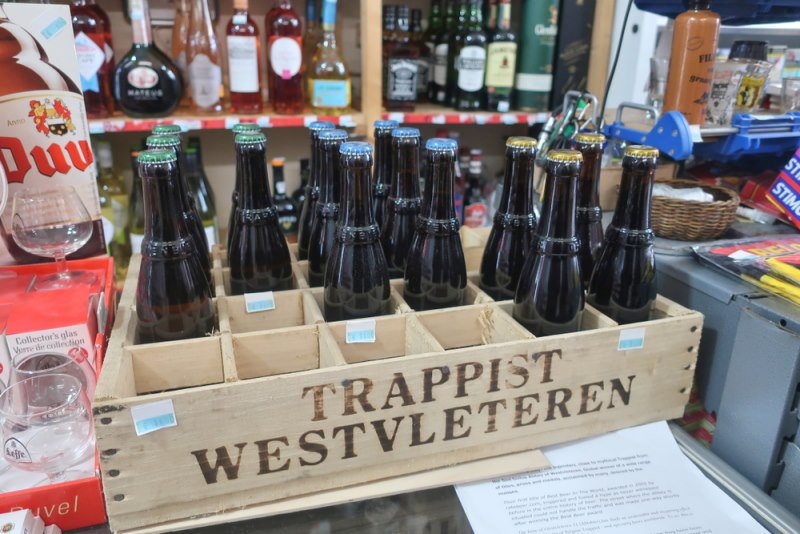
Westvleteren (Belgium, since 1831)
If you have even the slightest interest in the wonderful world of Trappist beers, you undoubtedly know that the Westvleteren 12 has been voted the best beer in the world several times. Who decides that? Well, the Americans at RateBeer.com decide that. If only they had never done that. Since the unexpected award in 2005, it has become even more difficult to obtain a case of this scarce dark beer with its large foam head. Because as the monks say, “We brew to live. We do not live to brew.” With the unfortunate consequence that the brothers consider an output of 60,000 crates per year to be more than sufficient. Of course, that is absolutely not enough to meet the pressing demand. The world-famous beer does not just fall into your glass. Hospitality? Supermarkets? Liquor stores? Forget it. Traders should keep their greedy fingers off the beer. Only a group of chosen private mortals can stock up on a crate (or two, if the monks are in a good mood). And to do that, they must first dig up the secret treasure map marked with unicorn blood, under the hollow oak tree near St. Sixtus Abbey under the first new moonlight of March. Well, that last bit isn't quite right. But the strict purchase instructions on the official webshop come close. Unfortunately, the practice is less attractive. The bottles of Westvleteren 12 regularly turn up at rogue sellers and greedy catering establishments who charge staggering extortionate prices for the coveted beer. At the abbey gate, a democratically priced crate of 24 bottles will cost you less than €50. Also quite special: for decades the bottles of Westvleteren (including the 'Blond' and '8' variants) went through life without a label. All information was on the bottle cap. The first bottles with a label did not appear until the summer of 2022. Of course, you have to have somewhere to store that laundry list of ingredient and nutritional information that today's beer-drinking hipster craves.
La Trappe (Netherlands, since 1884)
Until the arrival of Zundert in 2013, the monks of the Koningshoeve brewery defended the Dutch tricolor in the Trappist landscape dominated by Belgian abbeys. Moreover, they did that for quite a long time. Because the glorious history of La Trappe Trappist beer goes back to 1884. That year, Brother Isidore taught his monks at Our Lady of Koningshoeven Abbey in the noble art of beer brewing. A craft that he in turn learned from his German father. With a range of no fewer than ten different beers, nowhere in the world will you find such a diverse Trappist offering as in Berkel-Enschot. Just think of Isid'or (7.5%), the amber-colored anniversary beer on the occasion of the 125th anniversary in 2009. Naturally named after the good old brewmaster monk with whom it all started. In 2021, the Trappists showed themselves to be real trendsetters with the La Trappe Nillis (0.0%), yes: the world's first alcohol-free Trappist beer! Over the years, Koningshoeve Abbey collected crates full of precious metal at domestic and foreign beer competitions as if they were Panini football cards. For many beer lovers, the undisputed champion is the La Trappe Quadrupel, introduced in 1991. An often imitated, but never equaled, heavy beer of 10% that suddenly became the poster child for a new beer style.
Log in to post a comment.
Westmalle (Belgium, Westmalle, since 1836)
The abbey of Our Lady of the Sacred Heart of Westmalle has been located in the sandy Flemish Voorkempen since 1794. Here, Norman monks found safe shelter when it became too hot under their feet in l'abbaye Notre-Dame de la Grande Trappe during the French Revolution. Devout as they were, they filled their days in the farm with praying, praying, praying and working, working, working. Because that's just how the monastics of the Cistercian Order of the Strict Observance have been for years. This is how the temporary refuge in Westmalle grew into the largest Trappist brewery in Belgium. Because what more does a Cistercian monk need to be happy? Maybe some quality tap fluid? Because after all that 'Ora et Labora', a Cistercian sometimes longs for a beer. From 1836 onwards, the brothers enjoyed a home-brewed golden beer after a hard day's work. It would then take another 185 years before the average mortal could throw this light table beer in his shopping cart. In 2021, the brothers launched the Westmalle Extra. Of course, by then they had already built up an indestructible reputation. Yes, the Westmalle Dubbel (7%) is quite tasty. Especially if you get the chance to taste this reddish-brown dark draft beer. But the undisputed star is of course the Westmalle Tripel. So to speak, the 'Mother of all Triples'. In 1934 the brothers held the mythical primordial triple above the baptismal font. They of course received a little help from Hendrik Verlinden, a fermentation chemist whose genius know-how was also the basis of the Ninoofse Witkap Tripel from Brouwerij Slaghmuylder. Initially, the heavily top-fermented beer was called 'Superbier'. A name that certainly has something to say about it. In 1956 the golden yellow beer was given its final name and recipe. This is how the Westmalle Tripel (9.5%) grew into the namesake of a sturdy top-fermented beer style: the tripel. Many brewers feel called to surpass this mother tripel with their own strong 'Pale Ale' variant. A bit like square football players daydreaming about dribbling like Messi. Admirable, but not very realistic.
Log in to post a comment.
Chimay (Belgium, since 1862)
Trappist beer-brewing monks also keep up with the times. In 1862 they went door to door with their very first bottles of Chimay Red (7%). Today they offer personalized beer labels from their Notre-Dame de Scourmont abbey on their flashy website. The star among the bottles with the characteristic colored labels and ditto crown caps is undoubtedly Chimay Blue (9%), the dark brown beer that hugs the taste buds like a warm fireplace on a very cold winter day. Once started as a temporary Christmas beer for the 1954 holidays, the 'Capsule Bleue' is today a world-class Trappist beer. Even on the other side of the globe, if you are lucky, you will come across this 'Strong Dark Ale'. One of the conditions for carrying the prestigious 'ATP' label involves brewing 'within the monastery walls or in the immediate vicinity of the abbey'. In Chimay's case, that's a good thing. Because which magical crystal clear droplets sparkle in the brewing kettles? The pure water of Scourmont! When a group of monks settled on the pristine plateau in the summer of 1850 and dug the first well with their own hands, they immediately knew that anything but ditch water flowed beneath the soil. And so many decades later, that same water still defines the taste of the five glorious Chimay Trappists.
Log in to post a comment.
Rochefort (Belgium, since 1899)
The first monastery of Rochefort dates back to 1230. But hey, how does that work? There is something going on in France at the end of the 18th century and before you know it, revolutionaries are poking at the gate of your beautiful gate with their bayonets. In 1805, the Abbey of Notre-Dame de Saint-Remy was finally destroyed. The debris was given a second life as construction material for all kinds of nice new buildings in the town of Namur. In the autumn of 1887, monks from Achel settled on what remained of the medieval monastery that had been mismanaged by the French. They set everything up and while they were at it, built a cool microbrewery. The first brew sloshed out of the brewing kettle in 1899 and was called Rochefort 6 (7.5%). After the Second World War, the beer with the red crown cap was joined by the Rochefort 10 (11.3%). Under the blue crown cap of this 'Merveille', cocoa and plum notes plot a Blitzkrieg on your taste buds. And so, by 1952, the microbrewery grew into a high-quality brewery that won the hearts of many beer lovers. This was mainly due to the Rochefort 8 (9.2%), which emerged as the flagship of the Walloon brewery after 1955. Yet dark clouds regularly loom over the rustic Rochefort chalice glass. At the end of 2010, a serious fire struck the oldest wooden part of the abbey. Both the monks and the brewery miraculously escaped the seat of the fire. But danger can also lurk underground. For years the brothers fought a fierce battle against the Lhoist mining company. The big bad chalk giant targeted their beloved Tridaine spring. When the monks waved a crumpled piece of paper from 1833 in court at the end of 2021 (being a deed that stipulated their exclusive exploitation rights and stated that everyone must therefore keep their paws away from the source), the judge finally ruled in their favor. And fortunately. After all, they needed the delicious pure spring water to flavor their latest Rochefort Tripel Extra (8.1%)!
Log in to post a comment.
Orval (Belgium, since 1932)
Mathilde of Tuscany was known as one of the most powerful ladies to ever rule medieval Northern Italy. But powerful countesses also want to stretch their legs sometimes. So it was that one day in 1076, after a walk in picturesque Florenville, she rested at the source of Orval. But, oh woe, disaster! Suddenly her ring was missing. Now such a wealthy margravine can of course easily afford a new piece of bling bling. This was all the wedding ring of her deceased husband, Godfrey with the Bult. A duke from Lower Lorraine who not only had to go through life with a highly discourteous nickname, but also met a gruesome end. Anyway. We deviate. Back to the essence. Mathilde wailed and prayed to god. And look! Suddenly a trout flapped above the water with the precious ring in its slippery mouth. “Vraiment, c'est ici un val d'or!” crowed Mathilde. Which was French for 'This really is a golden valley!'. Out of gratitude, the pious woman founded a monastery. A beautiful story, that legend of Orval. The monks of Notre-Dame d'Orval Abbey did not have to look long for a mascot when they brewed their first Trappist beer in 1932. Of course with water from the local Mathilde spring. The bottles with the trout with a gold ring in its mouth are highly sought after. Not so much about the label, but about the content. About 22 million copies of this special beer leave the abbey every year. 85% of this is intended for the Belgian market. Still, that doesn't meet the demand. As soon as the famous orange crates land somewhere, Orval enthusiasts appear like ninjas from the night to flee with laughter with the entire stock. The unique taste is probably not surprising. The beer is more related to the English 'Pale Ale' style than the typical Belgian specialty beers. Its exceptional ripening ability is part of the experience. Collectors pay big money for 'old Orval'. Keeping a case of Orval in the basement for ten years yields a higher return than any cryptocurrency or Silicon Valley share.
Log in to post a comment.
Stift Engelszell (Austria, since 2012)
The early 2010s were golden years for craft beer connoisseurs. Suddenly new Trappist breweries popped up like mushrooms. But they all felt the hot breath of the 'International Trappist Association' breathing into their monk's robes. This association judges whether the brew really deserves the 'ATP' quality mark. Because l'Abbaye du Monts de Chats' had its beer brewed on location in Chimay, the Northern French abbey was allowed to whistle for the label with 'Authentic Trappist Product' in 2011. The monks of the Austrian abbey Stift Engelszell in Engelharstzell an der Donau had more luck. Since 2012, they have boasted the honorary title of Österreich's only Trappist Brauerei. Initially, the brothers were mainly looking for some money to caulk up their monastery and abbey church. Some friendly guys from Brauerei Hofstetten, Austria's oldest brewery (°1229), gave the monks a helping hand. In terms of branding, the Austrian Cistercians had no lessons to learn. They named their first creations after their former abbots. In the spring of 2012 they presented the Gregorius with a dark quadruple (9.7%). That same year, this burly guy was followed by the fruity Benno (6.9%). The Austrian monks have now really got the hang of it. On the occasion of their ten-year brewing anniversary, they launched their 'Festbier' in 2022, not coincidentally in the year of the long-awaited 'Oktoberfest' resurrection. Already the sixth beer in the young Stift Engelszell range.
Log in to post a comment.
Zundert (Netherlands, since 2013)
La Trappe long cherished the title of the Netherlands' only Trappist beer. Then a stubborn meadow bird raised its crested head above the North Brabant Lapwing Moors. Since the first Zundert 8 bottles entered the supermarket at the end of 2013, things have gone quickly for the monk brewers of Maria Toevlucht Abbey. The first batch sold out within the week of the launch. The chestnut-colored unruly beer with 8% alcohol got a dark quadrupel brother in 2018 with Zundert 10. And that reddish-brown heavy boy (10%) immediately made a great start. In April 2019, he left the Dutch Beer Challenge with a shiny gold medal around his bottle neck in the Best Quadrupel category. Trappist brewery De Kievit strictly adheres to the rules of the 'International Trappist Association'. Fortunately, those holy commandments say nothing about bottling. The Zundert bottles with a purple label have been bottled since June 2022 at Trappist brewery De Koningshoeve - also known as the La Trappe home. The local wildlife likes that. The Maria Toevlucht Abbey is located in a special nature reserve, which can do without noisy bottles like a toothache. However, you can still visit the unique glass brewhouse and the abbey. If you register in advance for the bimonthly excursion of VVV Zundert, that is.
Log in to post a comment.
Tre Fontane (Italy, since 2015)
Somewhere in the year 67 AD, Emperor Nero's men finally captured that devious Paul the Apostle. And heck, his head was taken off. Because you shouldn't teach those Romans how to persecute Christians. But then something strange happened. Where poor Paul's head hit the ground, three fountains suddenly sprang up. Or as the Italians say: 'tre fontane'. When several cenobites founded a new house centuries later on the site of the miraculous event, they did not have to search long for a name. The 'Abbazia delle Tre Fontane': the abbey of the three fountains. In 1868, the dilapidated ruin was completely renovated. A new generation of monks patched things up and immediately planted a number of eucalyptus trees. They did this because there were a lot of nasty malaria mosquitoes buzzing on the swampy meadow south of the Roman city center. And these animals just hate eucalyptus. Today the fragrant deciduous trees are still there. And since 2015, their leaves have given a very special flavor to the world's only Italian Trappist beer. The blonde Tre Fontane (8.5%) is spiced with eucalyptus. It gives this 'Birra Trappista Italiana' a remarkably sweet-fresh taste. You have to have some luck to enjoy it. The brothers of Tre Fontane Abbey brew only 1,000 hectoliters of this tripel every year. For comparison: in Chimay, Belgium, about 170,000 hectoliters flow from the brewing kettles every year!
Log in to post a comment.
Tynt Meadow (England, since 2018)
In 2013, the monks of Mount Saint Bernard Abbey were in sackcloth and ashes. British milk prices hit rock bottom. Ultimately, their dairy farm had to close its books. What happened now? Because their little monastery, a stone's throw from Coalville in the English county of Leicester, could use some patching up. It dated back to 1835. And as England's only Cistercian abbey, they of course had a reputation to uphold. Then one of the brothers conjured a sublime idea from his ragged habit sleeve. “What if we start brewing Trappist beer?” Their fellow colleagues in the Low Countries were doing well with it, right? In fact. Their beers generated so much turnover that they had to pump the fat ones into all kinds of charities. So it happened. The 'monks' splashed across the Channel and drank the world-famous Belgian Trappist beers. They returned to their abbey with age-old brewing secrets and the vitality of a Brabant draft horse - because all that Belgian elixir of life naturally left its mark. Then the real work began. The monks experimented for months. After all, they had learned that brewing Trappist beer was a serious matter. “Beer is a good, honest, nurturing drink – our Belgian friends said more than once it should be liquid bread and not colored water, and that's what we're aiming to live up to,” says Abbot Erik Varden. In September 2018 the time had come. The ' Tynt Meadow ' saw the light of day. A truly unique achievement: it was the first beer brewed by English monks since the Reformation. And the dark double of 7.4% also tasted excellent! It promptly received the 'ATP' quality mark. The name 'Tynt Meadow' refers to the meadow on which the clergy planted their 'abbey' in the early 19th century. The brand name 'Saint Bernard' was already taken. And by the Belgian brewery Sint-Bernardus in Watou in West Flanders. It is rumored that St. Bernardus Abt 12 tastes exactly the same as the famous Westvleteren 12.
Log in to post a comment.
Missing an item in this list?
Log in or create a free account to add an item yourself.
Log in / create account
Log in to post a comment.