Europe is one of the wealthiest continents on the planet, home to financial and industrial leaders such as Switzerland, Norway, Germany, and the Netherlands. Yet across Eastern Europe, the Balkans, and the Caucasus, living standards and average incomes remain a fraction of Western European levels.
Looking at Gross Domestic Product (GDP) per capita adjusted for Purchasing Power Parity (PPP), a clear divide emerges between members of the European Union and nations that spent decades inside the Soviet bloc or Yugoslavia without joining the EU single market. Below are the ten poorest countries in the wider European region.
10. Montenegro
With a GDP per capita (PPP) of around $29,700, the small Adriatic nation of Montenegro is one of the more prosperous economies in the Western Balkans, though it still trails the EU average by a wide margin. Since declaring independence from Serbia in 2006, Montenegro has unilaterally used the euro as its currency.
Its scenic coastline around the Bay of Kotor and Budva attracts millions of tourists and foreign real estate buyers each year. Because the domestic manufacturing base is tiny, however, the economy remains vulnerable to seasonal swings in tourism and high youth unemployment.
9. Serbia
Generating roughly $28,800 in GDP per capita (PPP), Serbia is the largest economy in the Western Balkans. After the breakup of Yugoslavia, international sanctions, and conflict in the 1990s, the country has spent the past two decades rebuilding its industrial and technology sectors.
Belgrade and Novi Sad have grown into vibrant hubs for software development and foreign manufacturing, attracting investment from both the European Union and China. Outside the major cities, however, rural regions face aging populations, lower wages, and ongoing emigration of skilled workers to Western Europe.
8. Belarus
Belarus posts a GDP per capita (PPP) of approximately $25,600. Unlike most post-Soviet states that privatized state industries rapidly in the 1990s, Belarus preserved much of its Soviet-era state-controlled manufacturing and agricultural system under longtime leader Alexander Lukashenko.
For years, Minsk developed a thriving IT outsourcing sector alongside heavy machinery and potash fertilizer exports. Following contested elections in 2020 and the country’s involvement in the war in Ukraine, Western sanctions and the departure of thousands of tech workers have left the Belarusian economy heavily dependent on subsidized Russian energy and trade.
7. Azerbaijan
Situated at the crossroads of Eastern Europe and Western Asia along the Caspian Sea, Azerbaijan has a GDP per capita (PPP) of around $24,600. The country’s modern economy revolves around vast offshore oil and natural gas reserves, which have transformed the skyline of its capital, Baku.
Energy exports to Europe and Turkey generate billions in state revenue, especially since European nations sought alternatives to Russian gas. Outside Baku and the oil sector, however, average wages in rural districts remain low and economic diversification is still in its early stages.
6. Georgia
Georgia records a GDP per capita (PPP) of roughly $25,200 after several years of rapid economic growth. Located in the South Caucasus on the Black Sea, the country overhauled its business regulations in the 2000s, slashing red tape and taxes to become one of the easiest places in the region to start a company.
Tourism in Tbilisi, the Caucasus Mountains, and the wine regions of Kakheti has boomed, boosted further by transit trade between Europe and Central Asia. Even so, high unemployment in rural areas and ongoing geopolitical tensions with Russia over the occupied territories of Abkhazia and South Ossetia continue to hold back broader prosperity.
5. Armenia
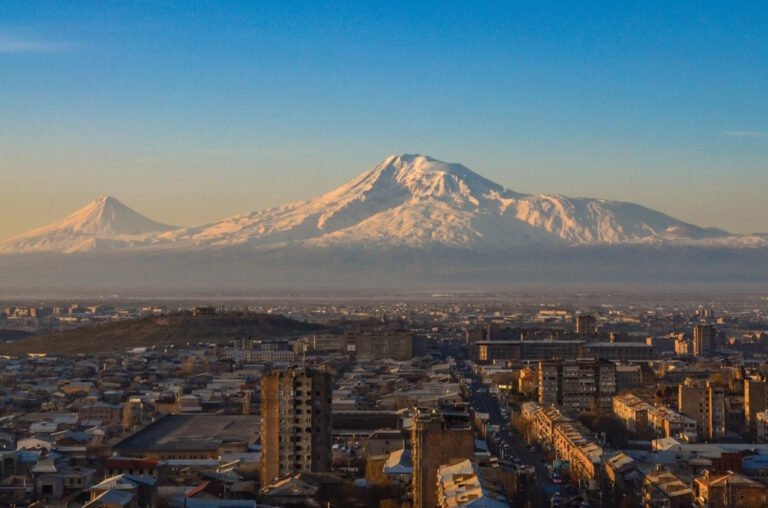
Landlocked in the South Caucasus, Armenia has a GDP per capita (PPP) of approximately $23,400. With closed borders with neighbors Turkey and Azerbaijan due to historical and territorial disputes, the country relies heavily on trade routes through Georgia and Iran.
Despite those geographic constraints, Yerevan has built a fast-growing technology, banking, and services sector, supported by financial remittances and investments from the large global Armenian diaspora. Bridging the gap between the booming capital and poorer agricultural provinces remains a central economic challenge.
4. North Macedonia
Generating around $22,200 in GDP per capita (PPP), landlocked North Macedonia emerged peacefully from the breakup of Yugoslavia in 1991. Longstanding diplomatic disputes over its name and history delayed its integration into Western institutions, though it joined NATO in 2020.
To attract foreign manufacturers, the government established special economic zones offering tax breaks to European automotive parts suppliers. While those factories have created thousands of jobs, low domestic wages and steady emigration of young professionals continue to weigh on long-term growth.
3. Bosnia and Herzegovina
More than three decades after the devastating Bosnian War of 1992 to 1995, Bosnia and Herzegovina posts a GDP per capita (PPP) of roughly $20,600. The Dayton Peace Agreement ended the fighting but created an unusually complex political structure divided into two autonomous entities and a rotating three-member presidency.
That fragmented governance makes passing nationwide economic reforms, building highways, and attracting foreign investors slow and difficult. Although tourism in Sarajevo and Mostar is growing steadily, high youth unemployment drives many graduates to seek work in Germany, Austria, and Slovenia.
2. Albania
For decades under the Cold War dictatorship of Enver Hoxha, Albania was the most isolated country in Europe, cut off from both the Western world and the Soviet bloc. Since transitioning to a market economy in the early 1990s, it has climbed to a GDP per capita (PPP) of around $20,300.
In recent years, Albania has experienced a massive tourism boom along its Mediterranean beaches in Ksamil, Saranda, and Vlora, bringing billions of euros into hotels and construction. Still, a large informal economy and decades of mass emigration to Italy, Greece, and the UK keep average incomes near the bottom of the European rankings.
1. Moldova (and Ukraine)
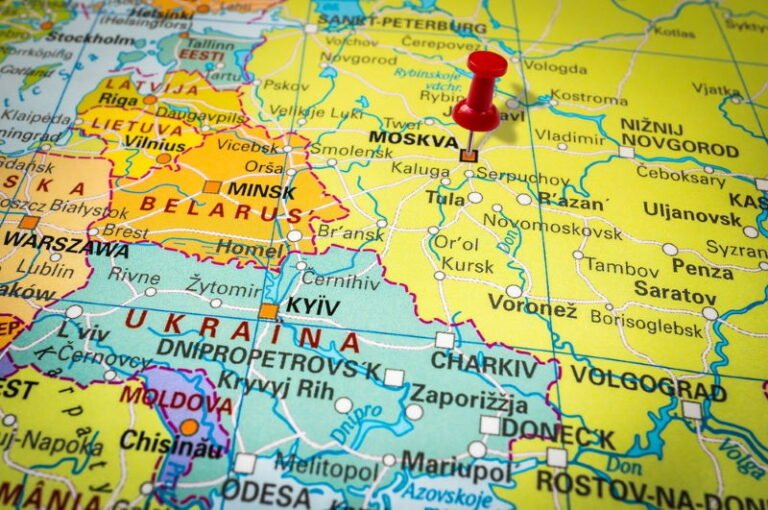
Tucked between Romania and Ukraine, Moldova is historically one of the poorest countries in Europe, with a GDP per capita (PPP) of roughly $17,900, while neighboring Ukraine sits slightly lower at around $15,400 following the devastation of the Russian invasion. Outside active war zones, Moldova struggles with many of the same structural headwinds as its neighbors.
With few mineral resources, Moldova depends heavily on agriculture, wine exports, and remittances sent home by nearly one million citizens working abroad. The breakaway pro-Russian region of Transnistria along its eastern border and the spillover effects of the war next door have placed additional strain on energy prices and trade, though European Union candidate status has brought new infrastructure funding.