Philosophy was dominated by men for centuries, but that does not mean women played no role in shaping our ideas about ethics, politics, science and consciousness. Although female philosophers have often been overlooked in traditional histories, their ideas have deeply influenced the way we think about the world. From antiquity to modern times, these are ten of the most influential female philosophers in history.
1. Hypatia of Alexandria (around 360 to 415)

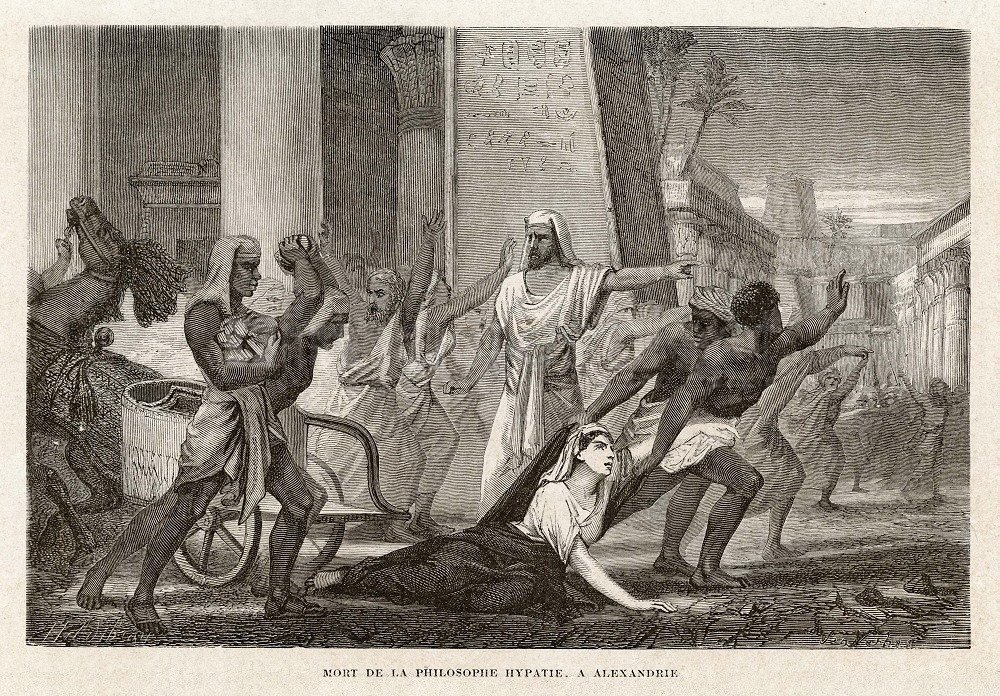
Hypatia is the best-documented female philosopher of antiquity. She was a Neoplatonist, a follower of the ideas of Plato and his later interpreter Plotinus, and taught mathematics, astronomy and philosophy in Alexandria, attracting students from far and wide. In an age when women were rarely admitted to intellectual circles, her position was exceptional.
Her influence with the Roman governor of Egypt, Orestes, drew her into a bitter political conflict between him and the Christian bishop Cyril of Alexandria. In 415, she was dragged from her carriage by a Christian mob, taken to a church and brutally murdered. Her death is often seen as a symbol of the end of the classical intellectual world, and today she is an icon of intellectual freedom and of women in science.
2. Hildegard of Bingen (1098 to 1179)
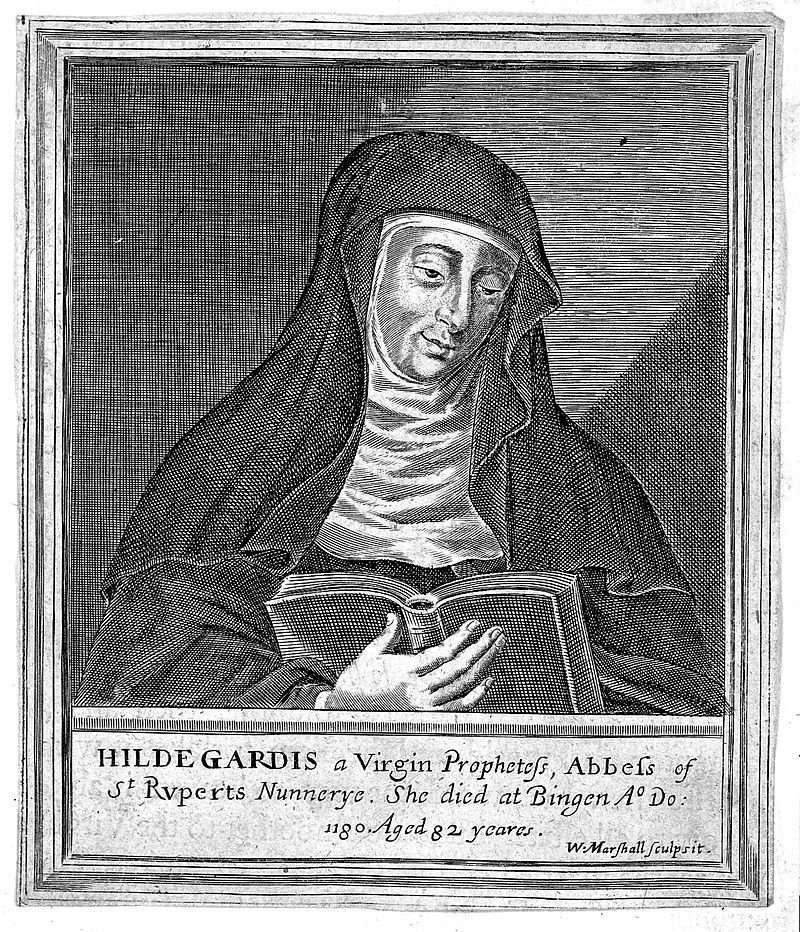
Hildegard of Bingen was a German abbess, theologian, composer and one of the most remarkable thinkers of the Middle Ages. From an early age, she experienced visions, which she later recorded in works such as Scivias, discussing the relationship between the cosmos, nature and humanity.
She also wrote about medicine and the healing properties of plants, composed music that is still performed and recorded today, and corresponded with popes, kings and the emperor Frederick Barbarossa, whom she did not hesitate to criticize. In 2012, she was declared a Doctor of the Church, one of only a few women to receive that title.
3. Christine de Pizan (1364 to around 1430)
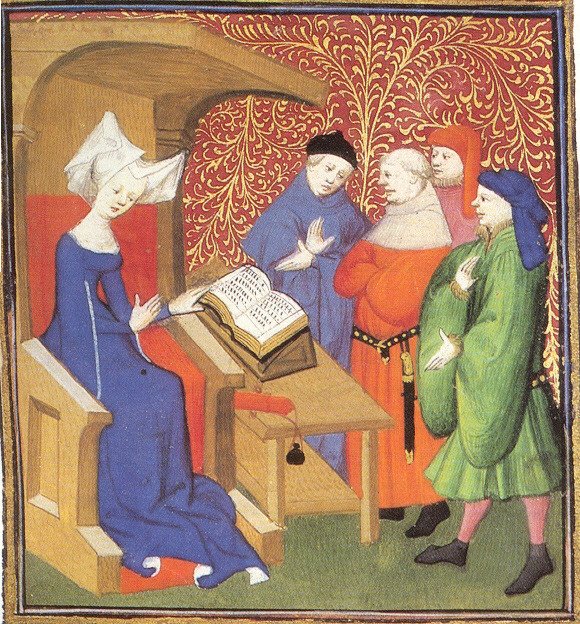
Born in Venice and raised at the French court, Christine de Pizan was widowed at around 25 and had to support her family by writing. She is often considered the first woman in Europe to make a living from her pen.
In 1405, she wrote The Book of the City of Ladies, one of the first works in defense of women, in which she builds an imaginary city of famous women to refute the misogynist ideas of her time. She also led a famous public literary debate against the popular Romance of the Rose, which portrayed women as manipulative and inferior. She is often seen as a forerunner of feminism.
4. Margaret Cavendish (1623 to 1673)

Margaret Cavendish, Duchess of Newcastle, was a philosopher, writer and natural philosopher, and one of the first women to publish philosophical works under her own name. In 1667, she became the first woman to attend a meeting of the Royal Society in London, which caused quite a stir.
Her book The Blazing World (1666) is considered one of the earliest works of science fiction. She rejected the strict separation of mind and body proposed by Descartes, and argued that all matter in nature has some form of perception and motion, ideas that are sometimes linked to modern debates about consciousness. In her own time, she was often mocked as eccentric, but her work is now taken much more seriously.
5. Mary Wollstonecraft (1759 to 1797)

Mary Wollstonecraft is often seen as one of the founders of modern feminism. In her groundbreaking book A Vindication of the Rights of Woman (1792), she argued that women were not naturally inferior to men, but appeared so only because they were denied education.
She called for women to have the same intellectual and social opportunities as men, and her ideas laid the foundation for the women’s rights movements of the 19th and 20th centuries. She died just eleven days after giving birth to her daughter, who, as Mary Shelley, would become famous as the author of Frankenstein.
6. Edith Stein (1891 to 1942)
Edith Stein was a student and assistant of Edmund Husserl, the founder of phenomenology. Her doctoral thesis from 1916, On the Problem of Empathy, was one of the first in-depth philosophical studies of how we understand the feelings and experiences of others. As a woman, she was repeatedly denied a professorship.
Born into a Jewish family, she converted to Catholicism in 1922 and later became a Carmelite nun, trying to build bridges between phenomenology and Christian philosophy. In 1942, she was arrested by the Nazis in the Netherlands and murdered in Auschwitz. In 1998, she was declared a saint.
7. Simone de Beauvoir (1908 to 1986)
If one female philosopher has had a lasting influence on feminist thought, it is Simone de Beauvoir. Her masterpiece The Second Sex (1949) is still one of the most important texts on gender and power. Its most famous line, “One is not born, but rather becomes, a woman”, expresses her idea that being a woman is largely shaped by society rather than by biology alone.
De Beauvoir was also an important existentialist philosopher and novelist, and the lifelong partner of Jean-Paul Sartre. Her work inspired the second wave of feminism from the 1960s onwards.
8. Hannah Arendt (1906 to 1975)
The German-born political philosopher Hannah Arendt fled Nazi Germany and settled in the United States. In The Origins of Totalitarianism (1951), she analyzed how Nazism and Stalinism were able to arise. In 1961, she reported on the trial of the Nazi official Adolf Eichmann in Jerusalem, and coined the controversial phrase “the banality of evil”: the idea that great evil can be committed by ordinary, thoughtless people following orders, rather than by monsters.
Her work on power, freedom, truth and political action remains highly influential, and her books saw a surge in sales in recent years.
9. Simone Weil (1909 to 1943)
The French philosopher Simone Weil was one of the most unusual thinkers of the 20th century. She was a brilliant student, but chose to work in factories and on farms to experience the lives of workers for herself. Her writings on suffering, attention, justice and spirituality were mostly published after her death.
During the Second World War, she joined the French Resistance in London. She died in 1943 at the age of 34, partly because she refused to eat more than the rations available to people in occupied France. Thinkers such as Albert Camus admired her deeply.
10. Ayn Rand (1905 to 1982)
Ayn Rand is one of the most influential and controversial female thinkers of the 20th century. Born in Saint Petersburg, she emigrated to the United States in 1926 and became famous with her novels The Fountainhead (1943) and Atlas Shrugged (1957). Her philosophy, Objectivism, holds that rational self-interest is the highest virtue and that laissez-faire capitalism is the only just system.
Her ideas found a large following in libertarian and conservative circles in the United States, and figures such as former Federal Reserve chairman Alan Greenspan have cited her as an influence. Many academic philosophers, however, consider her work simplistic, and she is rarely studied at universities. Whether you admire her or reject her, her influence on politics and culture is hard to deny.