There are around 400 species of parrots, ranging from tiny pygmy parrots of less than 10 centimeters to true giants about a meter long. These are the five largest parrot species in the world, measured by total length from the top of the head to the tip of the tail. Because macaws have very long tails, the top five are all macaws.
1. Hyacinth macaw (up to about 100 cm)
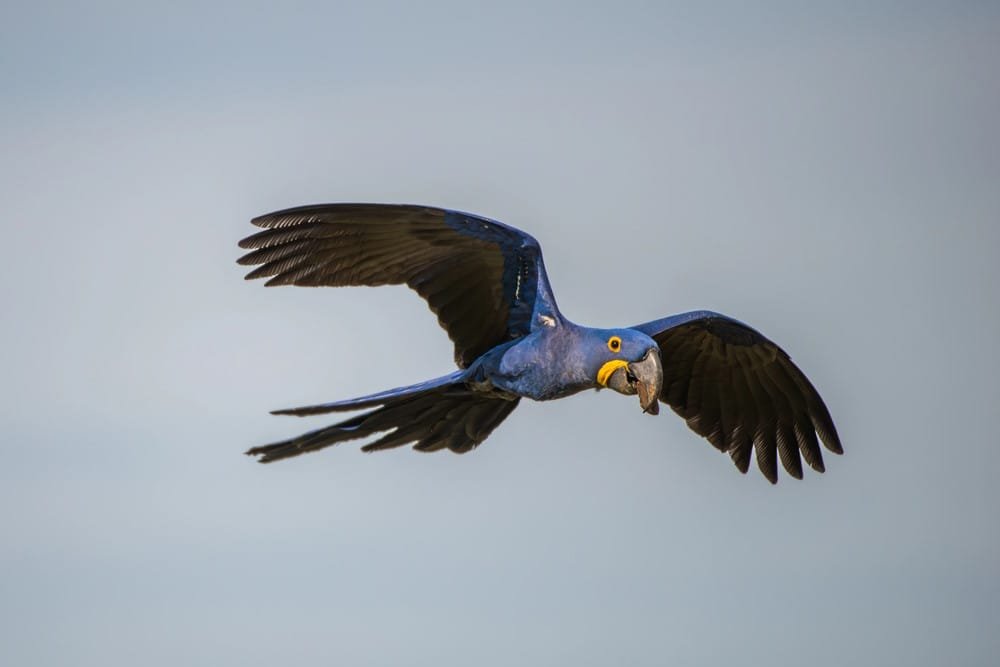
The hyacinth macaw (Anodorhynchus hyacinthinus) is the longest parrot in the world. It grows up to about 1 meter long and weighs around 1.2 to 1.7 kilos. From head to tail, it is cobalt blue, with striking yellow rings around its eyes and at the base of its lower beak. That beak is enormously powerful: it easily cracks hard palm nuts that are impossible for most other animals.
The hyacinth macaw lives in the Pantanal wetlands and in parts of the Brazilian interior, Bolivia and Paraguay. It came under heavy pressure from habitat loss and illegal capture for the pet trade. Thanks to conservation work, numbers in the Pantanal have recovered, but only a few thousand remain in the wild.
2. Green-winged macaw (up to about 95 cm)
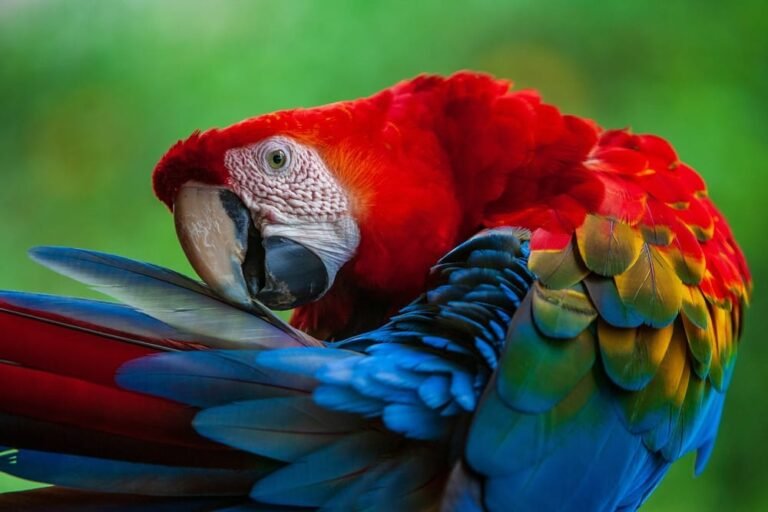
The green-winged macaw (Ara chloropterus), also called the red-and-green macaw, is the largest of the red macaws and the second-longest parrot in the world, at up to around 95 centimeters. Its plumage is mostly deep red, with green and blue on its wings. Its face has thin lines of tiny red feathers on bare white skin. It lives in the forests of northern and central South America and is often seen at clay licks, where large groups of macaws eat clay, probably to get extra salt.
3. Buffon’s macaw (up to about 90 cm)
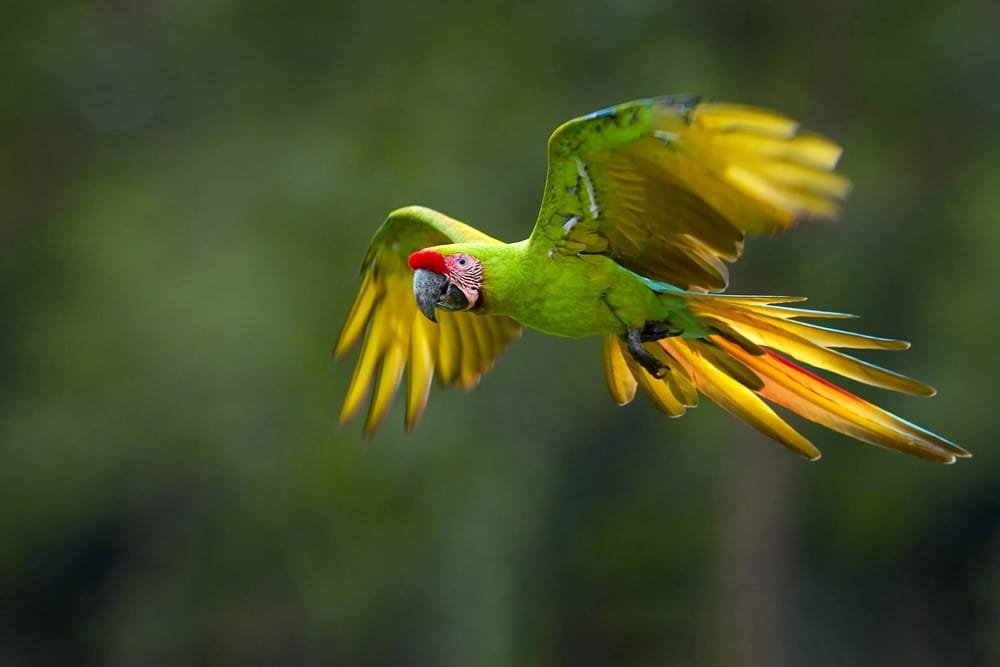
Buffon’s macaw, or great green macaw (Ara ambiguus), grows to around 85 to 90 centimeters long and weighs about 1.3 kilos. Its plumage is mostly green, with a red forehead, blue flight feathers and a reddish-brown tail. It lives in the forests of Central America and in parts of Colombia and Ecuador.
Buffon’s macaw is critically endangered, with only a small population left in the wild, possibly no more than about a thousand birds. It nests in hollow trees and usually lays only two eggs, which makes recovery slow.
4. Scarlet macaw (up to about 90 cm)
The scarlet macaw (Ara macao) is probably the most famous red macaw. Its bright red body, yellow and blue wings and long red tail make it one of the most colorful birds in the world. Including its tail, it can grow to around 80 to 90 centimeters long. It lives in the rainforests of southern Mexico, Central America and the Amazon, and it is the national bird of Honduras. In the wild, scarlet macaws can live for 40 to 50 years, and in captivity even longer.
5. Blue-and-yellow macaw (up to about 86 cm)
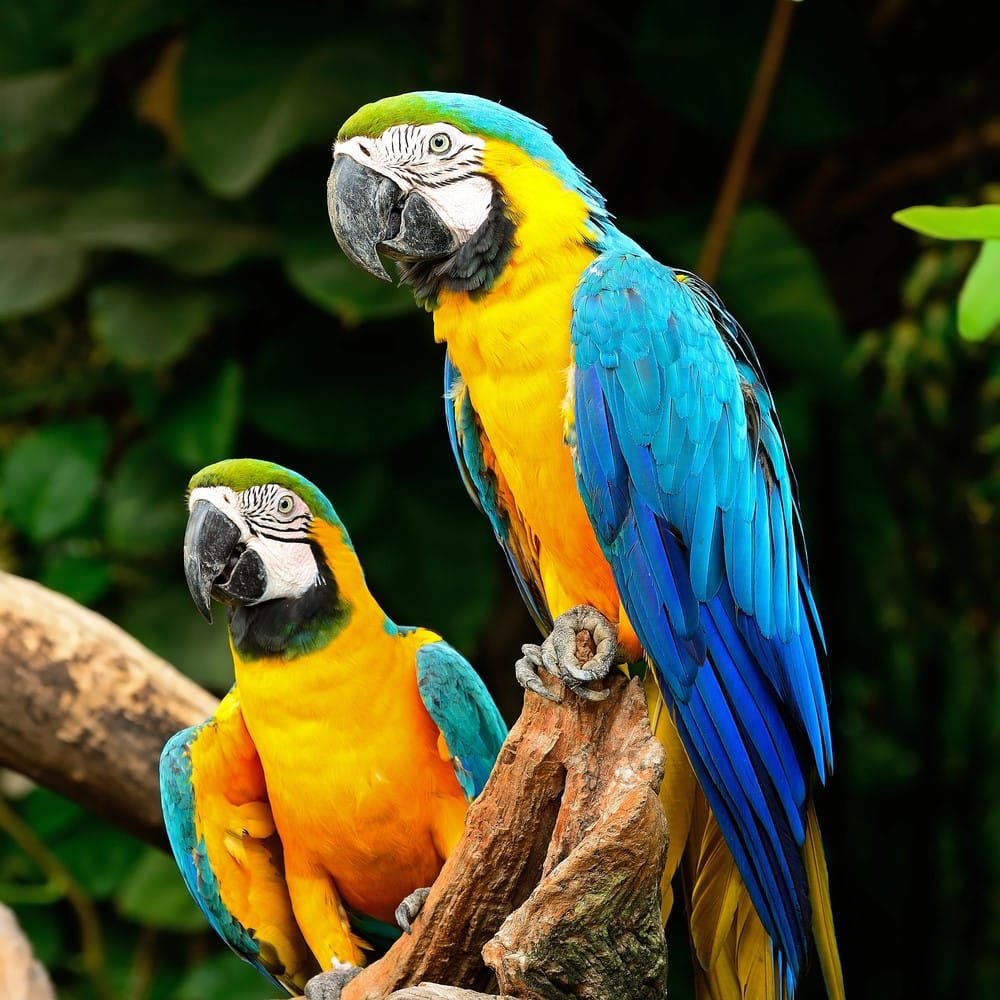
The blue-and-yellow macaw (Ara ararauna) can grow up to around 86 centimeters long. Its upperparts are bright blue, its underparts golden yellow, and its face has white skin with lines of small black feathers that form a pattern unique to each bird, a bit like a fingerprint. It lives in forests and swamps from Panama to Brazil and Bolivia.
It is one of the most popular large parrots kept as pets, known for its intelligence, its adaptability and its ability to mimic words.
Bonus: the palm cockatoo and the kakapo
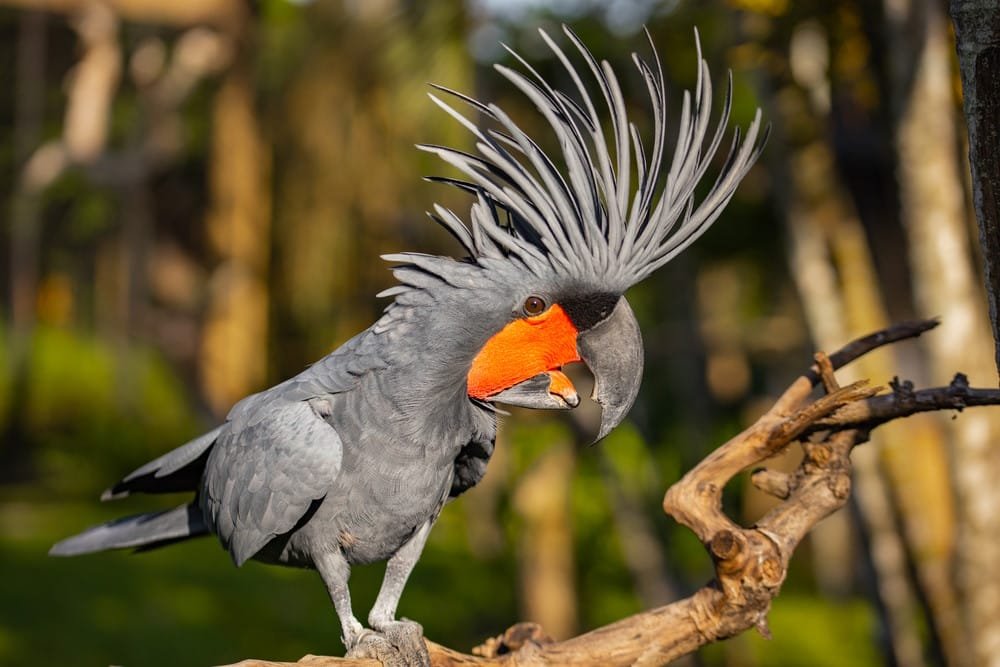
The palm cockatoo (Probosciger aterrimus) is, at around 55 to 60 centimeters, the largest cockatoo in the world. It has almost completely black plumage, a large crest and bright red cheek patches that change color when the bird is excited. It lives in the forests of New Guinea and the far north of Australia. It is one of the few birds known to use tools to make music: males break off sticks or seed pods and drum them against hollow trees as part of their courtship display, each with its own rhythm.
And if you measure by weight rather than length, the winner is a completely different bird: the flightless kakapo from New Zealand. Males can weigh up to around 4 kilos, making it the heaviest parrot in the world. It is critically endangered, and every surviving bird is known by name.