Humans like to think of themselves as the exception in the animal kingdom. Anyone who reads the scientific research of the past few decades will find that harder and harder to believe.
Friendships that last for years, tools passed on from parent to child, songs that spread from group to group like a music trend: researchers keep finding behavior in animals that we long thought was ours alone. These are ten animals with surprisingly human traits, and what the research actually says.
1. Chimpanzees form lifelong friendships
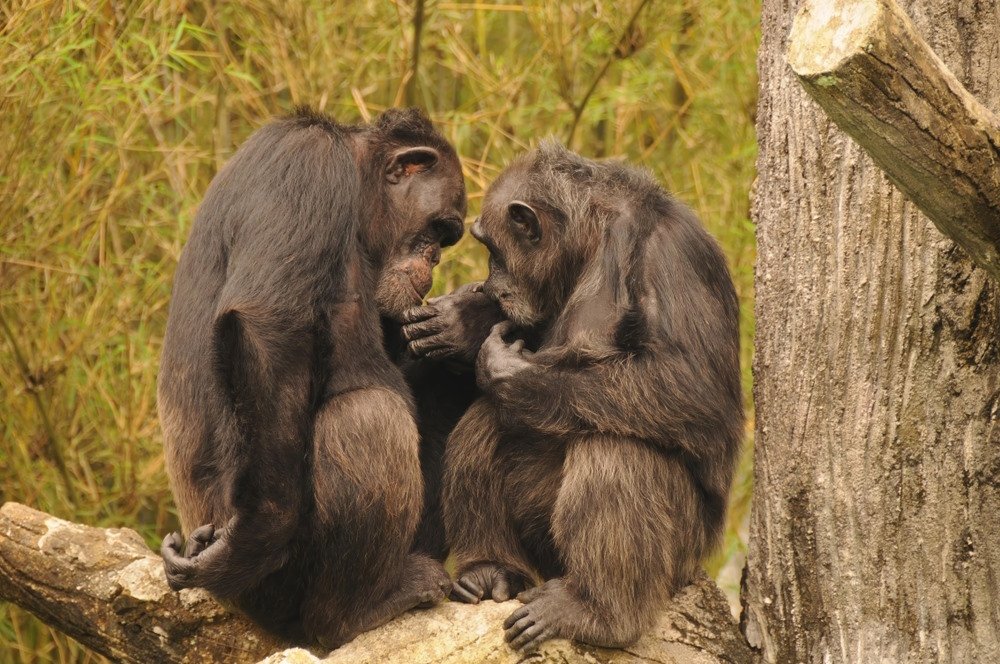
Chimpanzees share about 98 percent of our DNA, and their social lives are strikingly similar too. They form friendships that can last for years, build alliances to climb the social ladder and make up after a fight with a hug or a grooming session.
That social world has a dark side as well. Between 1974 and 1978, Jane Goodall’s team in Gombe, Tanzania, documented how one chimpanzee community split in two and one group systematically killed the males of the other. It is the best-known evidence that organized violence between groups is not uniquely human.
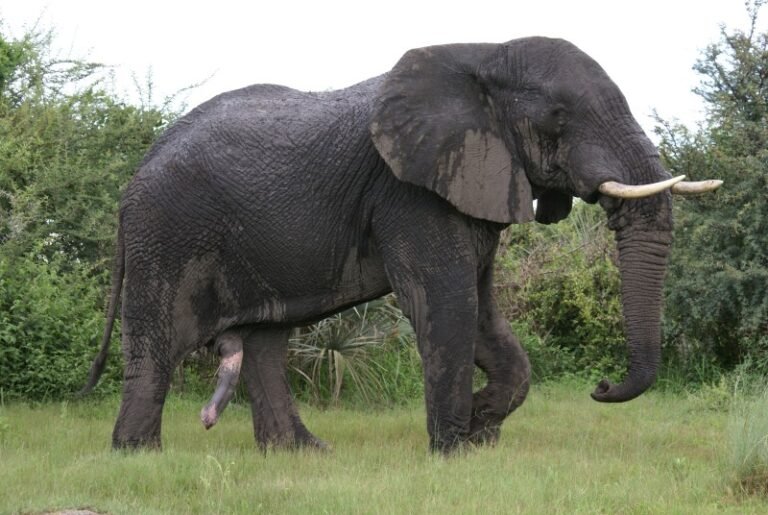
2. Elephants mourn their dead
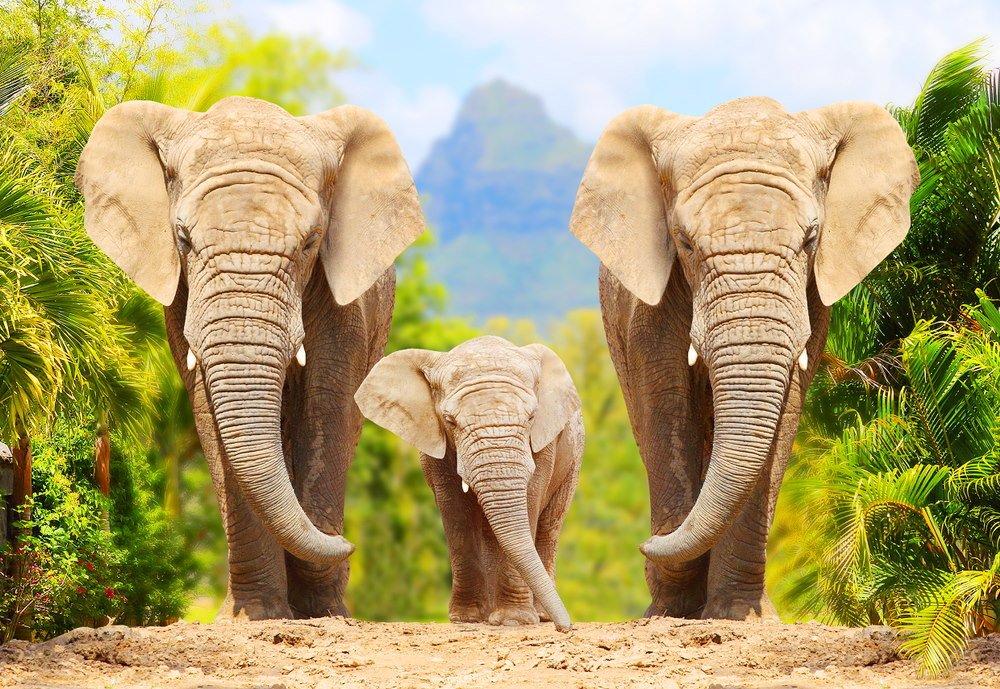
When an elephant dies, members of its herd gather around the body. They touch it with their trunks, sometimes stay nearby for days and return to the spot later. Researchers have also recorded elephants lingering over the bones of other elephants, something they do not do with the bones of other species. It looks a lot like grief.
What exactly goes on inside an elephant, nobody knows. Biologists are careful with the word sadness, because behavior is easier to measure than feelings. But it is clear that elephants treat the death of a herd member differently from any other event.
3. Dolphins call each other by name
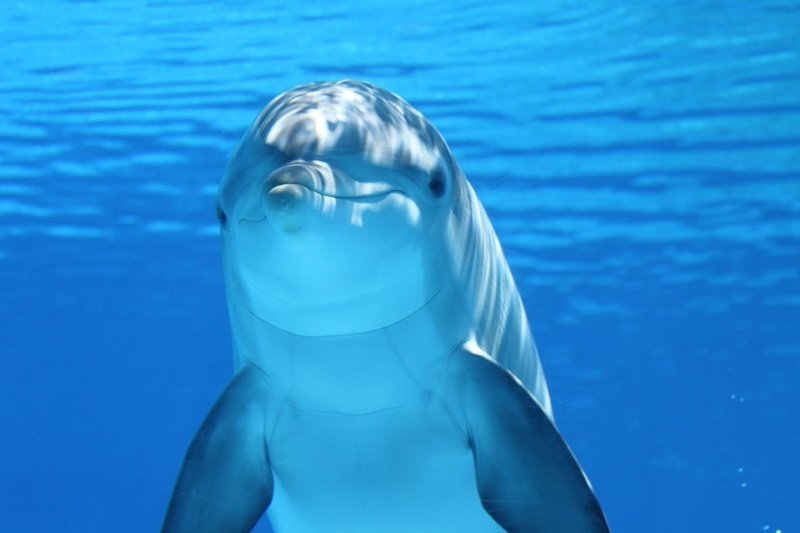
In its first months of life, every bottlenose dolphin develops its own unique whistle, which it keeps for life. This “signature whistle” works like a name: dolphins copy another dolphin’s whistle to address that individual specifically.
Biologist Vincent Janik of the University of St Andrews showed with recordings in the wild that dolphins respond when their own whistle is played back, but not to the whistles of others. Apart from humans, almost no other species is known to call individuals by a learned, unique sound.
4. Magpies may recognize themselves in a mirror
In 2008, magpies made headlines worldwide. German researchers put a colored sticker on the feathers of five magpies, placed them in front of a mirror and saw that some of the birds tried to scratch the sticker off. Self-recognition in an animal without a neocortex was hailed as a breakthrough.
In 2020, a Spanish team tried to repeat the experiment with a larger group of birds. It did not work: the magpies did not show convincing self-recognition. The debate is still open, which makes the magpie perhaps the most honest example on this list.
5. Bonobos make love, not war
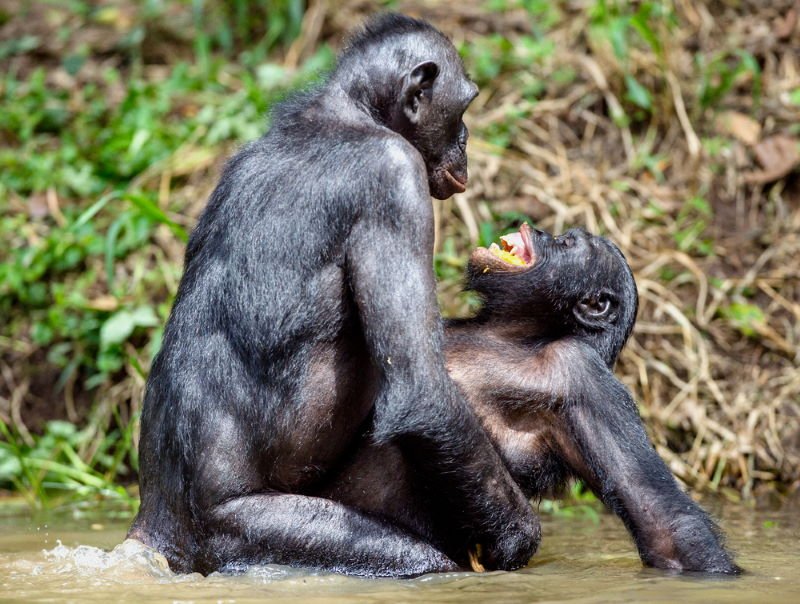
Bonobos are just as closely related to us as chimpanzees, but they handle tension very differently. Where chimpanzees look for confrontation, bonobos often turn to physical contact. Sharing food, welcoming a newcomer, calming a conflict: it often happens through touching and sexual behavior.
Primatologist Frans de Waal described it as a kind of social glue. In bonobo groups, females also hold strong positions, which keeps male aggression in check. Two species with almost identical DNA, and two completely different ways of living together.
6. Crows make and use tools
Tool use was long considered typically human. New Caledonian crows prove otherwise: they make hooked tools from twigs and leaves to fish insect larvae out of tree trunks. In a lab test, a crow nicknamed 007 solved an eight-step puzzle on its first try.
Crows also pass these skills on. Young birds learn the technique from older ones, and slightly different tool designs exist in different areas. “Culture” is a big word for a bird, but the pattern is exactly what you would expect from cultural learning.
7. Dogs understand our emotions

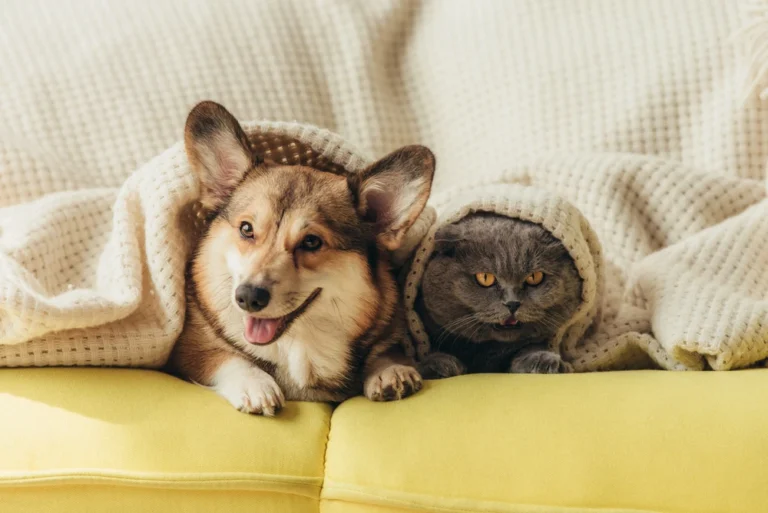
Every dog owner sometimes feels their dog understands them. In 2016, researchers at the University of Lincoln showed that this is true. Dogs matched angry or happy faces on a screen with the matching voices, for both humans and other dogs.
That takes more than a learned trick: the dog has to combine two kinds of information into one emotion. Dogs also follow our gaze and understand pointing, something even chimpanzees find hard. Living alongside humans for at least 15,000 years leaves its mark.
8. Octopuses solve puzzles
Octopuses unscrew jars, squeeze through gaps the size of their beak and escape with a skill that drives aquarium keepers mad. In 2016, Inky the octopus escaped from his tank at the National Aquarium of New Zealand and made it to the sea through a drainpipe.
Even more remarkable is the veined octopus, filmed in Indonesia carrying coconut shell halves around to use as a shelter later. Carrying tools for future use is rare in the animal world. That a mollusk does it, with a nervous system built completely differently from ours, makes it all the more striking.
9. Whales sing songs that spread like hits
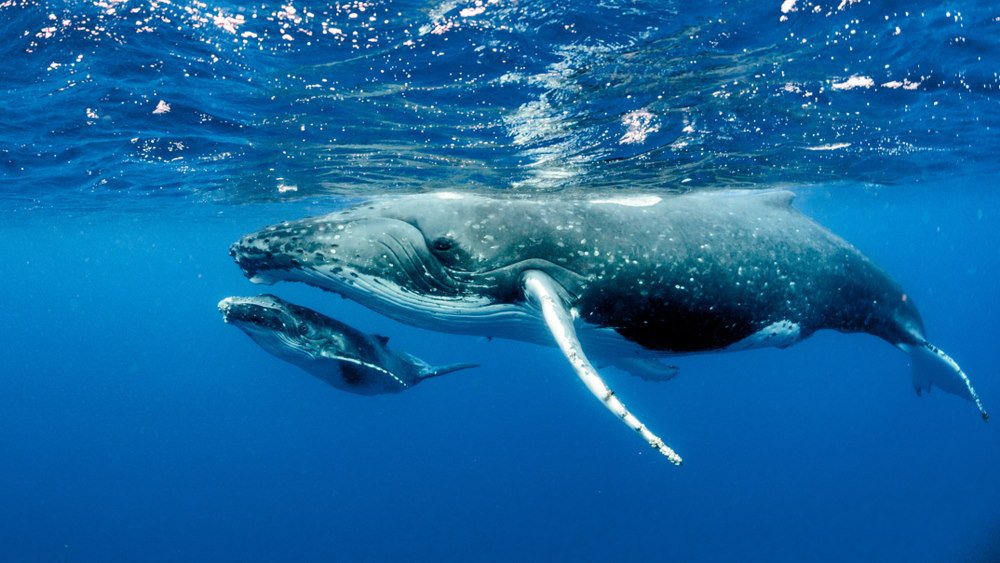
Male humpback whales sing long, complex songs that are the same within a population and change from season to season. Australian biologists recorded how a completely new song arrived on the east coast from the Indian Ocean side, and within two years the local whales had dropped their own song entirely for the new one.
Later studies showed songs moving across the South Pacific from population to population, always in the same direction. Researchers call it the largest cultural change ever documented in a non-human species. A hit that sweeps across half an ocean, and nobody knows why that particular song catches on.
10. Pigs have personalities and can play video games
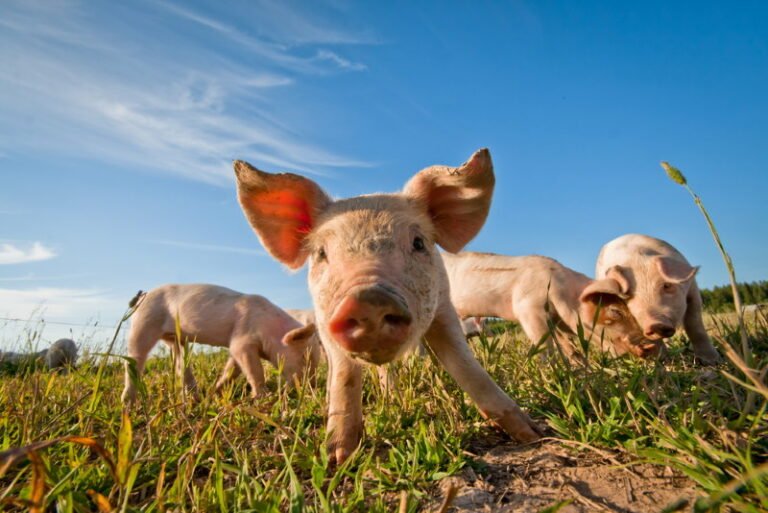
At Purdue University in the US, four pigs learned to use a joystick with their snouts to move a cursor on a screen toward a target. They scored well above chance in a game originally designed for monkeys. The researchers found that especially impressive because pigs are far-sighted and have no hands.
Pigs also respond to their names, remember faces and have very different personalities. Some are curious and bold, others prefer to hang back. In learning ability, they are often compared to dogs.
The list gets longer every decade. Every time we point to a trait that supposedly makes us unique, it turns out a crow, a pig or an octopus can do something similar. The line between humans and animals has not disappeared, but it keeps shifting, almost always in the same direction.