When you think of blood, you think of red. That color comes from hemoglobin, the iron-containing protein that carries oxygen in our blood. But in the enormous diversity of the animal kingdom, some groups use other molecules to transport oxygen, with surprising blood colors as a result: blue, green, purple or even clear. These are ten animals with unusually colored blood.
1. Horseshoe crabs: blue blood that saves lives
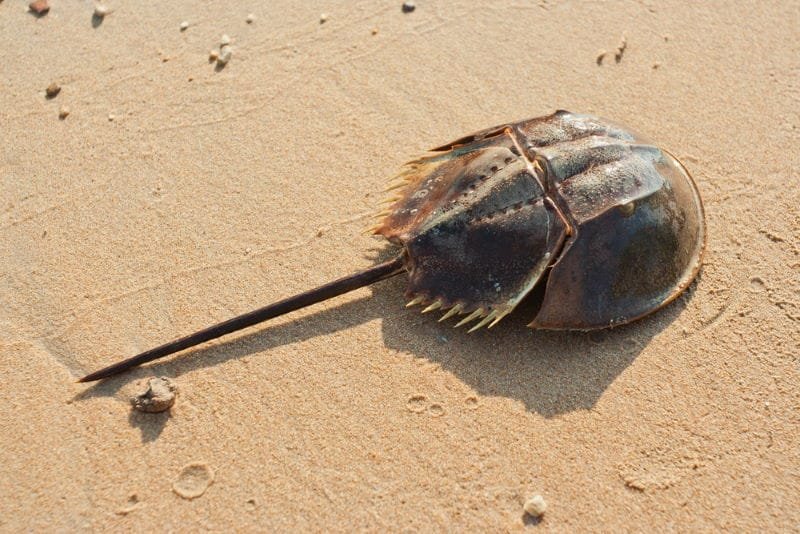
Horseshoe crabs, which despite their name are more closely related to spiders than to crabs, have bright blue blood. The color comes from hemocyanin, a copper-containing protein that carries oxygen instead of hemoglobin. But the color is not the only special thing about it. Their blood contains cells that clot immediately on contact with bacterial toxins.
That property makes horseshoe crab blood extremely valuable to the pharmaceutical industry, which uses an extract of it to test vaccines, injectable drugs and medical devices for dangerous contamination. Every year, hundreds of thousands of horseshoe crabs are caught, partly drained of blood and returned to the sea, although a significant share of them die. A synthetic alternative has been developed and is slowly being adopted.
2. Octopuses and squid: blue blood
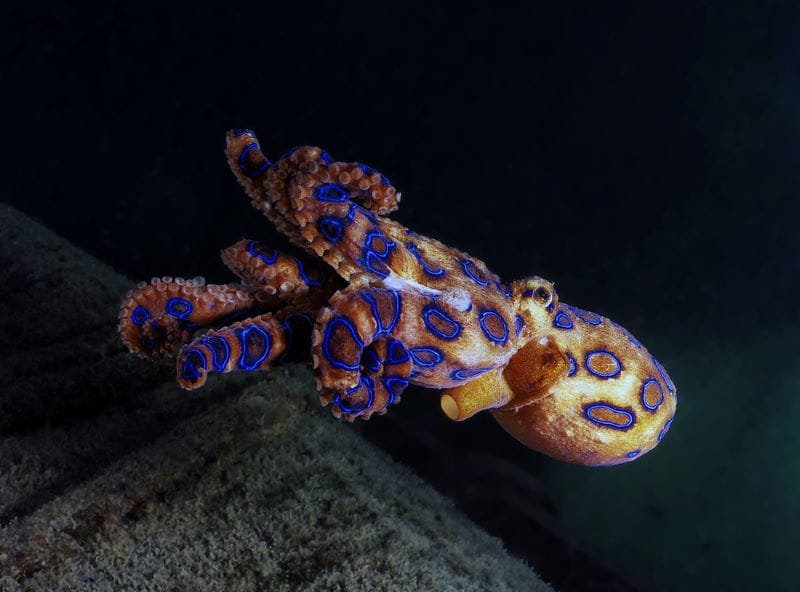
Octopuses, cuttlefish and squid also use hemocyanin. Their blood is blue when it carries oxygen and almost colorless when it does not. Unlike hemoglobin, which is packed inside red blood cells, hemocyanin floats freely in the blood. Hemocyanin carries less oxygen than hemoglobin, which may be one reason why octopuses have three hearts: two to pump blood through the gills and one for the rest of the body.
3. Spiders and scorpions: blue blood
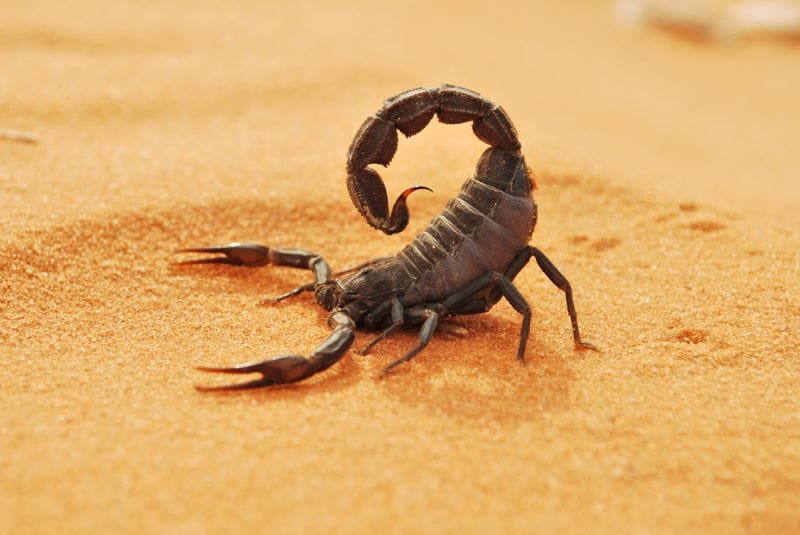
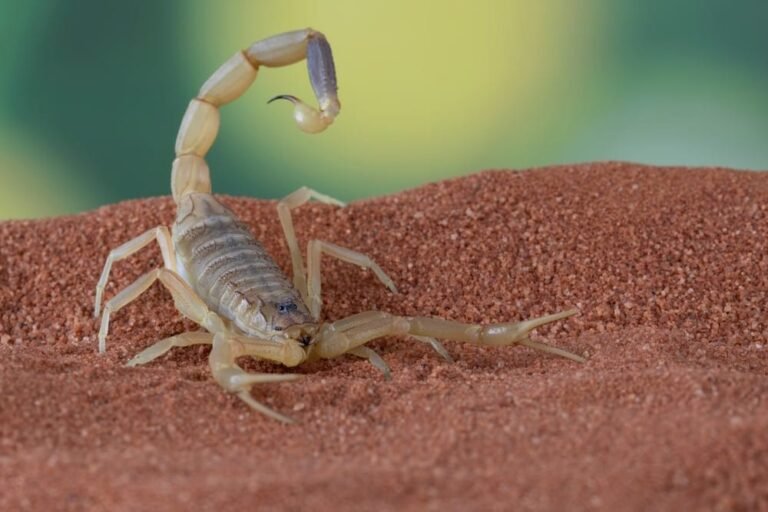
Like octopuses and horseshoe crabs, most spiders and scorpions rely on hemocyanin to transport oxygen, so their blood, called hemolymph, also turns bluish when it is rich in oxygen. Their circulatory system is open: instead of flowing through a closed network of blood vessels, the hemolymph bathes the organs directly.
4. Snails: blue blood
Many snails, including sea snails such as whelks and periwinkles, and land snails, also use hemocyanin, so their blood turns blue when exposed to oxygen. Interestingly, the hemocyanin of mollusks and that of arthropods such as spiders are built very differently. Copper-based oxygen transport evolved more than once, independently.
5. Fan worms: green blood
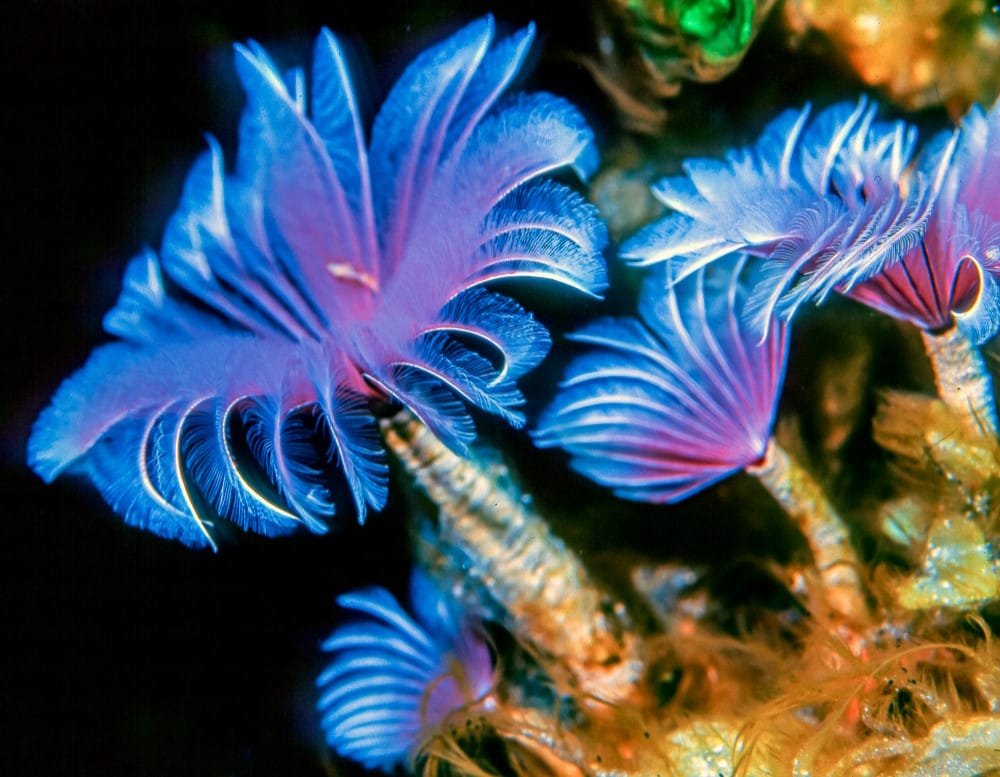
Some marine worms, such as the fan worms of the family Sabellidae, which live in self-built tubes on the sea floor, have a respiratory pigment called chlorocruorin. Like hemoglobin, it contains iron, but a small change in the structure of the molecule makes it absorb light differently, so that it looks green in thin layers. In high concentrations, it can actually look red.
6. Green-blooded skinks
A group of lizards in New Guinea and the Solomon Islands, the green-blooded skinks (genus Prasinohaema), have bright lime-green blood, muscles, bones and tongues. Their oxygen carrier is ordinary hemoglobin. The green color comes from extremely high levels of biliverdin, a green waste product of the breakdown of red blood cells. In humans, much lower levels would cause jaundice and could be deadly, yet these lizards are perfectly healthy. Why they evolved this, possibly several times, is still a mystery.
7. Peanut worms: purple blood
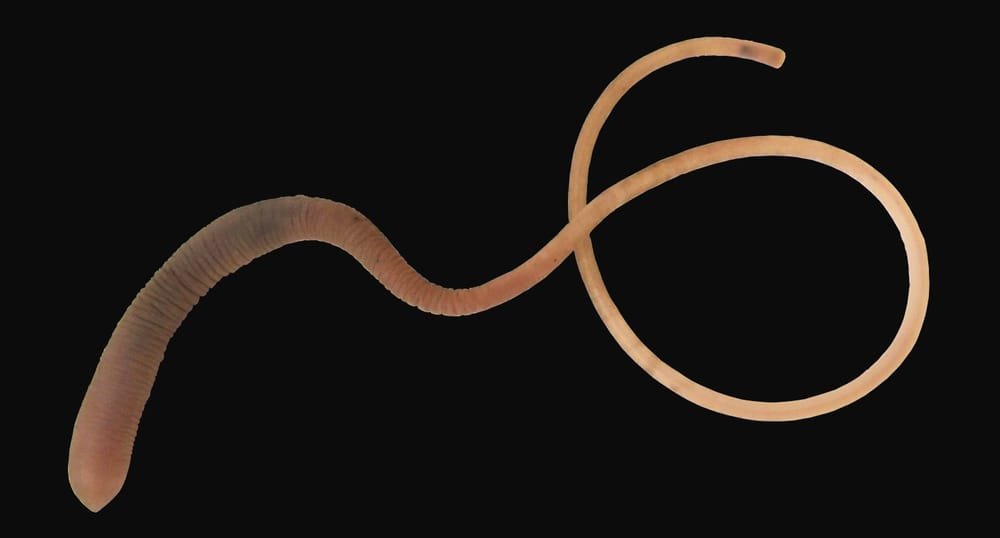
Peanut worms (Sipuncula) are unsegmented marine worms that can pull their front part into their body, making them look like a peanut. They use hemerythrin, an iron-containing protein that is colorless without oxygen, but turns violet-pink when it binds oxygen. Hemerythrin is one of the rarest respiratory pigments in the animal kingdom.
8. Lamp shells: purple blood
Lamp shells (Brachiopoda) are marine animals with two shells that look superficially like clams, but are biologically completely different. They are true survivors: the group has existed for more than 500 million years. Some of them also use hemerythrin, which gives their body fluid a purplish tint when it is rich in oxygen.
9. Icefish: clear blood
The icefish of the Antarctic Ocean are the only known vertebrates without hemoglobin. Their blood is almost transparent. They manage because the ice-cold water around Antarctica holds a lot of oxygen, which dissolves directly into their blood plasma. To compensate, they have large hearts, a large blood volume and wide blood vessels. Their pale, almost white gills make them look ghostly.
10. Insects: (mostly) colorless blood
Most insects have blood that is colorless, yellowish or greenish, depending on what they eat, because their blood does not transport oxygen at all. Insects breathe through a network of tiny air tubes, called tracheae, that bring oxygen directly to their cells. Their blood mainly carries nutrients, hormones and waste. One exception are the larvae of certain midges, known as bloodworms, which live in oxygen-poor mud and have bright red hemoglobin.
The color of blood is a direct result of the molecule an animal uses to carry oxygen. Red blood with hemoglobin dominates among vertebrates, but the variety of blue, green and purple among invertebrates shows how evolution solved the same problem, transporting oxygen, in several completely different ways.