An octopus has three hearts, a day on Venus lasts longer than a year, and wombats produce cube-shaped droppings. The real world is often stranger than anything a science fiction writer could invent.
Here are 25 bizarre facts that are 100% scientifically true, along with the explanation behind each one.
1. An octopus has three hearts and blue blood
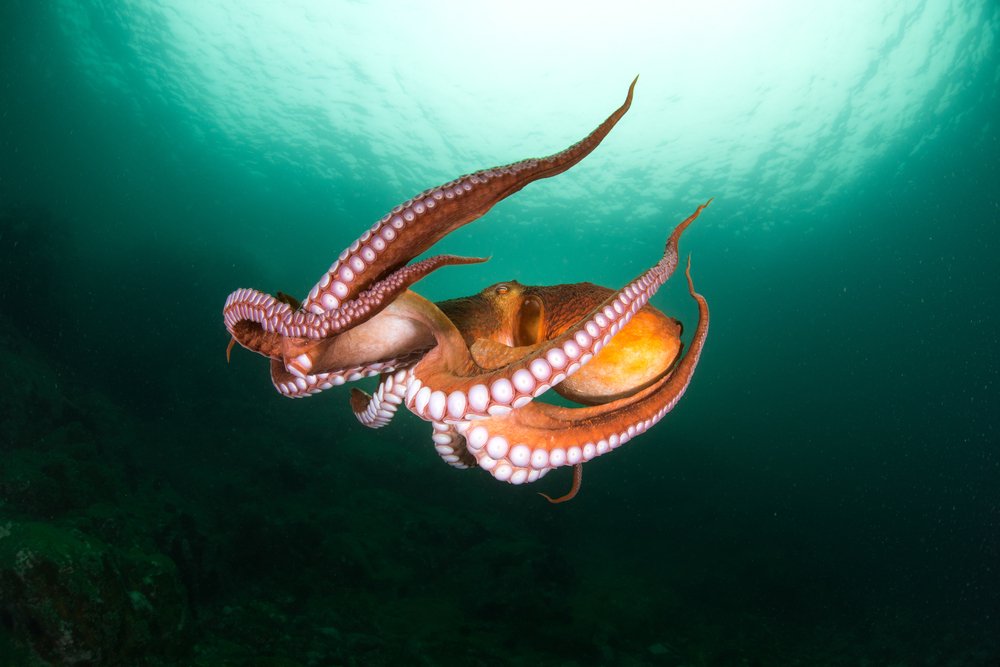
Two branchial hearts pump blood through the gills, while a third systemic heart circulates oxygenated blood to the rest of the body. Because octopuses use a copper-rich protein called hemocyanin instead of iron-based hemoglobin to carry oxygen, their blood is bright blue.
Even stranger: when an octopus swims, its main systemic heart temporarily stops beating. That quickly exhausts the animal, which is why octopuses prefer crawling along the sea floor.
2. There are more stars in the universe than grains of sand on Earth
Researchers at the University of Hawaii estimated that all the beaches and deserts on Earth hold roughly 7.5 sextillion grains of sand (a 75 followed by 17 zeros).
According to the European Space Agency (ESA), the observable universe contains between 1022 and 1024 stars, at least a thousand times more stars than every grain of sand on our planet.
3. Your body contains roughly as many bacterial cells as human cells
For decades, popular science books claimed that bacteria outnumber human cells by ten to one. A thorough 2016 study recalculated the numbers and found the ratio is actually much closer to one-to-one.
An average adult body is made up of about 30 trillion human cells and hosts roughly 39 trillion bacteria, most of which live inside the digestive tract.
4. Folding a piece of paper 42 times would reach the Moon
Every time you fold a sheet of paper in half, its thickness doubles. That exponential growth adds up fast: if you start with a standard sheet measuring 0.1 millimeters thick, folding it 42 times would create a stack roughly 440,000 kilometers high.
Since the Moon orbits at an average distance of 384,400 kilometers, that stack would easily reach lunar orbit. In practice, of course, you cannot fold a normal sheet of paper more than seven or eight times.
5. The classic tongue taste map is completely wrong

Many school textbooks used to show a “tongue map” claiming you taste sweet at the tip, sour on the sides, and bitter at the very back. That chart came from a misinterpretation of a 1901 German paper.
In reality, taste buds capable of detecting sweet, salty, sour, bitter, and umami are distributed across the entire surface of your tongue.
6. Clocks on GPS satellites run faster than clocks on the ground
Einstein’s theory of relativity predicts that time moves at different speeds depending on gravity and velocity. Because GPS satellites orbit high above Earth where gravity is weaker, their onboard atomic clocks tick about 45 microseconds faster per day, while their orbital speed slows them down by 7 microseconds.
That leaves a net gain of 38 microseconds every single day. Engineers have to program that relativistic correction into the satellites; without it, your phone’s GPS would drift off course by about 10 kilometers a day.
7. Every time you recall a memory, you slightly rewrite it
Human memory does not work like a video file stored on a hard drive. When you remember an event, your brain actively reconstructs the scene and then saves that new version back into long-term storage.
During this process, current emotions and new details can slip into the memory. That is why two people can witness the exact same event and years later remember it very differently while both feeling completely certain they are right.
8. Bananas are slightly radioactive
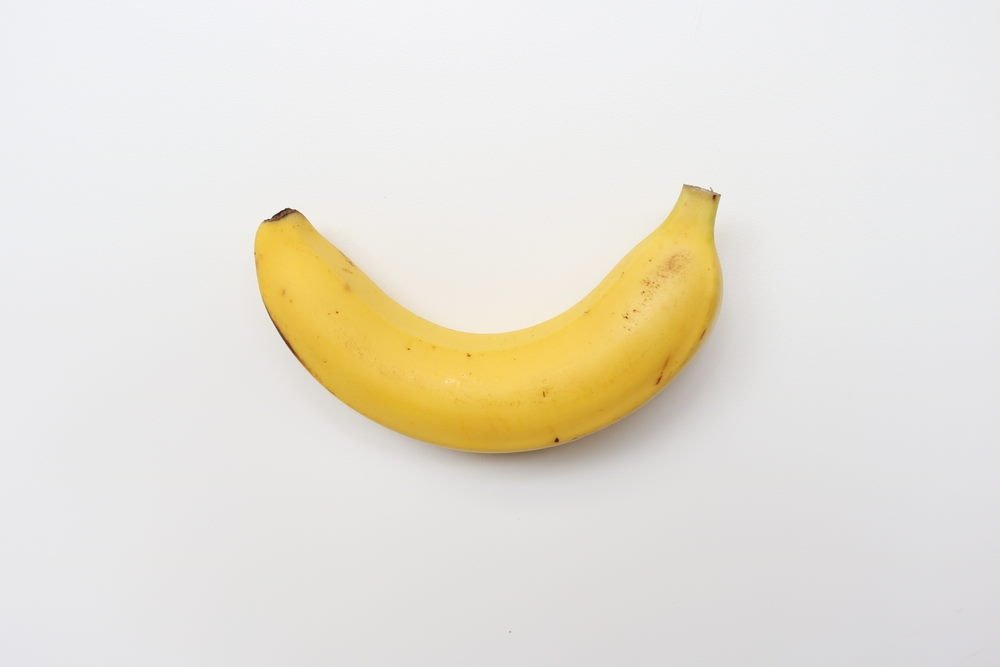
Bananas are packed with potassium, and a tiny fraction of all natural potassium (about 0.012 percent) is the radioactive isotope potassium-40. Nuclear physicists even use the “banana equivalent dose” as an informal unit to compare tiny amounts of radiation.
You do not need to worry about your morning smoothie, though: your body regulates its potassium levels automatically, and you would have to eat millions of bananas at once for the radiation to harm you.
9. Humans share a surprising amount of genetic machinery with bananas
You have probably heard the claim that humans share 50 to 60 percent of their DNA with bananas. More accurately, about 60 percent of human protein-coding genes have a recognizable counterpart in the banana genome.
That is because all complex life on Earth relies on the same basic cellular instructions for dividing cells, repairing DNA, and converting nutrients into energy.
10. Some turtles can breathe through their rear ends
Several freshwater turtle species, including Australia’s Fitzroy River turtle and North America’s painted turtle, can absorb oxygen from water through specialized blood vessels inside their cloaca.
Known scientifically as cloacal respiration, this trick allows the turtles to stay submerged for weeks or even months while hibernating under frozen lakes or hiding from predators.
11. Water can boil and freeze at the exact same time
At a specific combination of temperature and pressure (0.01 degrees Celsius and 0.006 atmospheres of pressure), water reaches what physicists call its triple point.
Under those exact conditions inside a vacuum chamber, liquid water, solid ice, and water vapor can all exist side by side, causing the water to visibly boil and freeze simultaneously.
12. The human nose may be able to tell apart a trillion scents
For nearly a century, scientists repeated the estimate that humans can distinguish around 10,000 different odors. In 2014, a team of researchers at Rockefeller University tested human smell sensitivity with complex scent mixtures and calculated that the nose can discriminate at least one trillion distinct olfactory stimuli.
Even if the exact upper limit is debated, biologists agree our sense of smell is far sharper than once thought.
13. Trees share nutrients underground through fungal networks
Beneath a forest floor, the roots of trees and plants connect with microscopic fungal threads called mycorrhizae. Scientists nicknamed this underground exchange system the “Wood Wide Web”.
Fungi trade water and minerals from the soil in exchange for sugars produced by the trees through photosynthesis, connecting large sections of a forest beneath our feet.
14. Most people cannot draw a working bicycle from memory
In 2006, British psychologist Rebecca Lawson asked volunteers to sketch an ordinary bicycle without looking at one. Even though everyone knew what a bike looked like, a surprising number of people drew designs that could never function.
People routinely drew frames connecting the front and rear wheels directly (making steering impossible) or looped the chain around the front wheel. It is called the “illusion of explanatory depth”: we think we understand everyday objects until we have to explain how they work.
15. The letter J never appears on the periodic table
Scan all 118 chemical elements from Hydrogen (H) to Oganesson (Og), and you will not find the letter J in a single element symbol or official English name. The letter Q is also absent.
Many element names come from classical Latin or ancient Greek, and classical Latin did not have a separate letter J.
16. A desert snail woke up after four years glued to a museum display
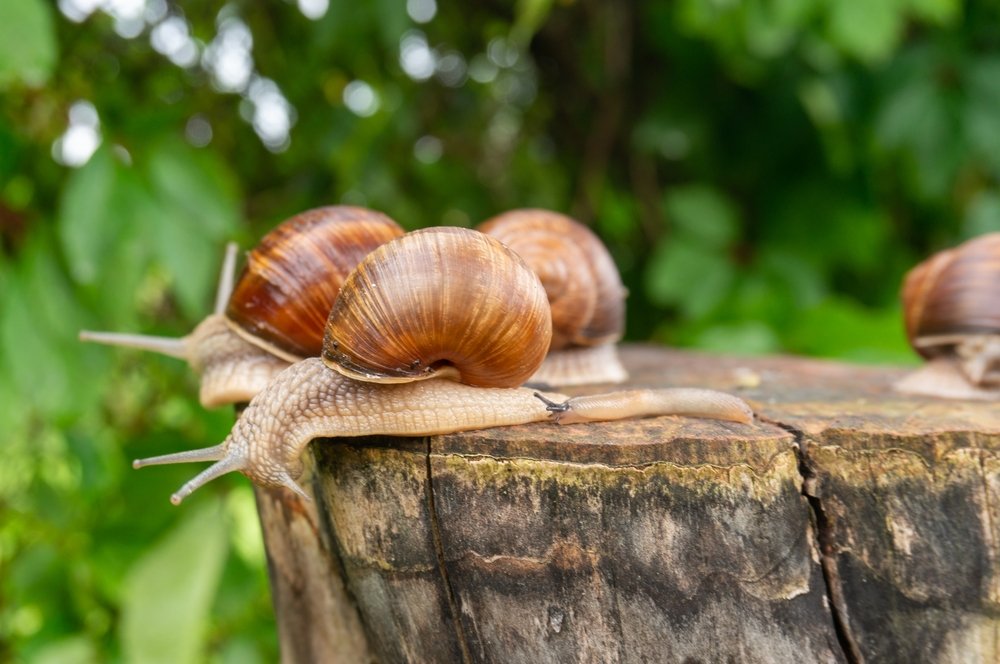
In 1846, curators at the British Museum glued an Egyptian desert snail (Eremina desertorum) onto a display card, assuming the shell was empty. Four years later, in March 1850, staff noticed a fresh film of mucus around the opening.
When they placed the shell in lukewarm water, the snail crawled right out and ate some cabbage. Desert snails can seal their shells with a dried mucus membrane and enter a deep state of dormancy for years during droughts.
17. A typical fluffy cloud weighs around 500,000 kilograms
White cumulus clouds look weightless, but the U.S. Geological Survey (USGS) calculated that an average cumulus cloud measuring one cubic kilometer contains about 500,000 kilograms (1.1 million pounds) of water, roughly the weight of 100 adult elephants.
The cloud stays aloft because that weight is spread across trillions of microscopic water droplets so tiny that warm updrafts keep them suspended in the air.
18. Your eyes project the world upside down onto your retinas
Because the lens at the front of your eye is curved like a camera lens, light rays cross as they enter, projecting an inverted, upside-down image onto the retina at the back of your eye.
Your visual cortex flips and processes the signals automatically, so you experience the world right side up without ever thinking about it.
19. A day on Venus is longer than a year on Venus
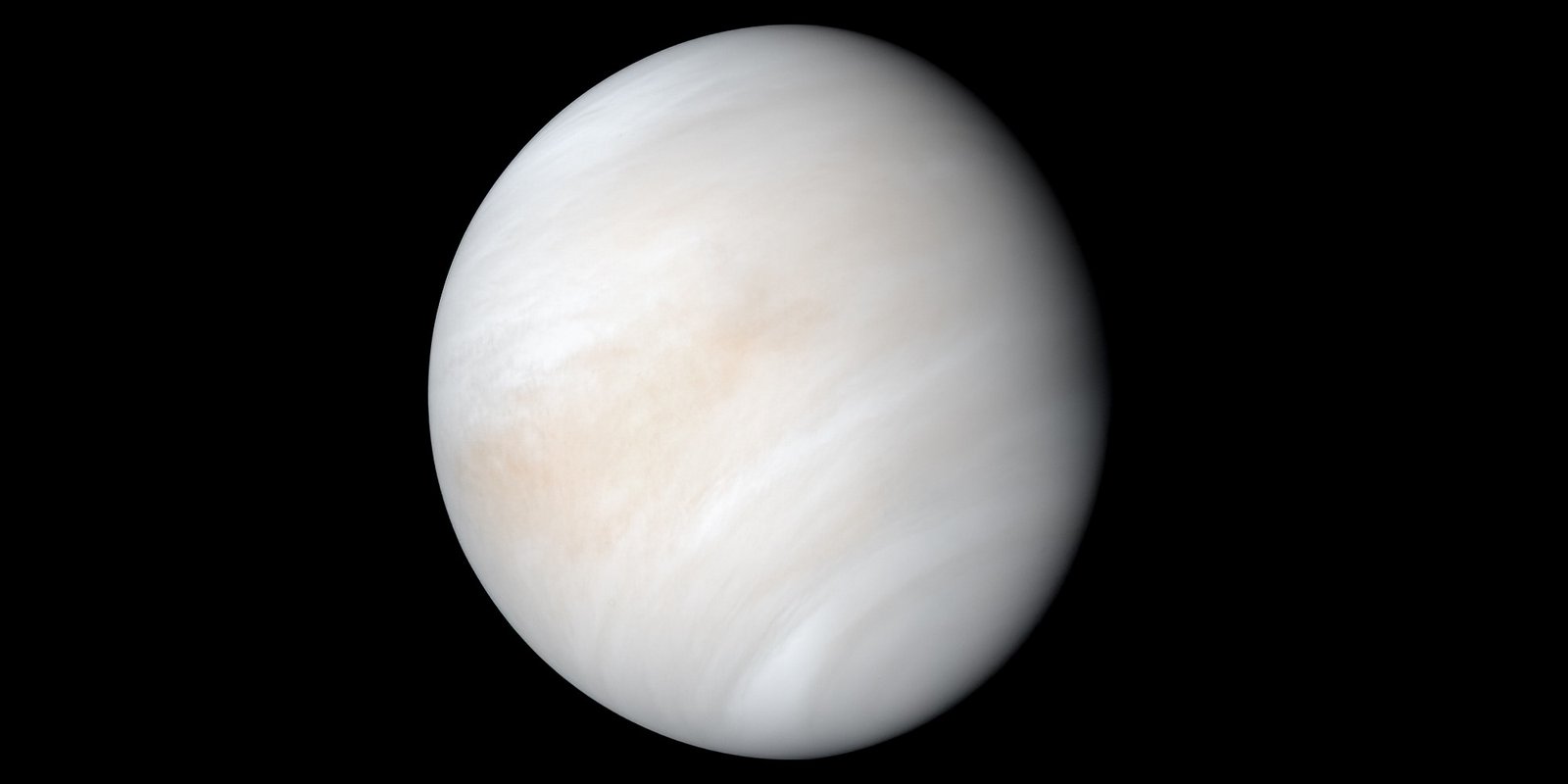
Venus rotates on its axis more slowly than any other planet in the solar system. One full rotation takes 243 Earth days, while Venus completes a full orbit around the Sun in just 225 Earth days.
To make matters even weirder, Venus spins backward compared to Earth, meaning the Sun rises in the west and sets in the east.
20. Birds are living dinosaurs
Birds did not just evolve alongside dinosaurs; paleontologists classify modern birds as avian dinosaurs that evolved from small, feathered theropods during the Jurassic period.
That means the pigeon pecking at crumbs in the park is a direct living member of the dinosaur family tree, and a distant cousin of Tyrannosaurus rex.
21. Growing up with black-and-white TV makes you dream in black and white more often
A 2008 study at the University of Dundee found that people over 55 who grew up watching black-and-white television reported dreaming in monochrome about a quarter of the time.
Participants under 25, who grew up surrounded by color screens, almost never had black-and-white dreams, suggesting that childhood media shapes how our brains visualize dreams.
22. Wombats produce cube-shaped poop
The common wombat of Australia is the only known animal on Earth that produces square, cube-shaped droppings. In 2021, researchers discovered how: the final section of the wombat’s intestine has alternating stiff and flexible grooves that mold drying feces into two-centimeter cubes.
The flat sides keep the droppings from rolling off rocks and logs, which wombats use as elevated scent markers to communicate with other wombats.
23. Earth has about 30 times more trees than the Milky Way has stars
In 2015, an international team of ecologists published a global tree census in the journal Nature and found that Earth is home to roughly 3.04 trillion trees.
By comparison, astronomers estimate that our Milky Way galaxy contains between 100 billion and 400 billion stars.
24. If the Sun disappeared right now, we would not know for eight minutes
Sunlight travels at roughly 300,000 kilometers per second, taking 8 minutes and 20 seconds to cross the 150 million kilometers between the Sun and Earth.
Because gravity travels at the exact same speed as light according to general relativity, Earth would continue orbiting an empty spot in space in broad daylight for more than eight minutes before darkness fell and our planet flew off in a straight line.
25. Your skeleton completely replaces itself roughly every ten years
Bones feel like solid stone, but they are living tissue that is constantly being broken down and rebuilt by specialized cells called osteoclasts and osteoblasts.
This continuous remodeling process replaces about 10 percent of an adult’s bone mass each year, giving you an almost entirely new skeleton every decade. Which of these 25 facts surprised you the most? Share your favorite in the comments below.