Weapons are invented by people, and people sometimes come up with very strange ideas, especially in wartime, when budgets do not seem to matter.
From a shotgun that fires half a kilo of shot to bats carrying firebombs, these are ten weapons that make you wonder who ever approved them. Some worked surprisingly well. Most did not.
10. The punt gun: a shotgun more than three meters long
Not every weapon was made for war. The punt gun was a hunting gun up to about three and a half meters long, far too heavy to hold. It was mounted on a small flat boat, which the hunter quietly steered towards a flock of resting waterfowl.
Firing around half a kilo of shot, a single blast could kill dozens of birds. That was exactly the problem: commercial hunting in the 19th century devastated bird populations, and in the United States the Migratory Bird Treaty Act of 1918 put an end to it.
9. The flail: the famous weapon that probably barely existed
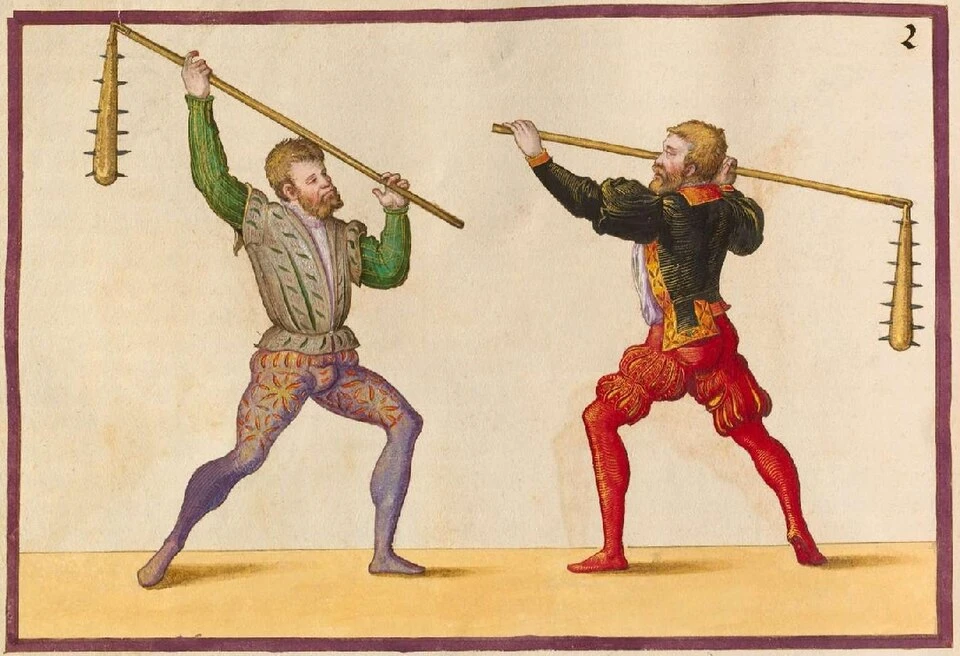
Everyone knows the medieval flail: a handle with a chain and a spiked ball, standard equipment in every knight movie and video game.
But weapons historians are fairly sure that it was rarely used in battle. It barely appears in medieval manuscripts and paintings, while swords, axes and war hammers appear hundreds of times. Many of the flails in museums turned out to be 19th-century fakes made for collectors. As a weapon, it was also impractical: hard to aim, likely to bounce back at your own head and useless in a tight formation.
8. The wind cannon: anti-aircraft fire without ammunition
During World War II, Austrian engineer Mario Zippermayr worked on a “wind cannon” that would fire powerful vortices of air into the sky, strong enough to knock bombers off course.
In tests, it could smash wooden boards at around 200 meters. But at the altitude where bombers actually flew, the vortex had long since fallen apart. Prototypes were reportedly set up near a bridge over the Elbe, where they hit exactly zero aircraft.
7. The Claw of Archimedes: a crane that flipped ships
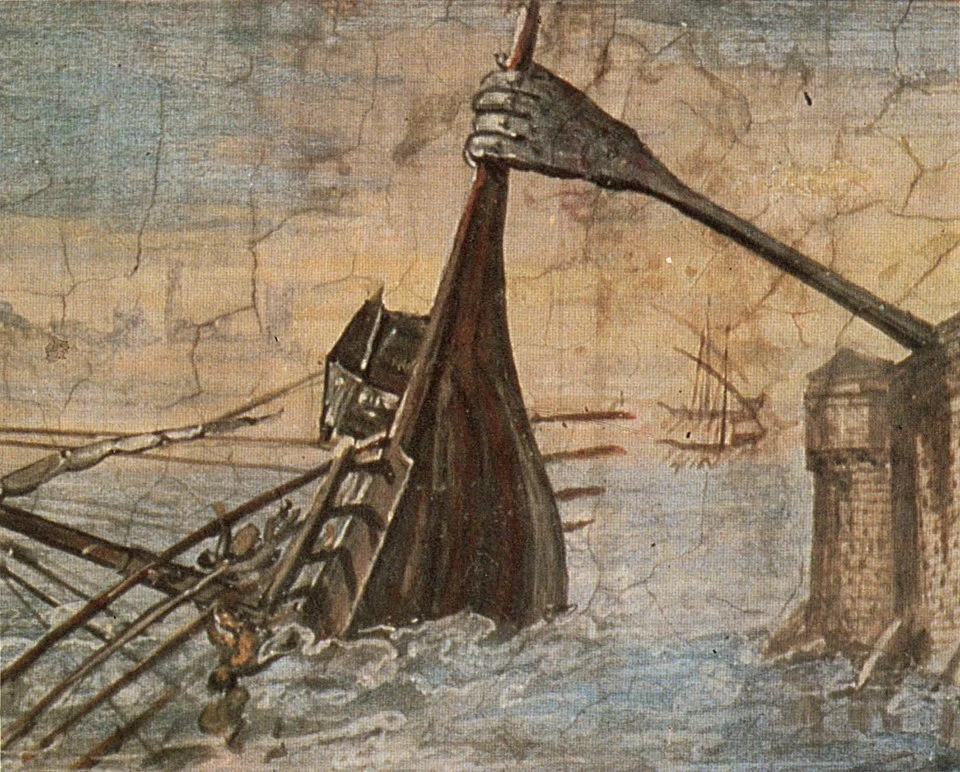
In 213 BC, when the Roman fleet attacked Syracuse, the great mathematician Archimedes had a surprise waiting. Crane-like arms with grappling hooks stuck out over the city walls.
According to ancient historians, a claw would hook onto the bow of a ship, lift it partly out of the water and then drop it suddenly, capsizing or swamping it. Modern engineers who built a replica concluded that it really could have worked. His famous “death ray” mirrors that supposedly set ships on fire are much more doubtful.
6. The Kolibri: the smallest pistol ever mass-produced
In 1910, Austrian watchmaker Franz Pfannl introduced a pistol so small it fit in the palm of a hand. He named it Kolibri, German for hummingbird.
Its 2.7 mm cartridge is the smallest centerfire caliber ever commercially produced. Its bullet had so little energy that it could barely penetrate a thin piece of wood. Pfannl marketed it as a self-defense pistol for ladies, but only around a thousand were made. Today, they are sought-after collector’s items.
5. The Blaster: flamethrowers under your car doors
In the 1990s, carjackings were so common in Johannesburg that in 1998 South African inventor Charl Fourie came up with a radical solution: flamethrowers mounted under the driver and passenger doors, triggered by a pedal.
The device was legal in South Africa and earned its inventors the 1999 Ig Nobel Peace Prize. It never became standard equipment, and only a few hundred were reportedly sold.
4. Bat bombs: thousands of bats with tiny firebombs
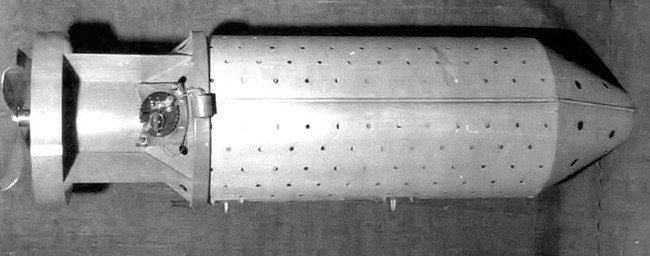
In January 1942, an American dentist sent the White House an idea. Japanese cities were largely built of wood and paper, and bats like to hide in roofs. Why not attach tiny time-delayed firebombs to thousands of bats and release them over a city at dawn?
President Roosevelt approved it, and Project X-Ray cost around 2 million dollars. It worked almost too well: in 1943, armed bats escaped at a base in New Mexico and set part of it on fire, including, according to legend, a general’s car. The project was canceled in 1944, because another weapon promised faster results: the atomic bomb.
3. The LED Incapacitator: a flashlight that makes you vomit
It looks like a big flashlight and was developed around 2007 with funding from the US Department of Homeland Security. It fires bright flashes of light in changing colors and frequencies designed to confuse the brain.
People who look into it become disoriented and nauseous, and some test subjects threw up, earning it the nickname “puke ray”. Police were supposed to start using it, but it never went into widespread service.
2. Who Me?: a stink bomb that stank too much
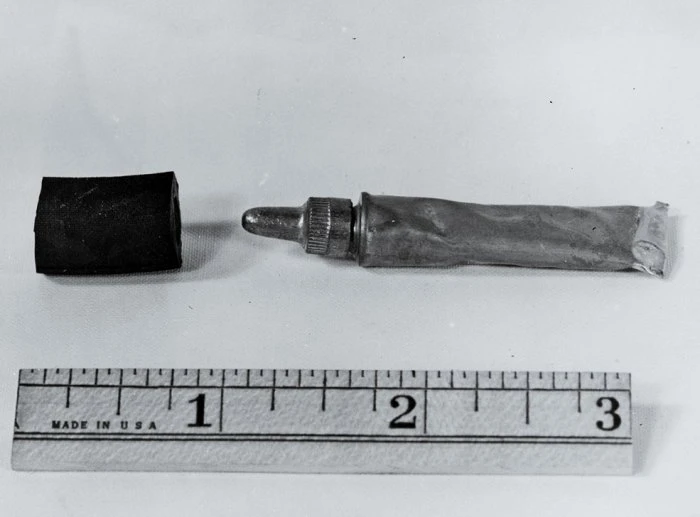
During World War II, the American OSS intelligence service developed a stink spray called “Who Me?” for the French Resistance. The idea was not to injure German officers, but to humiliate them by making them smell like sewage in public.
In practice, the smell spread so quickly that the person spraying it smelled just as bad as the target, which was rather inconvenient for a secret agent. The project was quietly dropped.
1. The “gay bomb”: a proposal that never left the paper
In 1994, a US Air Force laboratory in Ohio wrote a short proposal asking for 7.5 million dollars to research non-lethal chemical weapons. One idea was a chemical that would supposedly make enemy soldiers so attracted to each other that discipline would collapse.
The same list included a chemical to attract angry wasps to the enemy and one to cause terrible bad breath. None of it was ever funded or developed, and the science behind it does not work that way anyway. The document became public in 2005, and in 2007 it won the Ig Nobel Peace Prize, which nobody came to collect.