Everyone knows that birds lay eggs. But many more animals do, and some of their eggs are truly bizarre: shaped like a screw, standing on a stalk, embedded in a parent’s back or guarded until the mother dies. These are 13 strange eggs in the animal kingdom.
1. Shark egg cases
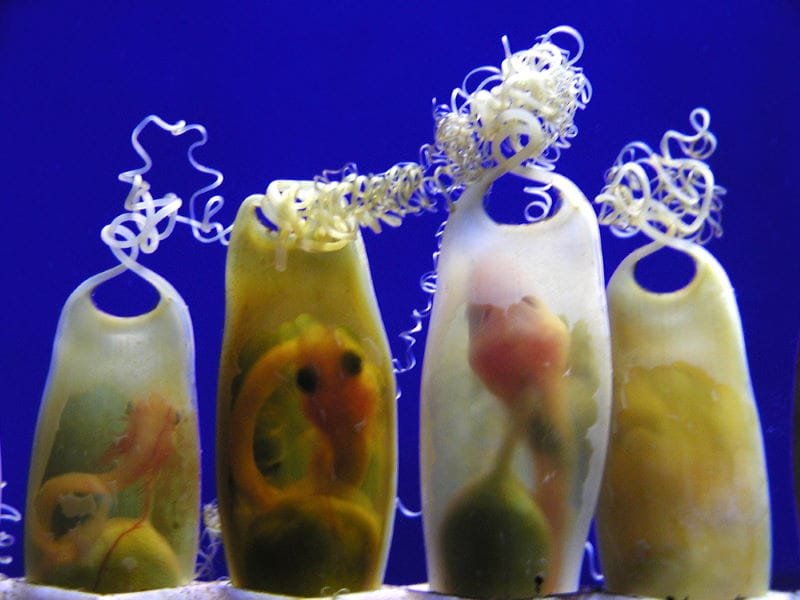
Not all sharks give birth to live young. Many species, including catsharks and many skates, which are related to sharks, lay their eggs in tough, leathery cases. Inside, the embryo grows for months, feeding on its yolk sac. The cases often have tendrils or horns that anchor them to seaweed or rocks. After the young shark has hatched, the empty cases sometimes wash up on beaches, where they are known as “mermaid’s purses”.
2. Jawfish: eggs in dad’s mouth
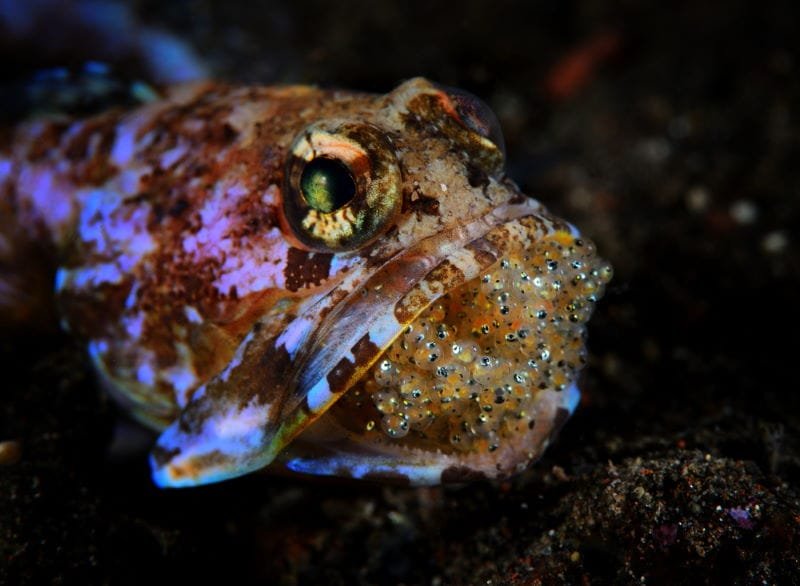
With jawfish, it is the males that do most of the work. After the female has laid her eggs, the male takes the whole clutch into his mouth and broods it there for about a week, regularly rolling the eggs around to keep them supplied with oxygen. Because he cannot eat with a mouth full of eggs, he sometimes briefly spits them out into his burrow to feed, before scooping them up again.
3. Surinam toad: eggs in mom’s back
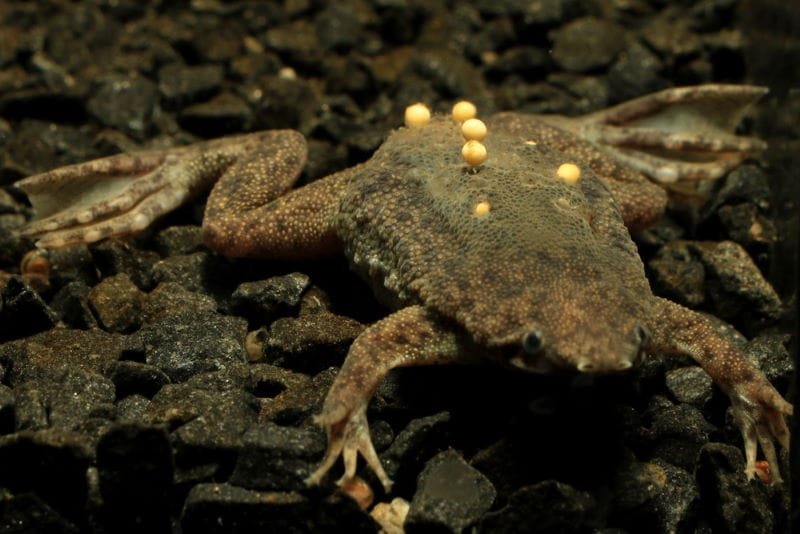
The Surinam toad is an extremely flat, tongueless frog from South America. During mating, the pair performs a kind of underwater somersault, and the eggs end up on the female’s back. Her skin then swells up around them, until each egg sits in its own little pocket. There, the embryos develop not into tadpoles, but straight into tiny, fully formed toads. After several months, dozens of baby toads pop out of their mother’s back.
4. Horn shark: screw-shaped eggs
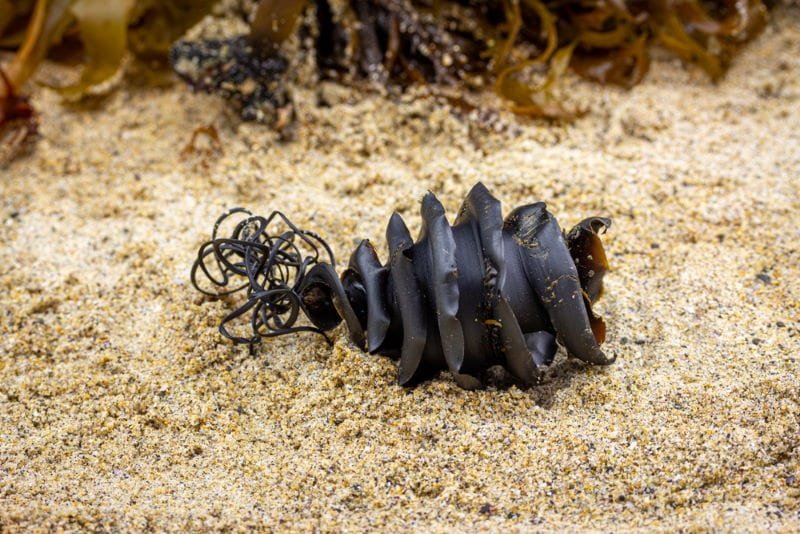
The eggs of the California horn shark have a truly remarkable shape: a spiral, like a screw. That is not a coincidence. The female is thought to pick up her eggs in her mouth and wedge them into rock crevices, where the spiral shape locks them firmly in place, making them hard for predators to pull out. It can take up to nine months before the young shark hatches.
5. Emu: dark green eggs
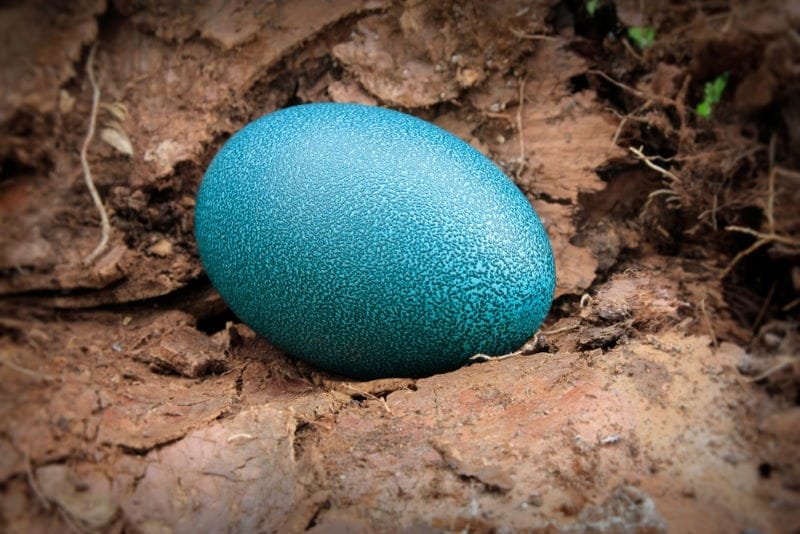
The eggs of this large Australian bird are a striking dark green, almost black, and can weigh more than half a kilo. The female lays them in a nest built by the male, and then often leaves to find another partner. It is the male that incubates them, for around eight weeks. During that time, he barely eats or drinks and hardly leaves the nest, turning the eggs several times a day. By the time the chicks hatch, he may have lost around a third of his body weight.
6. Giant water bugs: eggs on dad’s back
In some species of giant water bugs, the female glues her eggs onto the back of the male, sometimes more than a hundred of them, neatly arranged in rows. The male then carries them around for one to two weeks, regularly bringing them to the surface for air and keeping them moist and clean, until the young hatch.
7. Clownfish: guarded by dad
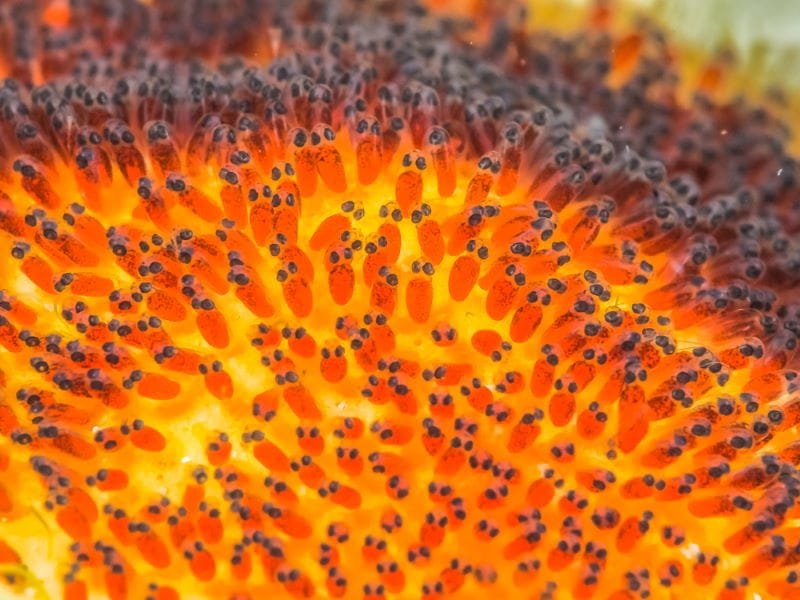
The clownfish, or anemonefish, lives among the tentacles of a sea anemone. In each group, only one pair breeds: the largest fish, which is the female, and the second largest, the breeding male. If the female dies, the breeding male changes sex and becomes the new female. The pair first cleans a patch of rock next to the anemone. After the eggs are laid, the male does most of the care: he fans them with his fins for oxygen and removes bad eggs. The eggs turn from orange to brown, and just before hatching, after about a week, you can see the silvery eyes of the babies inside.
8. Kiwi: an enormous egg
The New Zealand kiwi is about the size of a chicken, but it lays an egg around six times larger than a chicken egg. Relative to the female’s body, it is one of the largest eggs of any bird: around 15 to 20 percent of her body weight. In the final days before laying, the egg takes up so much space that the female can hardly eat.
9. Praying mantis: an egg case made of foam
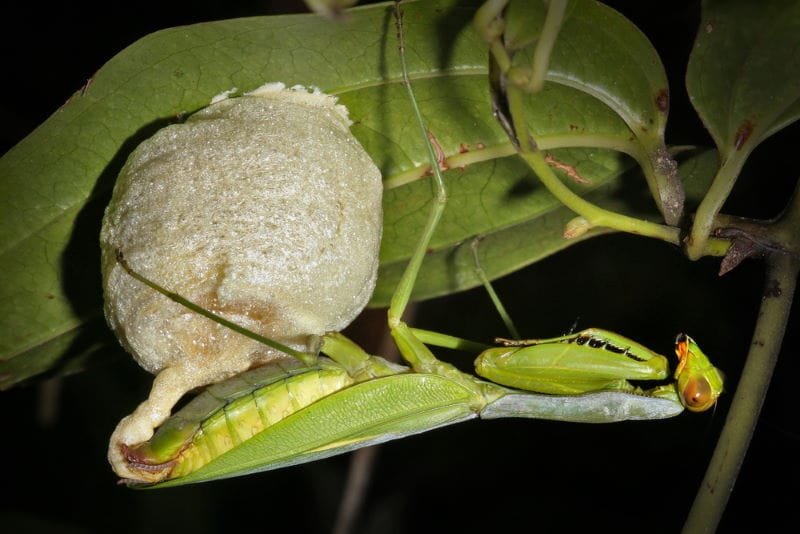
After mating, during which the male is sometimes eaten by the female, the female praying mantis lays her eggs in a package called an ootheca. She produces a frothy liquid that she whips into foam around the eggs, which then hardens into a protective case. Depending on the species, one case can contain dozens to hundreds of eggs, which survive the winter safely inside.
10. Octopus: a mother who gives everything
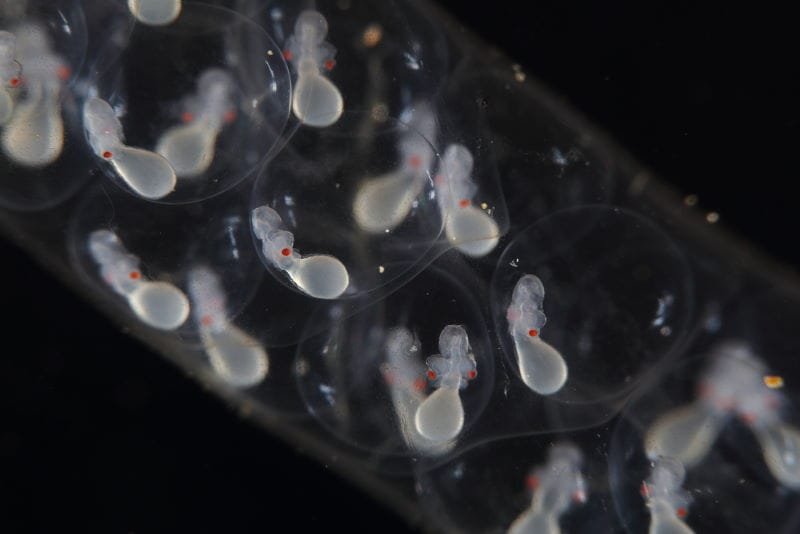
Many squid lay their eggs in long strings on the sea floor and then leave them. But the female common octopus hangs her eggs, often tens of thousands of them, in strings from the roof of her den and guards them constantly, blowing water over them for oxygen and keeping them clean. During this time, which can last a month or more, she stops eating. Shortly after the eggs hatch, she dies. One deep-sea octopus was observed guarding her eggs for four and a half years, the longest brooding period known for any animal.
11. Lacewing: eggs on stalks
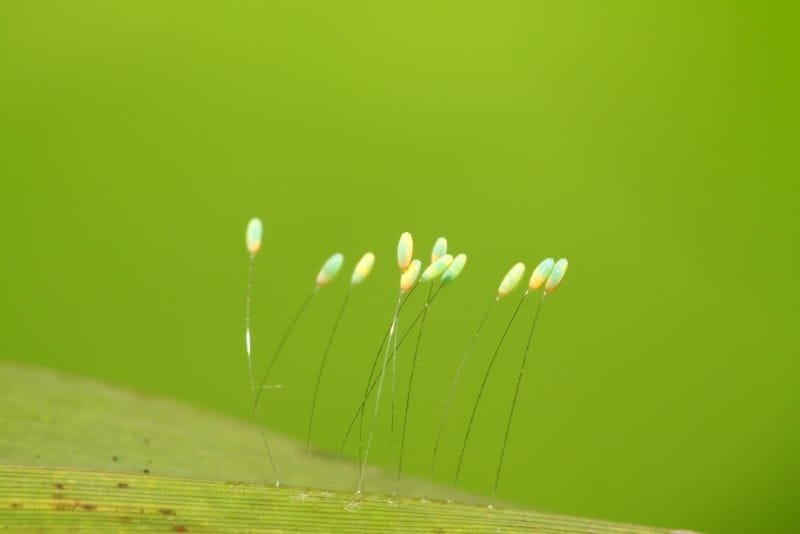
The eggs of lacewings look very unusual: each one sits on top of a thin, hair-like stalk. The stalk is thought to protect the eggs from ants and other predators, and to protect them from each other. Lacewing larvae are voracious predators, and if the eggs were lying side by side, the first larva to hatch might eat its brothers and sisters.
12. Shield bugs: barrels with a lid
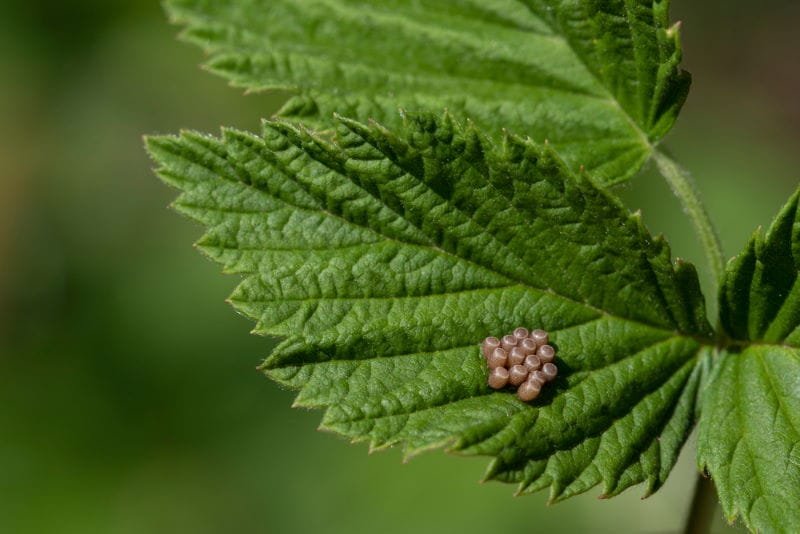
The eggs of shield bugs look like tiny barrels, laid in neat rows on leaves and stems. Each egg has a small lid. Just before the young bug hatches, you can see its eyes through the shell, and a dark mark appears. When it is ready, the nymph uses a special T-shaped tool on its head, an egg burster, to push the lid open.
13. Platypus: a mammal that lays eggs
The platypus and the four species of echidna are the only mammals in the world that lay eggs. After mating, the female platypus digs a long underground burrow with a nesting chamber, which she seals with plugs of soil. She usually lays one to three small, leathery eggs, which she keeps warm between her belly and her tail. After about ten days, the tiny young break out using an egg tooth. Then the mother feeds them milk, which she does not secrete through nipples, but through patches on her skin.