Monkeys can look remarkably like us, but some species have a truly unusual appearance. Think of a giant mustache, a bald red face, a punk hairstyle or a nose that hangs over the mouth.
These are ten monkeys and other primates with a very striking look, counting down to number one.
10. Emperor tamarin
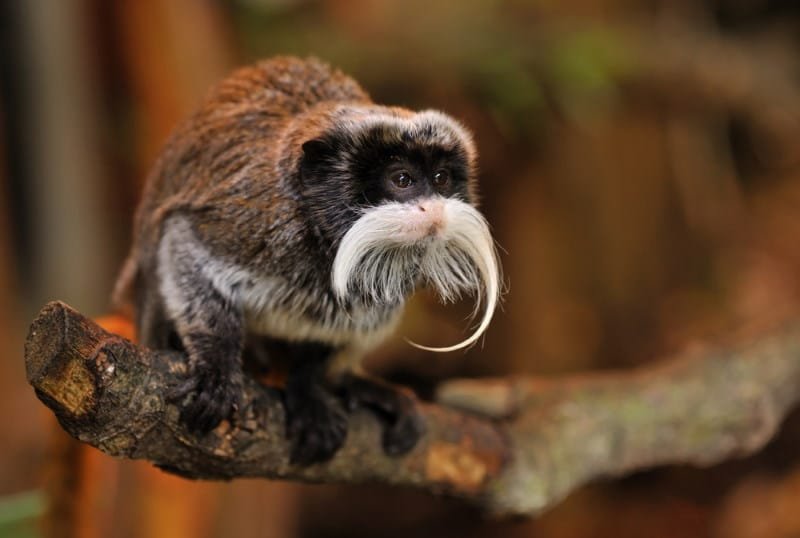
This small gray monkey has an enormous white mustache that hangs down past its shoulders. According to a popular story, it was named after the German emperor Wilhelm II, who had a similar mustache. Emperor tamarins live in the rainforests of the southwestern Amazon, in Peru, Bolivia and Brazil.
9. Gee’s golden langur
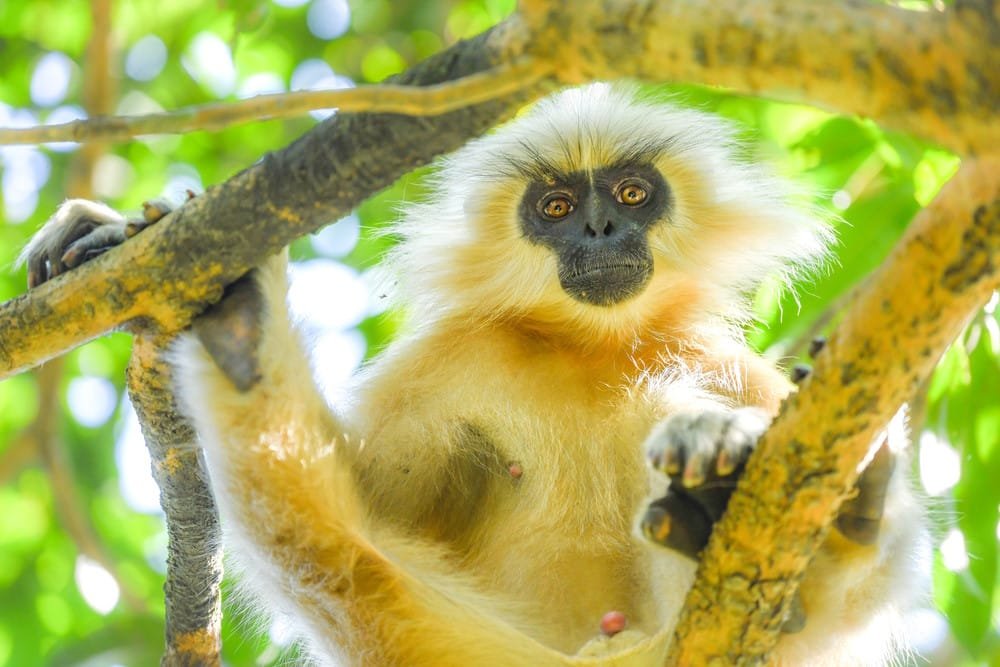
The golden langur has a golden-cream coat and a black face, and its fur can change color with the seasons. It lives only in a small area on the border of India and Bhutan and is endangered. Science has only known it since the 1950s, when naturalist Edward Pritchard Gee drew attention to it, which is why it is also called Gee’s golden langur.
8. Bald uakari
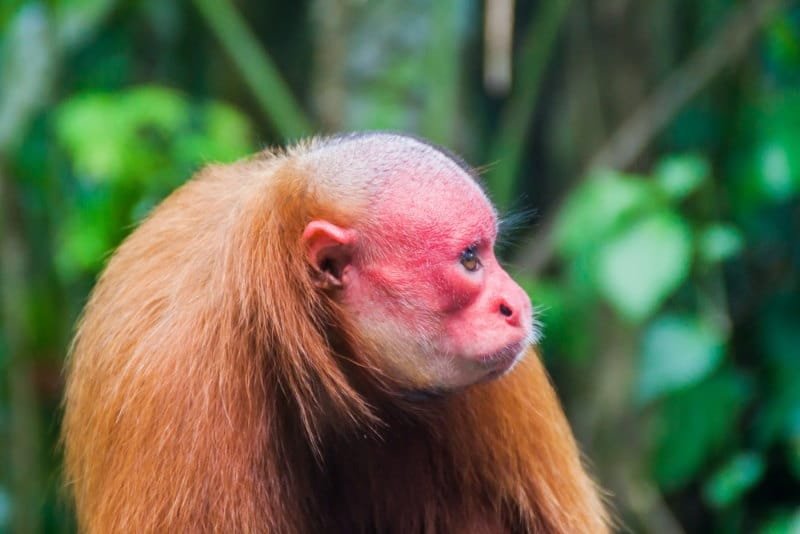
The bald uakari looks as if it fell head-first into a pot of red paint. It has a bald, bright red face and head, with shaggy fur on its body. The redness comes from blood vessels just under the skin, and the redder the face, the healthier the monkey: sick animals turn paler, so females use the color to choose a fit partner. It lives in the flooded forests of the Amazon and is often called one of the ugliest monkeys in the world.
7. White-faced saki
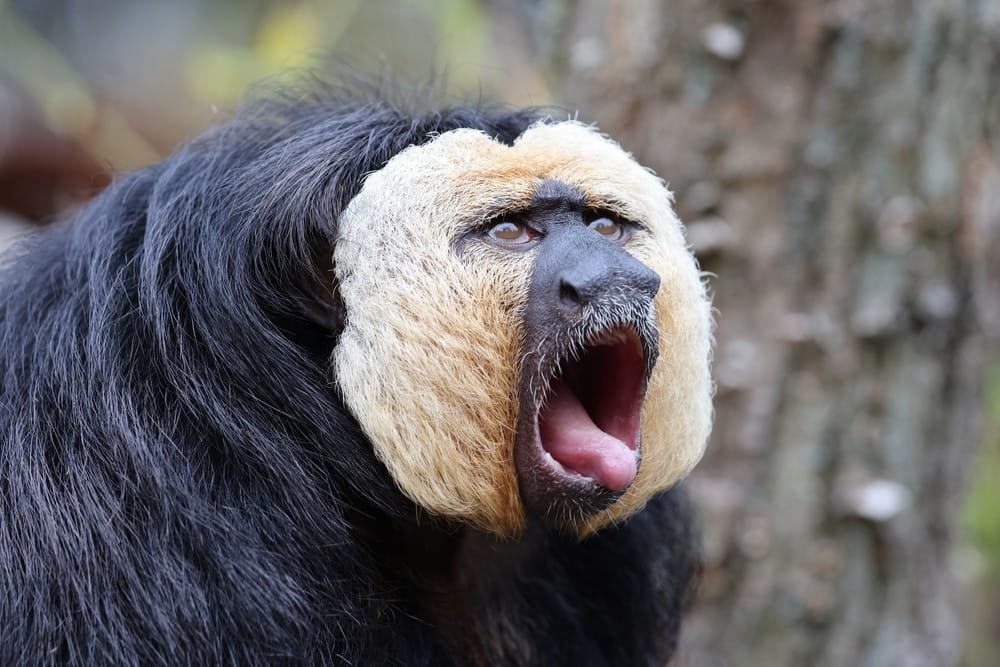
With the white-faced saki, you can see immediately whether it is a male or a female. The male is black with a strikingly white face, while the female is grayish-brown with a much less conspicuous face. They live in pairs or small family groups in the rainforests of northeastern South America.
6. Golden snub-nosed monkey
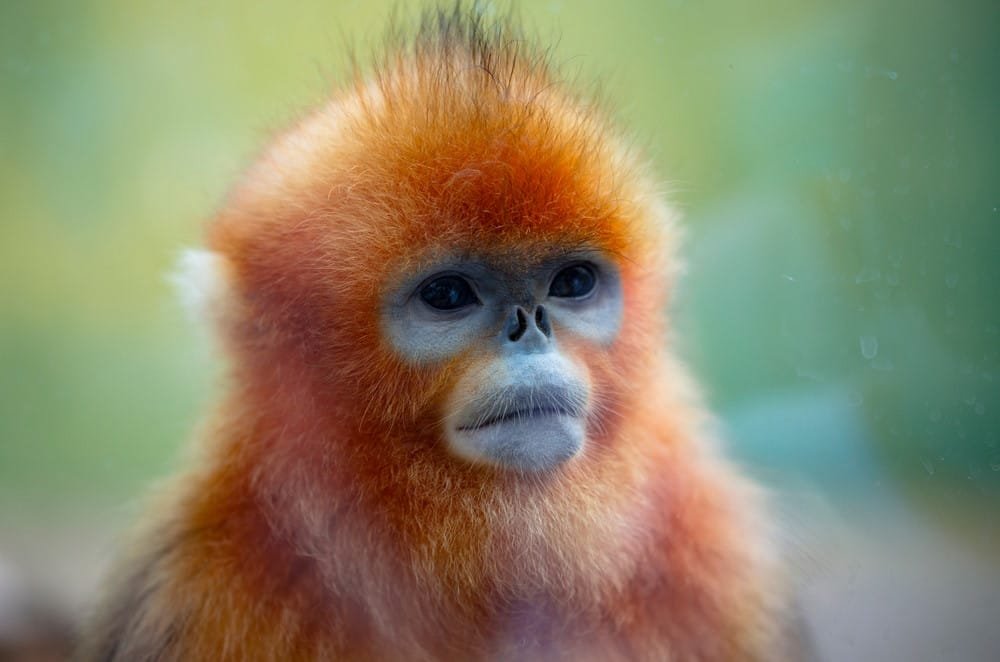
This monkey with its bright orange fur and pale blue face lives in the mountain forests of central China, where it can snow heavily in winter. It survives the cold thanks to its thick fur. Its nose is so flat that its nostrils point almost straight forward, which may help prevent frostbite.
5. Red-shanked douc
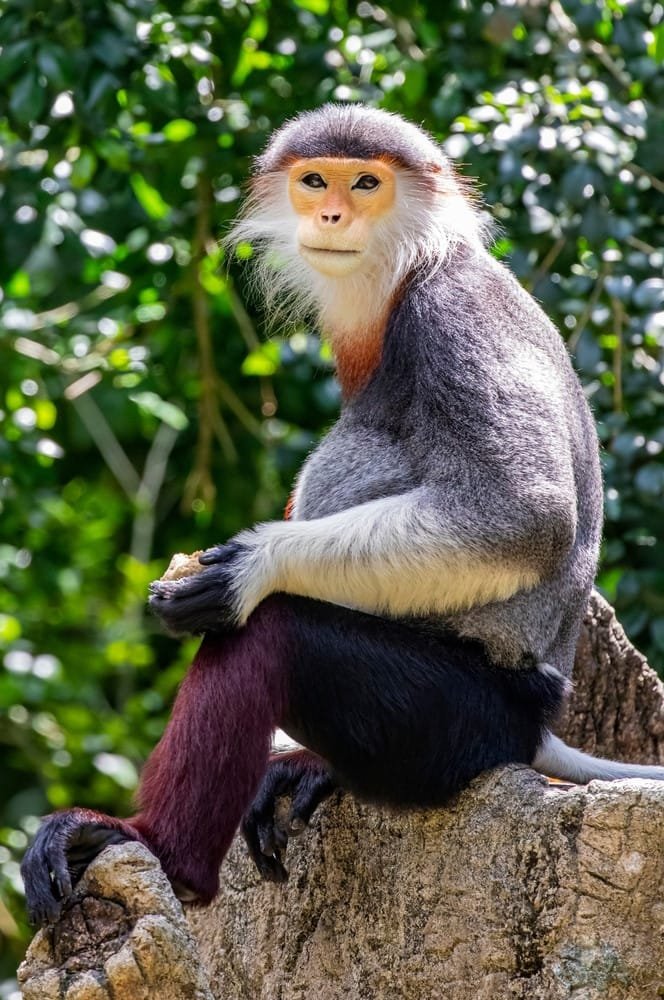
The red-shanked douc from Vietnam, Laos and Cambodia looks like it is wearing a costume. It has maroon lower legs, black thighs, white forearms, a gray body and a golden face framed by white whiskers. It is often called the “costumed ape” and is considered one of the most colorful primates in the world. Sadly, it is endangered.
4. Gelada
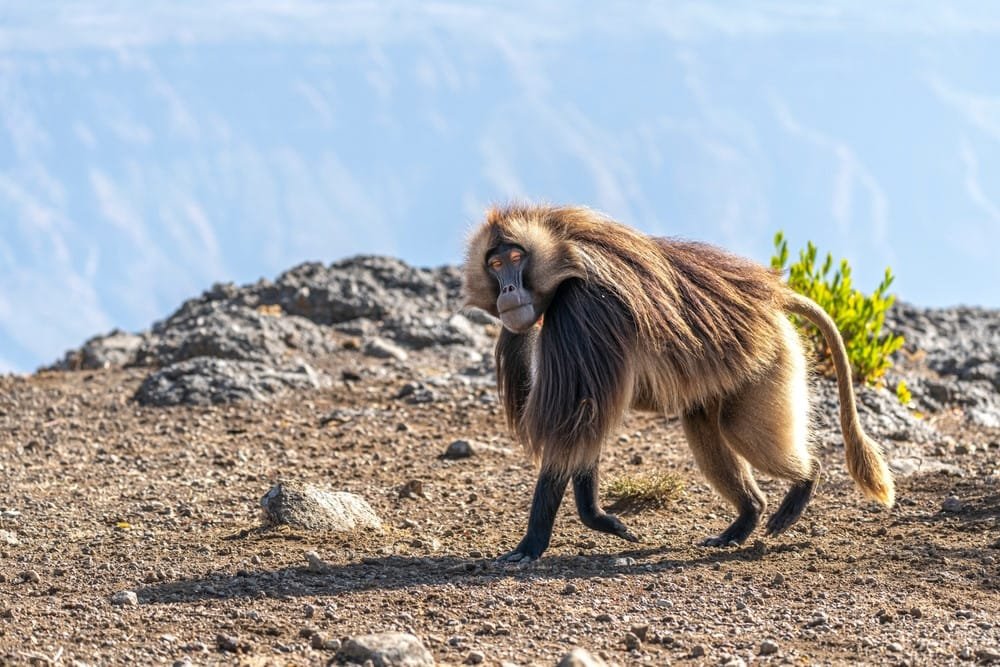
Male geladas from the highlands of Ethiopia have long manes like a lion and impressive canine teeth. On their chest is a bare, red, hourglass-shaped patch of skin, which is why they are sometimes called “bleeding-heart monkeys”. The patch becomes brighter when they are excited. Despite their fierce look, geladas are peaceful grazers: they are the only primates that live almost entirely on grass.
3. De Brazza’s monkey
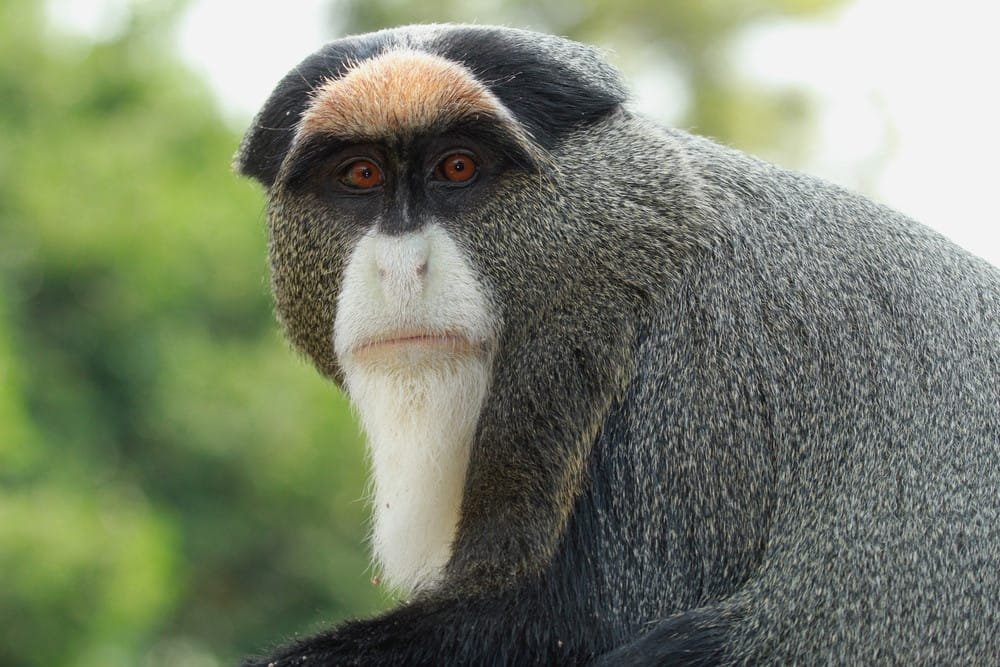
With its white beard and orange forehead, De Brazza’s monkey looks like a wise old wizard. It lives in swampy and riverside forests in Central Africa. When it senses danger, it often freezes completely and can stay motionless for hours, relying on its camouflage instead of running away.
2. Tarsier
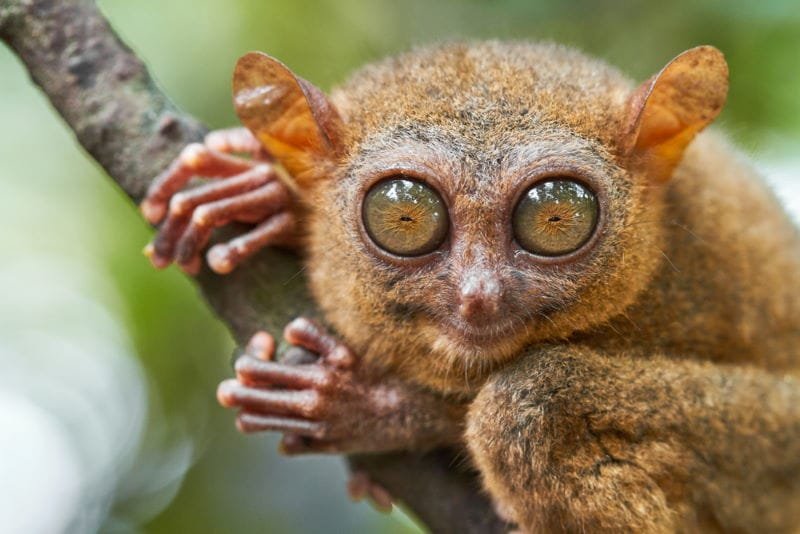
Strictly speaking, the tarsier is not a monkey but a different kind of primate. Each of its enormous eyes is about as large as its entire brain. It cannot move its eyes, but it can turn its head almost 180 degrees in each direction, like an owl. Some people find it adorable, others find it creepy.
1. Proboscis monkey
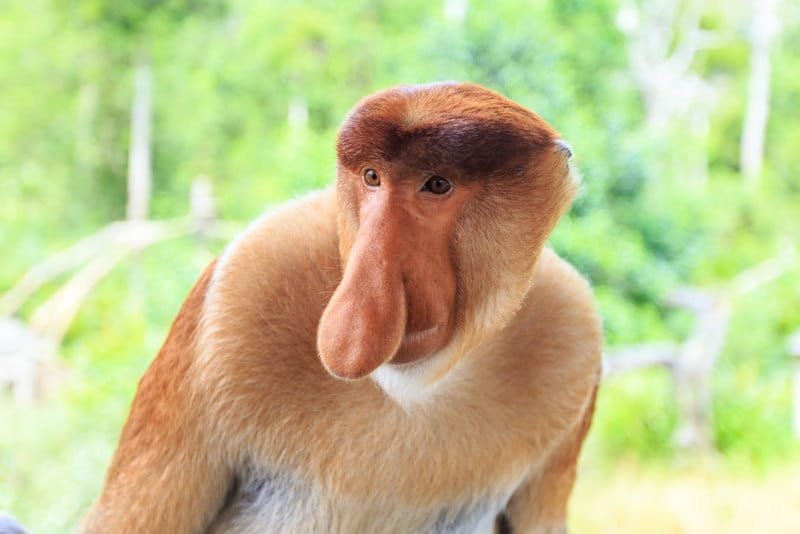
The proboscis monkey from Borneo lives up to its name. In older males, the nose hangs down over the mouth. The nose makes their calls louder, and females prefer males with big noses. In Indonesia, it is sometimes jokingly called “monyet belanda”, Dutch monkey, because its big nose and pot belly reminded local people of the Dutch colonists.