Big ears are not just for show. They help animals hear predators coming or track down hidden prey, such as insects under the ground or in tree bark. In hot regions, big ears also work as radiators, helping animals lose body heat. And, of course, animals with big ears are simply great to look at. These are 12 of the most remarkable.
1. Fennec fox
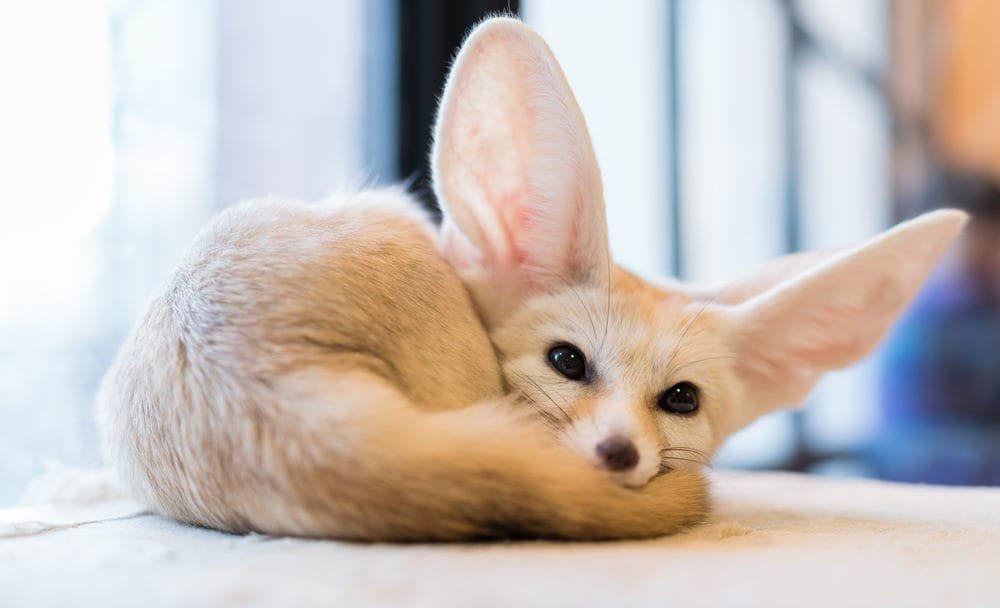
The fennec fox from the Sahara is the smallest fox in the world, yet it has the largest ears of any fox relative to its body size: up to around 15 centimeters long, on a body of only 35 to 40 centimeters. Its ears help it hear insects and small animals moving underground at night, and they release body heat in the scorching desert. Its sandy, cream-colored coat reflects sunlight, and furry soles protect its paws from the hot sand. A German armored reconnaissance vehicle was even named after it, because it is small, quiet and fast.
2. Long-eared jerboa
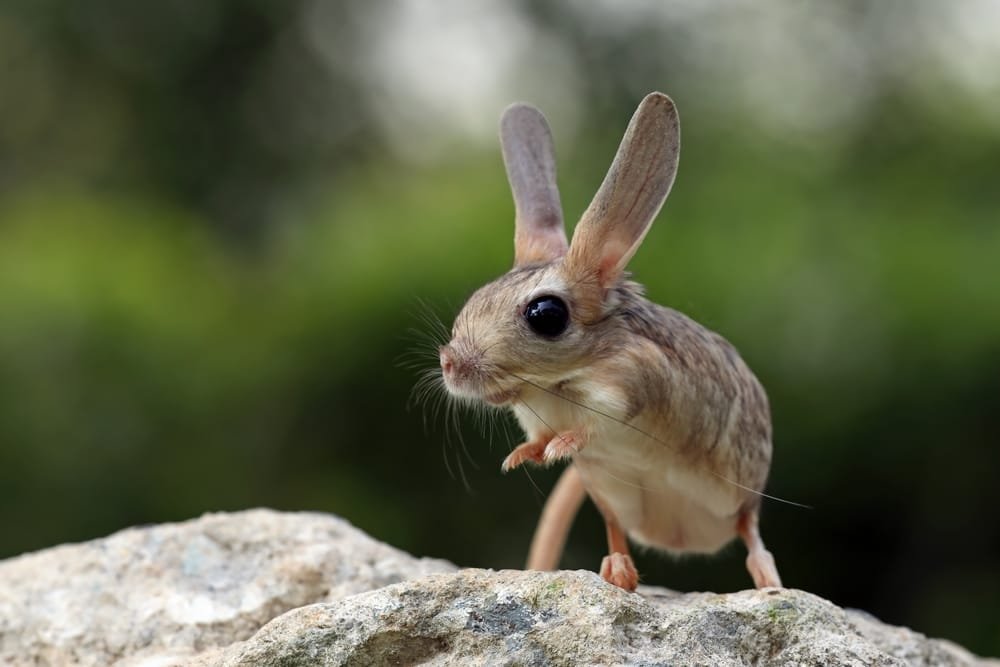
The long-eared jerboa is a tiny rodent of only around 7 to 9 centimeters long, from the deserts of Mongolia and northern China. Its ears are enormous: relative to its body, among the largest of any mammal. With hind legs much longer than its front legs, it moves by hopping like a miniature kangaroo, and it has a long tail with a tuft at the end for balance. It is nocturnal and rarely seen. It was first filmed in the wild only in 2007.
3. Greater bilby
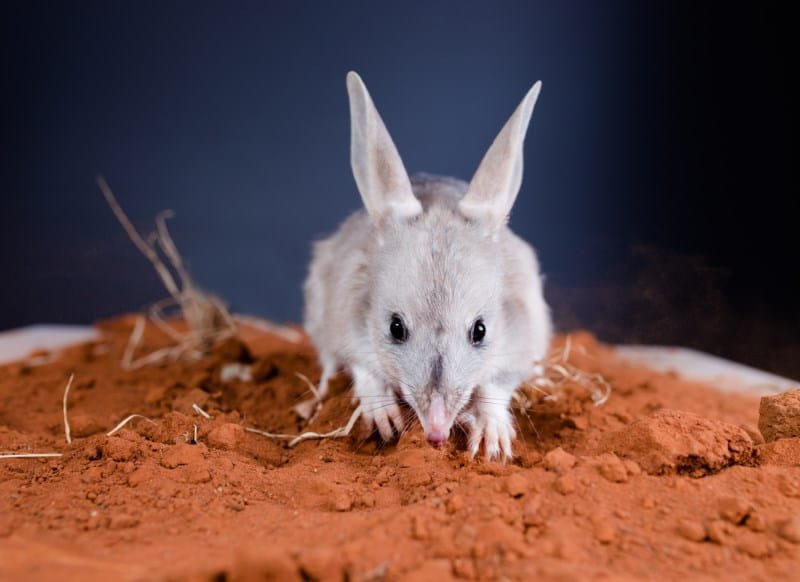
The bilby is a small Australian marsupial with long, rabbit-like ears and a long, pointed snout. There used to be two species, but the lesser bilby became extinct in the mid-20th century, and the greater bilby is now rare and protected. Bilbies dig deep spiral burrows where they sleep during the day. At night, they come out to hunt insects, seeds and bulbs. In Australia, a campaign has been running for years to replace the Easter bunny with the Easter bilby, because introduced rabbits are a major threat to these animals.
4. Black-tailed jackrabbit
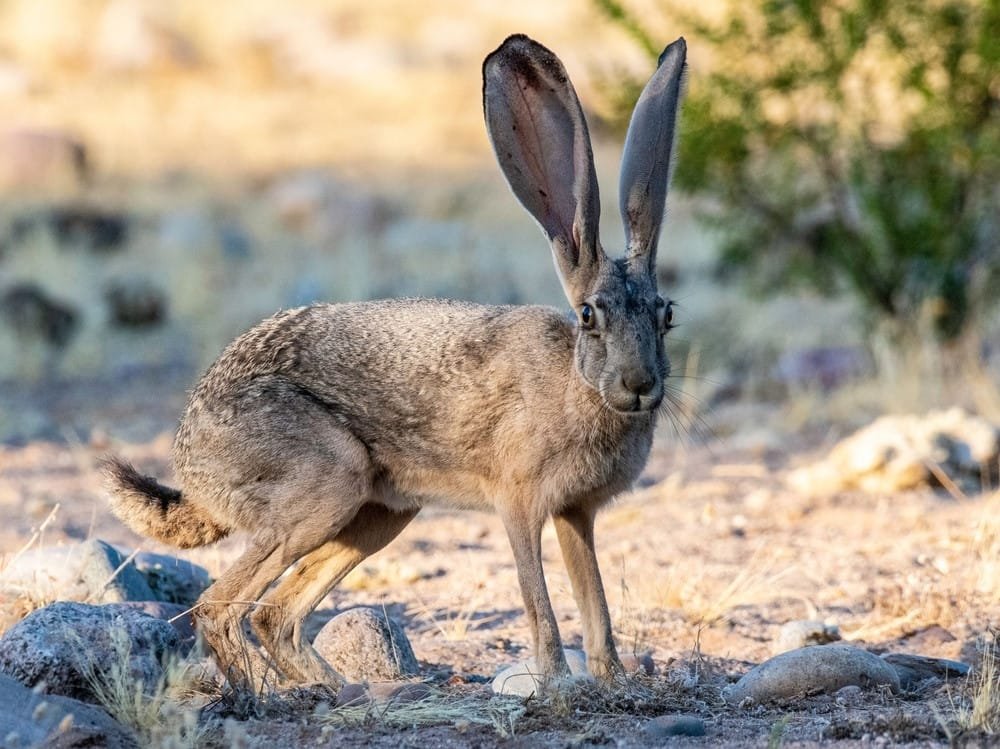
Despite its name, the black-tailed jackrabbit of the southwestern United States and Mexico is a hare, not a rabbit. Its ears can be more than 15 centimeters long. They help it hear predators such as coyotes from far away, but they also act as air conditioning in the desert: they are full of blood vessels, and when the jackrabbit rests in the shade, its blood cools as it flows through the thin ears. It can run at up to 60 km/h and leap several meters at a time.
5. California leaf-nosed bat
The California leaf-nosed bat, which lives from southern California into Mexico, has large ears and a leaf-shaped flap on its nose. Unlike many other bats, it often hunts using its excellent hearing and vision rather than echolocation alone. It can hear the tiny sounds of insects, such as crickets and moths, moving on the ground or on plants, and then swoops down to grab them.
6. Mule deer

Mule deer from western North America owe their name to their large ears, which resemble those of a mule. They are closely related to the white-tailed deer. Their ears can move independently, allowing them to pinpoint sounds from all directions, which is useful when you are prey for wolves, coyotes and mountain lions. When startled, mule deer often flee with a distinctive bouncing gait, landing on all four feet at once.
7. Galago
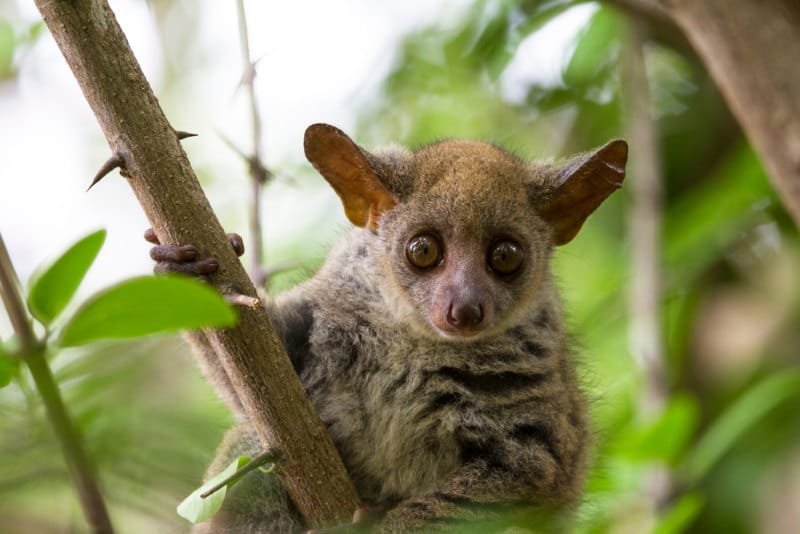
Galagos are also known as bush babies, because their calls can sound like a crying baby. These small primates from Africa are active at night. They can move their large ears independently toward a sound, and even fold them flat. With their powerful hind legs, they can jump several meters between branches, and they catch insects out of the air with their hands.
8. Aye-aye
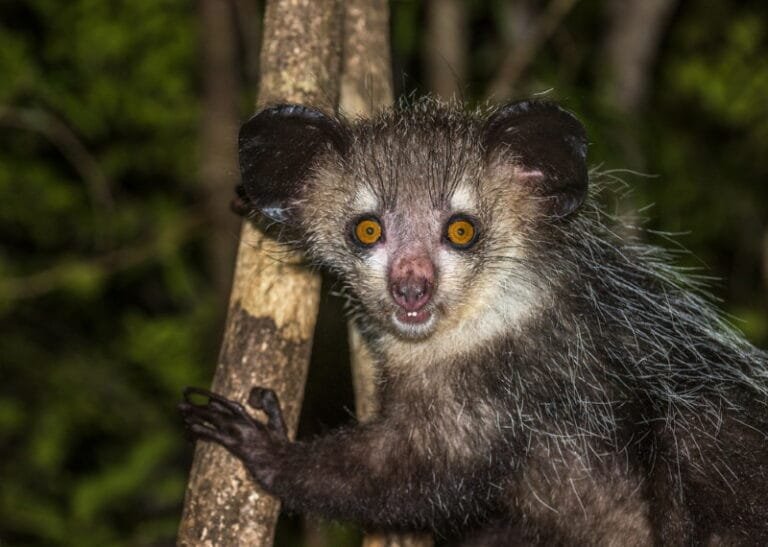
The aye-aye is a lemur from Madagascar, active at night, with large bat-like ears and a remarkably long, thin middle finger. It taps on tree trunks with this finger and listens with its huge ears for the hollow spaces where insect larvae live. When it hears something, it gnaws a hole in the wood with its rodent-like teeth and pulls out the larvae with its long finger. Scientists call this technique percussive foraging.
9. Caracal
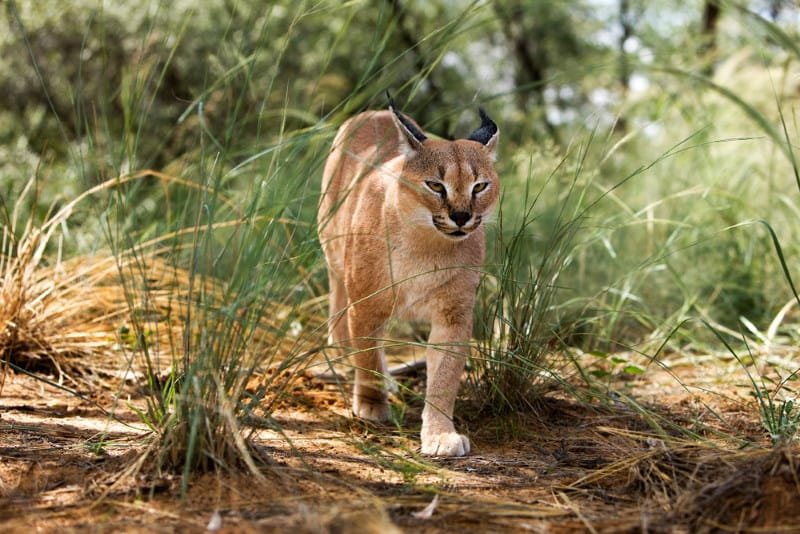
The caracal is known for its large ears with long black tufts at the tips. Its name comes from the Turkish word for “black ear”. It is sometimes called the desert lynx, but it is more closely related to the African golden cat. This slender, medium-sized cat lives in Africa, the Middle East and parts of Asia. It is famous for its incredible jumps: it can leap several meters into the air to catch birds in flight.
10. Serval
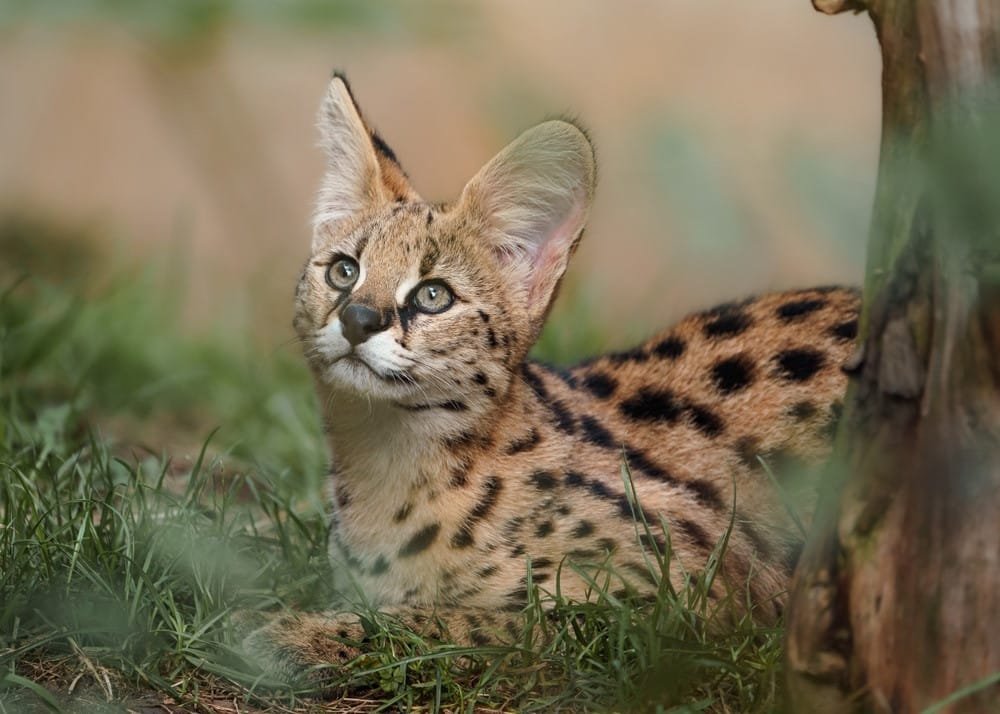
The serval is a long-legged cat with large ears and a golden coat with black spots. It has the longest legs and the largest ears relative to its body size of any cat. On the African savanna, it hunts in tall grass and wetlands, where its ears pick up the faint sounds of rodents, even underground. When it locates prey, it leaps high into the air and pounces down on it with its front paws.
11. African savanna elephant
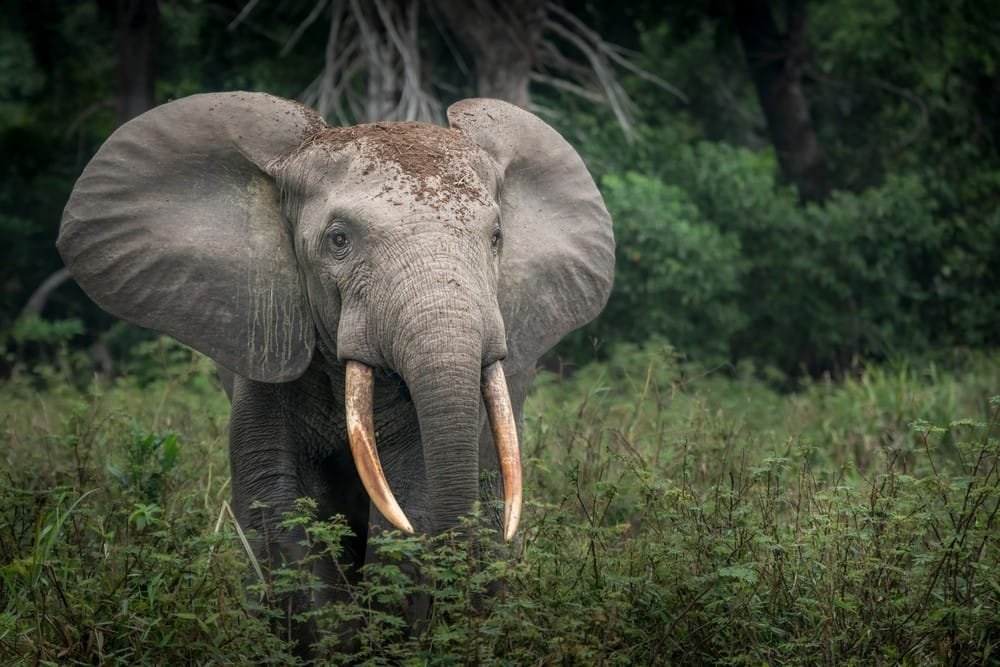
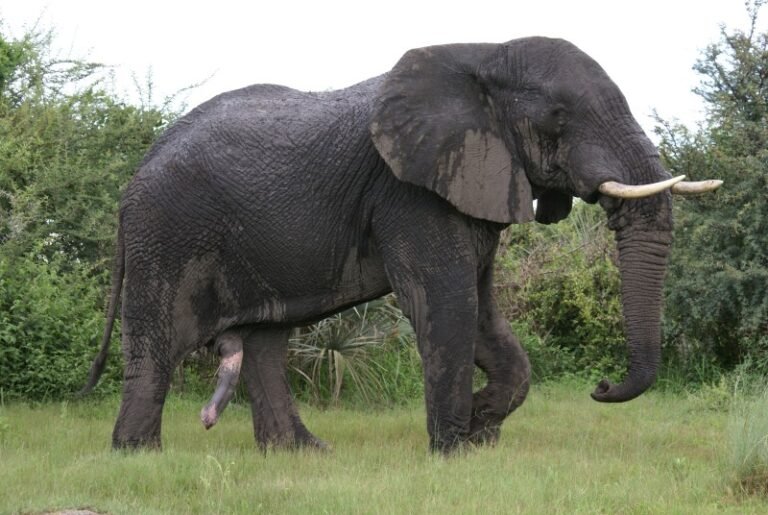
The African savanna elephant has the largest ears of any animal: they can be up to around 2 meters long, and are often said to be shaped roughly like the map of Africa. They are mainly used to keep cool: the back of the ears is full of blood vessels, and when elephants flap them, the blood cools down. Elephants also use their ears to communicate, spreading them wide to look bigger and more threatening.
12. Basset hound

Among domestic animals, the basset hound stands out with its long, drooping ears. They are thought to help it track scents: as it sniffs along the ground, its ears sweep scent particles toward its nose. Basset hounds are friendly but stubborn hunting dogs with short legs and a long back. Their long ears do need regular care, because they are prone to ear infections. A basset hound named Tigger once held the Guinness World Record for the longest ears on a dog, each more than 30 centimeters long.