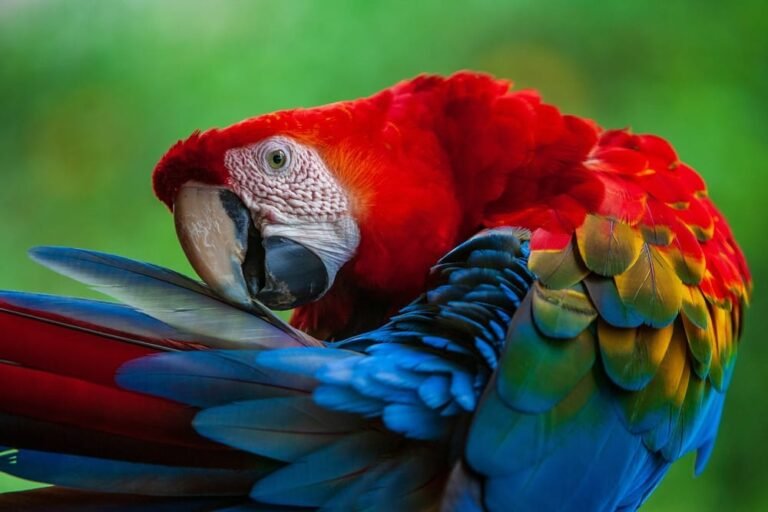
One of the two longest rivers in the world, the largest tropical rainforest on Earth and countless species of plants and animals, many of which scientists have not even described yet. That is the Amazon. These twenty remarkable animals share this unique region with many others.
1. Jaguar (Panthera onca)
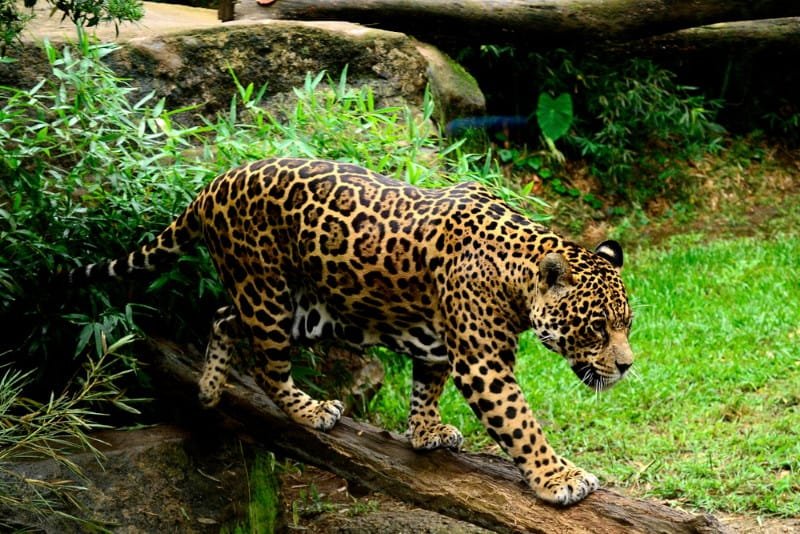
The jaguar looks a bit like a leopard, but you can tell them apart by its heavier build and larger rosettes, which often have spots inside. It is the largest cat in the Americas, and few animals are safe from its powerful jaws. It can bite through the shell of a turtle and kill caimans. Unlike many other cats, the jaguar loves water. It is an excellent swimmer and also catches fish.
2. Capybara (Hydrochoerus hydrochaeris)
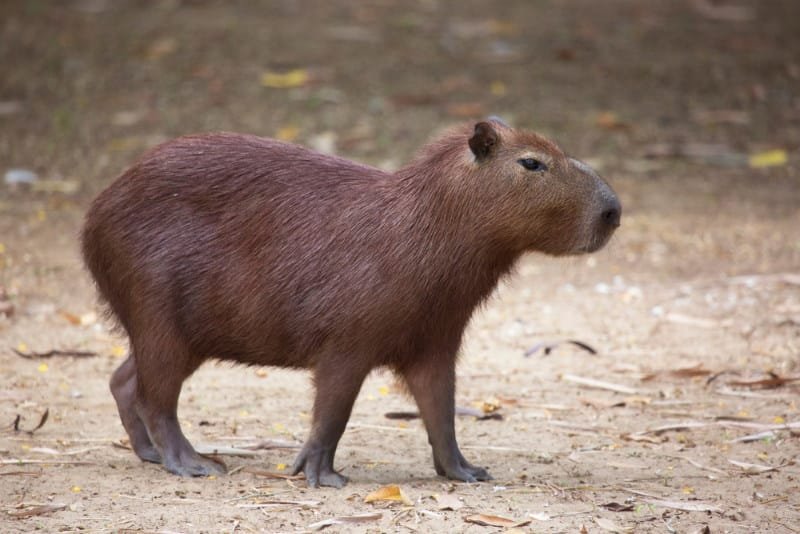
The capybara looks like a giant guinea pig on longer legs, and in fact the two are related. The largest rodent in the world always stays close to water. It is an excellent swimmer, with partly webbed toes, and it can stay underwater for several minutes to hide from predators. Besides caimans and jaguars, humans also hunt it.
3. Pygmy marmoset (Cebuella pygmaea)
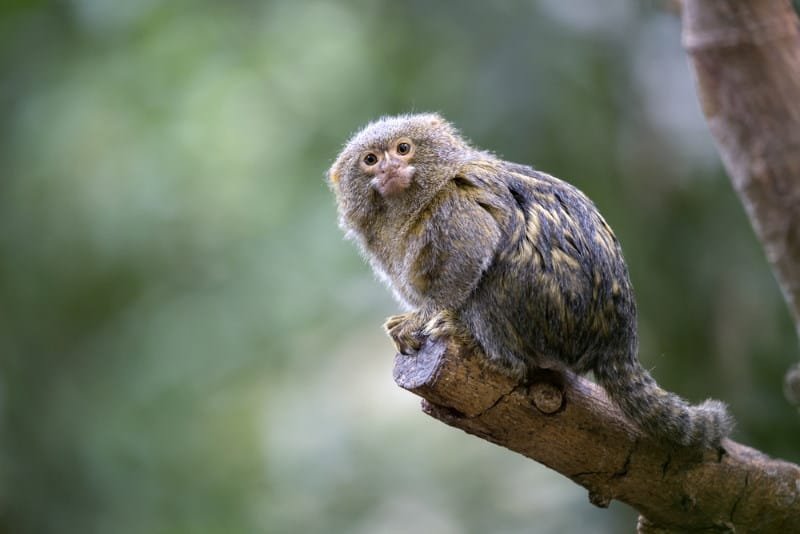
With a body length of only around 12 to 16 centimeters, not counting the tail, the pygmy marmoset is the smallest true monkey in the world. It eats insects and fruit, but its favorite food is tree sap and gum, which it gets by gnawing small holes in the bark. Another fun fact: research suggests that groups of pygmy marmosets in different areas use slightly different calls, a bit like dialects.
4. Sloth
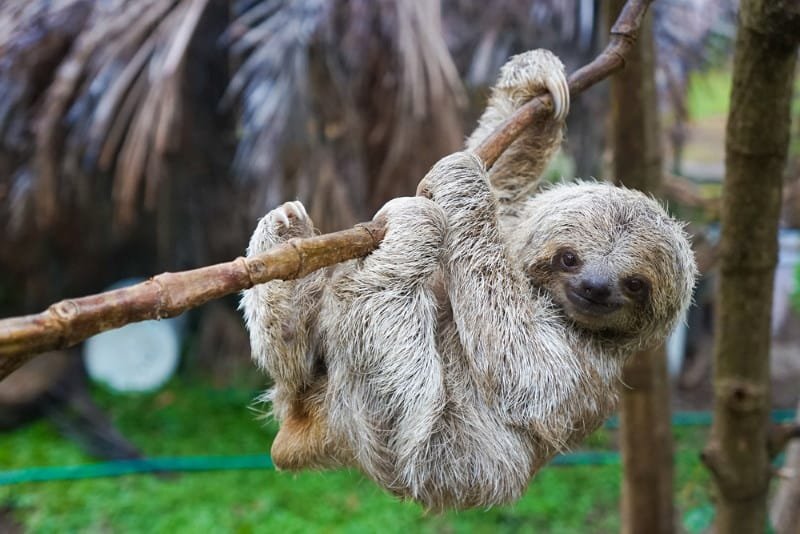
Who can resist the sweet face of these South American mammals? Millions of years ago, there were many kinds of sloths, including giant ground sloths as big as elephants. Today, there are only two groups left: the two-toed sloths and the three-toed sloths, known for their mask-like faces. On average, they move only a few dozen meters a day. That is not surprising when you live on hard-to-digest leaves that provide very little energy.
5. South American tapir (Tapirus terrestris)
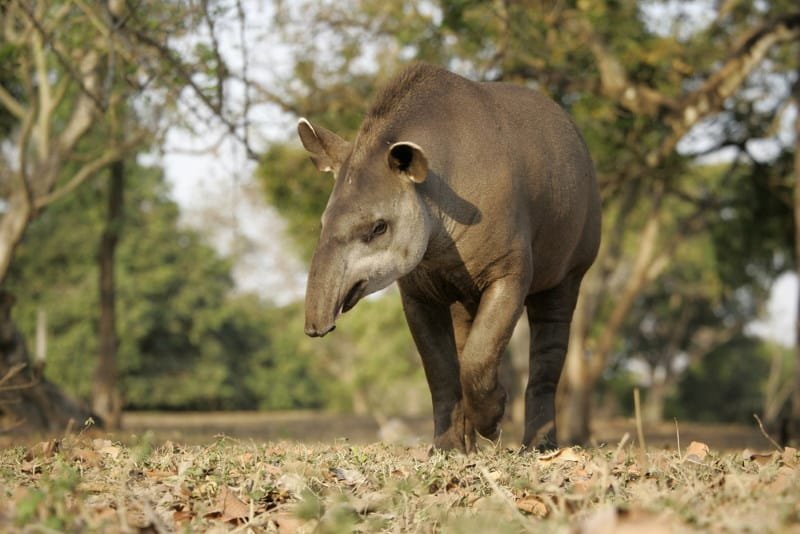
Baby tapirs are adorable. After a long pregnancy of about 13 months, a single calf is born. Its white spots and stripes, which look a bit like a watermelon, disappear after a few months, making way for a plain brown coat. The tapir mainly eats fruit, grass, leaves and water plants, and it is an important seed disperser in the forest.
6. Southern tamandua (Tamandua tetradactyla)
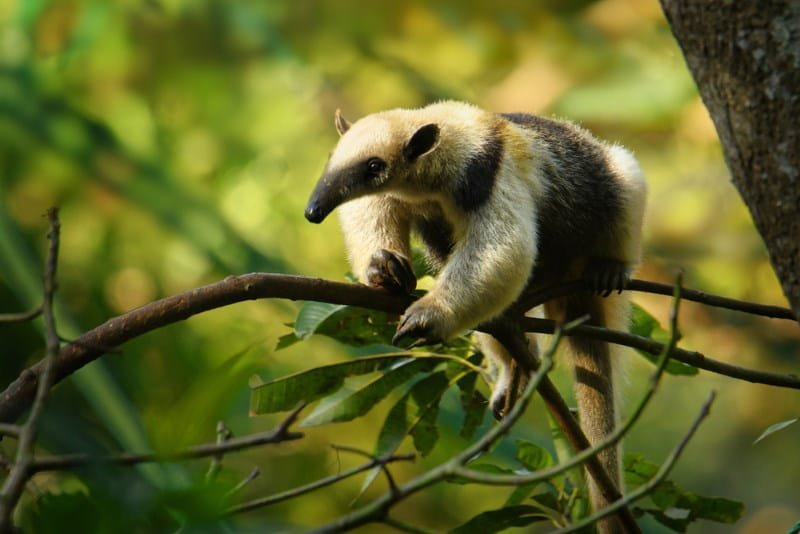
This tree-climbing anteater can eat thousands of ants and termites a day. It licks them up with its long, sticky tongue from nests in the trees and on the ground. When threatened on the ground, the tamandua stands up on its hind legs with its back against a tree or rock, ready to lash out with its strong front legs and sharp claws.
7. Emperor tamarin (Saguinus imperator)
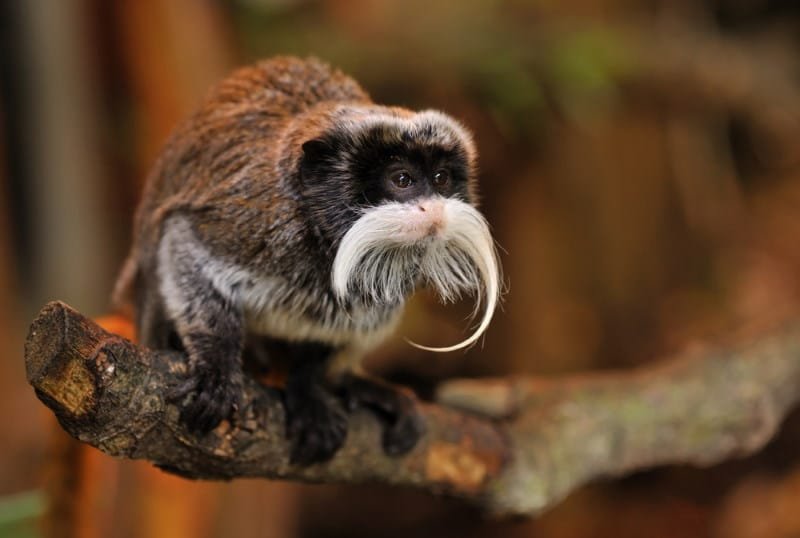
The emperor tamarin is said to have been named as a joke, because its long white mustache resembled that of the German emperor Wilhelm II. Usually twins are born, and the father and other group members do most of the carrying. The mother mainly takes care of nursing.
8. Harpy eagle (Harpia harpyja)
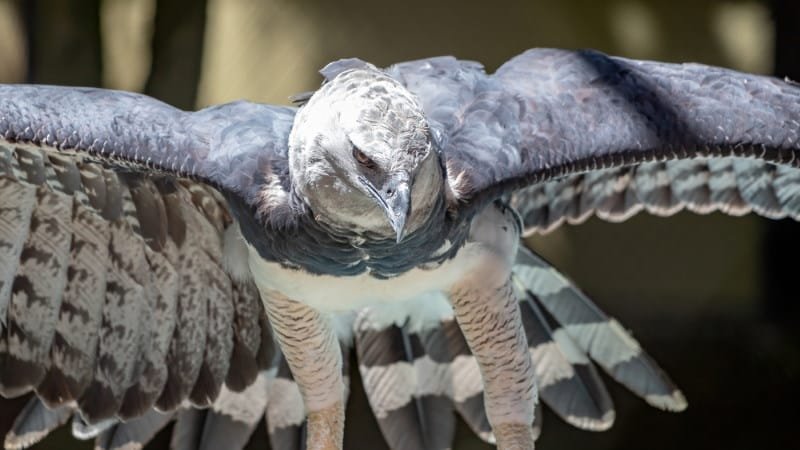
When you look at the harpy eagle, it is easy to see why it was named after the fearsome winged creatures of Greek legend. This is not a bird to handle without gloves: its talons can be larger than a grizzly bear’s claws. With a wingspan of around 2 meters, it is one of the largest and most powerful eagles in the world. It hunts sloths and monkeys in the treetops.
9. Hyacinth macaw (Anodorhynchus hyacinthinus)
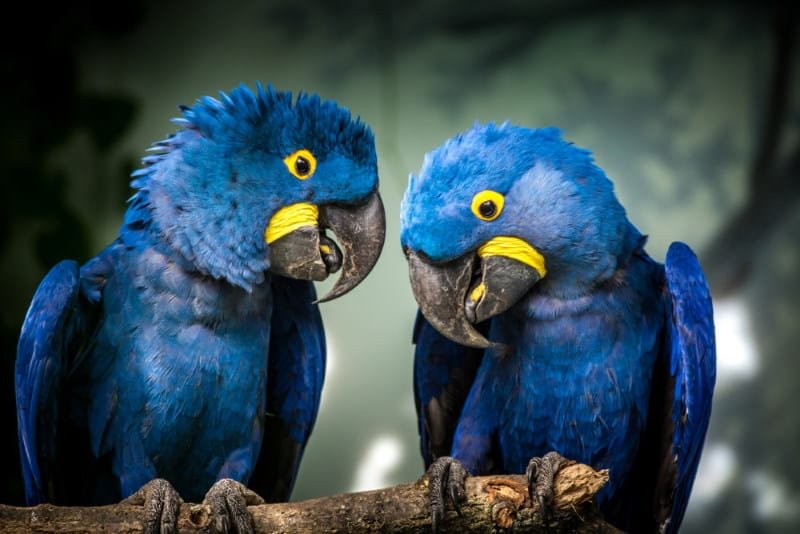
The hyacinth macaw is a stunning cobalt blue bird with yellow rings around its eyes and at the base of its lower beak. It can grow to around 1 meter long, making it the longest parrot in the world. Hyacinth macaws stay with the same partner for life. They mainly eat palm nuts, which they crack with their enormously strong beaks.
10. Royal flycatcher (Onychorhynchus coronatus)
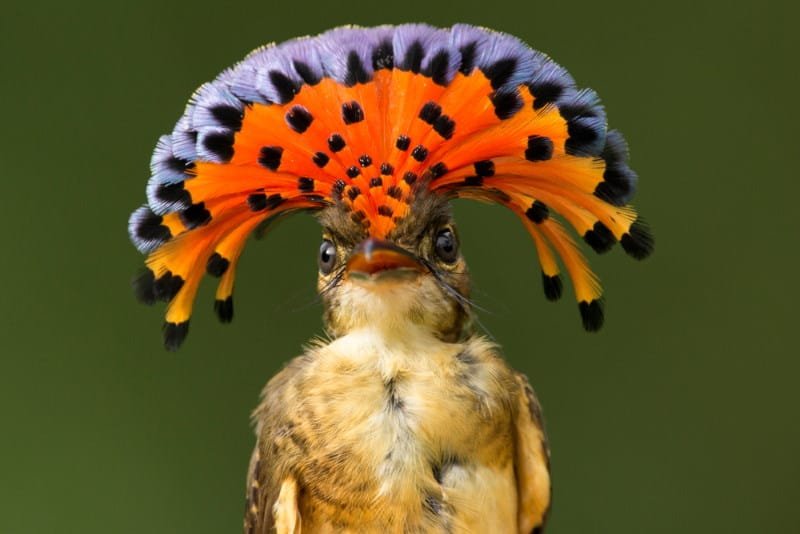
The brownish plumage of the royal flycatcher is pretty, but not exactly eye-catching. As soon as it raises its crest, however, you see how spectacular this small bird is. Males have a red crest with blue-black tips, while females have a yellow or orange one. Unfortunately, the royal flycatcher rarely shows off its crown, usually only during courtship or when it feels threatened.
11. Toco toucan (Ramphastos toco)
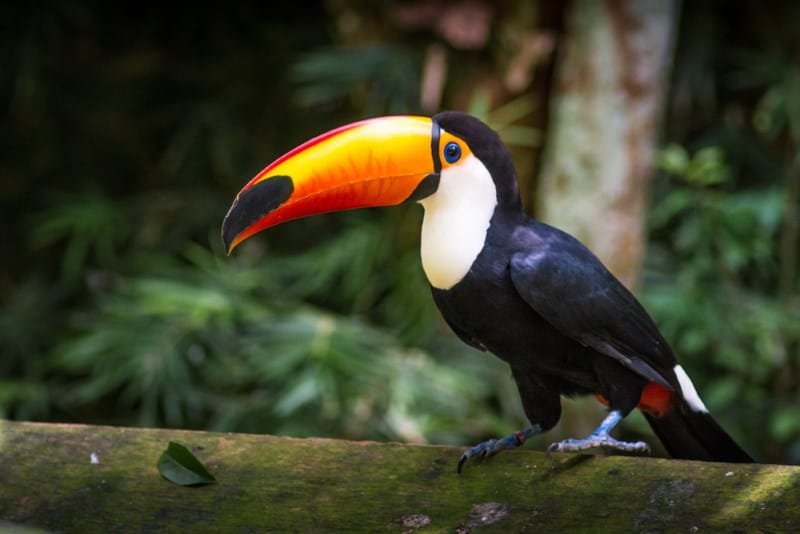
The huge orange-yellow beak of the toco toucan immediately catches the eye. It is almost 20 centimeters long, but surprisingly light, and it also helps the bird get rid of excess body heat. The toucan mainly uses it to pick fruit. Playful toucans also sometimes grab each other’s beaks in a friendly wrestling match.
12. King vulture (Sarcoramphus papa)
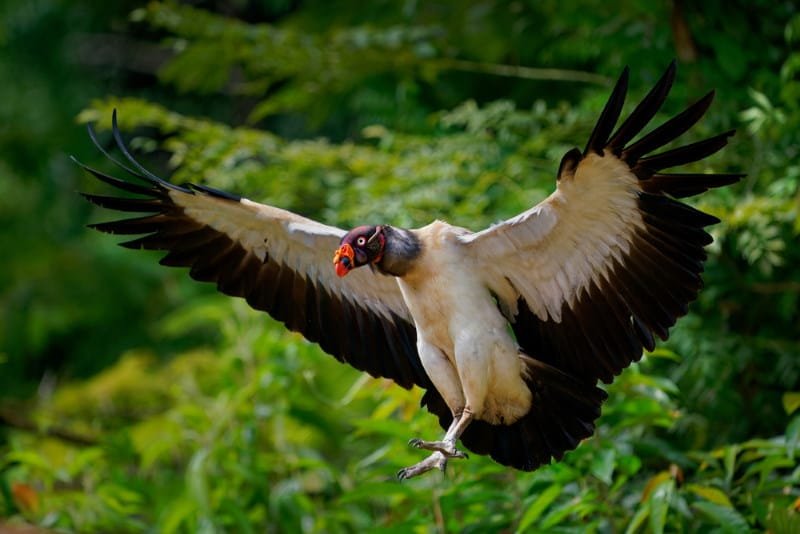
This New World vulture is around 70 to 80 centimeters long and has a wingspan of up to 2 meters. In flight, it rides the thermals, barely flapping its wings. Its colorful head, with orange, red, yellow and purple skin, is one of the most striking in the bird world. Thanks to its strong beak, it can tear open carcasses that smaller vultures cannot.
13. Poison dart frogs (Dendrobatidae)
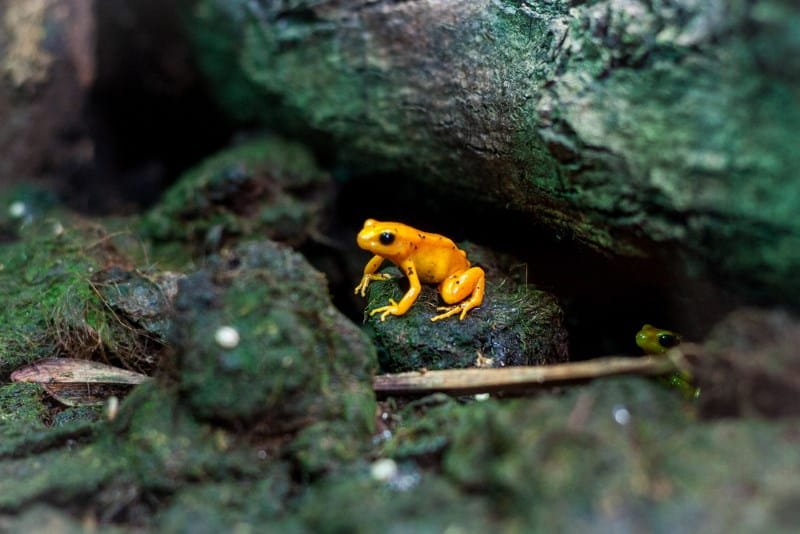
Poison dart frogs come in all kinds of bright colors, which warn predators that they are toxic. Many species live in the Amazon, such as the dyeing poison frog and the colorful Ranitomeya frogs. The most poisonous of all, the golden poison frog, lives in the rainforests of western Colombia. The frogs get their poison from their food: they eat toxic ants, mites and beetles and store the toxins in their skin. In captivity, without that diet, they are harmless.
14. Pink-toed tarantula (Avicularia avicularia)
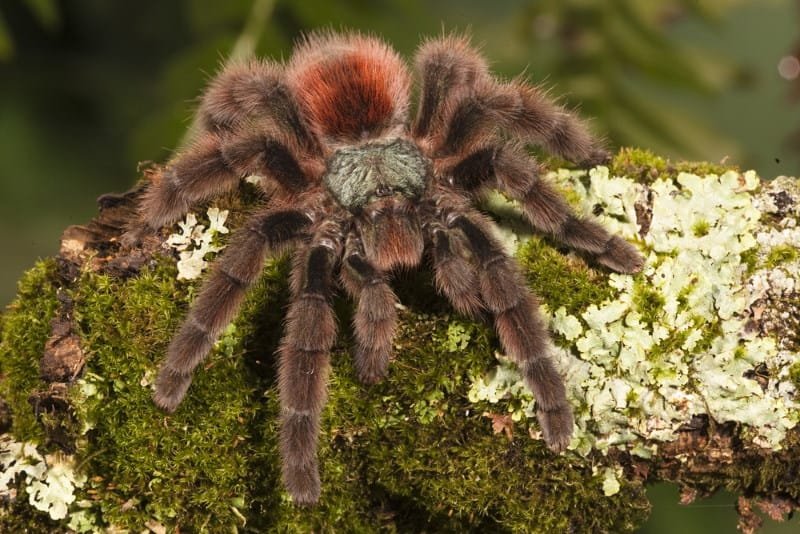
Many people have heard of the Mexican red-knee tarantula, but the pink-toed tarantula is much less known. This tree-dwelling spider builds silk tube homes in the trees. Young spiders have a pinkish body and dark toes, while adults have a dark, hairy body with pink or reddish feet. It is a docile species that rarely bites.
15. Brazilian wandering spiders (Phoneutria)
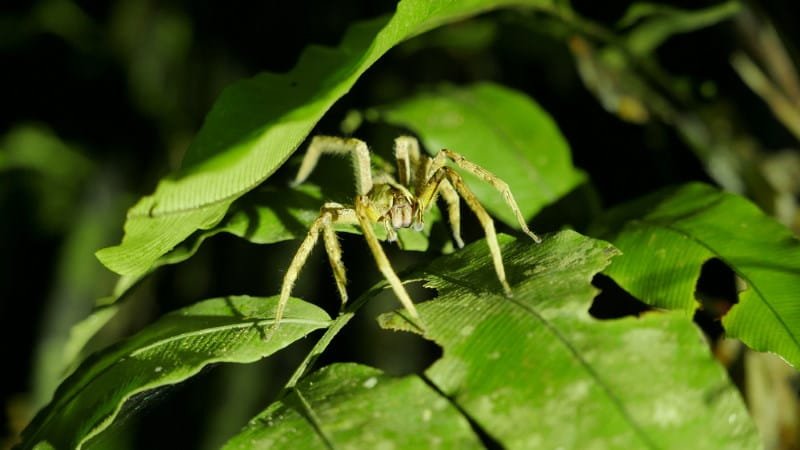
You really do not want to find a Brazilian wandering spider in your bunch of bananas. These spiders are fast, defensive and highly venomous, and some species live in the Amazon. Instead of building a web, they roam the forest floor at night in search of prey. When threatened, they raise their front legs in a typical defensive pose. Thanks to modern antivenom, deaths are very rare today.
16. Black caiman (Melanosuchus niger)
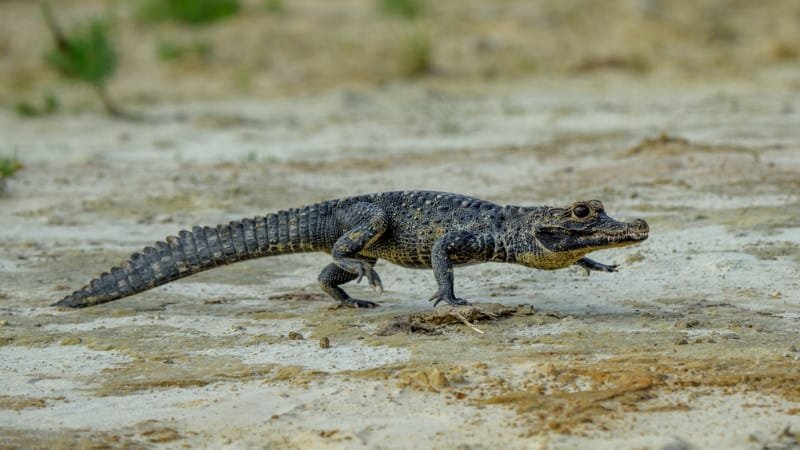
The black caiman is the largest of all caimans and the largest predator in the Amazon. Adults are usually 3 to 4 meters long, but large males can reach 5 meters or more. Its dark color helps it hide in the water at night, when it hunts fish, capybaras and other animals. In the 20th century, it was hunted on a massive scale for its skin and nearly disappeared, but it has since recovered in many areas.
17. Green anaconda (Eunectes murinus)
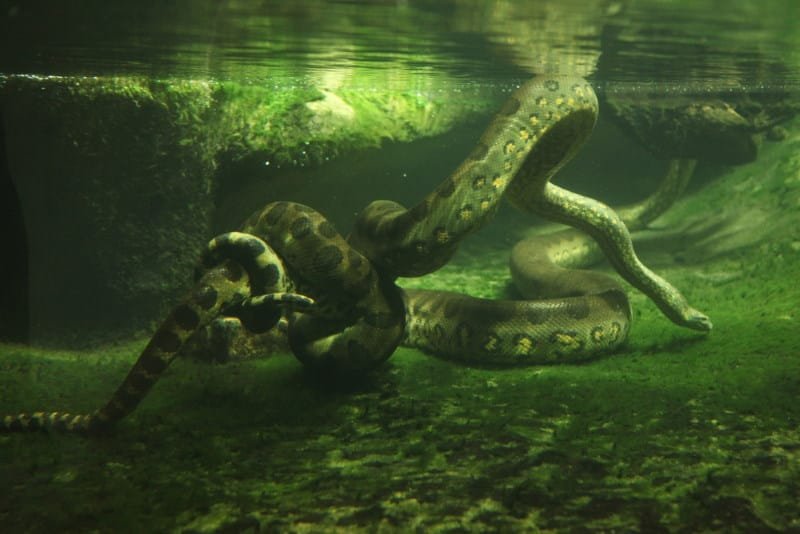
Female green anacondas usually grow to 4 to 5 meters long, with exceptional specimens of more than 6 meters. Males are much smaller. It may not be the longest snake in the world, that title goes to the reticulated python, but it is the heaviest: large females can weigh well over 100 kilos. With such a heavy body, moving through dense forest is not easy, so anacondas spend most of their time in or near water. In 2024, scientists announced that the northern populations are a separate species, the northern green anaconda.
18. Red-bellied piranha (Pygocentrus nattereri)
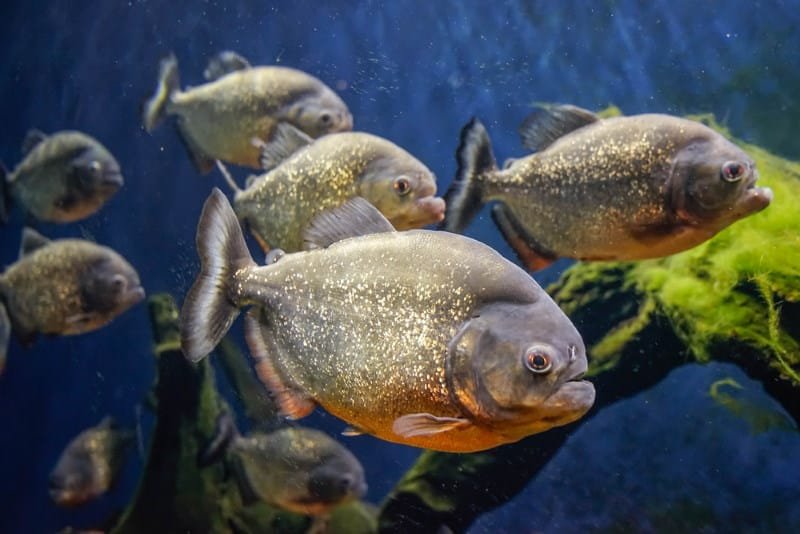
Horror stories in which a school of piranhas devours a human in seconds are just that: stories. Some piranha relatives are even vegetarian, and most piranhas eat fish, insects, crustaceans and fruit that falls into the water. They usually swim in groups for protection, not to hunt together. That said, in the dry season, when water levels are low and food is scarce, piranhas can become more aggressive, and they occasionally bite swimmers.
19. Amazon river dolphin or boto (Inia geoffrensis)
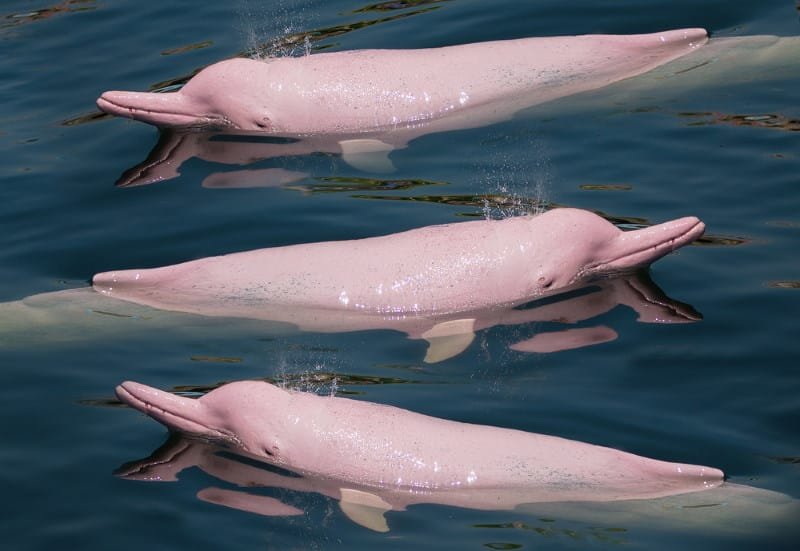
The Amazon river dolphin, or boto, lives in the rivers of the Amazon and Orinoco basins. It can grow to more than 2.5 meters long, making it the largest river dolphin in the world. It has small eyes, but in the muddy water it relies mainly on echolocation. Calves are gray at birth, but adults, especially males, often turn pink. That is probably caused by scar tissue from fights. Instead of a dorsal fin, it has a low ridge, and because the bones in its neck are not fused, it can turn its head to maneuver between tree trunks in flooded forests.
20. Amazonian manatee (Trichechus inunguis)
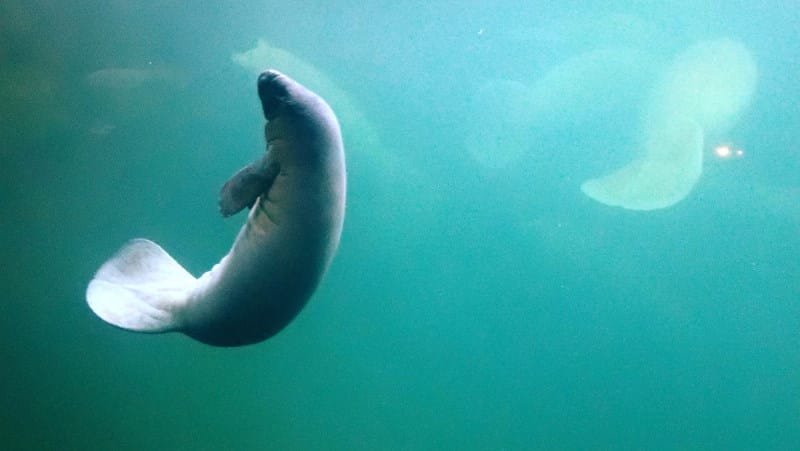
A sea cow that lives only in fresh water: that, in short, is the Amazonian manatee. This mammal can grow to around 2.8 meters long and weigh around 400 kilos, which makes it, believe it or not, the smallest of the three manatee species. A remarkable detail is that its molars are constantly replaced: new teeth grow in at the back and slowly move forward as the front ones wear down from chewing tough plants.