Throughout history, cunning tricksters, pranksters, and overeager scientists have convinced the public that fantastic beasts walked among us. From stitched museum curiosities to modern internet jokes, fabricated creatures have sparked global sensations. Here are ten famous animal hoaxes that fooled the world.
10. Gef the Talking Mongoose
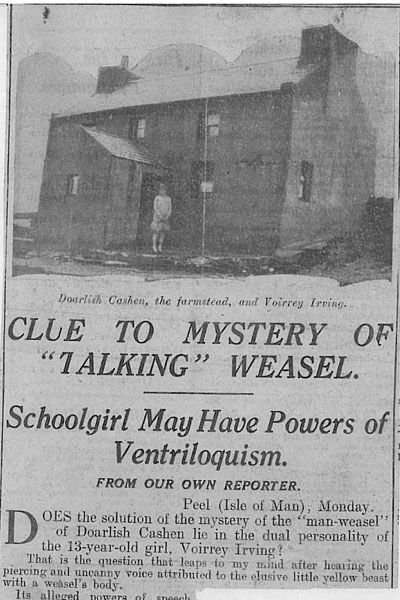
During the 1930s on the Isle of Man, the Irving family claimed that an articulate creature named Gef inhabited the wooden walls of their farmhouse. Gef described himself as an extra-clever mongoose who could speak English, sing songs, and spy on local neighbors.
Psychic researchers investigated the claim, suspecting that teenage daughter Voirrey was a skilled ventriloquist using clever tricks.
9. The Lake George Monster
In 1904, American artist Harry Watrous built a wooden sea monster with green eyes and a movable jaw to prank a fellow fisherman in upstate New York. Using pulleys and ropes from shore, Watrous caused the creature to surface repeatedly in front of startled tourists.
The monster became a regional legend before Watrous confessed to the practical joke thirty years later.
8. The Martian Monkey
In 1953, three barbers in Georgia claimed to have discovered the corpse of a tiny alien beside a damaged flying saucer on a rural highway. Police and Air Force officials quickly investigated the hairless green corpse.
A university zoologist exposed the truth: the men had shaved the fur off a deceased rhesus monkey, cut off its tail, and dyed its skin green with food coloring.
7. The Pacific Northwest Tree Octopus
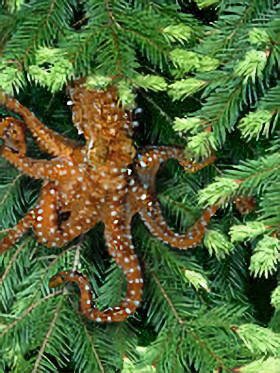
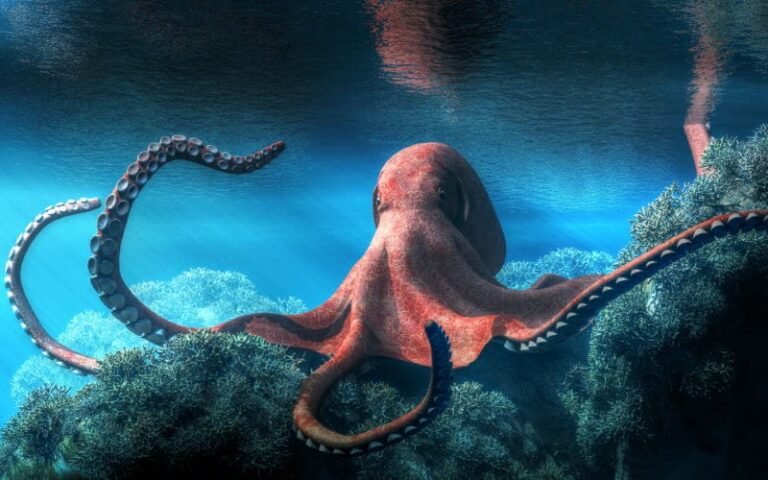
In 1998, Lyle Zapato launched a satirical website dedicated to the endangered tree octopus of the Olympic Peninsula rainforests. The site featured descriptions of the mollusk’s climbing habits, dietary preferences, and natural predators.
Despite the obvious absurdity, the hoax became a famous case study showing how easily students and casual internet users believe fabricated online sources.
6. The Cottingley Fairies
In 1917, young cousins Elsie Wright and Frances Griffiths took photographs in their garden showing delicate winged creatures dancing in front of them. The images convinced prominent figures, including author Sir Arthur Conan Doyle, who regarded them as genuine evidence of psychic spirits.
Decades later in the 1980s, the women confessed that the fairies were cardboard drawings copied from children’s gift books and secured with hatpins.
5. The Cardiff Giant
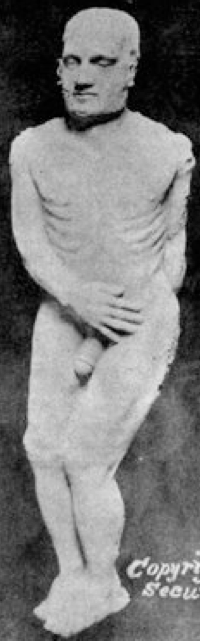
Workers digging a well in Cardiff, New York, in 1869 uncovered a massive ten-foot petrified man. Thousands paid admission to view what theologians declared to be biblical proof of ancient giants.
In reality, tobacconist George Hull commissioned a sculptor in Chicago to carve the figure out of gypsum rock, aged it with sulfuric acid, and buried it on his cousin’s farm as a lucrative hoax.
4. Piltdown Man
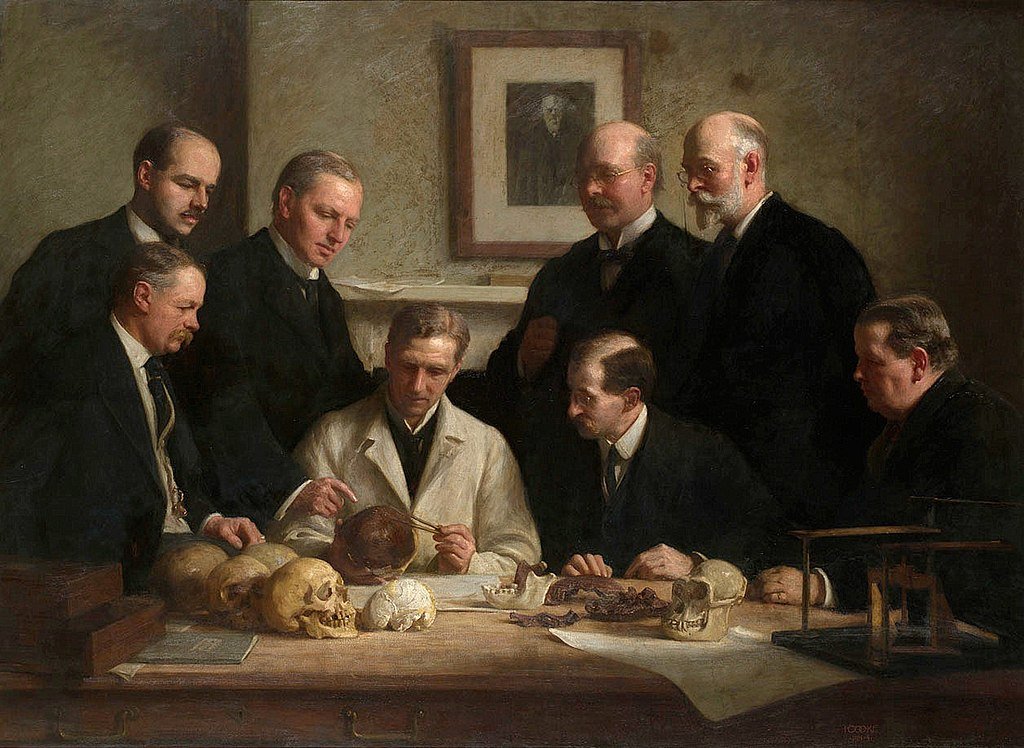
In 1912, amateur archaeologist Charles Dawson announced the discovery of skull fragments and a jawbone in Sussex, claiming to have found the missing evolutionary link between apes and humans. British anthropologists enthusiastically accepted Eoanthropus dawsoni for four decades.
Modern chemical tests in 1953 proved the fossil was a deliberate forgery consisting of a medieval human skull, an orangutan jaw, and chimpanzee teeth stained with potassium bichromate.
3. Ompax spatuloides
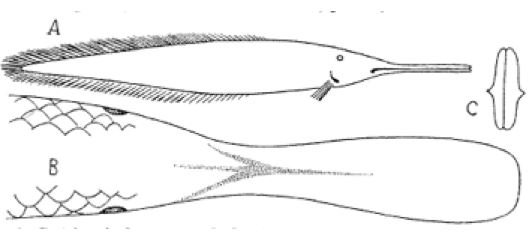
In 1872, station workers in Queensland, Australia, presented visiting naturalist Count Castelnau with a strange cooked fish featuring a duck bill, platypus head, and lungfish tail. Castelnau sketched the specimen and published a formal scientific description of the new genus Ompax.
Decades later, locals revealed that the specimen was an elaborate prank constructed from parts of three different animals served on toast.
2. Archaeoraptor
National Geographic magazine proclaimed a sensational discovery in 1999: Archaeoraptor liaoningensis, a fossil from China showing the true evolutionary link between dinosaurs and modern birds.
Paleontologists soon detected structural anomalies in the slab. Smugglers had glued together the head and body of a primitive bird with the tail and legs of a dromaeosaurid dinosaur to fetch a higher black-market price.
1. The Fiji Mermaid
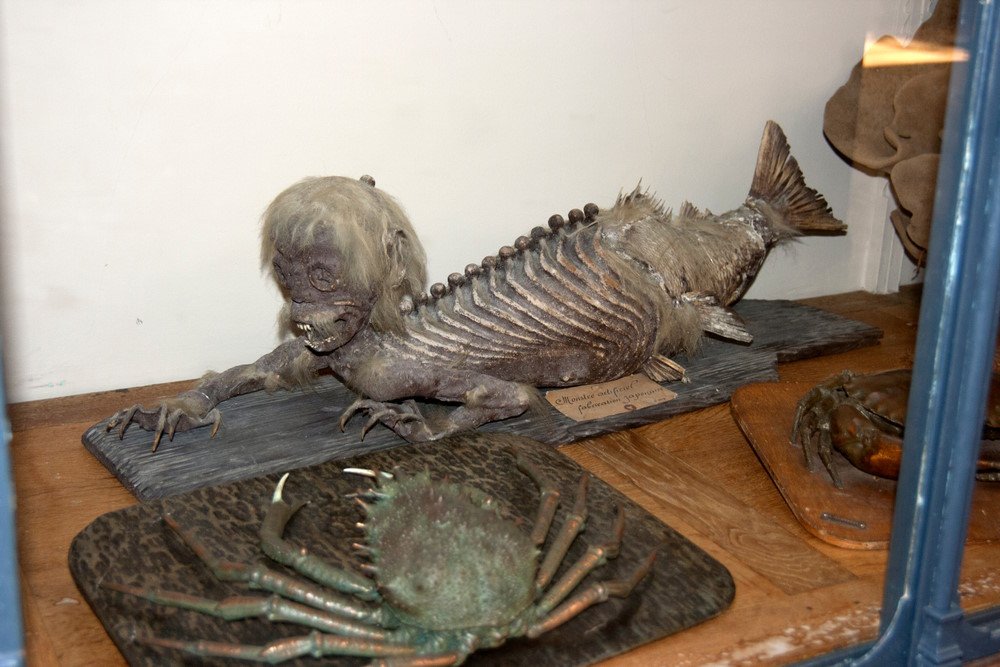
Showman P.T. Barnum exhibited the Fiji Mermaid in New York during 1842, promoting it as a mummified specimen captured near the South Pacific. Crowds expected a gorgeous siren from marine legend, only to see a dried, mummified creature with bared teeth.
The specimen was a classic Japanese folk craft combining the torso and head of a young monkey sewn onto the tail of an adult salmon.