Animals have all kinds of tricks to defend themselves or catch prey. Producing electricity is one of the most remarkable. Some fish generate weak electric fields to sense their surroundings and communicate, while others can deliver shocks powerful enough to stun a horse. These are six animals that can produce electricity, from mild to dangerous.
1. Black ghost knifefish
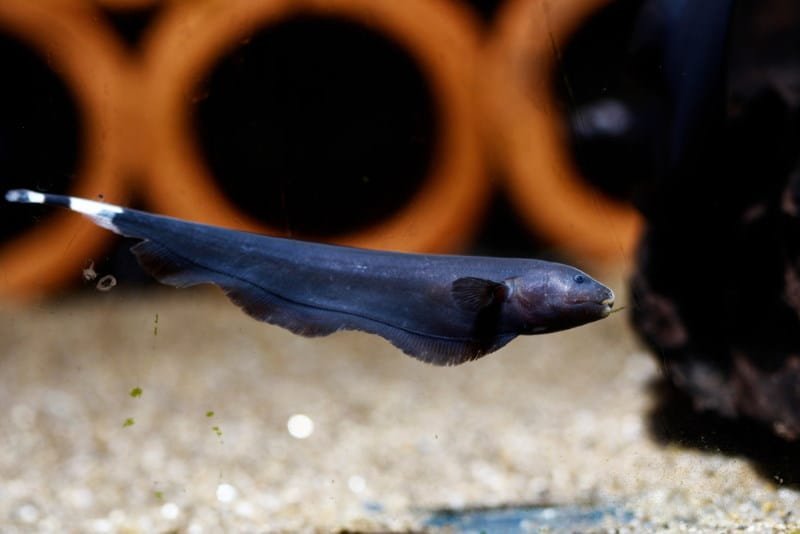
The black ghost knifefish (Apteronotus albifrons) lives in fresh water in tropical South America. It is black with a white stripe on its nose and two white rings on its tail, and grows to around 50 centimeters. It constantly generates a weak electric field around its body and has receptors all over its skin to detect changes in that field. That allows it to “see” in the dark, find prey and communicate with other knifefish. The electricity is very weak, so there is no danger of a shock. It is a popular, though demanding, aquarium fish.
2. Elephantnose fish
The elephantnose fish from the rivers of West and Central Africa owes its name to a long, flexible extension of its lower jaw, which it uses to search for insect larvae in the mud. Like the knifefish, it produces weak electric pulses for navigation and communication. It also has one of the largest brains relative to its body size of any vertebrate, and its brain uses a huge share of its energy, probably to process all that electrical information.
3. Stargazers
Stargazers are fish that bury themselves in the sand of the sea floor, with only their eyes and upward-facing mouth sticking out, waiting for prey to swim by. Some species, such as the northern stargazer (Astroscopus guttatus) off the east coast of the United States, have electric organs behind their eyes. These organs evolved from eye muscles. The shocks are relatively weak, but probably help to stun prey or deter predators.
4. Electric rays
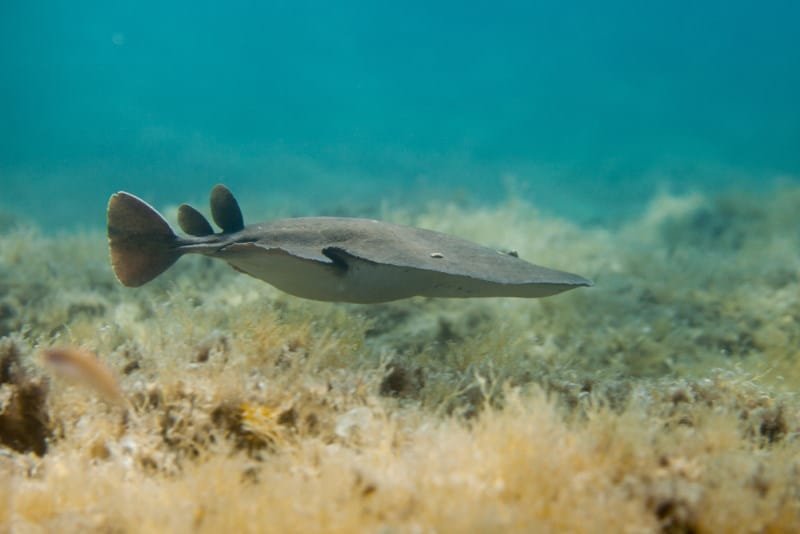
Electric rays (order Torpediniformes) include around 70 species, all able to produce electric shocks. They use them to stun prey and to defend themselves. Depending on the species and size, a shock can range from a few volts to more than 200 volts. Electric rays mainly live in shallow coastal waters, where they lie hidden in the sand.
The ancient Greeks and Romans already knew about the power of these rays. The Roman physician Scribonius Largus recommended placing a live torpedo ray on the head of patients with headaches, and doctors also used it to treat gout. The name “torpedo” comes from the Latin word for numbness.
5. Electric catfish
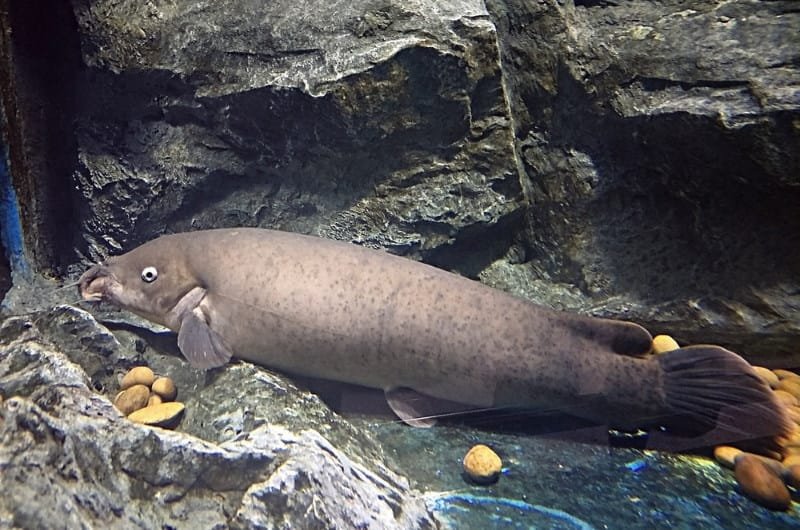
Electric catfish are a family of around 20 species that all produce electricity. They live in tropical Africa, including the Nile. Large specimens can deliver shocks of up to 300 to 400 volts, which they use to stun their prey, mainly other fish. Electric catfish already appear in ancient Egyptian tomb paintings, and the Egyptians may have used them for medical purposes. A shock from a large electric catfish is not deadly to an adult human, but it is very painful and can leave you temporarily numb.
6. Electric eel
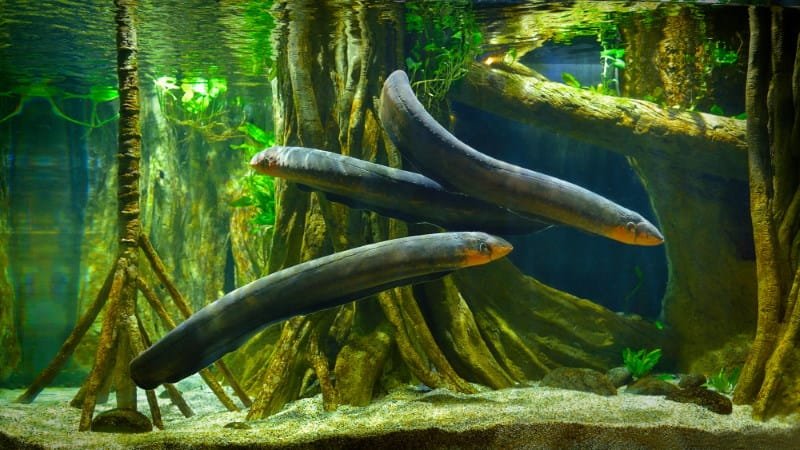
Despite its name, the electric eel is not an eel at all, but a knifefish, related to number 1 on this list. It lives in the rivers and swamps of the Amazon and other parts of South America. The electric eel has three electric organs, which take up around four-fifths of its long body. It can produce weak pulses to navigate, and powerful shocks to stun prey and defend itself.
In 2019, scientists discovered that there are actually three species of electric eel. One of them, Volta’s electric eel, can produce shocks of up to 860 volts, the highest voltage of any known animal. Electric eels sometimes even leap out of the water to shock a threat directly. Deaths are rare, but a powerful shock can cause a person to collapse and drown.
Bonus: electric eels that hunt in packs
For a long time, electric eels were thought to be solitary hunters. But in 2021, researchers in the Brazilian Amazon described something nobody had seen before: groups of more than a hundred Volta’s electric eels hunting together. They herd small fish into a tight ball, after which several eels strike at the same time with combined electric shocks, stunning the fish so they can be easily eaten. It is a reminder of how much is still unknown about these remarkable animals.