Deep beneath our feet, in total darkness, lies a hidden world full of life. Some animals have adapted so extremely to an underground existence that they spend almost their entire lives without seeing daylight. These burrowing and cave-dwelling specialists have developed fascinating adaptations for a life in the dark. Meet eight of these remarkable underground residents.
1. Naked mole-rat
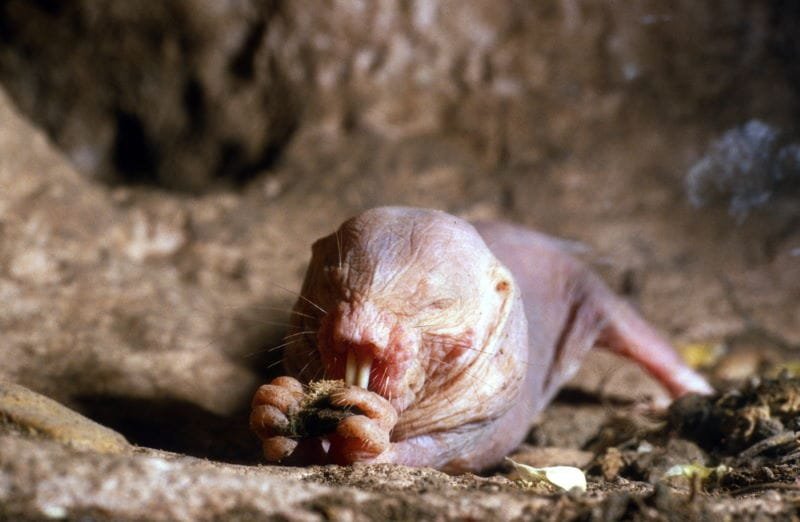
The naked mole-rat (Heterocephalus glaber) from East Africa is perhaps the best-known example. These almost hairless, wrinkly rodents live in large underground colonies with a social structure resembling that of bees or ants, with a single breeding “queen”.
They are fully adapted to underground life: their eyes are tiny and their vision is very poor, they dig with their large front teeth, which can move independently, and they have a slow metabolism. They are remarkably resistant to some types of pain and very rarely get cancer. They can live for more than 30 years, extremely long for a rodent, and they can survive for up to 18 minutes without oxygen.
2. Olm
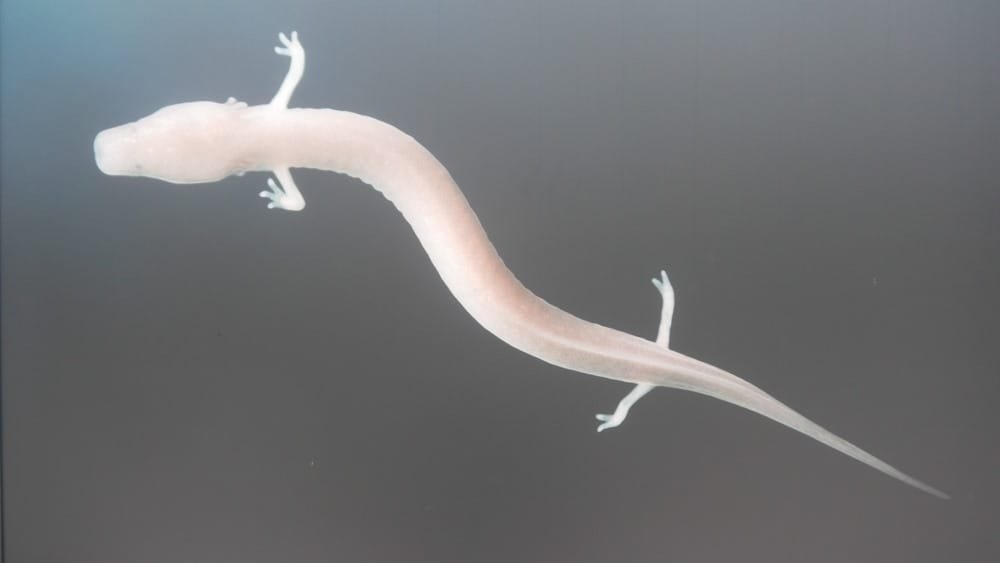
The olm (Proteus anguinus) is a unique salamander that lives in the underground waters of caves in the Dinaric Alps, in Slovenia, Croatia and Bosnia and Herzegovina. Local people once believed it was a baby dragon washed out of the caves after heavy rain.
It is fully adapted to life in permanent darkness. It has no pigment, so it is pale pink or white, and its eyes are underdeveloped and covered by skin. But it has an excellent sense of smell and hearing, and can even sense electric fields. Olms can live for possibly more than 100 years, and in one study, an olm did not move from its spot for more than seven years. They can survive for years without food.
3. Marsupial moles
Marsupial moles are small, blind marsupials that live in the sandy deserts of Australia. They “swim” through loose sand, searching for insect larvae and worms. Their bodies are perfectly adapted: they have a leathery shield on their nose, no external ears, eyes reduced to tiny remnants under the skin, powerful digging claws and silky fur. Unlike other moles, they do not leave tunnels behind: the sand collapses behind them as they move. Females have a backward-facing pouch, so it does not fill with sand.
4. Blind cave fish
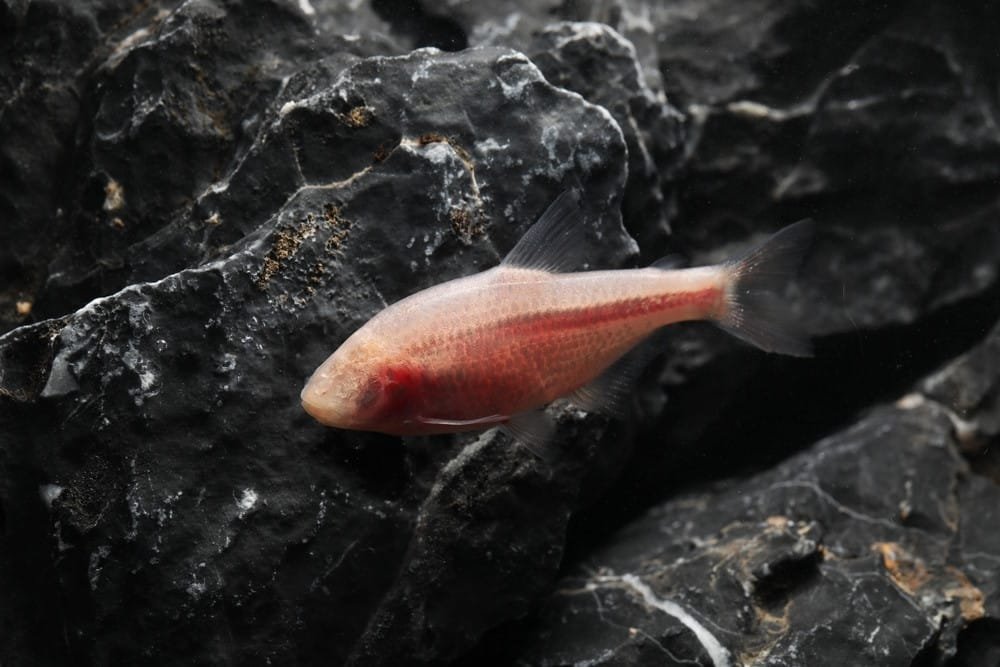
Around the world, there are many species of fish that have adapted to life in underground caves and rivers. A well-known example is the Mexican tetra (Astyanax mexicanus). Some populations of this fish live in rivers and have normal eyes, while others, living in caves, have lost their eyes and pigment completely over the course of evolution.
The cave fish find their way and their food using other senses, such as their lateral line, which detects water pressure and vibrations, and their sense of smell. Losing eyes and pigment saves energy in an environment where they are useless. Because the two forms of the same species can still interbreed, they are a favorite of scientists studying evolution.
5. Golden moles
Golden moles (family Chrysochloridae) are small insect-eating mammals from southern Africa. Despite their name and appearance, they are not closely related to true moles, but to tenrecs and elephant shrews. They live mostly underground, and many species are functionally blind, with eyes covered by skin and fur.
They have a wedge-shaped head with a leathery nose pad, no visible ears or tail, and powerful front legs for digging. Their dense fur often has a beautiful iridescent, metallic sheen, whose function underground is unclear. Some species can detect vibrations, such as the footsteps of termites, through the bones of their head.
6. Texas blind salamander
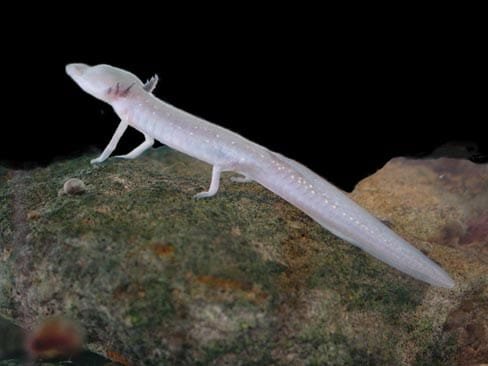
The Texas blind salamander (Eurycea rathbuni) lives only in the underground waters of the Edwards Aquifer in Texas. Like the olm, it is fully adapted to the dark: it has no pigment, its eyes are reduced to two tiny black dots under the skin, and it has striking red, feathery external gills to take oxygen from the water.
It hunts small invertebrates such as snails and shrimp, which it detects by sensing the movements they make in the water. It is an endangered species, threatened by the pollution and overuse of the groundwater it depends on.
7. Springtails
Springtails (Collembola) are tiny, six-legged animals that live in enormous numbers in the soil. A single square meter of soil can contain tens of thousands of them. Many species that live deep in the soil or in caves have adapted to a life without light: they have lost their pigment and eyes and are completely white or pale. In 2010, a species of springtail was found nearly two kilometers deep in a cave in Georgia, one of the deepest-living land animals ever found. They play an important role in breaking down organic material in the soil.
8. Caecilians
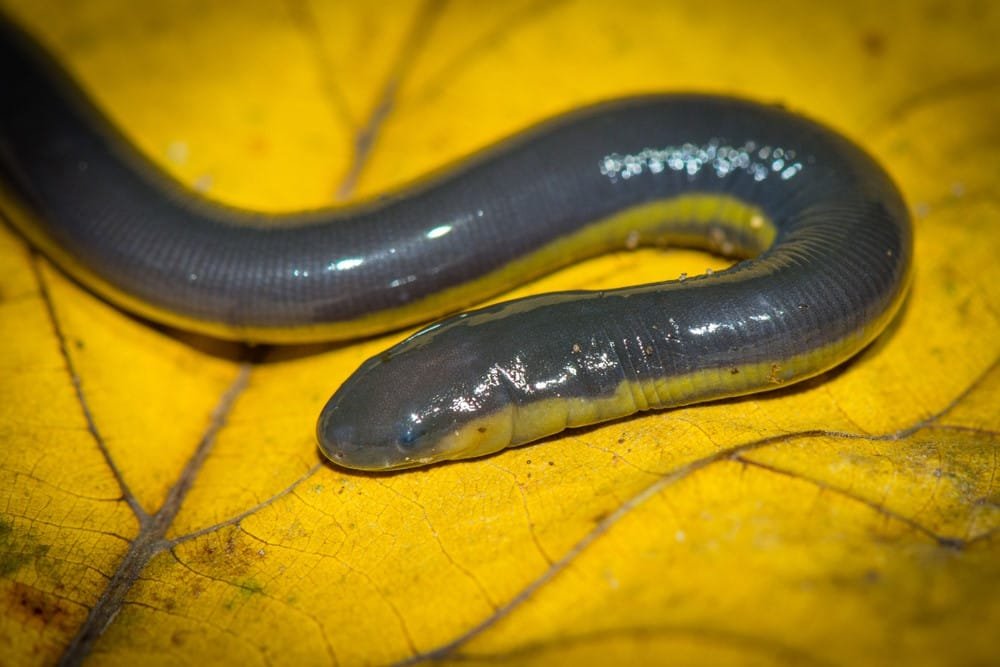
Caecilians (order Gymnophiona) are a group of legless amphibians that look like large worms or snakes. Most species live buried in the soil in moist, tropical regions around the world. They have a compact, bullet-shaped skull for digging, tiny eyes that are often covered with skin or even bone, and a well-developed sense of smell.
They have a unique sensory organ, a small tentacle between their eye and nostril, which they use to detect prey such as worms and termites in the dark soil. Some species have a bizarre form of parental care: the young feed on the nutrient-rich outer layer of their mother’s skin, which she regrows regularly.