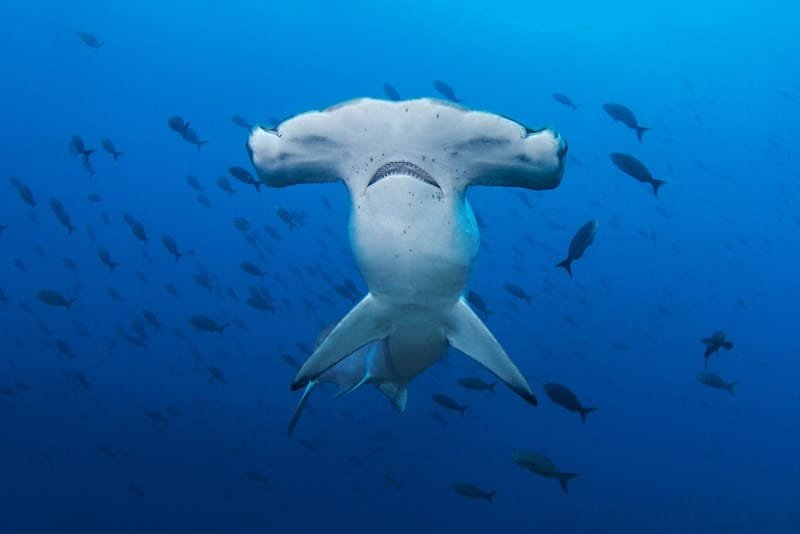
Two eyes in your head seems perfectly normal. But many animals do it differently. They have eyes at the ends of their arms, in their shells or inside a transparent head. Some can even see with their whole skin. These are 12 animals with eyes in the strangest places.
1. Starfish: eyes on the tips of their arms
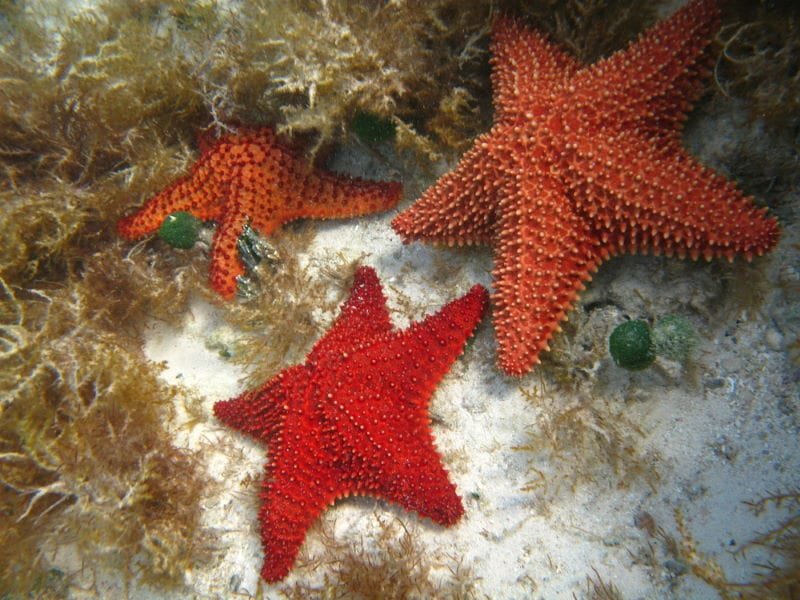
A starfish has no head, but it does have eyes. At the tip of each arm sits a small, simple compound eye, often visible as a red dot. It cannot see sharply with it, but it can distinguish light from dark and large shapes, such as the edge of a reef, which helps it find its way home.
2. Brittle star: seeing with its whole skin
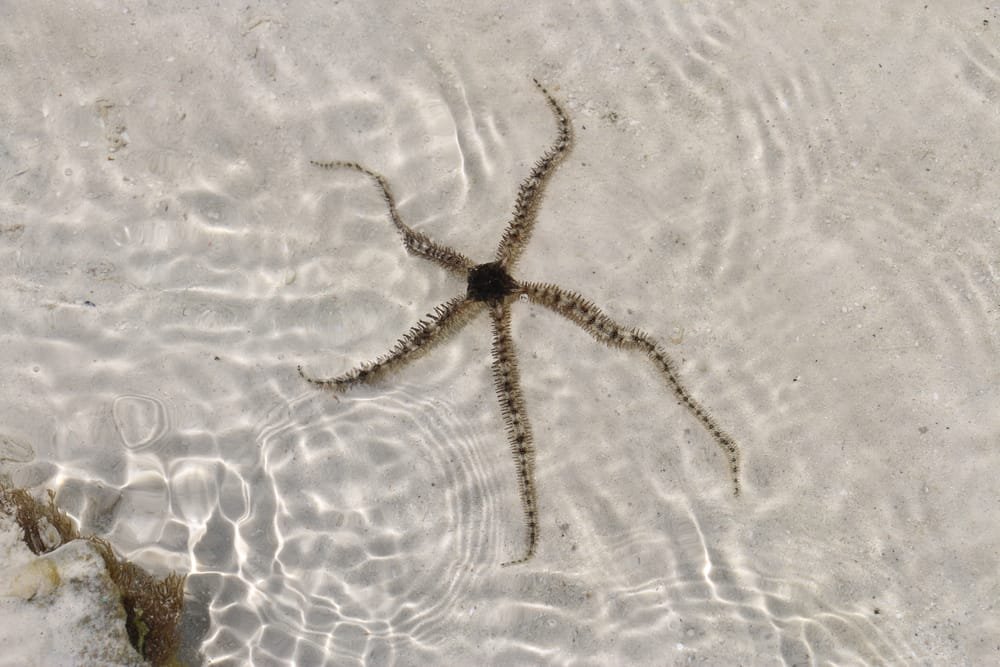
The red brittle star (Ophiocoma wendtii) has no eyes at all, but it can still see. Its whole body is covered with light-sensitive cells. During the day, it turns dark, and that pigment helps to shade the cells so that light only reaches them from certain directions, allowing the animal to detect shapes. It was only the second animal known to see without eyes, after the sea urchin.
3. Scallop: up to 200 mirror eyes
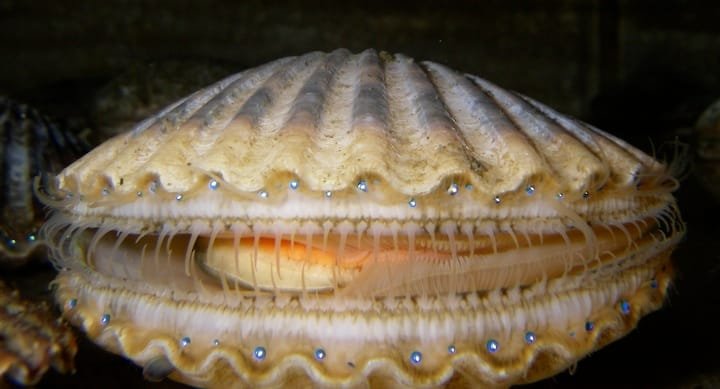
Along the edge of a scallop’s shell runs a row of up to 200 tiny, often bright blue eyes. They do not work with a lens like our eyes, but with a curved mirror at the back, just like a reflecting telescope. That mirror is made of tiny, perfectly arranged square crystals of guanine. Why a scallop needs so many eyes is still not fully understood, but they help it spot approaching predators.
4. Chiton: eyes made of stone
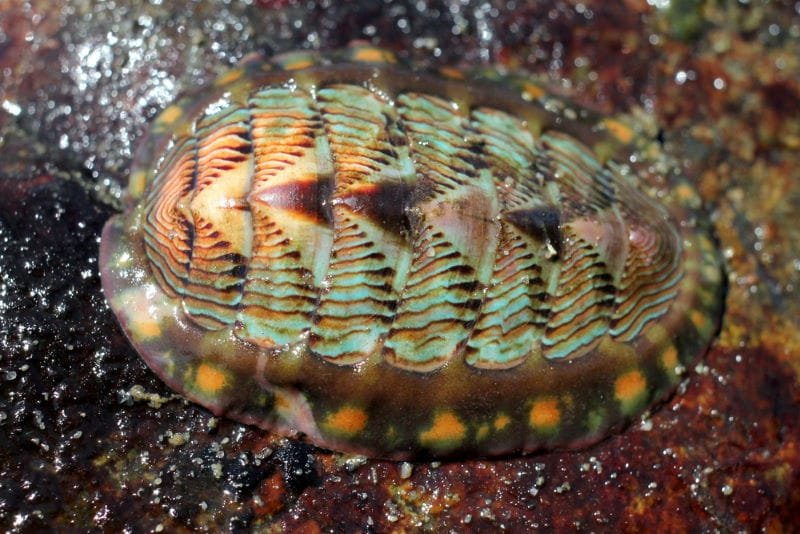
A chiton is a mollusk with a shell made of eight plates. In some species, those plates contain hundreds or even thousands of tiny eyes. Their lenses are made of aragonite, the same mineral as the shell itself. They are among the only known eyes with lenses made of stone. With them, a chiton can tell the shadow of a predator apart from a passing cloud and clamp down onto its rock in time.
5. Hammerhead shark: eyes at the ends of its head
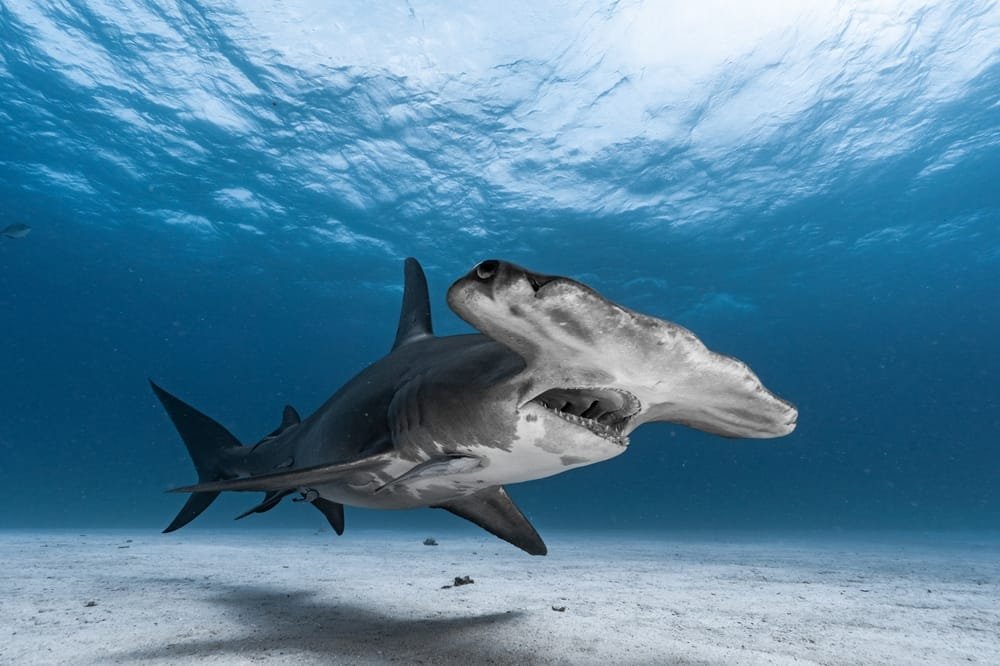
The eyes of a hammerhead shark sit at the far ends of its wide, flat head. This gives it a huge field of view and excellent depth perception in front of its head. By swinging its head from side to side while swimming, it can even see above and below itself at the same time. Its broad head is also packed with sensors that detect the weak electric fields of prey hidden in the sand.
6. Chameleon: each eye looks a different way
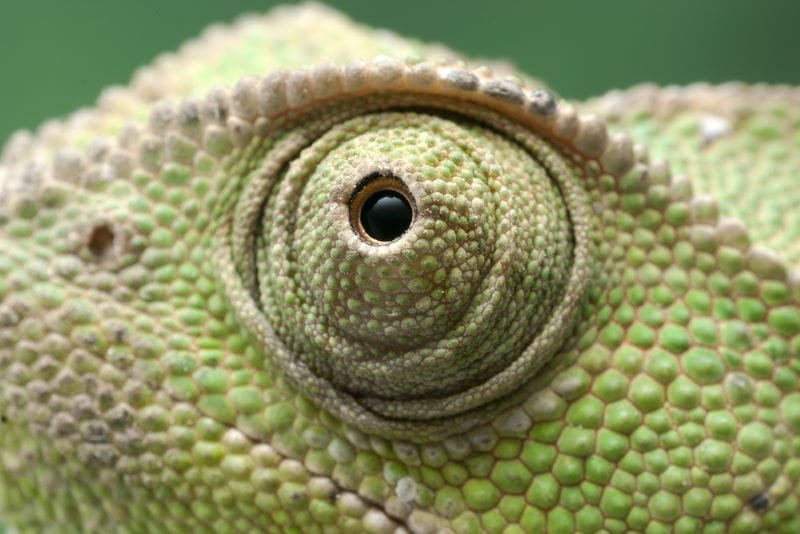
The eyes of a chameleon sit in cone-shaped turrets that can rotate independently of each other. One eye can look forward while the other looks backward, giving it an almost 360-degree view. When it spots an insect, it focuses both eyes on it to judge the distance precisely, before shooting out its tongue.
7. Jumping spider: eight eyes
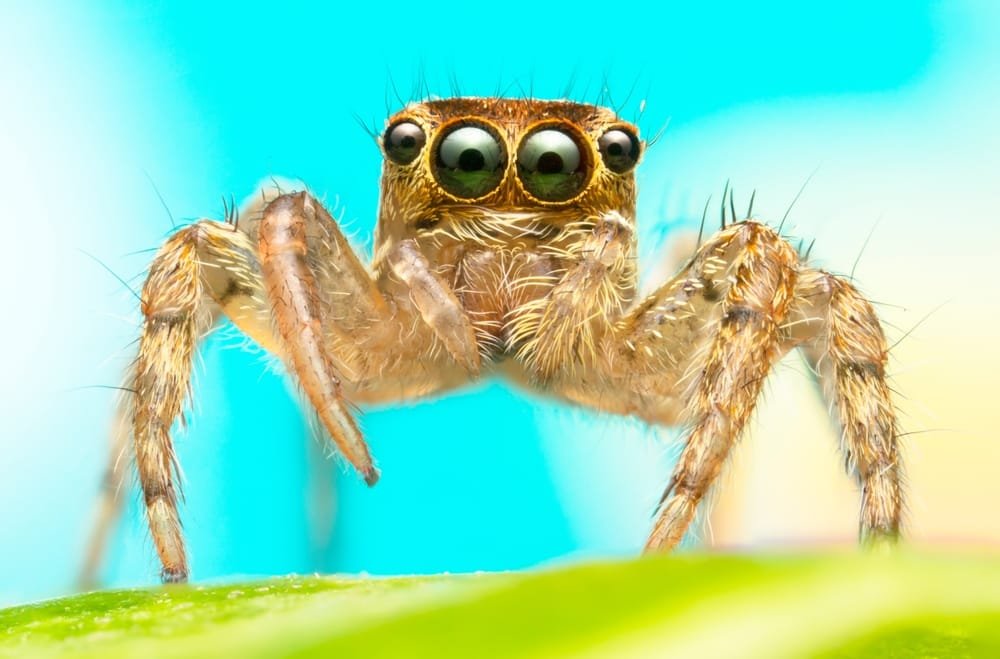
A jumping spider has eight eyes. The two large eyes in the middle look straight ahead and see remarkably sharply for such a small animal. The other six are spread over its head and keep an eye on its surroundings, so it can see almost all around without turning. Some species can also see ultraviolet light. It uses its excellent vision to stalk and pounce on prey, without needing a web.
8. Hermit crab: eyes on stalks
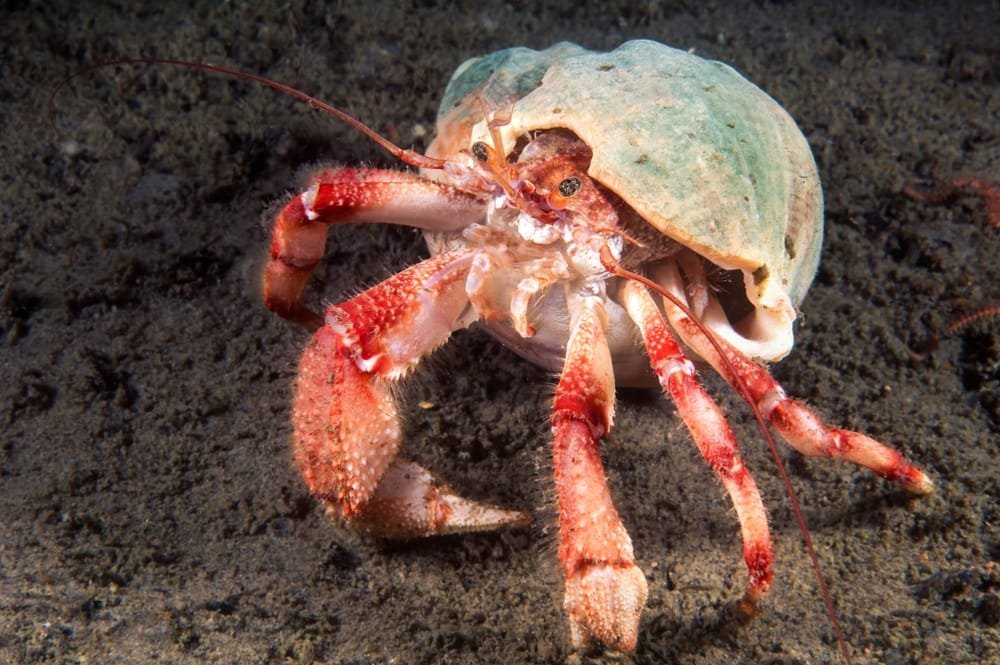
Hermit crabs, crabs and many shrimp have their eyes on stalks, which they can move independently. This allows them to look around while the rest of their body stays hidden in a shell or a crevice. Many crabs can even fold their eye stalks down into protective grooves in their shell.
9. Mantis shrimp: 12 to 16 types of light receptors
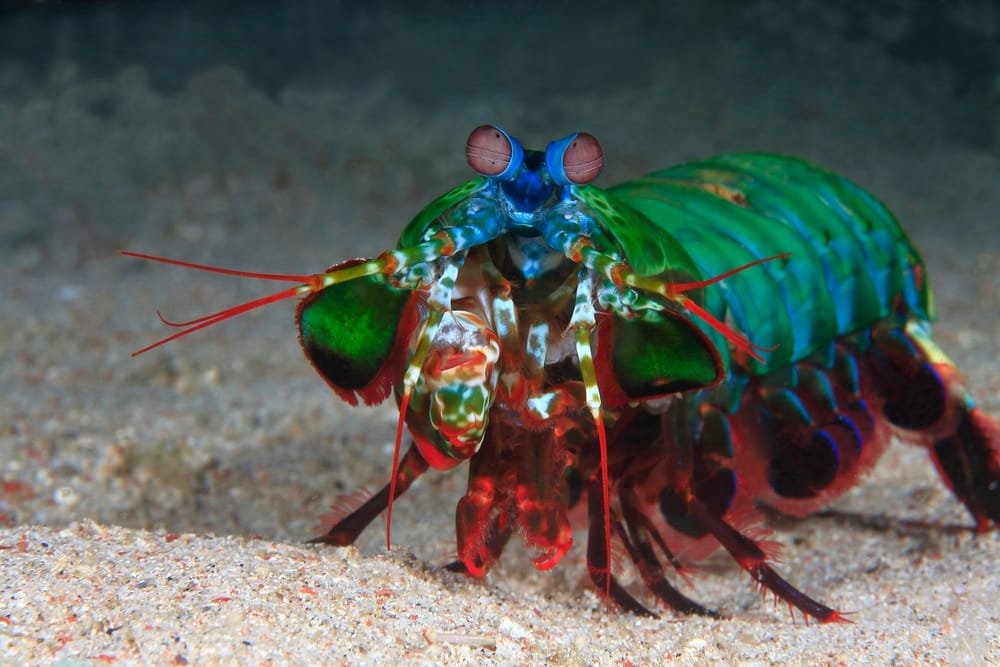
The mantis shrimp also has its eyes on stalks, but those eyes are truly extraordinary. Where we have three types of color receptors, it has 12 to 16. It can also see ultraviolet and polarized light. Surprisingly, research suggests it is actually worse than humans at telling similar colors apart: rather than comparing colors like we do, its eyes seem to recognize colors directly, which is probably faster.
10. Pistol shrimp: eyes under a helmet
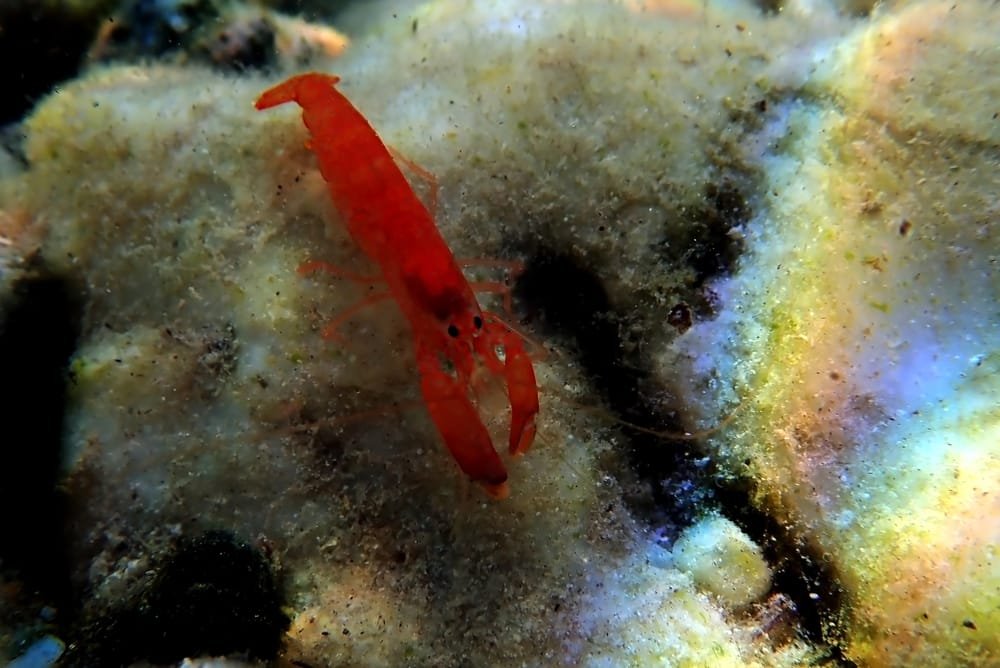
The pistol shrimp looks out from under a helmet. Its eyes sit under an extension of its shell that covers them like a hood. That is useful, because this shrimp snaps its large claw shut so fast that it creates a collapsing bubble with a bang of around 200 decibels underwater, one of the loudest sounds in the ocean. The hood probably protects its eyes from the shock waves of its own snaps and those of other pistol shrimp.
11. Barreleye: a fish with a transparent head
The barreleye (Macropinna microstoma) is a deep-sea fish with a transparent, fluid-filled head. What look like its eyes are actually its nostrils. The real eyes are two green, tube-shaped structures inside its head. They usually point upward to spot the silhouettes of prey above, but they can rotate forward when the fish goes after its food.
12. Mudskipper: eyes on top of its head
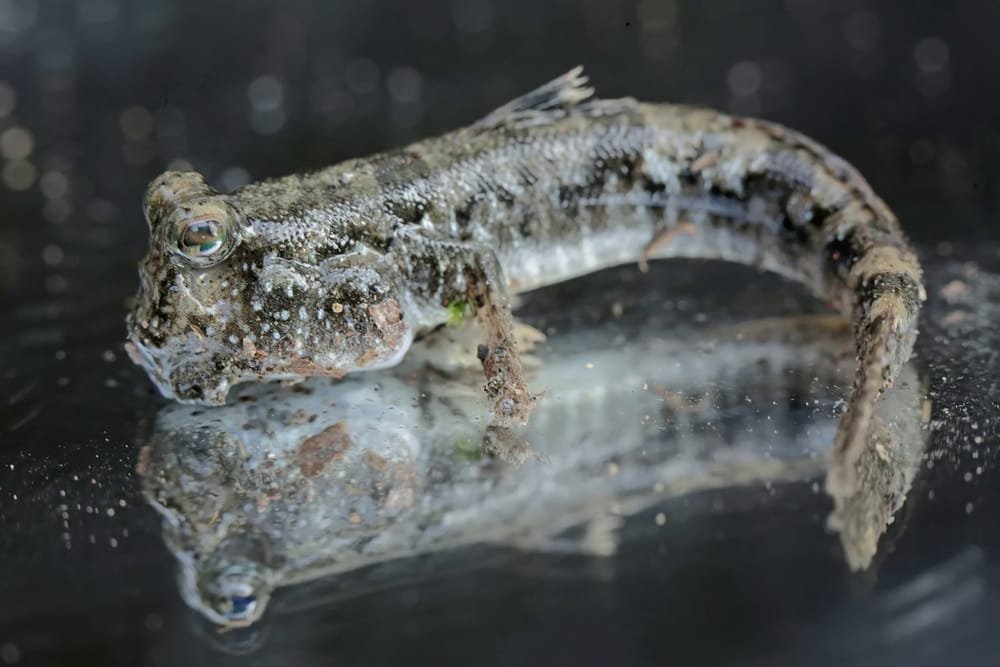
The mudskipper is a fish that spends much of its time on land. Its bulging eyes sit on top of its head, like a frog’s, so it can look around while lying half in the water. On land, it can even blink: it pulls its eyes down into their sockets, where a membrane wets them. Scientists think the ability to blink evolved in mudskippers independently from land animals, as an adaptation to life out of water.