Birds, bats and insects: those are the only animals that can fly, right? Strictly speaking, yes: they are the only living animals capable of true, powered flight. But nature is full of surprises, and many other animals have found ways to take to the air, usually by gliding. You would never expect these ten animals to fly, but they do. Sort of.
1. Flying squirrels
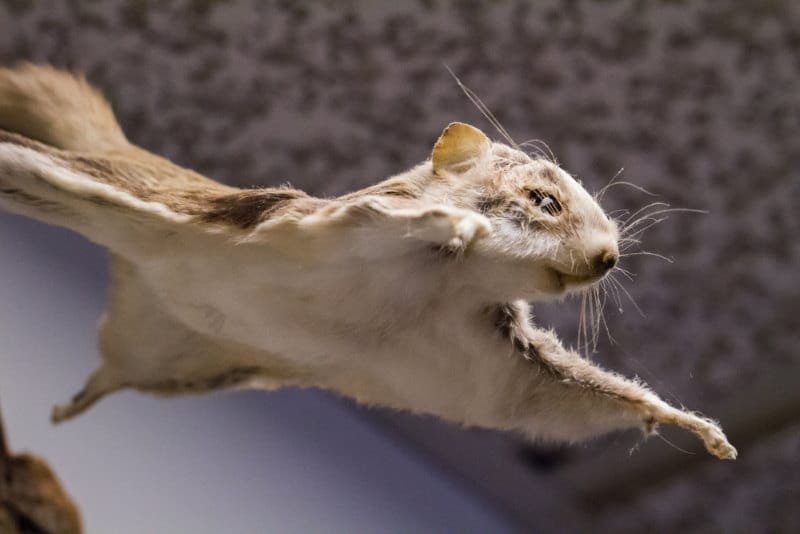
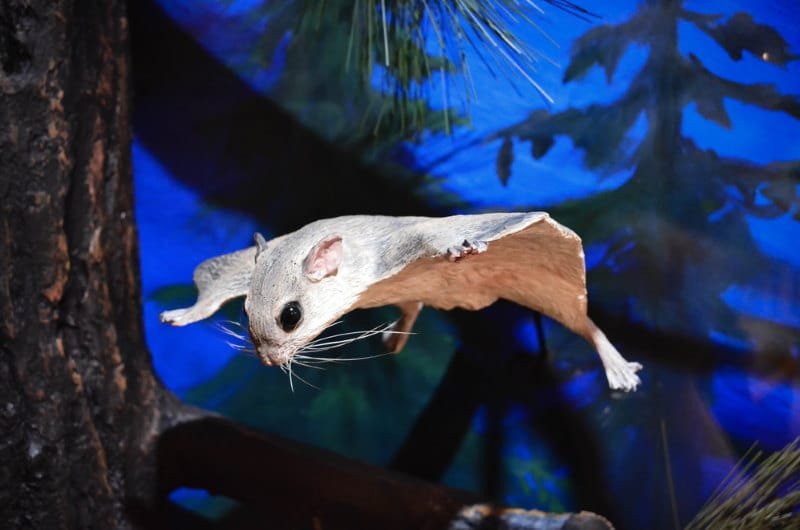
There are around 50 species of flying squirrels, living in North America, Europe and especially Asia. When a flying squirrel jumps from a tall tree, it spreads a membrane of furry skin between its front and hind legs, called a patagium, and glides like a kite. It steers by moving its wrists and adjusting the tension of the membrane, and uses its flat tail as a brake. Some species can glide for more than 100 meters. In 2019, scientists discovered something unexpected: under ultraviolet light, North American flying squirrels glow pink.
2. Colugos
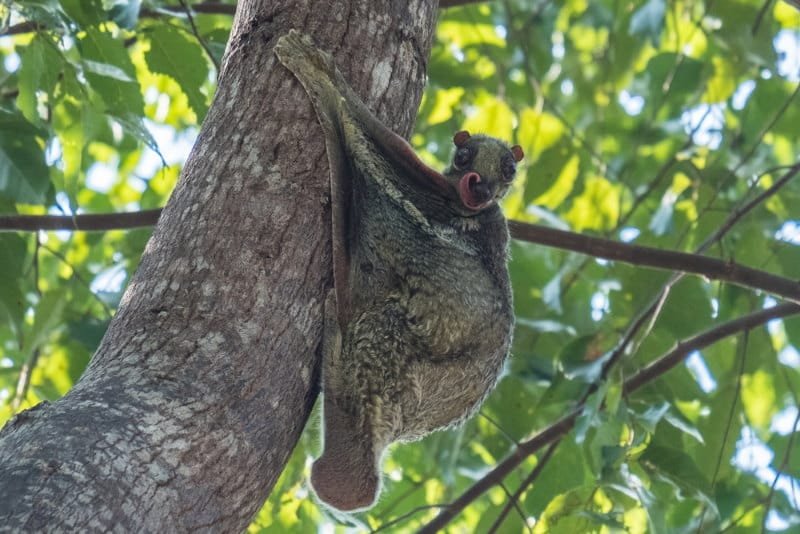
Colugos are sometimes called flying lemurs, which is wrong on two counts: they are not lemurs, and they do not fly, but glide. These mammals, about the size of a house cat, live in Southeast Asia. Their gliding membrane is the largest of any gliding mammal: it stretches from the neck to the fingertips, toes and even the tip of the tail. With it, they can glide more than 100 meters between trees. In the air, they look graceful, but on the ground they are rather clumsy, so they spend almost their entire life in the trees.
3. Flying fish
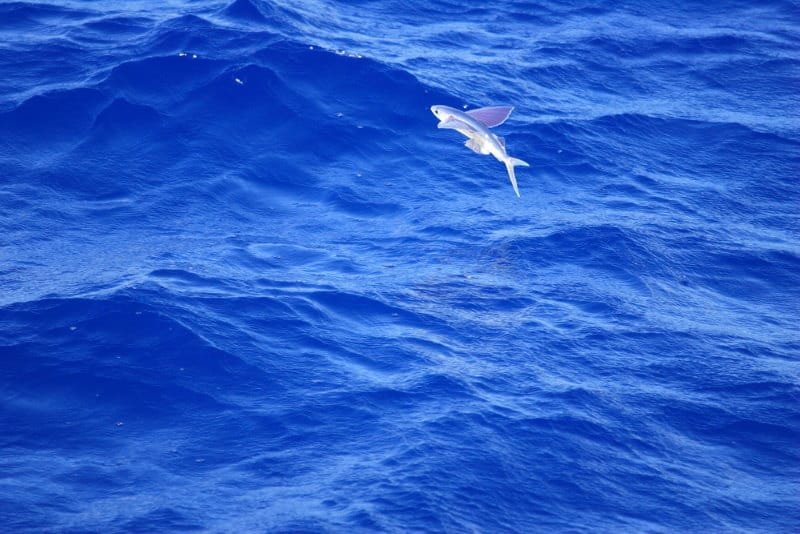
There are around 70 species of flying fish. They do not really fly either: they build up speed underwater, burst out of the water and spread their large, wing-like pectoral fins to glide. Most species live in warm, tropical seas. A typical glide covers around 50 meters, but by touching the water with their tail and beating it rapidly, they can extend their flight to as much as 400 meters, at speeds of more than 70 km/h. In 2008, a Japanese TV crew filmed a flying fish that stayed in the air for 45 seconds. They do this mainly to escape predators such as tuna and dolphins.
4. Paradise tree snake
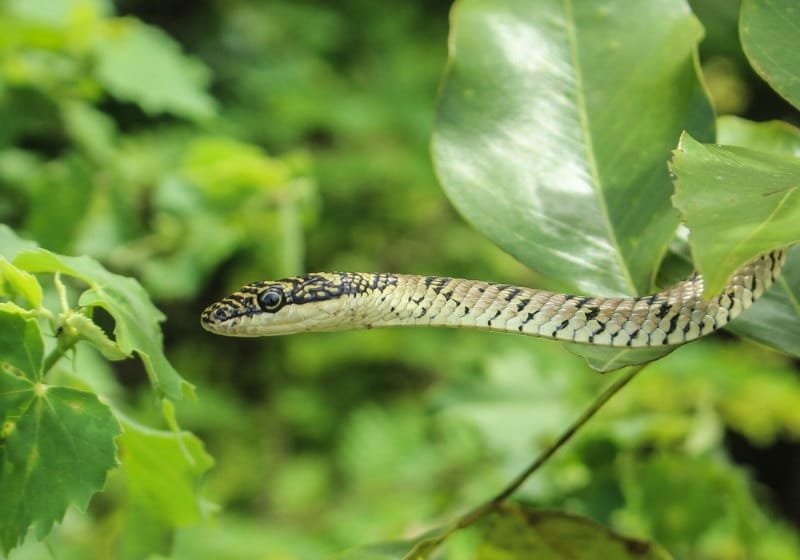
The paradise tree snake lives in the rainforests of Southeast Asia. It launches itself from branches, flattens its body to almost twice its normal width and makes undulating movements in the air, as if swimming. This allows it to glide surprisingly well and even change direction. Although the idea of a flying snake sounds frightening, it is mildly venomous at most and not dangerous to humans.
5. Flying geckos
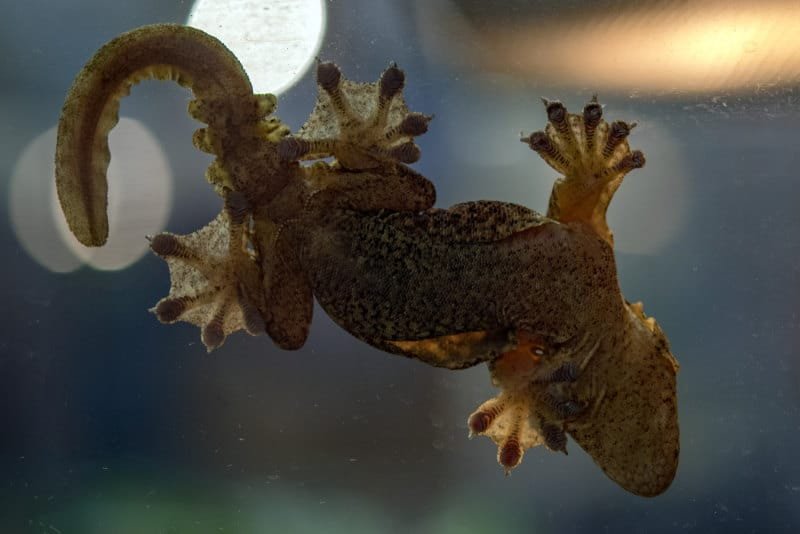
Flying geckos, previously grouped as the genus Ptychozoon, live in the forests of Southeast Asia. They cannot really fly, but they have flaps of skin along their head, body, legs and tail, and webbed feet. When they jump, these flaps open like a parachute, allowing them to glide. When they are resting on a tree trunk, the same flaps help them blend in perfectly, because they hide their shadow.
6. Wallace’s flying frog
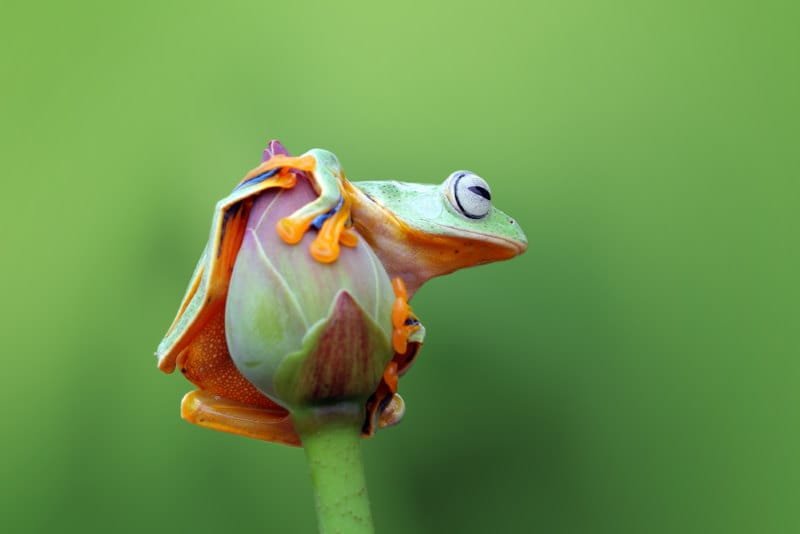
Wallace’s flying frog has enormous webbed feet, but they are not used for swimming. It uses them as parachutes. When it jumps from one tree to another, it spreads its fingers and toes and the webbing opens. This allows it to glide for around 15 meters. It lives in the rainforests of Malaysia, Thailand, Sumatra and Borneo, and was named after the naturalist Alfred Russel Wallace, who described it in the 19th century.
7. Flying dragons (Draco lizards)
The lizards of the genus Draco, from Southeast Asia, have one of the most remarkable gliding systems in the animal kingdom. Their “wings” are supported by extended ribs that they can fold out to the sides, stretching a colorful membrane of skin. Recent research suggests they even use their front legs to grab and control the edge of their wings in flight. They can glide distances of tens of meters between trees.
8. Sugar glider
The sugar glider is a small marsupial from Australia and New Guinea, weighing little more than 100 grams. Like the flying squirrel, it has a membrane between its front and hind legs, and it can glide around 50 meters. The two animals look remarkably similar, but they are not related at all: it is a famous example of convergent evolution, in which unrelated animals independently develop the same solution. Its name comes from its love of sweet tree sap and nectar.
9. Flying squid
Some squid can fly too. Japanese researchers have filmed small squid launching themselves out of the water by shooting out a powerful jet of water. In the air, they spread their fins and arms to form a kind of wing, and they can travel 30 meters or more before diving back into the sea. Like flying fish, they probably do this to escape predators, and it may even save them energy when traveling long distances.
10. Devil rays
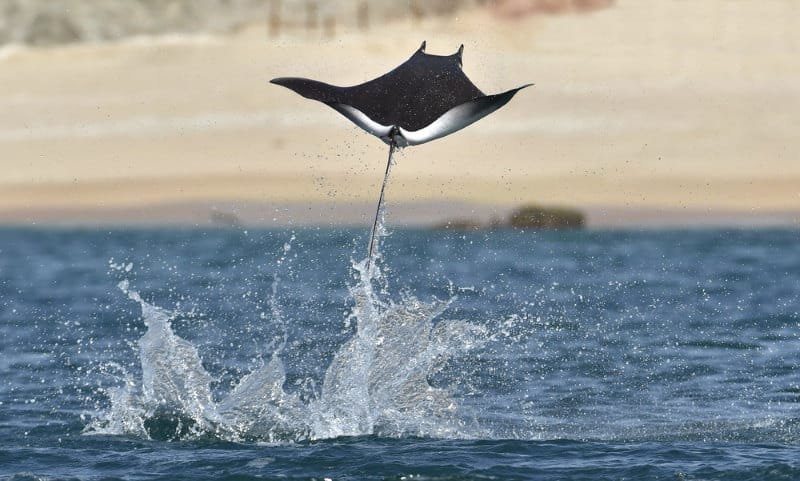
Devil rays (genus Mobula) are relatives of the manta ray. The giant devil ray can have a wingspan of around 5 meters. These rays are famous for their spectacular leaps: they can launch themselves out of the water up to around 2 meters high, sometimes in large groups, before belly-flopping back into the sea. Nobody knows for certain why they do it. Theories include communication, courtship and getting rid of parasites.