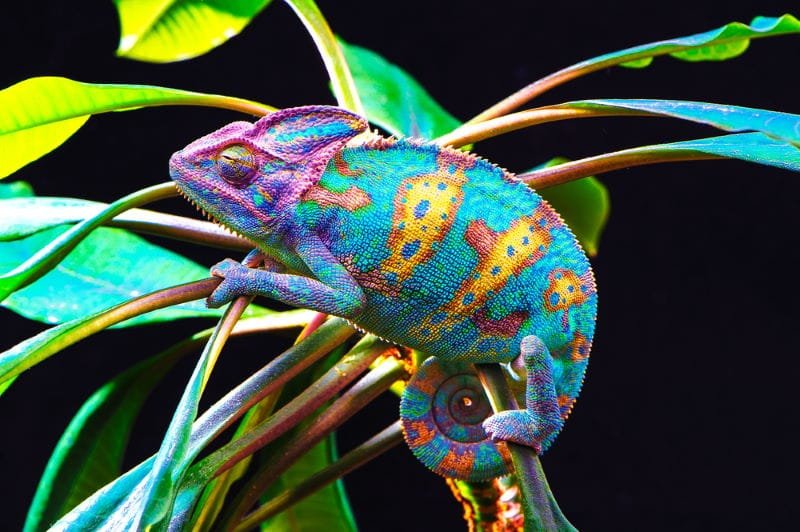
When you think of an animal that can change color, you probably think of the chameleon right away. But did you know that it is far from the only one? And it is certainly not the best at it.
Animals change color in different ways. Some mammals and birds grow a new coat or new feathers depending on the season. Others, such as octopuses and many fish, can change color in seconds using special skin cells. These are ten animals that can change color.
1. Chameleon
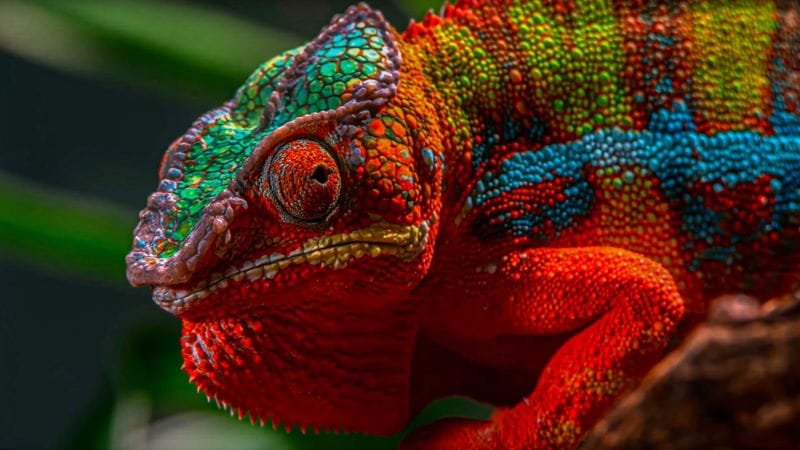
A list of color-changing animals has to start with the chameleon. Contrary to what children’s films suggest, chameleons do not mainly change color to blend in with their surroundings. Their normal colors already provide good camouflage. Color changes are mostly used for communication and to regulate body temperature: a cold chameleon turns darker to absorb more heat.
The most spectacular changes are meant to stand out, especially by males trying to impress females or intimidate rivals. Females that are already carrying eggs also change color, but to signal to males that they are not interested. Research has shown that chameleons do this by changing the spacing of tiny crystals in their skin, which reflect light differently.
2. Peacock flounder
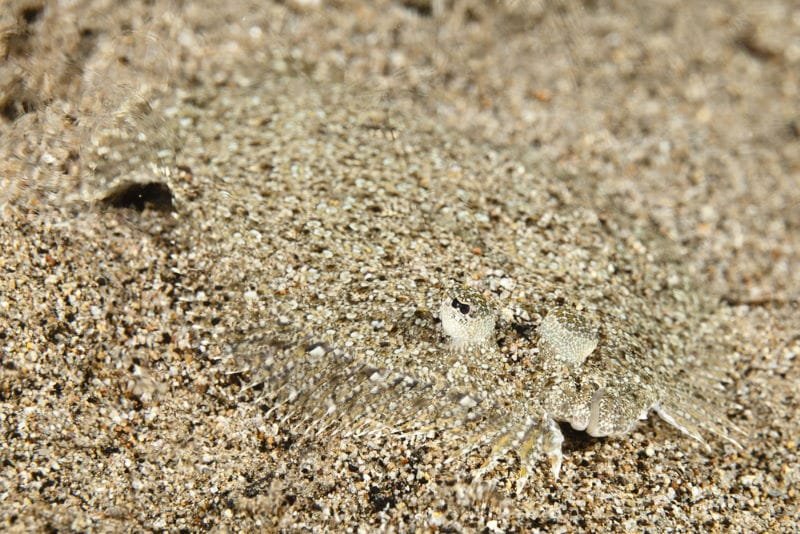
The peacock flounder (Bothus mancus) is a flatfish that lives in shallow tropical waters of the Indian and Pacific Oceans. The sea floor there is very varied, with stones, coral and sand. To stay invisible to enemies and prey, this flounder has a trick: within a few seconds, it can adjust its color and pattern to match the ground beneath it. It relies on its eyes to do so: if one eye is covered, it struggles to match its surroundings.
3. Mimic octopus
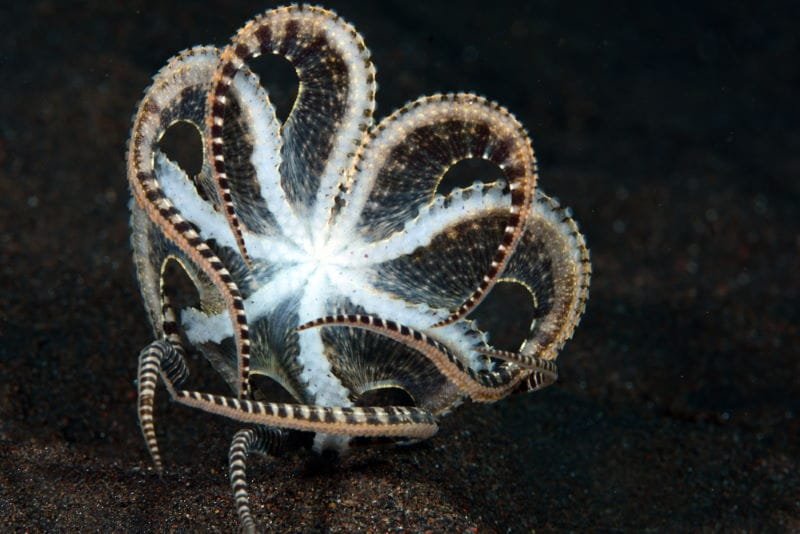
The mimic octopus (Thaumoctopus mimicus), which lives in the tropical seas of Southeast Asia, can give its body different colors and patterns. But that is not even its most impressive trick: it can imitate other sea creatures. Divers have seen it change its color, shape and movement to look like a poisonous lionfish, a flatfish or a venomous sea snake, among others. It was only discovered in 1998.
4. Green anole
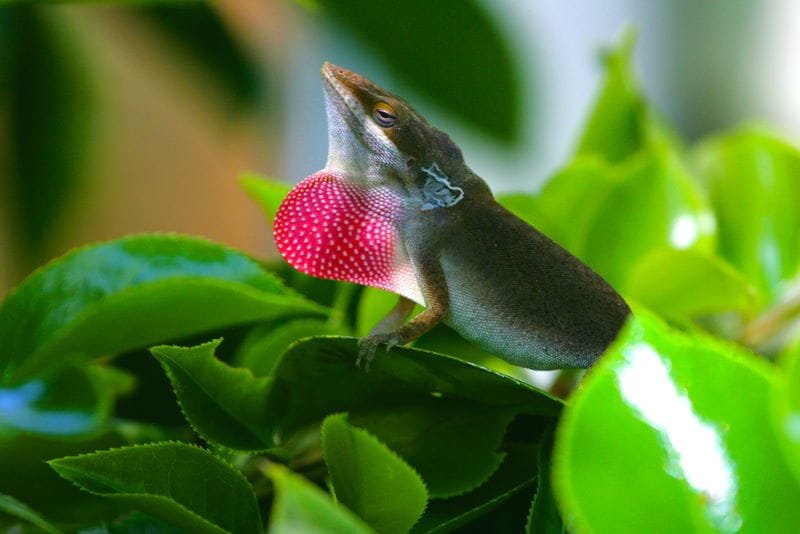
The green anole (Anolis carolinensis), from the southeastern United States, is sometimes called the “American chameleon”, because it can change from bright green to brown. It does not seem to do this mainly for camouflage. The color change is linked to temperature, stress and social interactions: a stressed or defeated male often turns brown.
5. Golden tortoise beetle
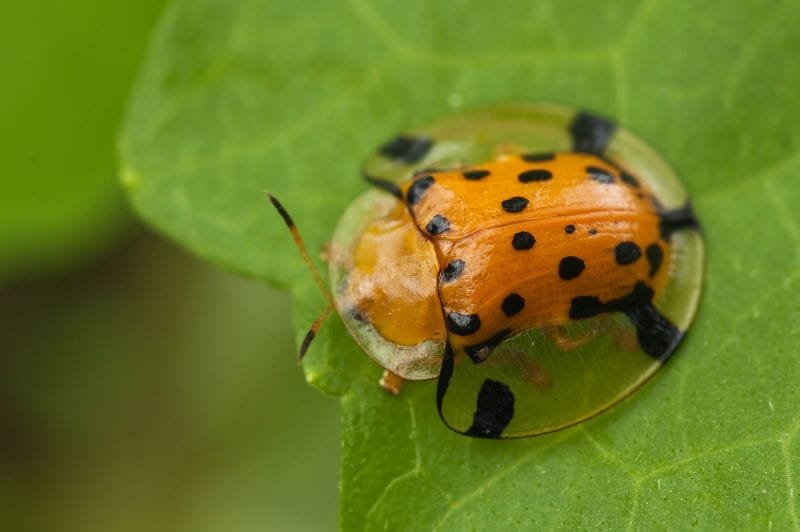
The golden tortoise beetle (Charidotella sexpunctata) is a small leaf beetle from North America. At rest, it has a beautiful metallic gold color, as if it were made of jewelry. When it is disturbed, it changes within minutes to a dull reddish color with black spots, possibly to resemble a ladybug, which predators avoid. The trick works by changing the amount of fluid in layers of its shell.
6. Pygmy seahorse
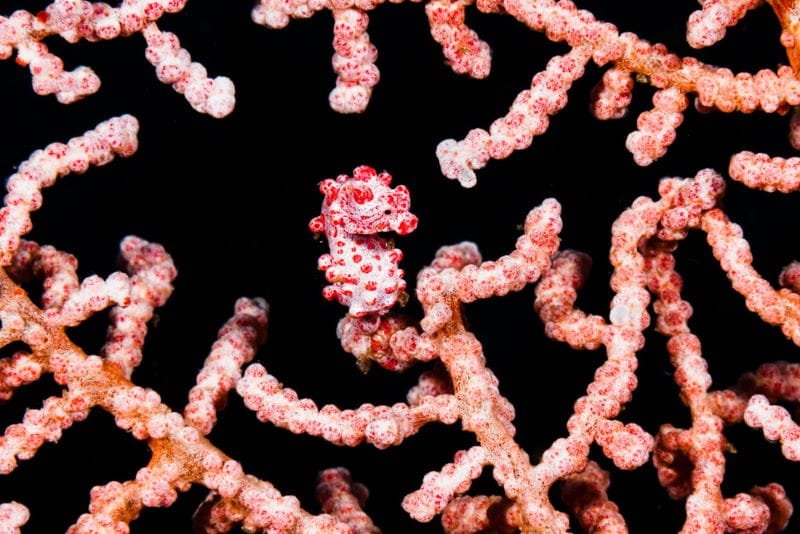
Pygmy seahorses are tiny, usually no more than 2 to 3 centimeters long, but that does not make them any less spectacular. They live on coral reefs in Southeast Asia and the western Pacific, where they cling to a sea fan and spend almost their entire adult life on it. Their color and the bumps on their body match their host so closely that they were only discovered when a scientist was examining a sea fan in a lab.
7. Hogfish
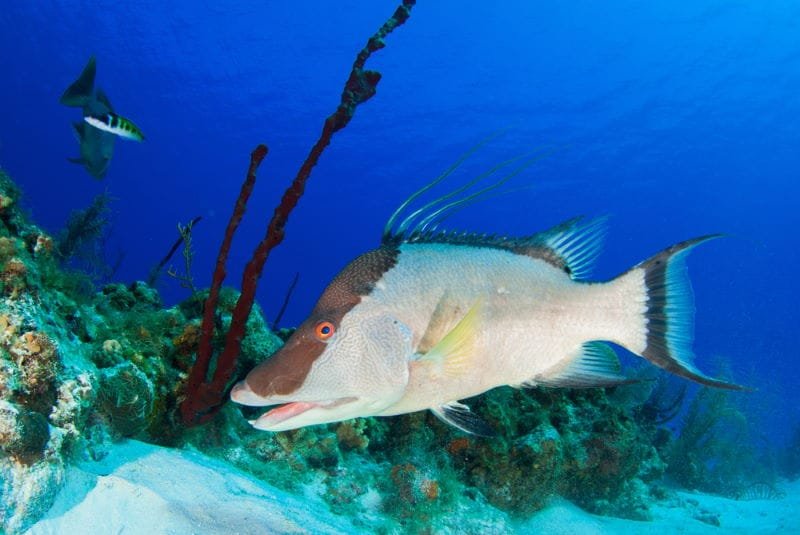
The hogfish (Lachnolaimus maximus) uses its long snout to root around on the sea floor near reefs in the western Atlantic, looking for mollusks and crabs, a bit like a pig. It can change color very quickly to blend in or to communicate, from almost white to reddish and brown, with or without mottled patterns. Research has even shown that its skin can detect light directly.
8. Caribbean reef squid
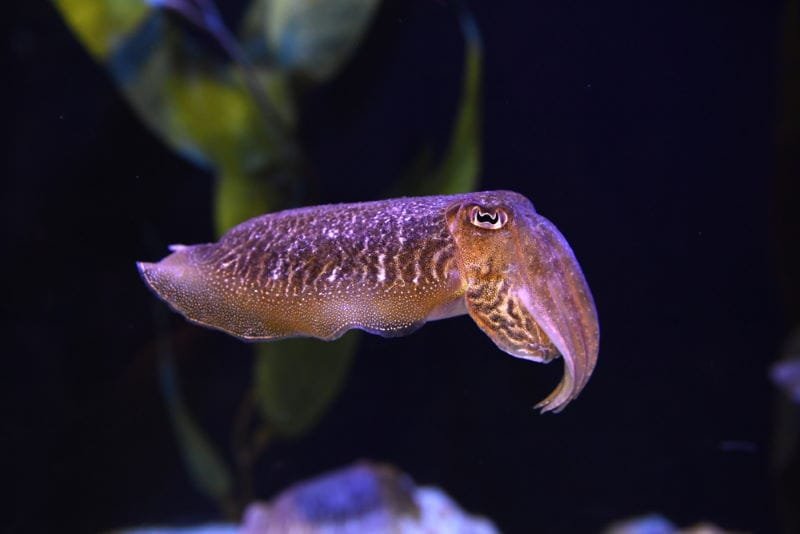
If you have ever been diving in the Caribbean, you have probably seen the Caribbean reef squid (Sepioteuthis sepioidea). It can change color extremely quickly, and it uses its colors and patterns not only to hide, but also to communicate with other squid. A male can even show a courtship pattern to a female on one side of its body, while showing a warning pattern to a rival male on the other side.
9. Stoat
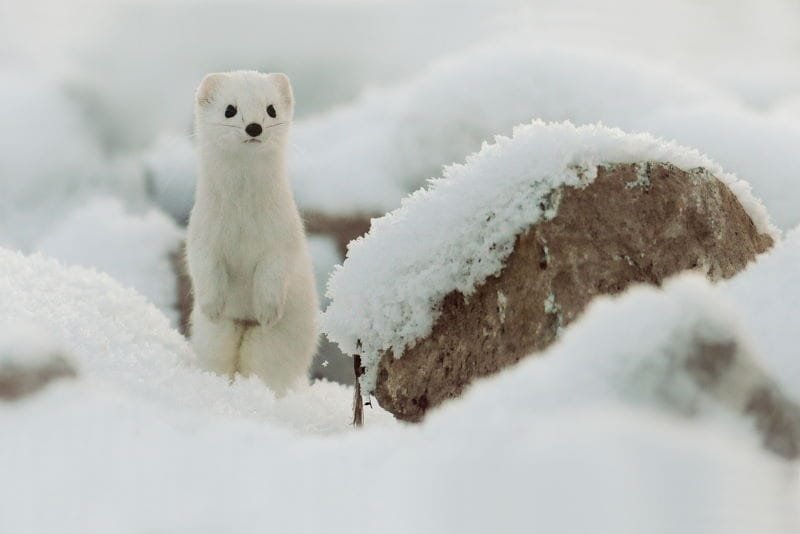
The stoat belongs to the weasel family and looks a lot like a weasel, but is slightly larger and has a black tip on its tail. In summer, it has a reddish-brown coat with a white belly. But with that look, you cannot hunt unseen in a snowy winter landscape. So in colder regions, it molts every autumn into a white winter coat, keeping only the black tail tip. In that white coat, it is known as ermine, and its fur was once highly prized for the robes of kings and judges.
10. Goldenrod crab spider
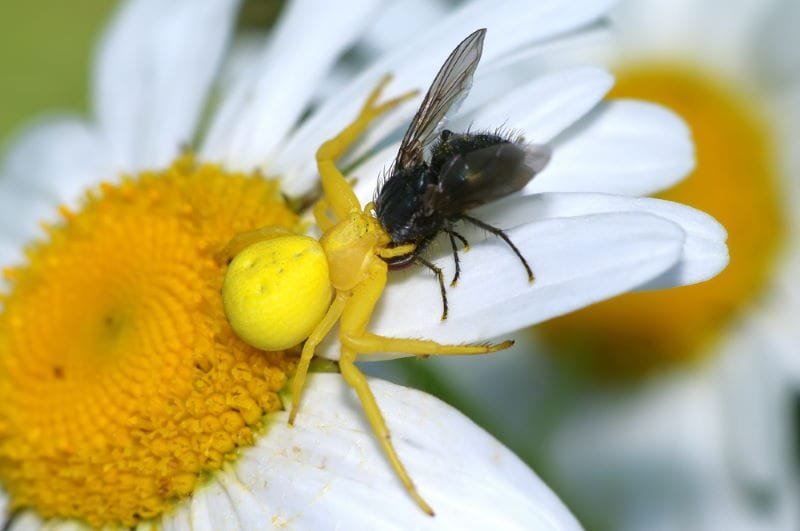
The goldenrod crab spider (Misumena vatia) belongs to the crab spiders, which do not build webs but hide in flowers to ambush passing insects. This species can be white or yellow, depending on the flower it is sitting in. The change is not fast: it takes the spider several days to turn yellow, by moving a yellow pigment into the outer layer of its body cells.