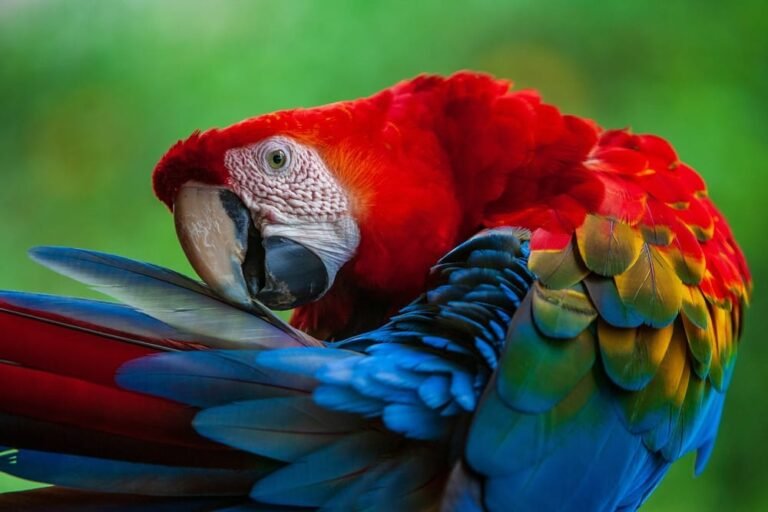
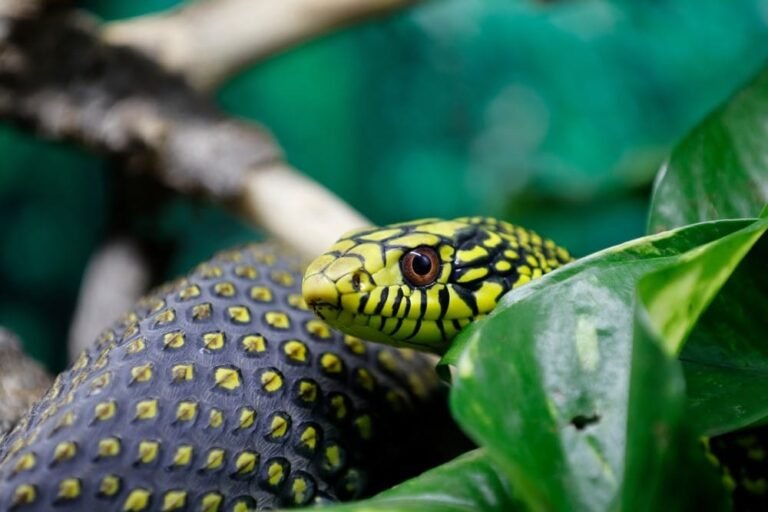
Birds have no teeth. Over millions of years, heavy jaws full of teeth were replaced by light beaks, which helped make flight possible. Since then, beaks have evolved into an amazing variety of shapes and sizes, each perfectly suited to what the bird eats.
These are fifteen birds with the strangest beaks in the world.
1. Shoebill
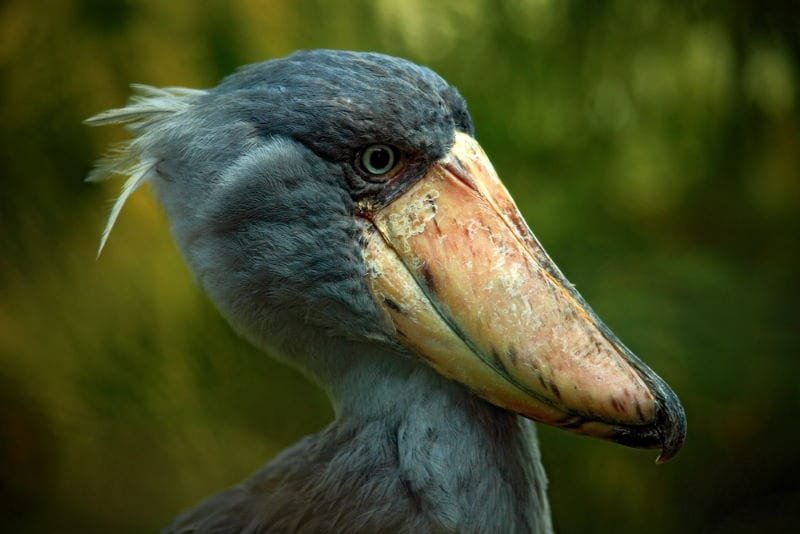
The shoebill is a huge bird, up to about 1.4 meters tall, from the swamps of East and Central Africa. Its enormous bill, shaped like a wooden clog, ends in a sharp hook. It stands motionless for hours, then strikes with lightning speed to catch lungfish, catfish and even baby crocodiles.
2. Sword-billed hummingbird
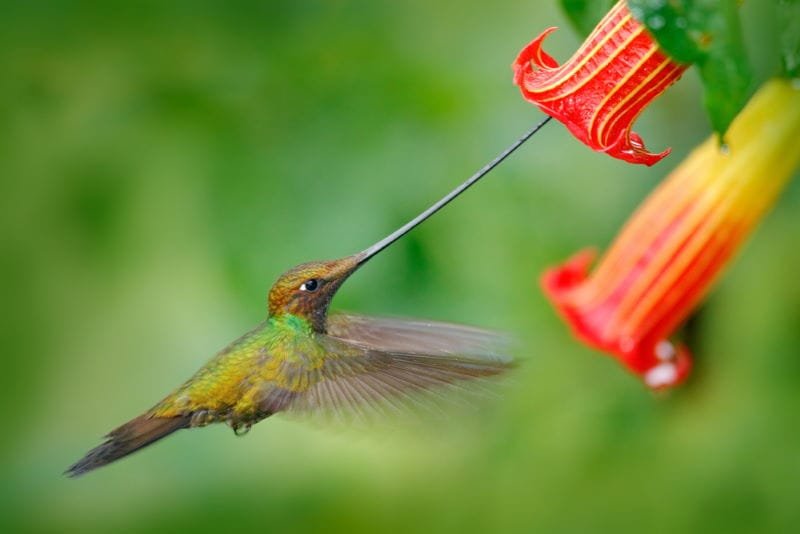
This hummingbird from the Andes is the only bird whose bill is longer than its body, not counting the tail. It is perfect for reaching nectar deep inside long, tube-shaped flowers. The downside: it cannot preen its feathers with its bill, so it grooms itself with its feet, and it has to hold its head up when perching.
3. Black skimmer
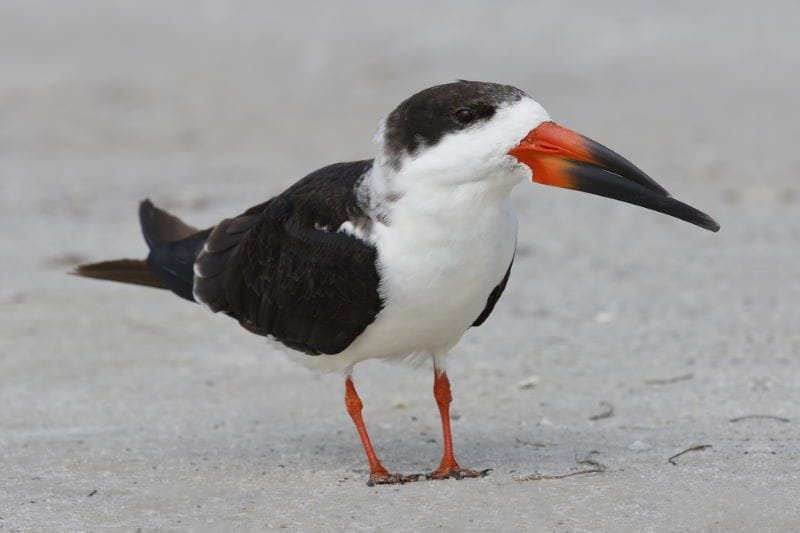
The black skimmer is the only bird in the Americas whose lower bill is much longer than the upper. It flies low over the water with its lower bill slicing through the surface. As soon as it touches a fish, the bill snaps shut.
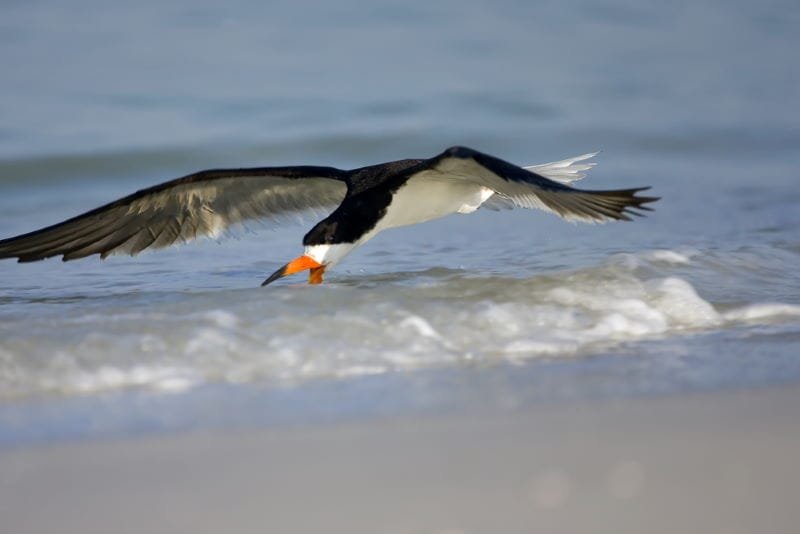
4. Crossbill
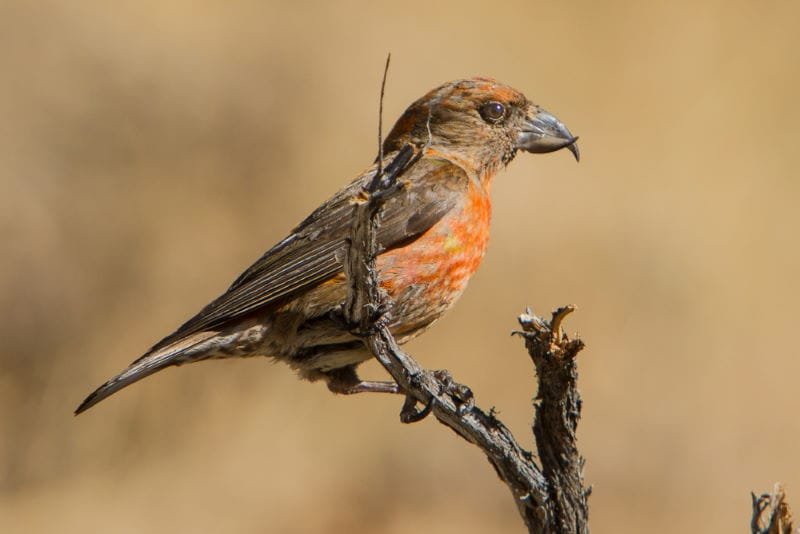
As its name suggests, the tips of the crossbill’s bill cross each other. That may look like a deformity, but it is the perfect tool for prying open pine and spruce cones to get at the seeds inside.
5. Toco toucan and keel-billed toucan
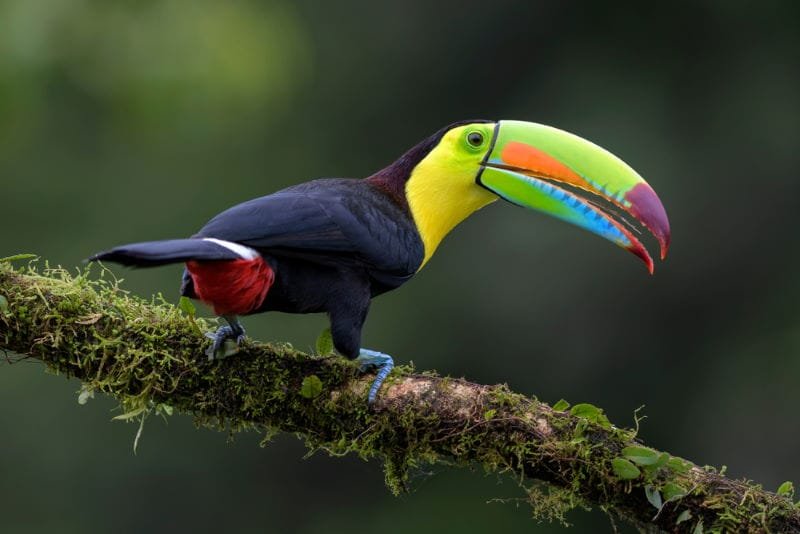
The keel-billed toucan’s colorful bill is about a third of its body length. Despite its size, it is surprisingly light, because it is hollow and made of keratin. Studies on toco toucans have shown that the bill also works as a radiator, helping the bird lose heat in hot weather.
6. Collared aracari
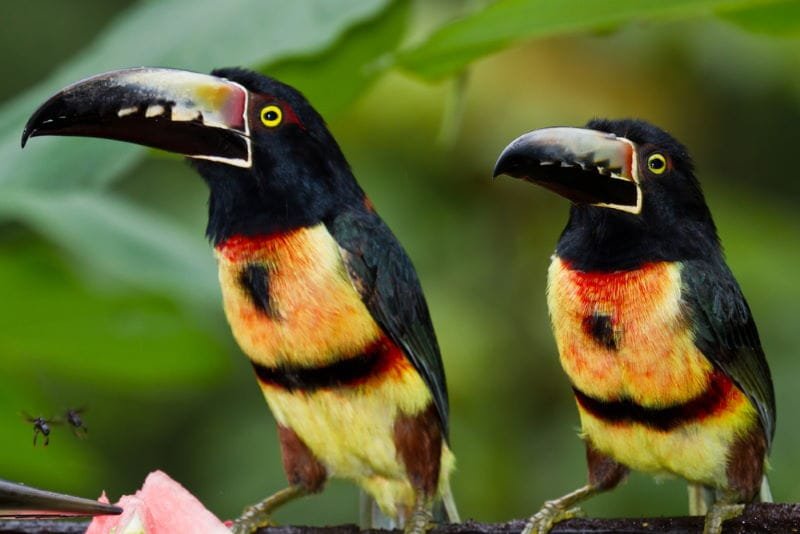
A smaller relative of the toucan, found from Mexico to Panama and northern South America. It uses its long bill to pick fruit, tosses it into the air and swallows it whole. Because its bill is not suited for drilling, it nests in old woodpecker holes.
7. Great hornbill
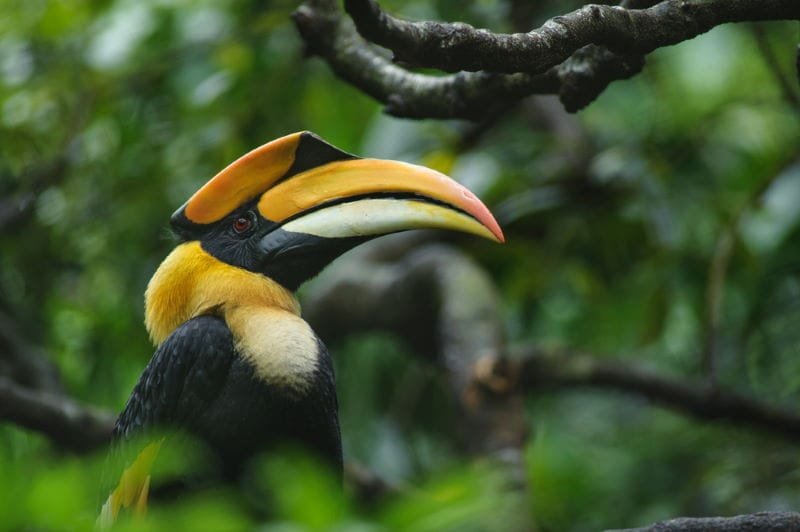
The great hornbill, which can be over a meter long, has a huge yellow bill topped with a hollow structure called a casque. During nesting, the female seals herself inside a tree hole with mud, leaving only a slit through which the male feeds her and the chicks.
8. Rhinoceros hornbill
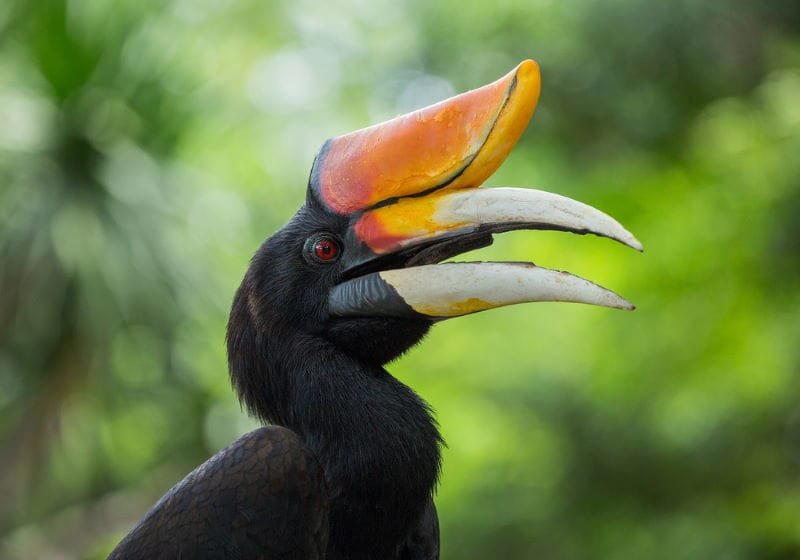
The rhinoceros hornbill, from Southeast Asia, has a bright red and orange casque that curves upwards like a rhino horn. The casque probably amplifies its loud calls through the rainforest.
9. Atlantic puffin
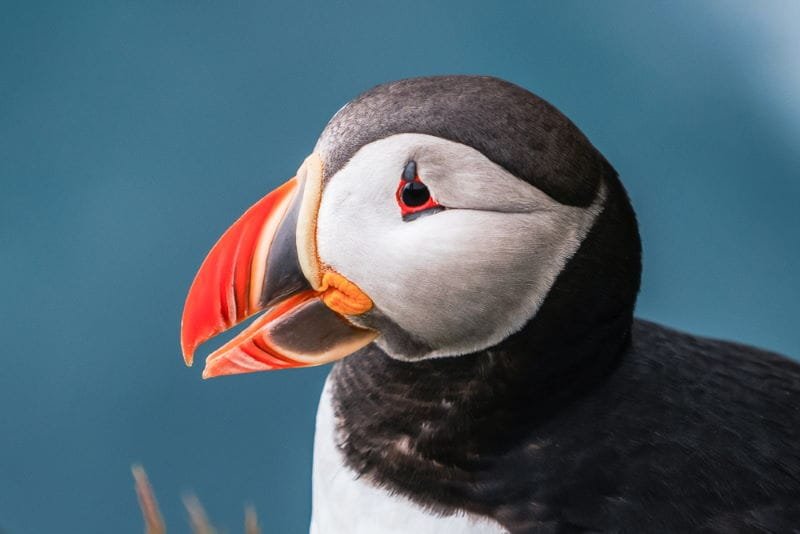
In the breeding season, the puffin’s bill turns bright orange, yellow and blue-gray. After the summer, the colorful outer plates are shed. Its bill has backward-facing spines on the tongue and palate, which allow it to carry more than ten small fish at once.
10. Great white pelican
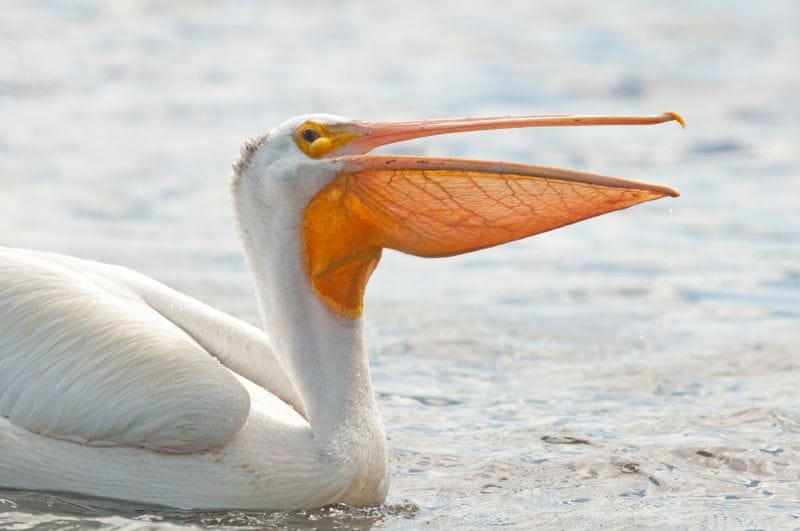
The great white pelican has a bill of up to almost 40 centimeters, with a stretchy pouch underneath that can hold several liters of water. It uses it as a net to scoop up fish, then drains the water before swallowing. Pelicans often hunt in groups, herding fish together.
11. Roseate spoonbill
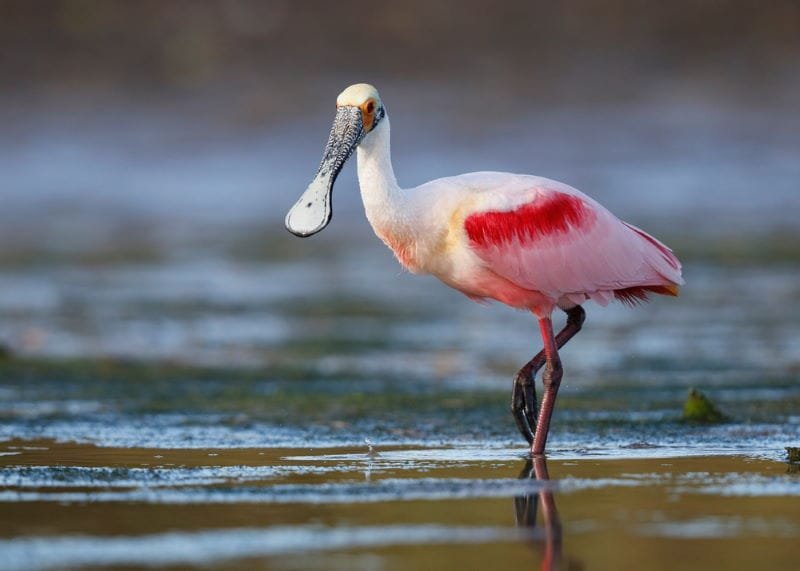
The spoon-shaped tip of this pink bird’s bill is very sensitive. It sweeps it from side to side through shallow water and snaps it shut as soon as it feels a small fish or shrimp. Chicks hatch with a straight bill, which only takes on its spoon shape after a few weeks.
12. Flamingo
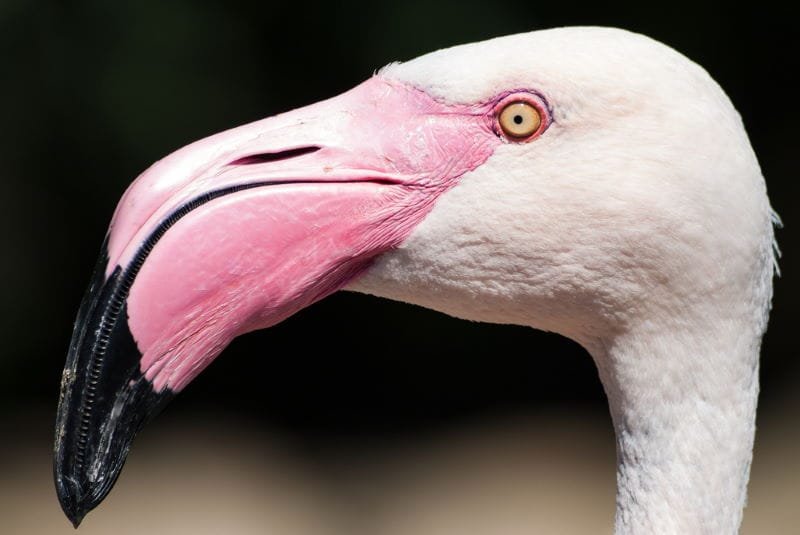
The outside of a flamingo’s bill is striking, with its sharp bend, but the inside is even more special. Flamingos feed with their head upside down, using comb-like plates inside the bill to filter tiny shrimp and algae from the water, similar to how baleen whales feed.
13. Long-billed curlew
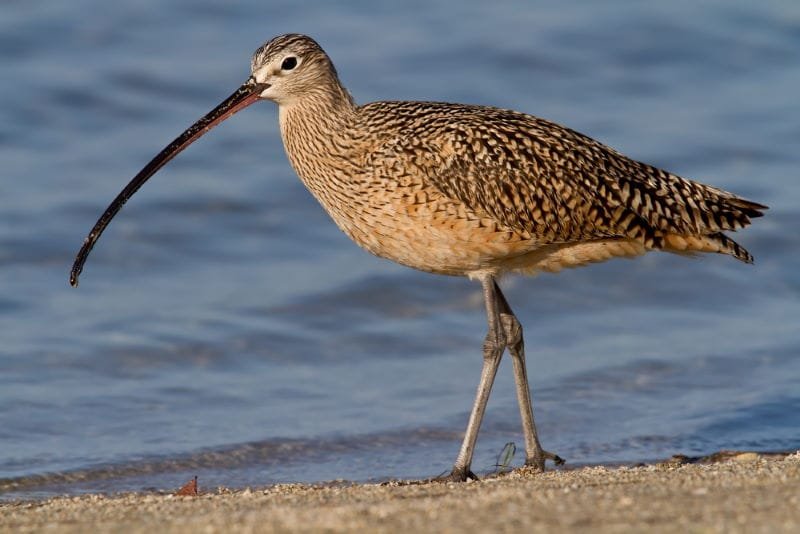
The long-billed curlew of North America has a long, down-curved bill of up to more than 20 centimeters, perfect for probing deep into mud and burrows for worms and crabs. Females have noticeably longer bills than males.
14. Red-necked avocet
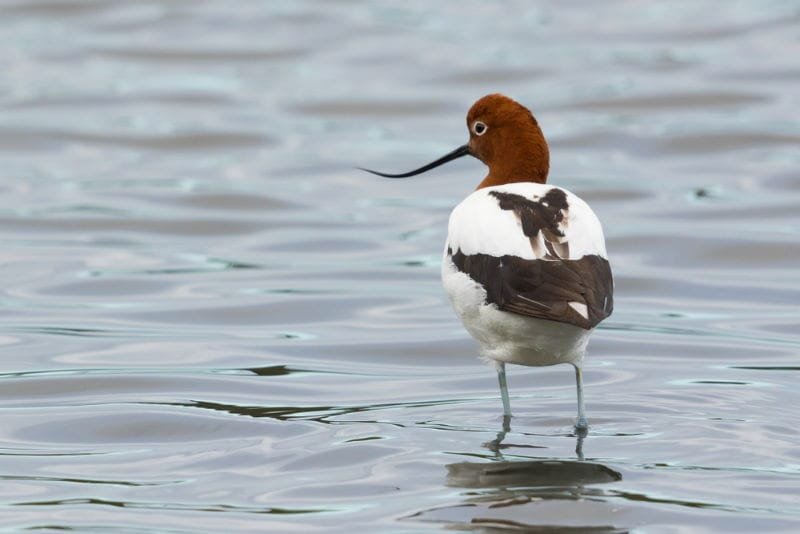
This Australian wader has a long, thin bill that curves upward at the tip. It sweeps it from side to side through shallow water to catch small crustaceans and insects.
15. Woodpecker
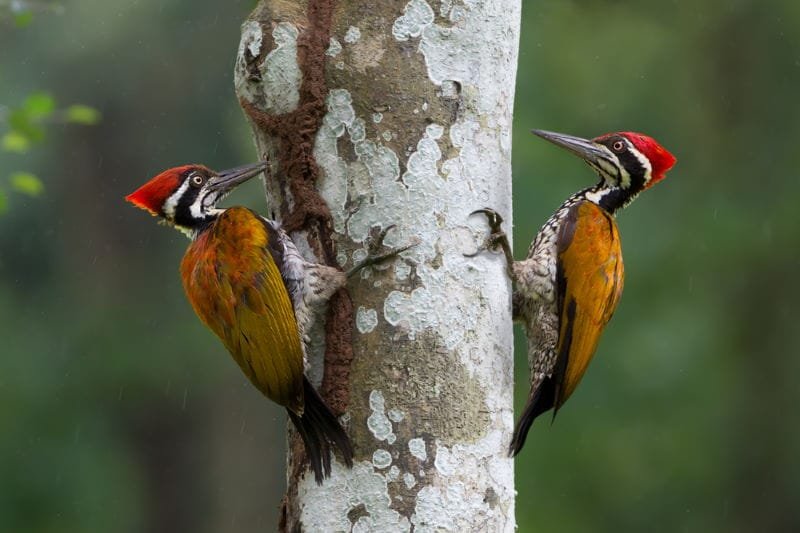
Woodpeckers hammer their chisel-like bills into wood up to 20 times per second, to find food, dig nests and drum to mark their territory. It was long thought that their skull worked as a shock absorber. But a 2022 study found the opposite: it acts as a stiff hammer, and their small brains are simply less vulnerable to concussion than ours.