Even the most famous paintings contain details that you only notice if you really take the time to look. Sometimes they are symbols that we have almost forgotten, sometimes subtle jokes by the painter, and sometimes optical tricks with a great story behind them. These are ten classics with remarkable hidden details.
1. The Night Watch, Rembrandt (1642)
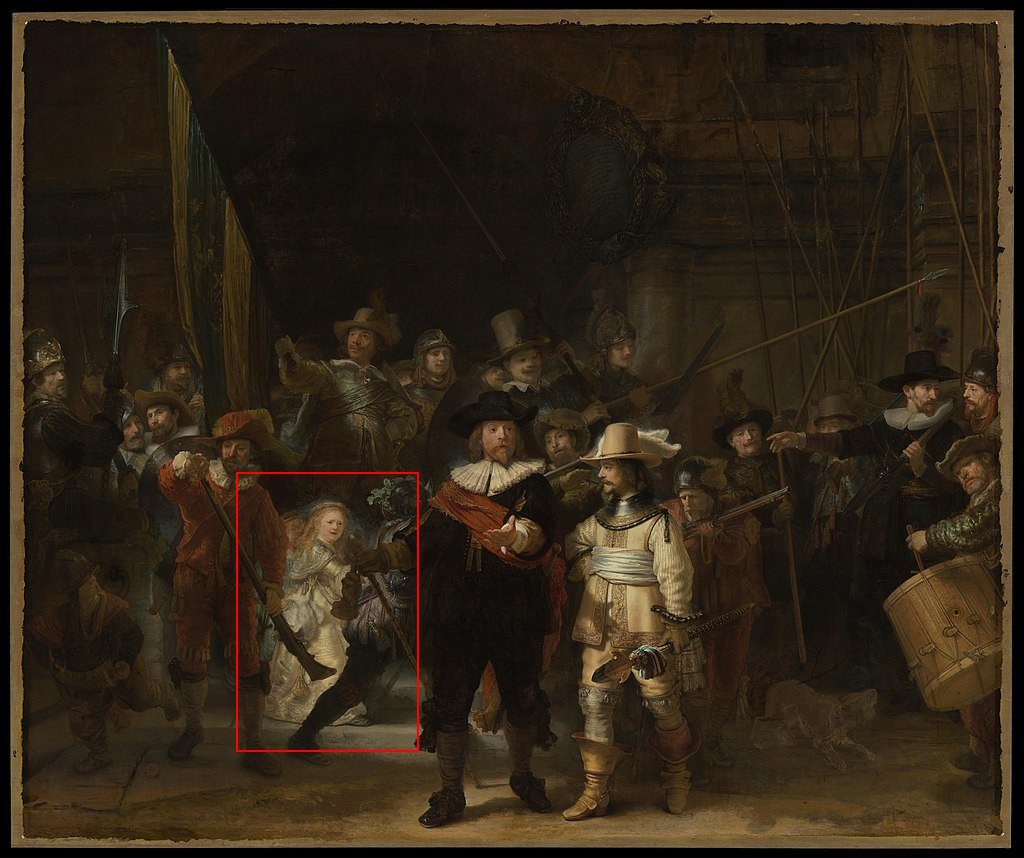
Your eye immediately goes to the captain and his lieutenant. But in the middle of the crowd walks a small girl, bathed in light. A dead chicken hangs from her belt, with its claws clearly visible. That is no coincidence.
The claw was the emblem of the Kloveniers, the civic militia company that commissioned the painting. The girl acts as a kind of mascot, carrying symbols of the company, including a drinking horn. In a sea of men with muskets and plumed hats, she is, strangely enough, the key to understanding the group portrait.
2. The School of Athens, Raphael (1509 to 1511)
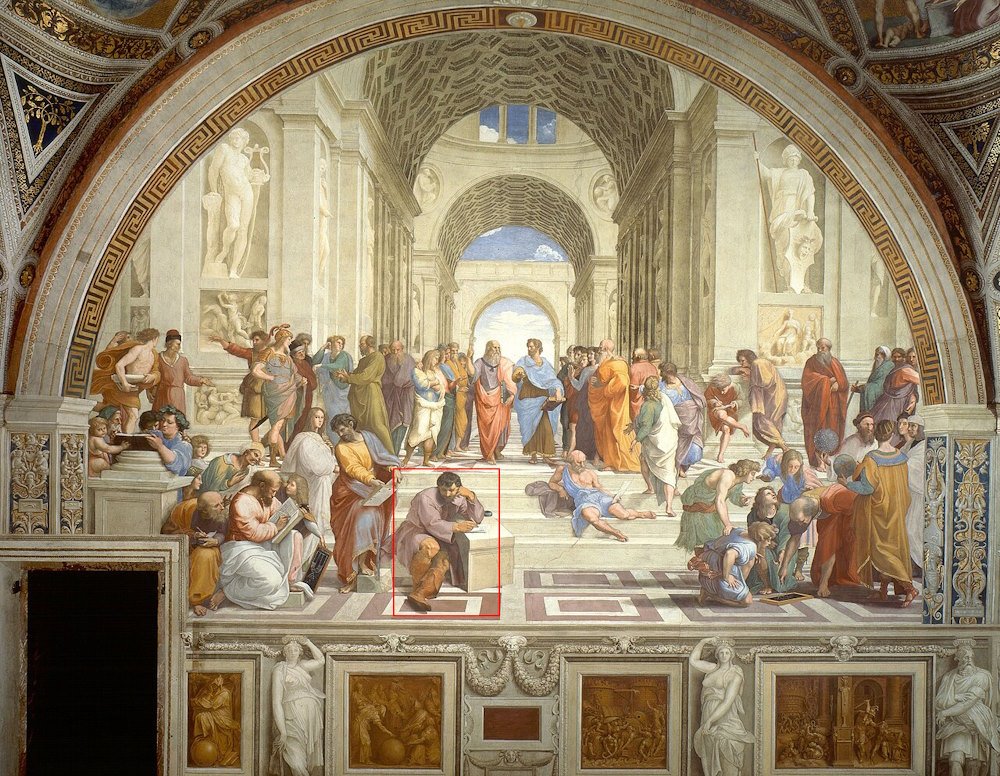
This fresco in the Vatican is a dream reunion of ancient philosophers, with Plato and Aristotle in the center. Plato is often thought to have the face of Leonardo da Vinci. But look at the bottom left of the stairs: there, a brooding figure leans on a block of marble, wearing boots and a grumpy expression. It is the philosopher Heraclitus, painted with the face of Michelangelo, who was working on the Sistine Chapel ceiling nearby at the same time. Raphael seems to have added him later, as a tribute to his rival. Raphael also painted himself, looking out at the viewer from the right edge.
3. The Last Supper, Leonardo da Vinci (around 1495 to 1498)

Everyone knows the dramatic reactions of the apostles to Jesus’s words that one of them will betray him. But look at what is not on the table: there is no prominent chalice, the cup that is a central symbol in Christian art. Instead, there are plates, bread and glasses. Judas reaches for the same dish as Jesus, a direct reference to the betrayal described in the Gospels. And in front of Judas, an overturned salt cellar is visible in old copies of the painting. Spilled salt was considered a bad omen.
4. The Arnolfini Portrait, Jan van Eyck (1434)
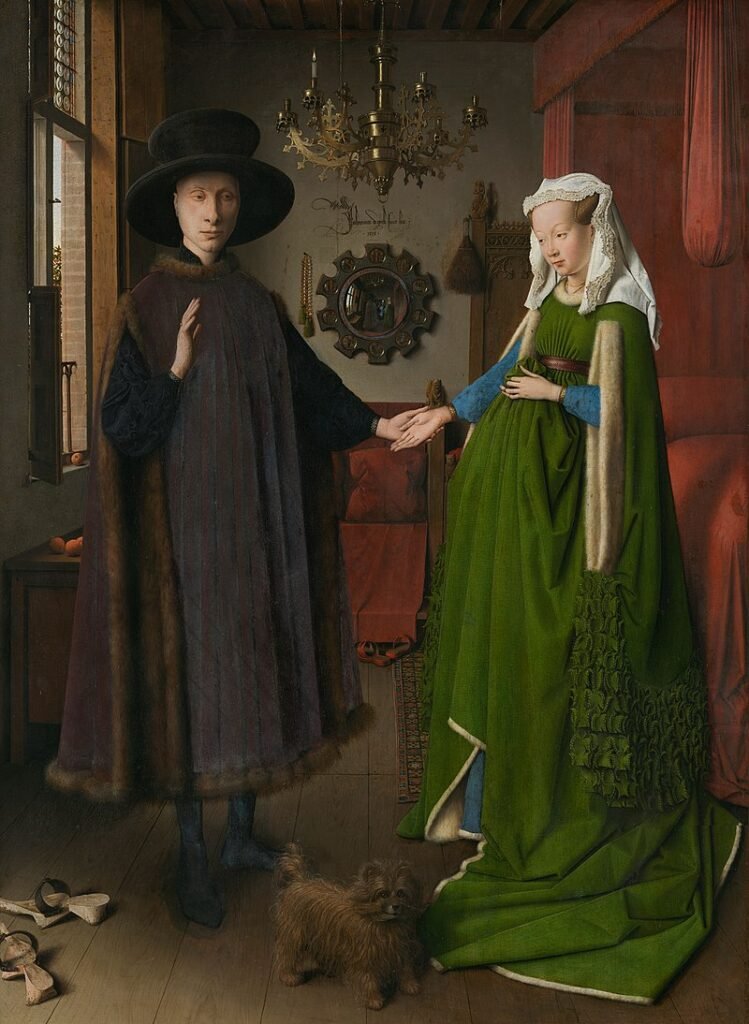
A stately double portrait, but the real action takes place in the convex mirror on the back wall. In that tiny mirror, the whole room is reflected again, including two extra people standing in the doorway who are not visible in the main scene. One of them may be the painter himself. Above the mirror, in elegant letters, is written “Johannes de eyck fuit hic 1434”: “Jan van Eyck was here”.
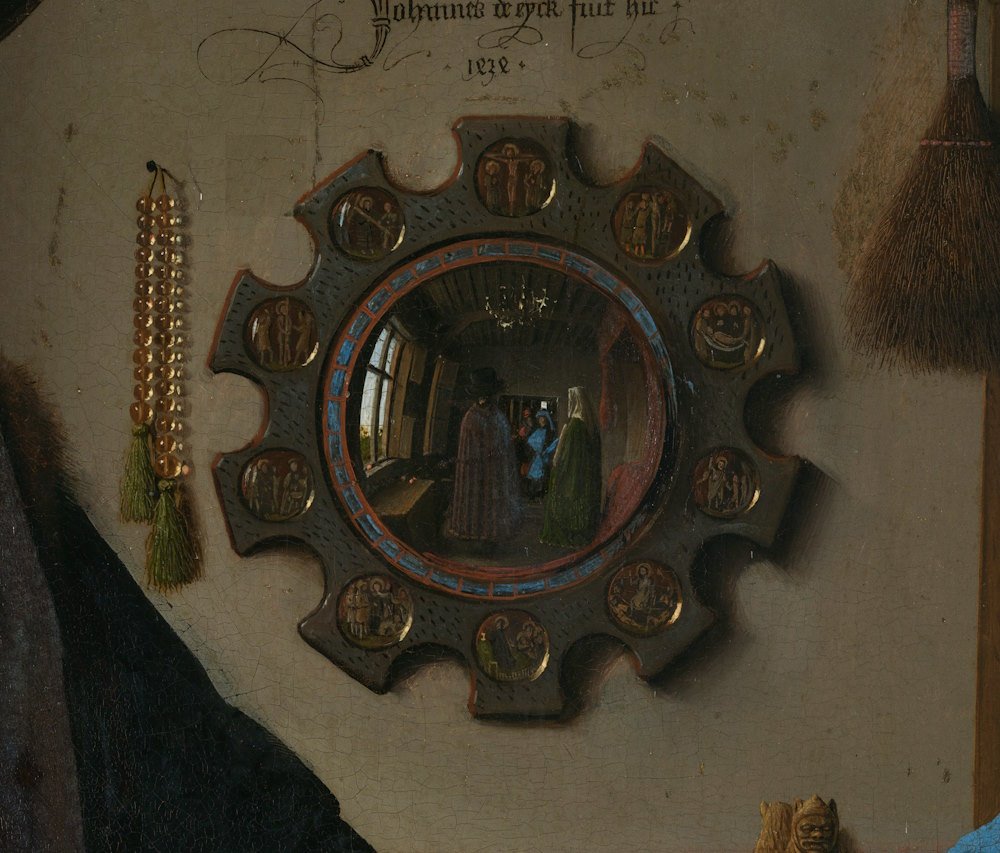
Around the mirror, ten tiny scenes from the Passion of Christ are painted, each smaller than a fingernail. It is a masterclass in detail and one of the cheekiest signatures in art history.
5. The Garden of Earthly Delights, Hieronymus Bosch (around 1490 to 1510)
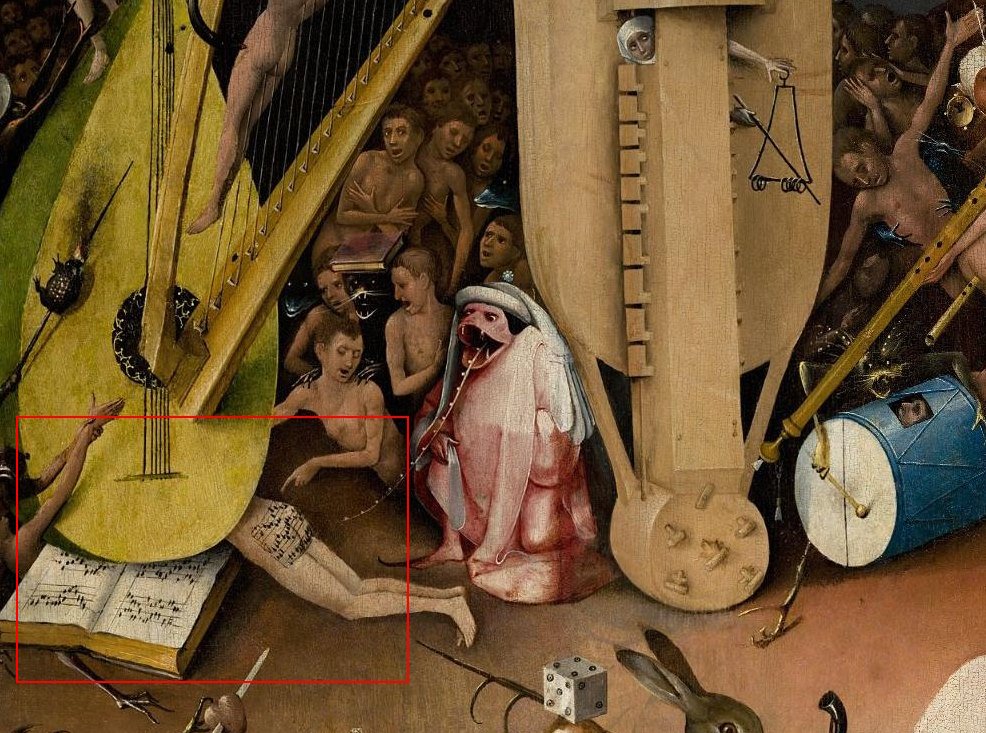
If you zoom in on the right-hand panel, which depicts hell, you find yourself in a nightmare full of musical instruments, monsters and punishments. One famous detail: a sinner lies with a line of musical notes printed on his buttocks. In 2014, a student transcribed the notes and recorded them, producing what became known online as “the 500-year-old butt song from hell”.
Nearby sits a monstrous bird-headed figure on a throne, swallowing sinners and excreting them again. Bosch’s imagination is bizarre, but also precise: every instrument and every torment carries a moral meaning.
6. The Calling of Saint Matthew, Caravaggio (1599 to 1600)
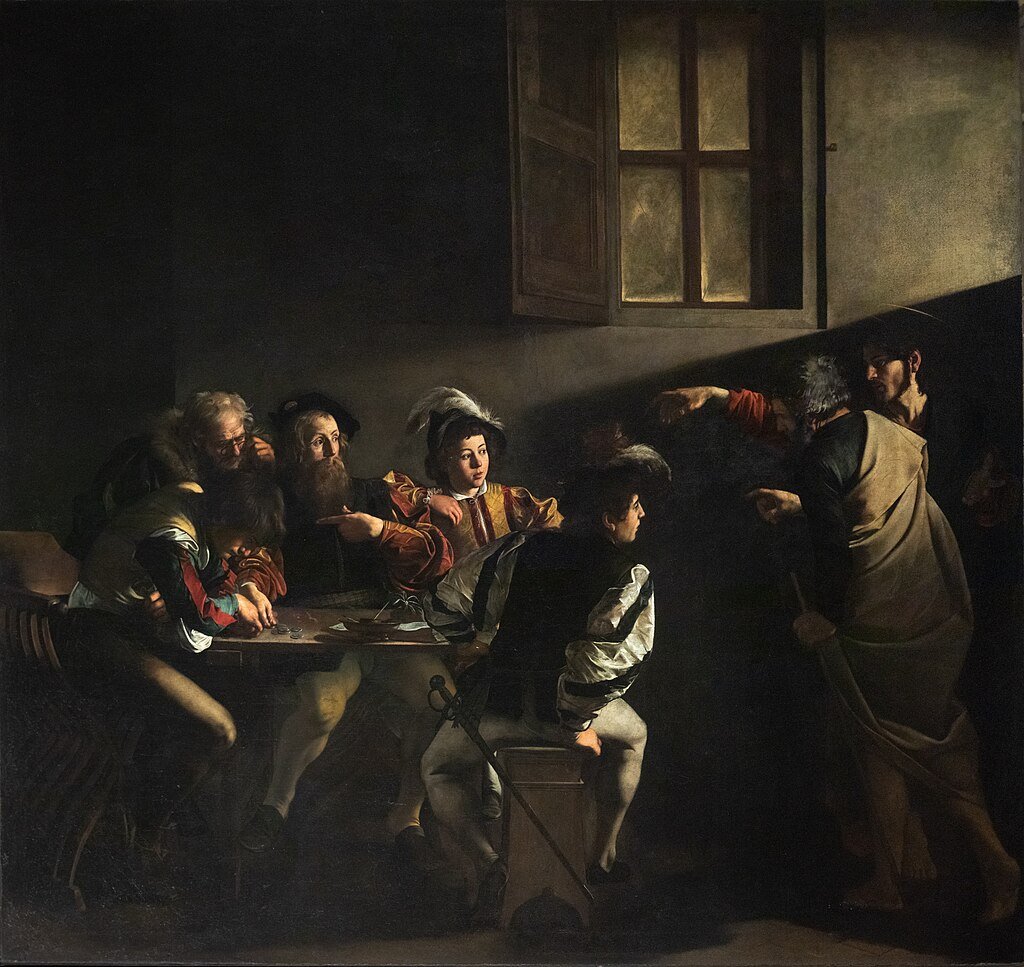
In a dark tavern, Christ points at the tax collector Matthew, who is counting money with his companions. Christ’s outstretched hand is almost identical to the famous hand of Adam in Michelangelo’s Creation of Adam in the Sistine Chapel. Caravaggio quotes Michelangelo directly, but in a raw, everyday setting with dramatic light. It is a detail that is often overlooked, but it links the High Renaissance to the Baroque.
7. The Annunciation with Saint Emidius, Carlo Crivelli (1486)
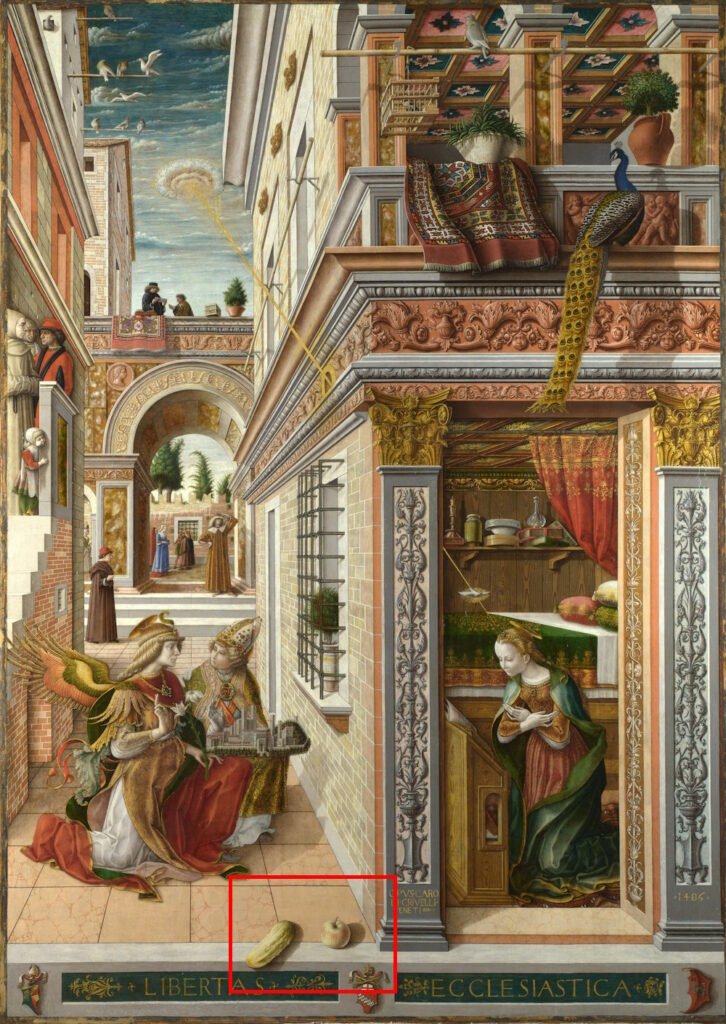
The archangel Gabriel brings his message to Mary, but in the foreground, on the ledge, lie an apple and a large cucumber, or gourd. They look out of place, but in the symbolism of the time, the apple stood for original sin, and the gourd or cucumber for redemption and resurrection. Crivelli loved to include these kinds of fruit and vegetables in his religious paintings, sometimes in a strikingly realistic, almost three-dimensional way. The painting is full of other delightful details too, such as a peacock and a man reading a letter delivered by pigeon.
8. Girl with a Pearl Earring, Johannes Vermeer (around 1665)
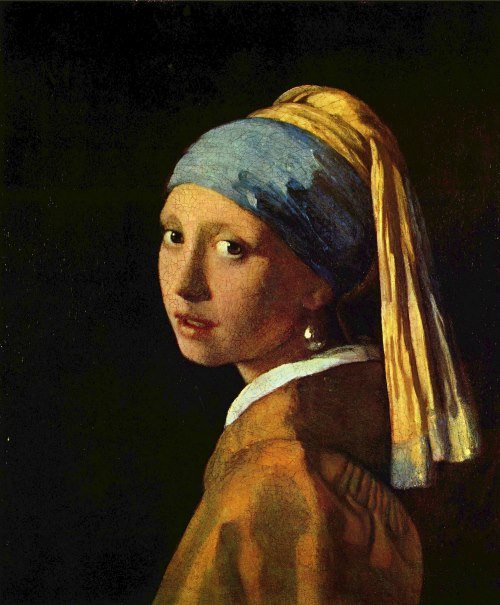
The famous pearl is probably not a real pearl, and it is barely painted at all. Research in 2018 showed that the “pearl” consists of just a few strokes of paint: a bright highlight at the top and a soft reflection of the white collar at the bottom. There is not even a hook to attach it to the ear. Many experts also think that a pearl of that size would have been almost impossible in Vermeer’s time, and that it may have been polished glass or tin. The illusion is so convincing that our brain fills in the rest.
9. The Ambassadors, Hans Holbein the Younger (1533)
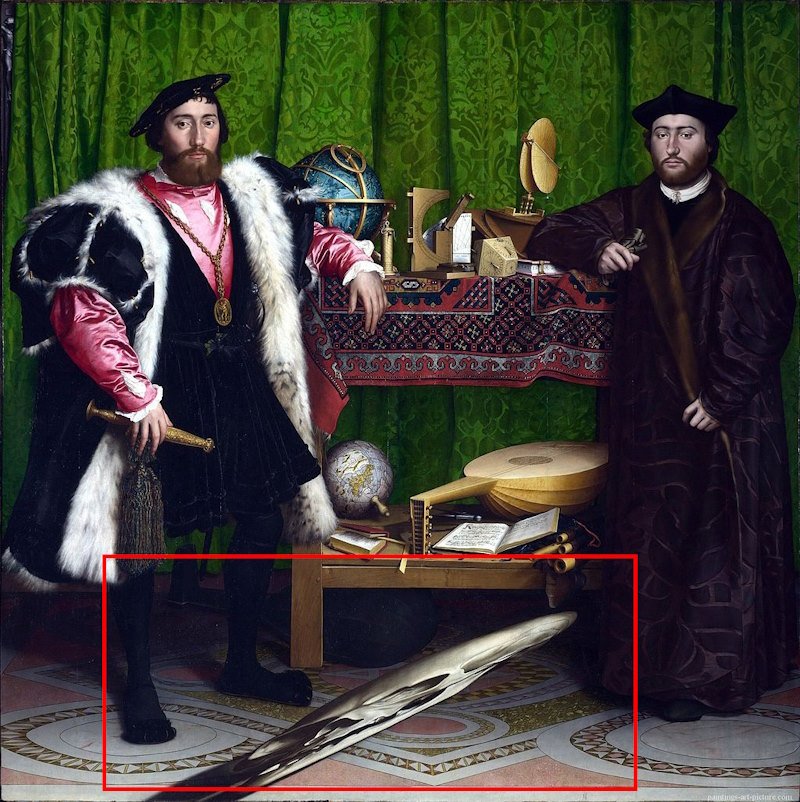
At first glance, this is a rich double portrait full of scientific instruments, books and a lute. But at the bottom, a strange, stretched shape floats across the floor. If you look at the painting from a sharp angle on the right side, that shape suddenly turns into a perfect human skull. Holbein used anamorphosis, a perspective trick that only works from one specific viewpoint.
The message is clear: memento mori, remember that you will die, even surrounded by wealth and knowledge. Look closely at the top left corner too: half hidden behind the green curtain hangs a small crucifix.
10. Las Meninas, Diego Velázquez (1656)
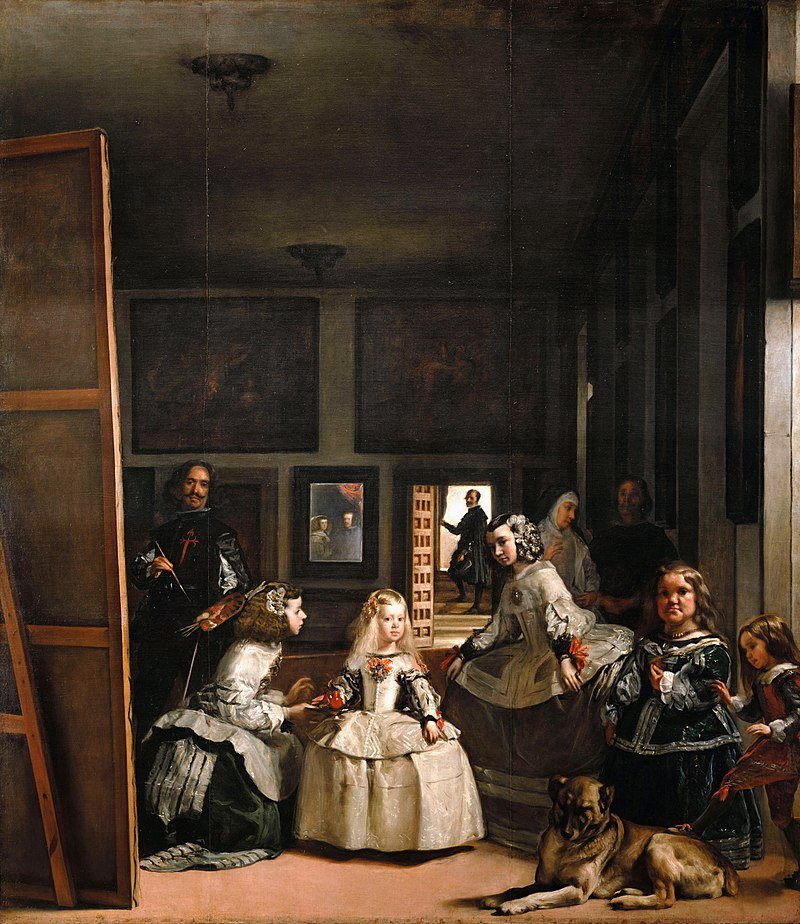
At first glance, this is a court portrait of the young Spanish princess Margaret Theresa with her ladies-in-waiting, two dwarfs and a dog. But Velázquez plays a brilliant game with perspective. In the background hangs a mirror, in which we see not the girls, but King Philip IV and Queen Mariana. Are they standing in front of the painting, exactly where you, the viewer, are standing?
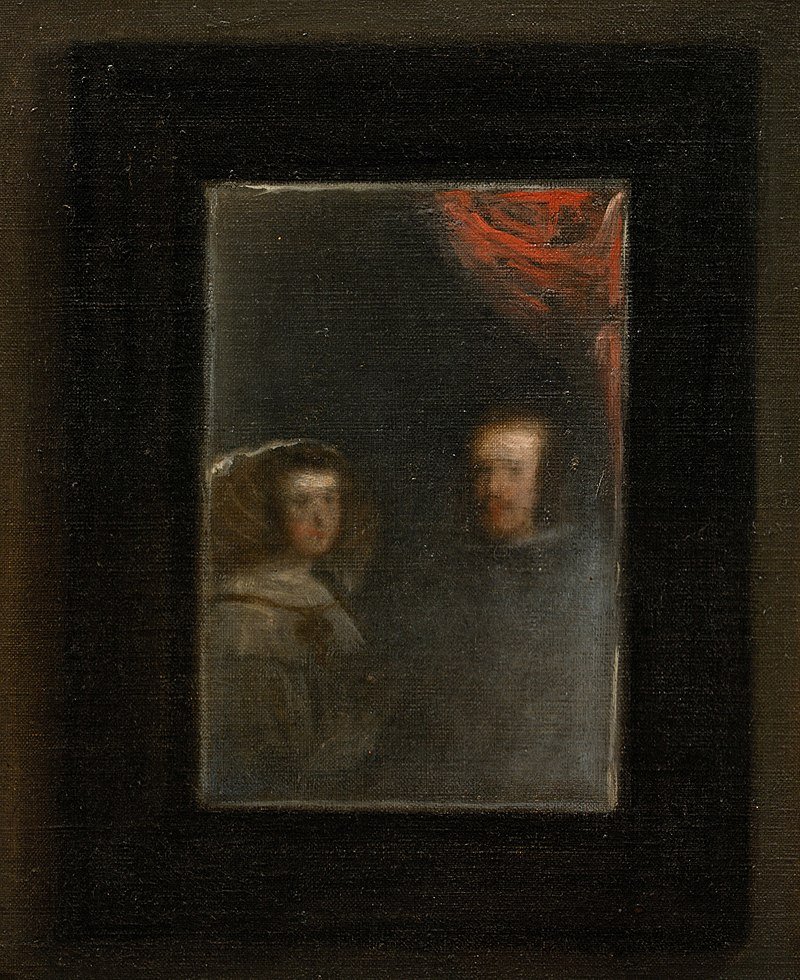
That turns the painting into a puzzling scene in which roles are reversed: you unconsciously take the place of the king, watched by his own court. Velázquez also painted himself prominently, brush in hand, working on a huge canvas whose front we never see. And on his chest is the red cross of the Order of Santiago, which he only received three years after the painting was finished. It was probably added later, perhaps on the king’s orders.
The longer you look, the more you see. These details make the old masters not only brilliant, but also playful. They whisper to you that every masterpiece has a second, third and fourth layer, and that the museum is a treasure hunt in which you are the detective.