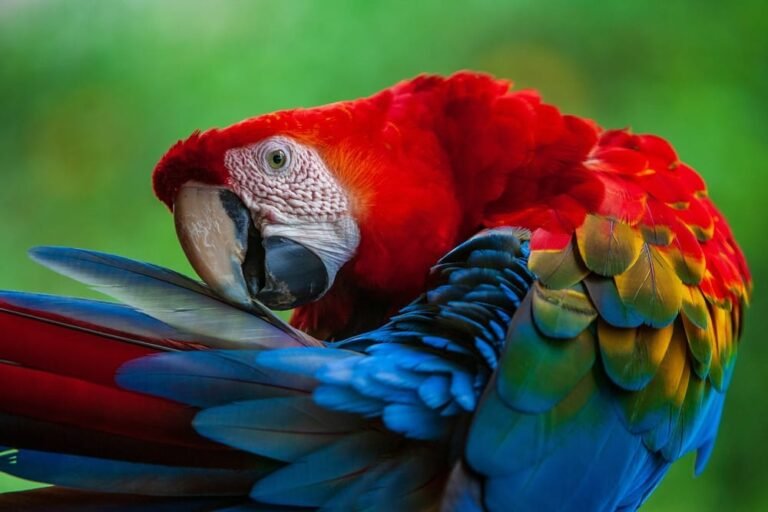
In the struggle to survive, animals have developed all kinds of clever ways to fool or scare off predators. One of the most striking strategies is having patterns on their bodies that look like eyes, or even an entire face. These fake faces can startle a predator, make an animal look much bigger and more dangerous than it really is, or direct an attack to a less vulnerable part of the body. These are ten masters of this kind of visual deception.
1. Peacock butterfly
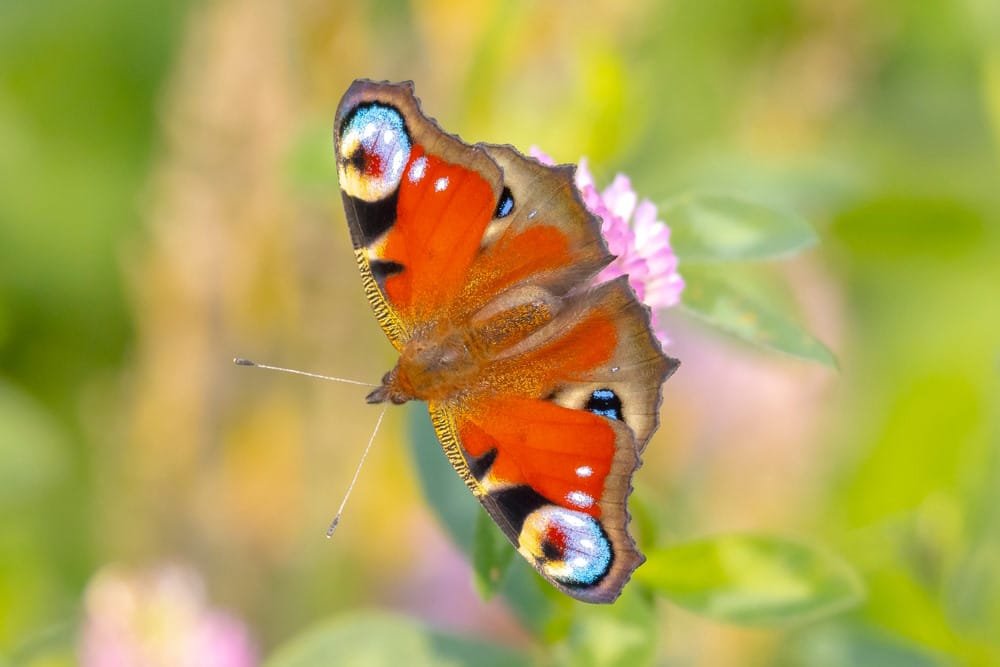
The peacock butterfly (Aglais io) is a well-known European butterfly with a beautiful pattern. When it opens its wings, it reveals four large, striking eyespots, two on each side. Together they look like the eyes of a much larger animal, such as an owl.
When a predator such as a bird approaches, the butterfly suddenly flicks its wings open and closed. The sudden appearance of the large “eyes” can startle the predator. During its winter hibernation, it adds sound to the show: by rubbing its wings together, it makes a hissing noise that scares off mice.
2. Elephant hawk-moth caterpillar

The caterpillar of the elephant hawk-moth (Deilephila elpenor) has a remarkable defense. Near its head are large eyespots. When it feels threatened, it pulls its head back into its body, so that the front segments swell up.
This makes the eyespots look even bigger and gives the caterpillar the appearance of a small snake. Birds that would happily eat a caterpillar usually prefer to avoid a confrontation with a snake.
3. Mantises with eyespots
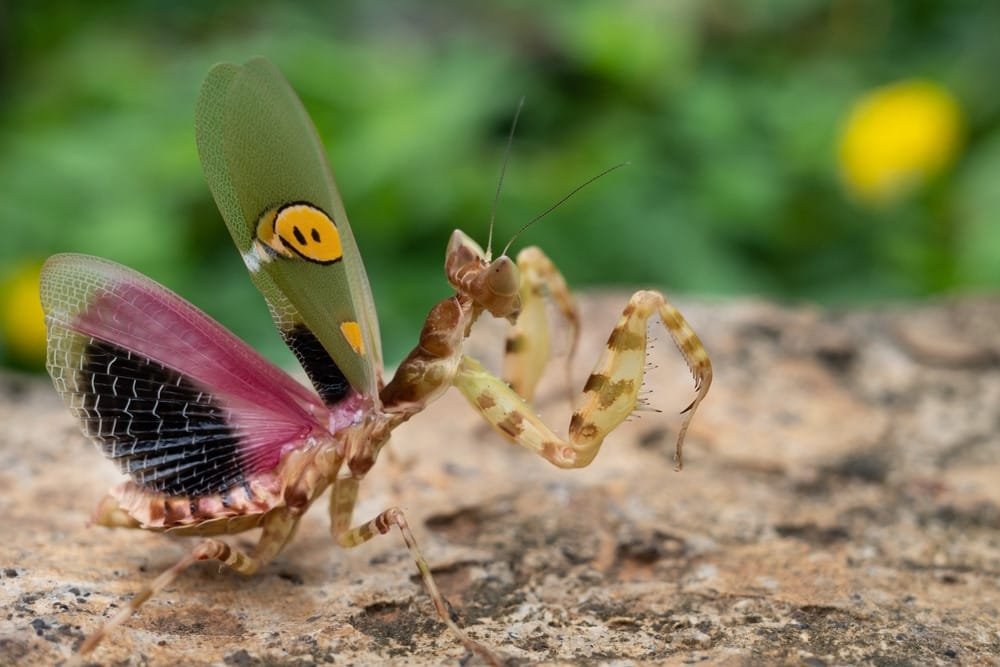
Mantises are masters of camouflage, but some species, such as flower mantises, also have a plan B. When their camouflage fails and they are threatened, they spread their front legs and wings. On the inside of their wings, there are sometimes bright colors and striking eyespots.
This sudden display of color and “eyes” can surprise a predator and make it hesitate for a moment, giving the mantis time to escape.
4. Four-eyed butterflyfish
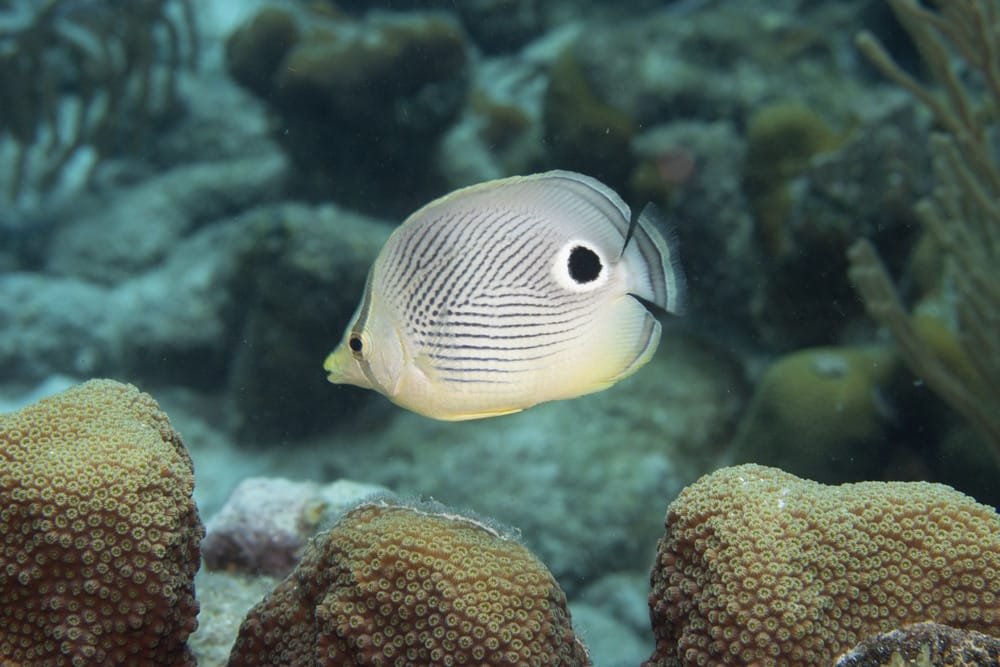
The name says it all: the four-eyed butterflyfish (Chaetodon capistratus) from the Caribbean appears to have four eyes. Its real eye is hidden by a dark vertical band across its head, while a large, striking black spot near its tail looks like an eye.
This confuses predators about where the head is and which direction the fish will flee. An attack aimed at the fake eye hits the tail instead of the head, giving the fish a better chance of escaping.
5. Peanut-headed lanternfly

One of the most bizarre examples is the peanut-headed lanternfly (Fulgora laternaria) from Central and South America. Despite its name, it is neither a fly nor a cicada, but a planthopper. It has a large, hollow extension on the front of its head that, seen from the side, looks remarkably like the head of a small caiman or lizard, complete with fake eyes and fake teeth.
This fake head is thought to scare off predators such as birds and monkeys. If that does not work, it can also flash its hind wings, which have large eyespots.
6. Eastern tiger swallowtail caterpillar
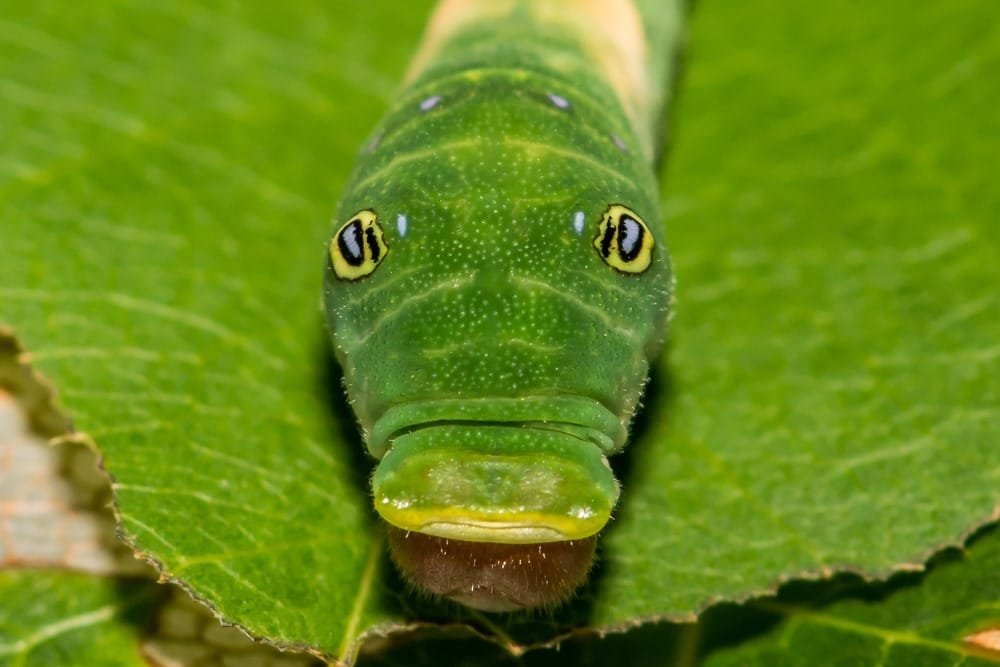
The caterpillar of the eastern tiger swallowtail (Papilio glaucus) from North America also has impressive eyespots. These large yellow and black spots on its swollen front segments look strikingly like the eyes of a small snake or tree frog.
When disturbed, it rears up and puffs up its front segments, making the “eyes” even more prominent. Like other swallowtail caterpillars, it can also push out a forked, foul-smelling orange organ from behind its head, which looks like a snake’s tongue.
7. Moths with hidden eyespots
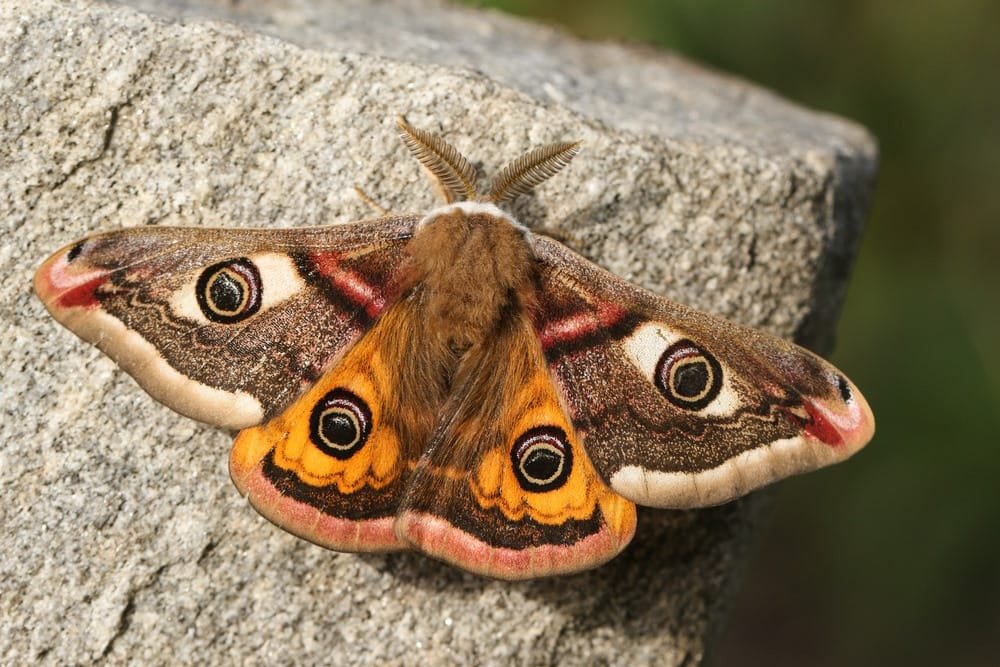
Many moths, especially giant silk moths and hawk moths, have eyespots on their hind wings. During the day, they keep these hidden under their camouflaged forewings. When a bird disturbs them, they suddenly open their forewings, revealing the large eyespots.
The sudden, threatening image can startle the predator long enough for the moth to escape. Experiments have shown that birds are indeed more likely to back off when they see eyespots, especially large, realistic ones.
8. A caterpillar that looks like a snake’s head
The caterpillar of the moth Oxytenis modestia, from Central and South America, takes mimicry even further. When threatened, it inflates its front segments, which then form a pattern that looks frighteningly like the head of a small snake, complete with eyes and scales. Earlier in its life, it uses a very different disguise: it looks like a bird dropping, which predators also tend to ignore.
9. Owl butterflies
The owl butterflies of the genus Caligo, from the rainforests of Central and South America, are among the largest butterflies in the Americas. On the underside of their wings is a huge, round eyespot with a realistic shine. When the butterfly rests with its wings closed, the eyespot and the surrounding pattern are thought to resemble the eye of an owl or, according to some researchers, a lizard, which may deter small predators.
10. A frog with eyes on its bottom
The Cuyaba dwarf frog (Physalaemus nattereri) from Brazil has a very unusual defense. On its lower back are two large black spots surrounded by white, which look like eyes. When threatened, it turns around, lowers its head and raises its rear end, so that the attacker suddenly faces what looks like the head of a much larger animal. To make the defense even more effective, glands in those “eyes” release a foul-tasting, toxic secretion.