The US Foreign Service Institute (FSI) has been training American diplomats in foreign languages for decades. Based on that experience, it divides languages into categories by how long it takes an English speaker to reach professional working proficiency. Spanish or French takes roughly 600 to 750 class hours. For the hardest languages, such as Mandarin, Japanese, Korean and Arabic, the FSI estimates around 2,200 hours of intensive study.
Of course, how hard a language is depends on what you already speak. These are ten languages that drive English-speaking learners to despair.
1. Mandarin Chinese: tones, characters and endless memorization

Mandarin is consistently named the hardest major language for speakers of European languages. The trouble starts with pronunciation: Mandarin is a tonal language with four tones plus a neutral tone. The syllable “ma” can mean mother, hemp, horse or scold, depending on the pitch. For ears used to languages in which tone only expresses emotion, that requires a complete rewiring.
Then there is the writing system. To read a newspaper, you need to know around 3,000 characters, and educated readers know many more. Many characters contain a hint about their pronunciation, but those hints are often unreliable, so in practice each character has to be memorized individually.
2. Japanese: three writing systems and layers of politeness
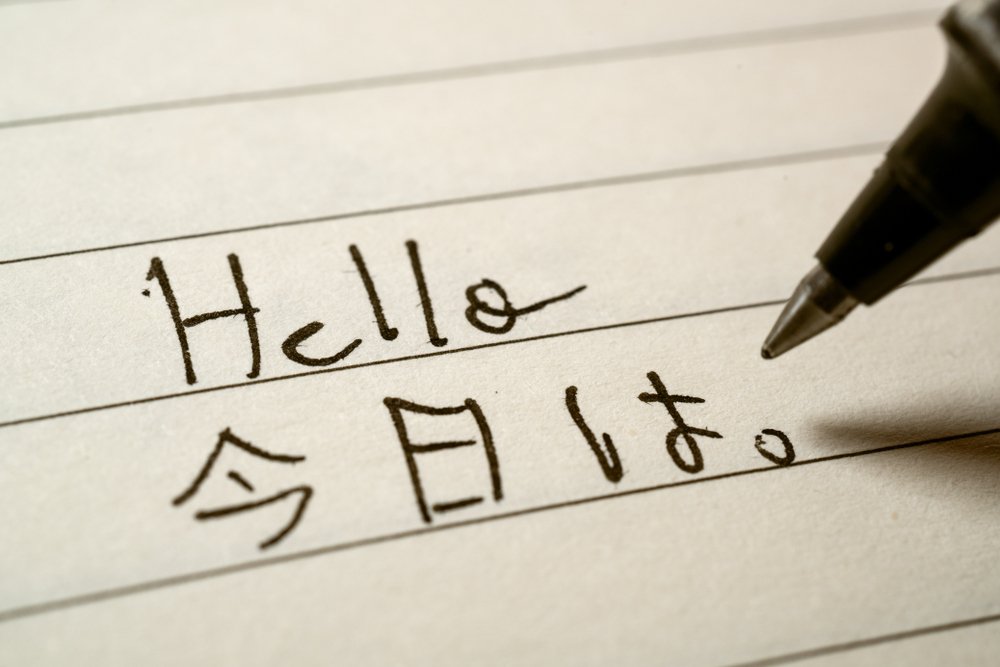
Japanese combines the difficulty of Chinese characters with a grammar that is very different from English. It uses three writing systems: hiragana (46 basic characters for native words and grammar), katakana (46 basic characters, mainly for foreign words) and kanji, the Chinese characters, of which the official list for everyday use contains 2,136. Most kanji have several readings, depending on the word they appear in.
Sentences follow a subject-object-verb order: “I sushi eat” instead of “I eat sushi”. But the truly exhausting part is keigo, an elaborate system of honorific language. How you phrase a sentence changes depending on your relationship to the listener: casual with friends, polite with strangers, humble or respectful with superiors and customers. Even many Japanese people struggle with keigo in business situations.
3. Arabic: throat sounds and many dialects
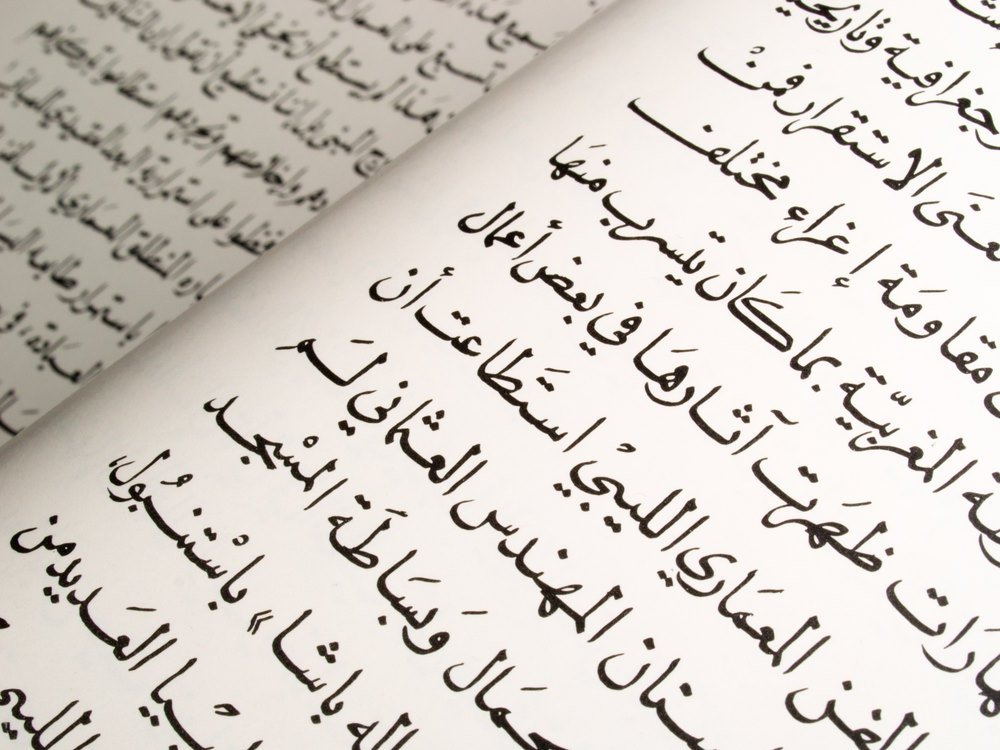
The Arabic alphabet has 28 letters and is written from right to left, and most letters change shape depending on their position in a word. Short vowels are usually not written, so you have to fill them in from context. The language also has sounds that do not exist in English, such as the throaty ʿayn.
Arabic grammar is built on a root system: most words are formed from a core of three consonants, and patterns of vowels and extra letters change the meaning. The biggest challenge may be choosing which Arabic to learn. Modern Standard Arabic is used in writing, news and formal speeches, but nobody speaks it at home. Spoken dialects such as Egyptian, Levantine, Gulf and Moroccan Arabic differ so much that speakers from different regions sometimes struggle to understand each other.
4. Korean: a logical alphabet, a tough grammar
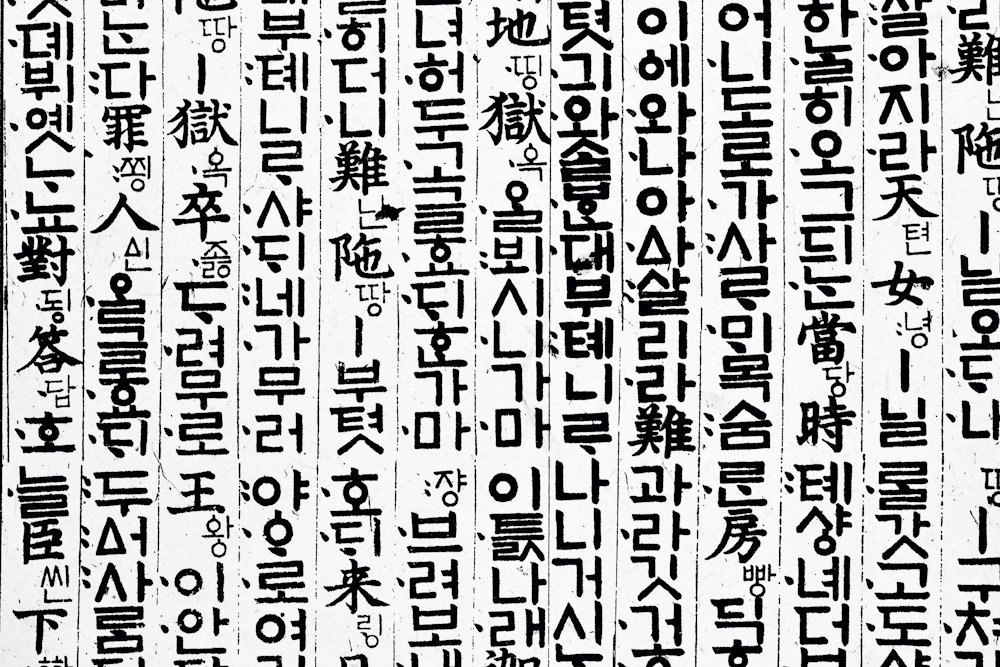
The good news: the Korean alphabet, Hangul, is brilliantly designed and can be learned in a few hours. King Sejong the Great had it created in the 1440s so that ordinary people could learn to read and write.
The bad news is the grammar. Korean is an agglutinative language: you stack endings onto a word stem to express tense, mood, politeness and the links between parts of a sentence, so a single verb can take dozens of forms. Like Japanese, it has an elaborate system of speech levels for showing respect. It also uses two different number systems, native Korean and Sino-Korean, depending on what you are counting.
5. Cantonese: even more tones
If Mandarin sounds hard, try Cantonese. Spoken by around 85 million people in Hong Kong, Macau and the Chinese province of Guangdong, it takes everything that makes Mandarin difficult and adds extra layers. Instead of four tones, Cantonese has six to nine, depending on how you count them.
The written language mostly uses traditional Chinese characters, but spoken Cantonese is so different from Mandarin that speakers of the two cannot understand each other. Cantonese has also kept final consonants such as -p, -t and -k, which Mandarin has lost.
6. Hungarian: eighteen cases and no relatives nearby
Hungarian is a linguistic outsider in Europe. It is not related to the Germanic, Romance or Slavic languages around it, but belongs to the Uralic family. Its closest relatives are two small languages in Siberia, and it is only very distantly related to Finnish and Estonian. That means you will recognize almost no words when you start.
Instead of prepositions, Hungarian uses suffixes: “in the house”, “into the house” and “from the house” are all different endings. Depending on how you count, it has around eighteen cases, and the endings change according to vowel harmony. Verbs have two different conjugations depending on whether the object is definite or indefinite. A famous example of how long Hungarian words can get is “megszentségteleníthetetlenségeskedéseitekért”, which roughly means “for your continued behavior of being undesecratable”.
7. Finnish: fifteen cases
Finnish has fifteen grammatical cases, all expressed with suffixes. The word “talo” (house) becomes “talossa” (in the house), “talosta” (out of the house), “taloon” (into the house) and so on. On top of that, the stem of a word often changes when endings are added, in a process called consonant gradation.
Because words can be built up with endless suffixes, Finnish is famous for very long words. Even loanwords are adapted so thoroughly to Finnish sounds that you hardly recognize them: “koulu” comes from the Swedish word for school, and “ranta” (beach) from an old Germanic word related to “strand”.
8. Navajo: so hard it became a secret code
Navajo, spoken by around 170,000 people in the southwestern United States, is so complex that the US Marines used it as a code during the Second World War. The Navajo Code Talkers used a code built on their language to send messages in the Pacific, and the Japanese never managed to crack it.
Navajo is a polysynthetic language: entire sentences can be packed into a single verb using prefixes and suffixes. Verbs even change depending on the shape or nature of the object being handled, with different stems for round objects, flat flexible objects or things in a container. The language also uses tones, and there are relatively few learning materials compared to major world languages.
9. Icelandic: Viking grammar frozen in time
Icelandic is the most conservative Germanic language. While English, Dutch and German simplified their grammar over the centuries, Icelandic has largely kept the complexity of Old Norse. Icelanders can read medieval sagas from the 13th century with relatively little difficulty.
The language has four cases, three genders and complex verb conjugations, and nouns, adjectives and pronouns all have to agree with each other. Iceland also prefers to create new words rather than borrow foreign ones. The word for computer, “tölva”, is a combination of “tala” (number) and “völva” (prophetess). That means you cannot fall back on familiar international vocabulary.
10. Russian: six cases and unpredictable stress

Russian is the most widely spoken Slavic language. The Cyrillic alphabet can be learned in a few days, but then the real challenges begin. Russian has six cases, and nouns, adjectives and pronouns all change their endings depending on their role in the sentence.
Verbs come in pairs: almost every verb has an imperfective and a perfective form, depending on whether an action is ongoing or completed. Word stress is unpredictable, can change the meaning of a word and is not marked in normal writing, so you have to learn it for every word. The FSI puts Russian in the “hard” category, with an estimated 1,100 class hours to reach professional proficiency, almost twice as long as for Spanish or French.