The quest for aerial speed in combat aviation is one of the most thrilling, extreme, and technologically demanding chapters in aerospace history.
During the height of the Cold War and the golden dawn of the supersonic age, military superpowers poured immense scientific fortunes into developing interceptors and reconnaissance jets capable of outrunning surface-to-air missiles, crossing continents in mere minutes, and intercepting supersonic nuclear bombers at the edge of the Earth’s atmosphere.
10. Lockheed Martin F-22 Raptor (Mach 2.25 / 2,414 km/h)
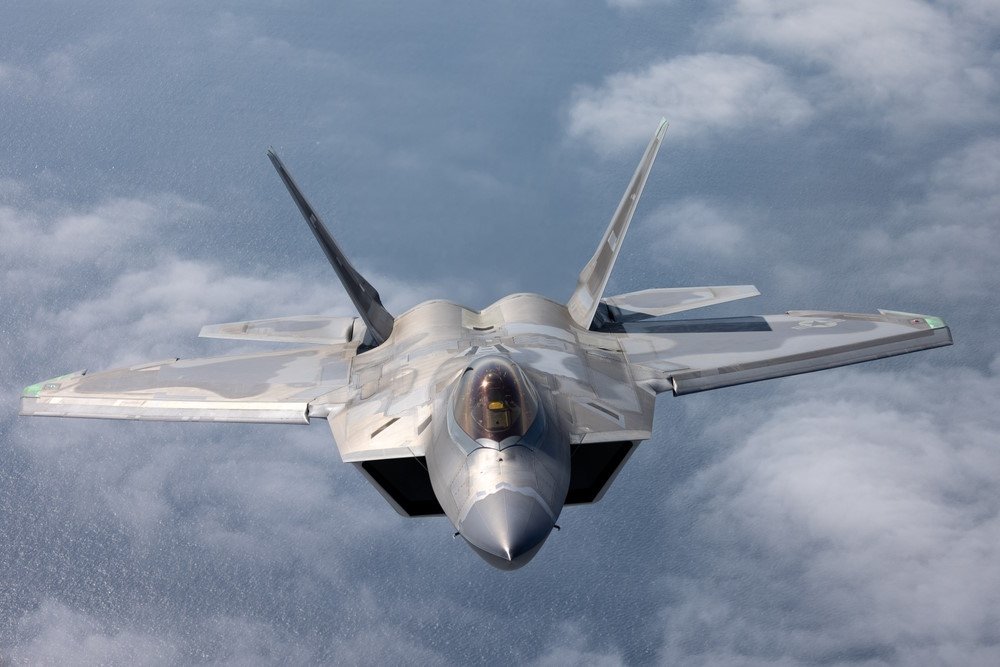
Widely regarded as the most dominant air-superiority stealth fighter in active military service today, the Lockheed Martin F-22 Raptor combines revolutionary low-observable fifth-generation radar stealth with mind-bending supersonic kinematic performance. Entering operational service with the United States Air Force in 2005, the Raptor is powered by two Pratt & Whitney F119-PW-100 afterburning turbofan engines, generating over 70,000 pounds of combined military thrust.
The F-22’s defining aerodynamic capability is “supercruise”, the ability to sustain supersonic flight at Mach 1.82 continuously without engaging fuel-thirsty afterburners, allowing it to patrol massive combat airspace at supersonic velocities without depleting its fuel reserves.
9. Mikoyan-Gurevich MiG-23 Flogger (Mach 2.35 / 2,499 km/h)
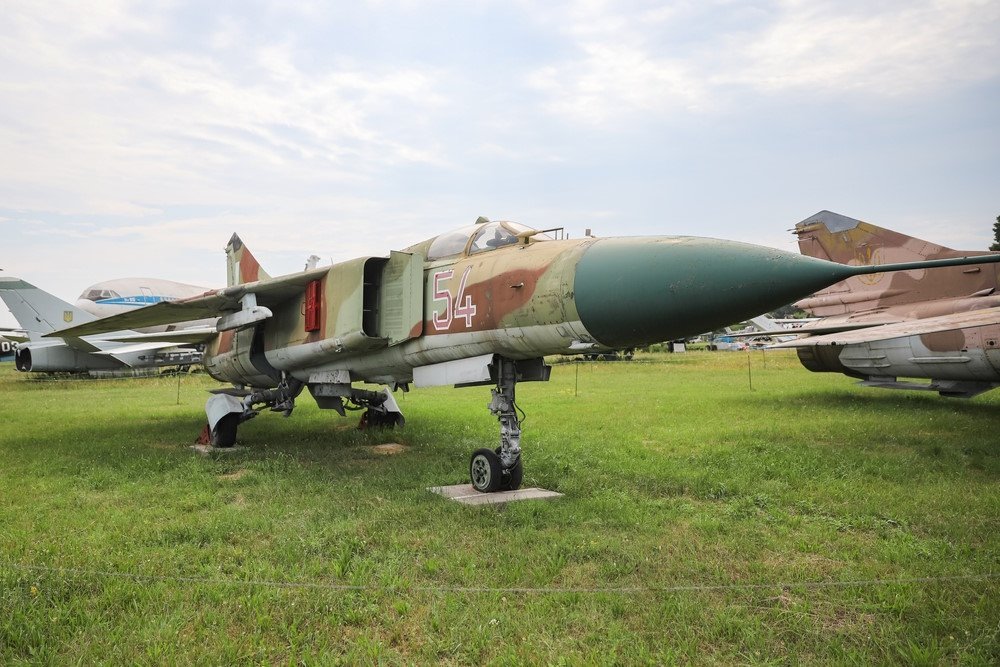
Introduced by the Soviet Union in the early 1970s to replace the legendary but short-ranged MiG-21, the Mikoyan-Gurevich MiG-23 (NATO reporting name “Flogger”) was engineered as a high-speed, variable-geometry (swing-wing) interceptor. With its wings swept back to their maximum 72-degree angle, the Flogger minimized aerodynamic drag to sprint across the sky at blistering supersonic speeds.
Powered by a single massive Khatchaturov R-35-300 afterburning turbojet engine, the MiG-23 could achieve a top speed of Mach 2.35 (2,499 km/h / 1,553 mph) at high altitude and an impressive Mach 1.1 at tree-top level.
8. Grumman F-14 Tomcat (Mach 2.34 / 2,485 km/h)
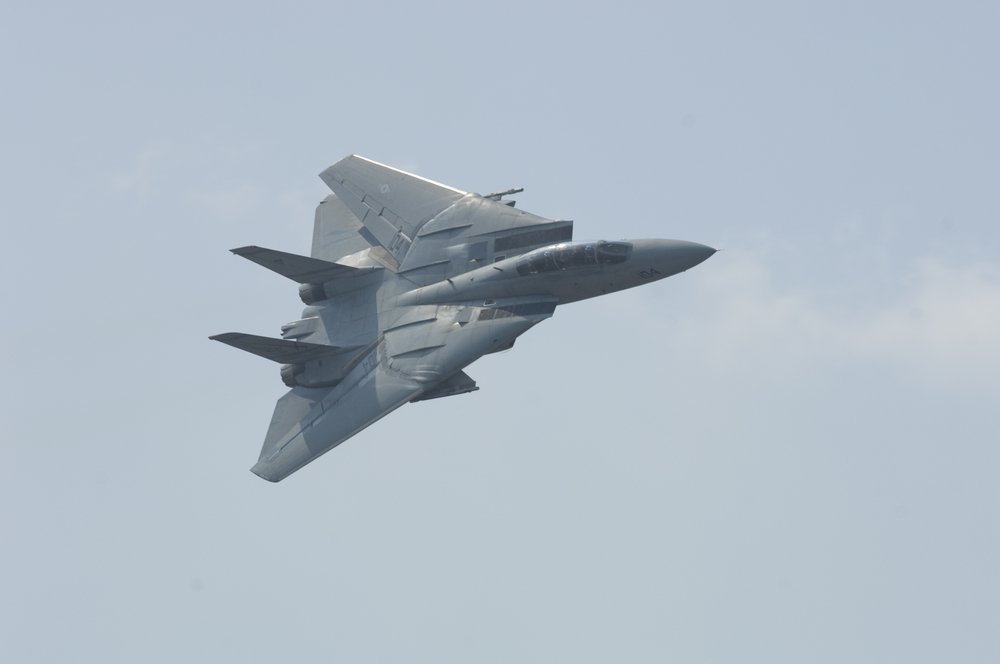
Immortalized in global popular culture by the 1986 film Top Gun, the Grumman F-14 Tomcat was the ultimate carrier-borne interceptor for the United States Navy for more than three decades (1974-2006). Engineered to protect American carrier strike groups against swarms of Soviet supersonic bombers and anti-ship cruise missiles, the Tomcat utilized an innovative automated variable-sweep wing design that swept from 20 degrees for slow carrier landings to 68 degrees for high-speed supersonic dashes.
Powered by twin General Electric F110-GE-400 engines (in its modernized F-14B/D variants), the Tomcat could reach a maximum speed of Mach 2.34 (2,485 km/h / 1,544 mph).
7. Sukhoi Su-27 Flanker (Mach 2.35 / 2,500 km/h)
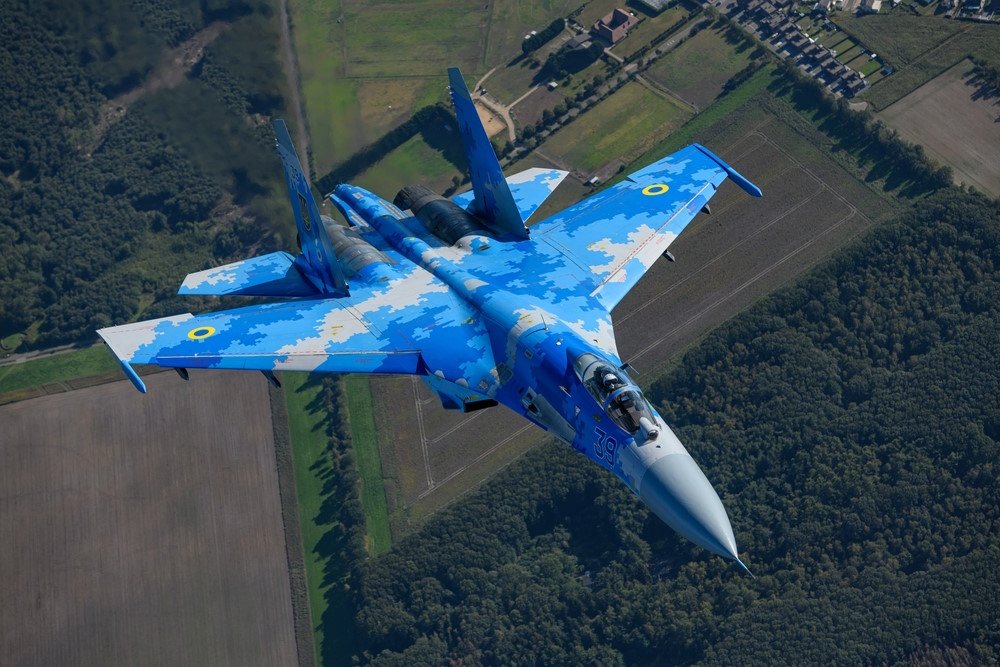
Developed by the Soviet Union in direct response to the American F-15 Eagle, the Sukhoi Su-27 (NATO reporting name “Flanker”) entered service in 1985 and remains one of the most aerodynamically gifted, versatile fighter platforms in aviation history. Featuring a blended wing-body design and two powerful Saturn AL-31F turbofan engines, the Flanker boasts exceptional thrust-to-weight ratio and maneuverability.
The Su-27 achieves a top speed of Mach 2.35 (2,500 km/h / 1,550 mph) at an altitude of 36,000 feet, with an operational service ceiling of 62,500 feet.
6. General Dynamics F-111 Aardvark (Mach 2.5 / 2,655 km/h)
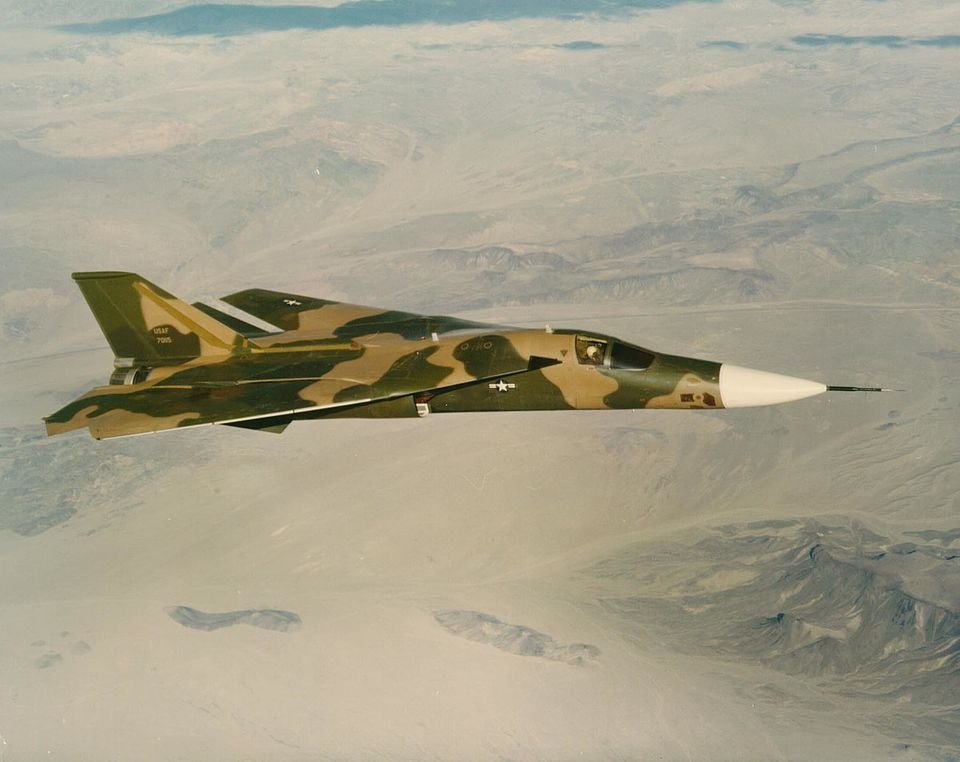
Pioneering the operational use of variable-geometry sweep wings and afterburning turbofan engines, the General Dynamics F-111 Aardvark entered service with the U.S. Designed as an all-weather tactical strike fighter and supersonic interdictor, the F-111 combined blistering speed with ground-hugging terrain-following radar (TFR).
Powered by twin Pratt & Whitney TF30 afterburning turbofans, the F-111 could sweep its wings back to 54 degrees and rocket through the sky at Mach 2.5 (2,655 km/h / 1,650 mph) at high altitudes, and Mach 1.2 at low levels beneath enemy radar coverage.
5. McDonnell Douglas F-15 Eagle (Mach 2.5 / 2,665 km/h)
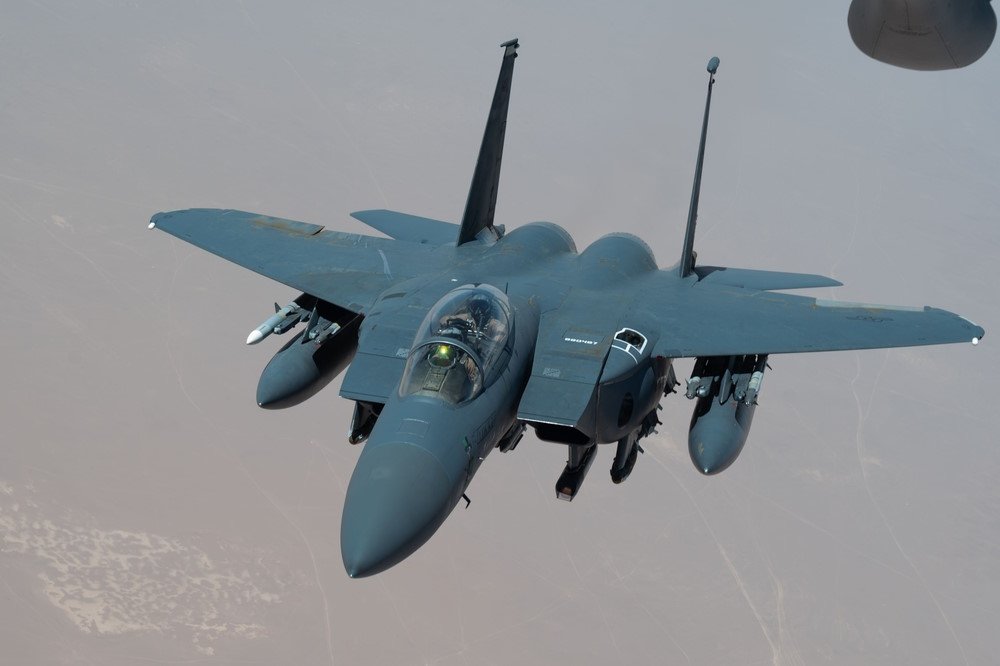
Standing unchallenged as the most successful air-superiority fighter in modern combat history, the McDonnell Douglas (now Boeing) F-15 Eagle boasts an astonishing, undefeated air-to-air combat record of 104 confirmed victories with zero losses in dogfight engagements. Entering operational service with the United States Air Force in 1976, the F-15 was engineered with a singular, uncompromising doctrinal philosophy: “not a pound for air-to-ground”, a pure, unadulterated air-dominance machine built to counter the perceived threat of Soviet high-altitude interceptors.
Powered by two Pratt & Whitney F100-PW-220 turbofan engines producing an exceptional thrust-to-weight ratio exceeding 1.2:1, the F-15 is capable of accelerating vertically straight up into the stratosphere while gaining airspeed.
4. Mikoyan MiG-31 Foxhound (Mach 2.83 / 3,000 km/h)
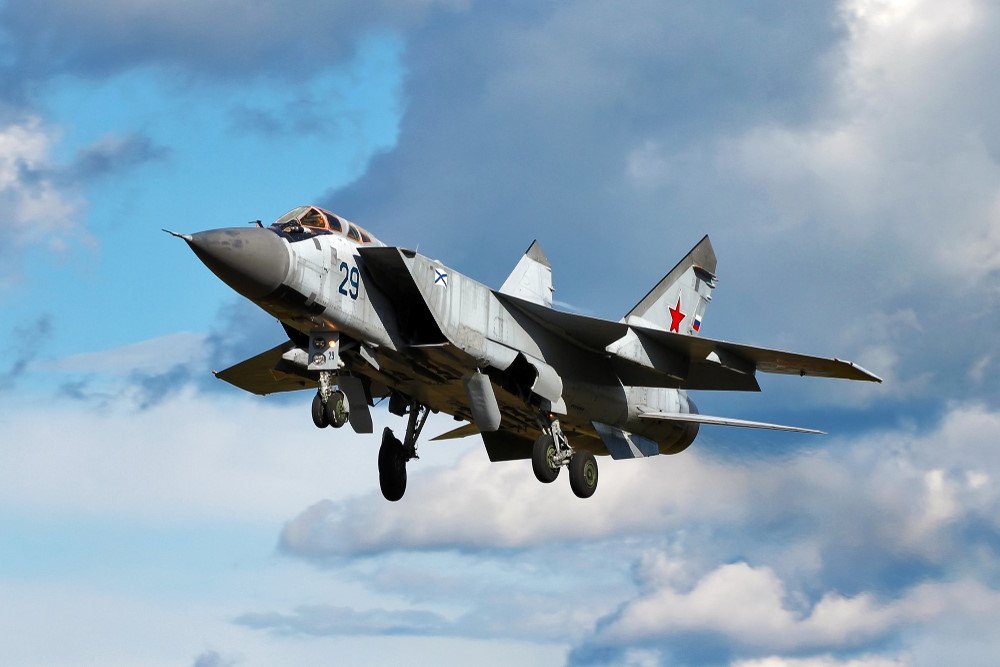
Developed to replace the legendary MiG-25, the Mikoyan MiG-31 (NATO reporting name “Foxhound”) entered Soviet service in 1981 as a long-range, two-seat supersonic interceptor designed to defend the vast, radar-sparse expanses of Siberia and the Russian Arctic against low-flying American cruise missiles and B-52 bombers. Powered by two colossal Soloviev D-30F6 turbofan engines generating an immense 68,000 pounds of thrust, the MiG-31 can cruise at Mach 2.35 and reach a top speed of Mach 2.83 (3,000 km/h / 1,864 mph).
The MiG-31 was the first operational combat aircraft in history fitted with a passive electronically scanned array (PESA) radar (the Zaslon), capable of tracking 10 targets and engaging four simultaneously.
3. Mikoyan-Gurevich MiG-25 Foxbat (Mach 3.2 / 3,490 km/h)
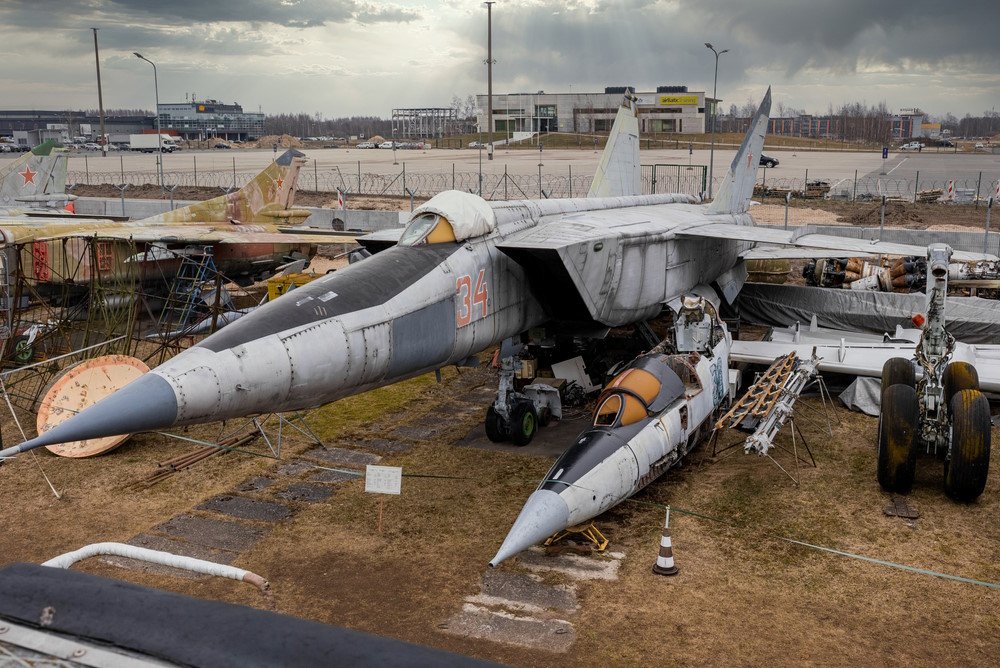
When the Mikoyan-Gurevich MiG-25 (NATO reporting name “Foxbat”) was first unveiled to Western intelligence during the Moscow air parade in the late 1960s, its massive wings and colossal dual air intakes triggered widespread panic inside the Pentagon, directly inspiring the urgent development of the American F-15 Eagle. Engineered specifically to intercept the planned American Mach 3 B-70 Valkyrie nuclear bomber and high-flying supersonic SR-71 reconnaissance planes, the Foxbat was an absolute brute of industrial aerospace engineering.
Because aerodynamic friction at speeds exceeding Mach 3 generates skin temperatures in excess of 300 °C (572 °F), conventional aviation aluminum could not be used as it would soften and lose structural integrity; instead, Soviet engineers constructed the MiG-25’s airframe primarily out of 80 percent nickel-steel alloy and 8 percent titanium, painstakingly welded together by hand.
2. Lockheed YF-12 (Mach 3.35 / 3,660 km/h)

Before the iconic SR-71 Blackbird achieved fame as an unarmed reconnaissance platform, legendary aeronautical engineer Clarence “Kelly” Johnson and Lockheed’s Skunk Works developed the Lockheed YF-12: a heavily armed, dedicated twin-seat Mach 3 interceptor prototype for the United States Air Force. First flown in secret at Area 51 in 1963, the YF-12 was designed to intercept supersonic Soviet bombers before they could approach the North American continent.
Equipped with an advanced Hughes ASG-18 radar in a bulbous nose cone and three internal weapons bays carrying Hughes AIM-47 Falcon long-range air-to-air missiles, the YF-12 was powered by two Pratt & Whitney J58 continuous-bleed turbo-ramjet engines.
1. Lockheed SR-71 Blackbird (Mach 3.3+ / 3,540+ km/h)
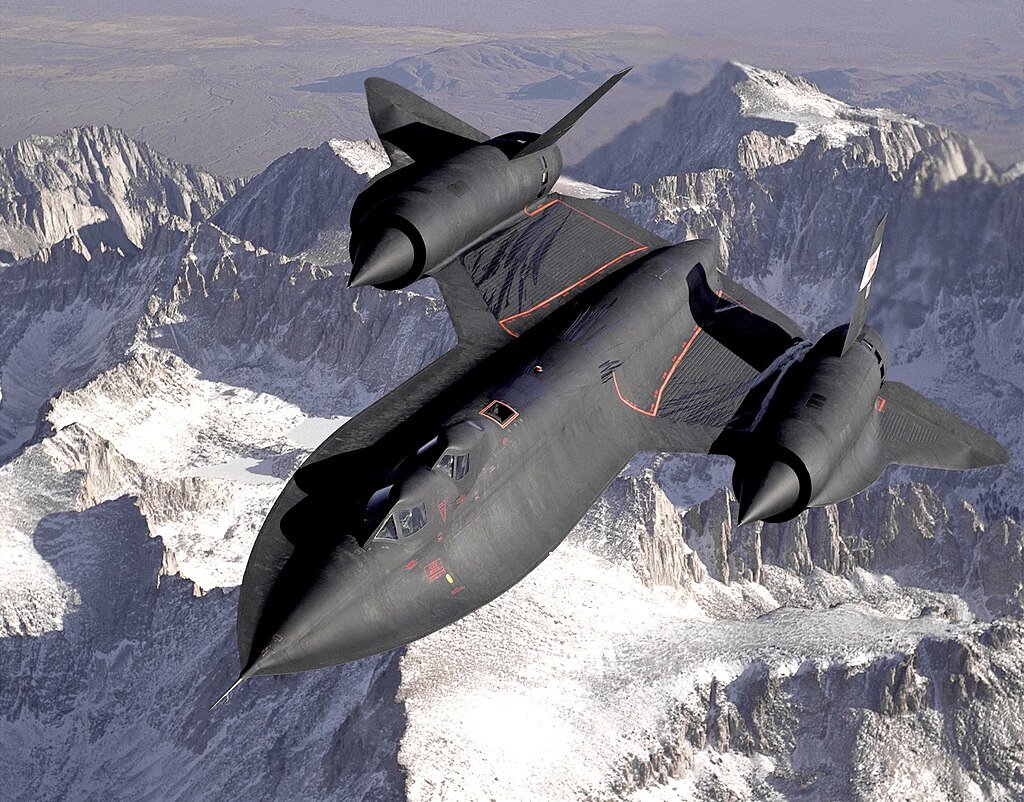
Standing unchallenged as the ultimate, immortal supreme monarch of supersonic aviation, the Lockheed SR-71 Blackbird is the fastest air-breathing manned aircraft ever constructed in human history. Conceived by Kelly Johnson at Skunk Works and entering operational service with the U.S.
Air Force in 1966, the Blackbird was engineered to fly so fast and so high that no enemy interceptor or missile could ever touch it: if a surface-to-air missile was detected, the standard pilot operating procedure was simply to accelerate and outrun it.
Which choice on this list is your personal favorite? Share your thoughts and rankings in the comments below.