For more than a century, proven oil reserves have drawn the fault lines of global geopolitics. Energy analysts define proven reserves as the quantity of crude oil that geologists are reasonably certain can be recovered from known reservoirs under existing economic and operating conditions.
Holding the largest underground reserves is very different from pumping the most oil each day. Some countries extract millions of barrels daily from relatively modest reservoirs, while others sit atop vast oceans of heavy crude that remain trapped underground due to sanctions, war, or crumbling infrastructure. Nearly 80 percent of the world’s proven reserves lie within OPEC member states. Here are the ten countries with the largest proven oil reserves on the planet.
10. Libya: 48.4 Billion Barrels
Libya holds the largest proven oil reserves on the African continent, concentrated primarily in the Sirte Basin in the northeast of the country. European refineries have prized Libyan crude for decades because it is light, low-sulfur sweet crude that is far cheaper and cleaner to refine into gasoline and diesel than heavier grades.
Since the fall of Muammar Gaddafi in 2011, however, rival factions in Tripoli and eastern Libya have repeatedly blockaded pipelines and export terminals as political leverage, preventing the country from reaching its full production potential.
9. United States: 55.2 Billion Barrels
Here is a striking energy paradox: the United States is the largest daily oil producer in the world at over 13 million barrels per day, yet it ranks only ninth in proven reserves. That gap comes down to geology and accounting rules.
Unlike Middle Eastern kingdoms that pump for decades from giant conventional sandstone reservoirs, US production relies heavily on hydraulic fracturing (fracking) in tight shale formations like the Permian Basin across Texas and New Mexico. Because shale wells decline rapidly after their first year and US Securities and Exchange Commission rules only count reserves scheduled to be drilled within five years, America’s official reserve figure stays modest even as continuous horizontal drilling keeps daily output at record highs.
8. Russia: 80.0 Billion Barrels
Beneath the marshes of Western Siberia and the Volga-Ural region lie roughly 80 billion barrels of proven crude reserves that have financed Moscow since the Soviet era. As Soviet-era supergiant fields like Samotlor slowly mature, Russian energy companies face the daunting task of shifting production toward remote Arctic and Eastern Siberian deposits.
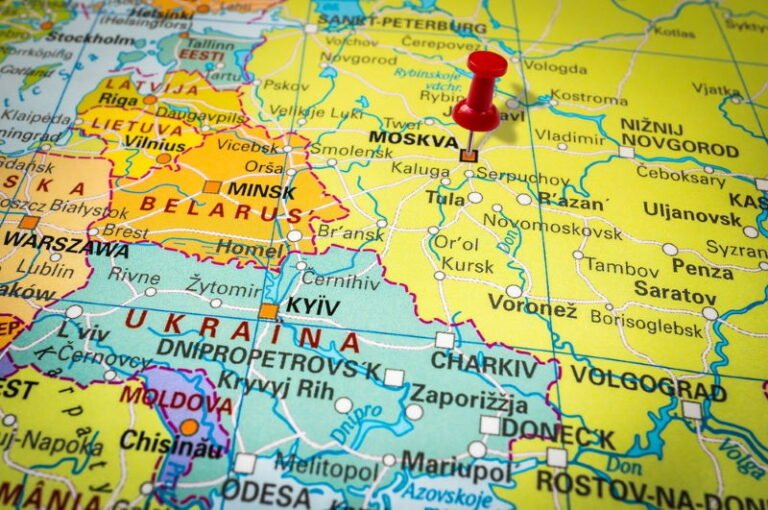
Western sanctions following the 2022 invasion of Ukraine cut off access to Western drilling technology and European pipeline buyers, forcing Russia to reroute its crude to India and China using a shadow fleet of aging tankers while defending its western refineries against long-range drone strikes.
7. Kuwait: 101.5 Billion Barrels

Kuwait occupies a sliver of land at the tip of the Persian Gulf smaller than New Jersey, yet it sits atop more than 101 billion barrels of oil. Roughly 70 percent of that wealth is pooled inside a single geological marvel: the Greater Burgan field, the world’s second-largest conventional sandstone oil field, where natural pressure pushes crude toward the surface for just a few dollars a barrel.
6. United Arab Emirates: 113.0 Billion Barrels
Within the seven-emirate federation of the UAE, oil wealth is heavily lopsided: Abu Dhabi controls roughly 96 percent of the nation’s 113 billion barrels, while glitzy Dubai has very little crude left of its own.
State oil giant ADNOC continues to invest tens of billions of dollars into offshore artificial islands at the Upper Zakum field to push capacity toward five million barrels per day. To reduce its vulnerability to maritime chokepoints, Abu Dhabi also built the Habshan-Fujairah pipeline across the mountains to the Gulf of Oman, allowing a large share of UAE crude exports to bypass the Strait of Hormuz entirely.
5. Iraq: 145.0 Billion Barrels
Around the southern port city of Basra lie some of the most prolific, shallow oil fields on Earth, including Rumaila, West Qurna, and Majnoon. Extraction costs here are remarkably low, yet decades of war, sanctions, political disputes between Baghdad and the Kurdistan Regional Government over northern pipelines to Turkey, and shortages of water needed to maintain reservoir pressure have kept Iraq’s infrastructure under constant strain.
4. Canada: 168.0 Billion Barrels
Canada’s fourth-place ranking does not come from free-flowing desert wells. Instead, roughly 97 percent of its 168 billion barrels consists of thick, tar-like bitumen locked inside the oil sands of northern Alberta, particularly around the Athabasca basin.
Only about a fifth of these oil sands lie shallow enough for massive open-pit mining trucks to scoop up; the rest must be heated underground with injected steam so the bitumen can flow to the surface. While extracting Canadian oil sands is expensive and energy-intensive, the recent expansion of the Trans Mountain Pipeline to the Pacific coast near Vancouver has finally given Alberta producers direct tanker access to Asian markets alongside their traditional US refinery customers.
3. Iran: 208.6 Billion Barrels
Commercial oil production in the Middle East began in Iran in 1908 with the discovery at Masjed Soleyman. Today, Iran holds nearly 209 billion barrels of proven reserves concentrated in southwestern Khuzestan province and beneath the waters of the Persian Gulf, alongside vast liquid condensates from the South Pars gas field.
Decades of international sanctions have starved the National Iranian Oil Company of Western recovery technology, forcing Tehran to rely on ship-to-ship transfers in Southeast Asian waters and covert sales to independent Chinese teapot refineries. With more than 90 percent of Iran’s crude exports passing through the heavily fortified terminal on Kharg Island, the country’s energy infrastructure remains one of the most sensitive flashpoints in global geopolitics.
2. Saudi Arabia: 267.2 Billion Barrels
Saudi Arabia remains the undisputed heavyweight of conventional oil.
Managed by state giant Saudi Aramco, the Kingdom’s 267.2 billion barrels include Ghawar, a 280-kilometer-long underground reservoir that is by far the largest conventional oil field ever discovered, as well as Safaniya, the world’s largest offshore field. Because Saudi crude sits in porous rock under high natural pressure, it costs only a few dollars per barrel to pump out of the desert.
That geological advantage allows Riyadh to act as the world’s central banker of oil, ramping production up or down by millions of barrels a day to steer OPEC+ prices while using its 1,200-kilometer East-West Pipeline to Red Sea ports as insurance against Gulf shipping disruptions.
1. Venezuela: 303.2 Billion Barrels

On paper, Venezuela possesses more oil than any other nation on Earth: 303.2 billion barrels, concentrated primarily in the Orinoco Belt. Like Canada’s oil sands, most of this reserve consists of extra-heavy crude so thick that it must be heated or blended with lighter naphtha just to flow through a pipeline.
In practice, Venezuela is a textbook case of how mismanagement can paralyze natural wealth. Over the past quarter-century, political purges of skilled engineers at state oil company PDVSA, chronic corruption, lack of maintenance, and international sanctions caused Venezuelan output to collapse from over 3.2 million barrels per day in the late 1990s to a fraction of that level, leaving the country with the world’s largest oil reserves struggling even to supply domestic gas stations.