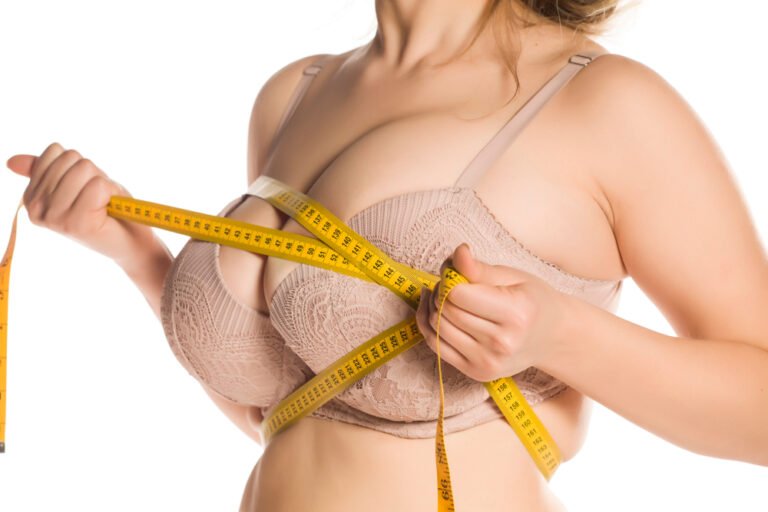
Search online for which country has the largest breasts, and millions of search results will instantly present a neat, official looking ranking. The United States always tops the chart, the Netherlands sits comfortably near the summit, and Southeast Asian nations cluster at the bottom. While this viral ranking appears everywhere across international media, the scientific study behind it never actually existed.
1. The study that never existed
Almost every viral article traces back to a single supposed research paper: an analysis published in The Journal of Female Health Sciences, claiming to calculate standardized cup sizes for adult women across 108 nations. Major television networks covered it in 2016, international newspapers republished it in 2019, and lifestyle blogs have shared it ever since.
There is just one problem: the journal does not exist. It has no academic publisher, no editorial board, no ISSN registration number, and no other published papers in medical archives. The original PDF document circulated on document-sharing websites with an empty reference number, and while investigative journalists flagged the paper as an outright hoax years ago, the viral ranking easily outran the debunking.
2. The ten countries with the largest breasts
According to the viral document that captured global headlines, the top ten nations were ranked as follows:
- United States
- Canada
- Ireland
- Poland
- United Kingdom
- Netherlands
- Colombia
- Iceland
- Venezuela
- Turkey
The ranking placed the Netherlands at number six, claiming an average national size hovering between a C and a D cup. Anyone examining the list closely immediately spots glaring anomalies: Ireland and Poland outrank Colombia and Venezuela, despite South America being the epicenter of aesthetic enhancement procedures, while tiny Iceland sits mysteriously wedged in between.
3. The ten countries with the smallest breasts
At the opposite end of the ranking, the viral study grouped ten nations as having the smallest average measurements:
- Philippines
- Malaysia
- Bangladesh
- Samoa
- Solomon Islands
- Taiwan
- Vietnam
- Thailand
- Laos
- Mozambique
The dataset consisted overwhelmingly of Southeast Asian nations, with Pacific island states and southeastern Africa scattered throughout. Regional media outlets even ran breathless headlines claiming Malaysian women averaged 113 milliliters of tissue against 111 milliliters in the Philippines: a difference of two milliliters, which equals roughly half a teaspoon.
4. Seven authors nobody can find
Beneath the fraudulent study were seven authors, each credited with impressive medical credentials. These titles included a curator of human anatomy in New Delhi, a professor of clinical radiology at Camiry University, and an emeritus chairman at the Atape Institute of Human Anatomy.
None of these academic institutions exist. Not a single named researcher appears in international medical directories, university registries, or peer-reviewed journals. One author was listed as an executive at an unnamed lingerie manufacturer, offering a commercial motive that media outlets never bothered to investigate.
5. The number that kept growing
In the original fake document, the sample size was listed as approximately 342,000 women between the ages of 28 and 30. By the time European lifestyle websites republished the story, that number had miraculously climbed to over 400,000 participants.
This steady inflation is a classic symptom of copied viral content. Subsequent writers round figures upward, add rhetorical flair, or misremember earlier articles, expanding the dataset with every click. When identical research appears across different outlets with shifting participant totals, skepticism is always justified.
6. The rankings that actually rely on data
Legitimate rankings do exist outside of the hoax, including analyses compiled by public demographic databases and commercial apparel trackers. These compilations rely primarily on retail bra sales figures combined with voluntary consumer surveys. In these commercial tallies, Sweden, Norway, the United Kingdom, and the United States frequently top the lists, while parts of East Asia and Central Africa appear lower.
However, retail data measures purchasing habits rather than anatomical necessity. While the recurring pattern is meaningful because similar regions surface in retail reports, it maps consumer shopping behavior rather than pure genetics.
7. A C-cup is not the same size everywhere
There are at least six completely different sizing systems in use globally. An American C-cup corresponds roughly to a European D-cup, making direct comparisons misleading. More importantly, bra cup letters represent volume relative to band size, meaning an 80C holds significantly more volume than a 70C.
Brand inconsistency complicates the picture further through vanity sizing, where garments with identical labels fit differently across competing labels. Ranking nations by cup letters alone compares completely incompatible measurements.
8. The Samoa paradox
Breast tissue consists predominantly of adipose fat, meaning total bust volume correlates strongly with Body Mass Index. This correlation is the most consistent and widely validated finding in genuine anthropometric science.
Yet Samoa, which possesses one of the highest average BMI rates in the world, was listed in the viral dataset as averaging an A-cup. Similar contradictions appear across Pacific island nations and parts of Africa. When a dataset directly contradicts established physical science, the underlying numbers are fundamentally flawed.
9. Why the United States always wins
American consumers frequently purchase brassieres with larger cup designations paired with narrower bands, such as selecting a 34DD where a European consumer might choose a 36C. In Western Europe, consumer habits often lean toward roomier band measurements.
Differences in retail fitting culture help explain why the United States consistently tops international surveys. Wealthier nations feature accessible professional fitting boutiques and wider commercial size ranges, producing tables that reflect retail prosperity rather than biological superiority.
10. What science has actually proven
Only one large international study has met rigorous scientific standards: the Breast Size Satisfaction Survey led by social psychologist Viren Swami. Encompassing over 18,500 participants across 40 countries, the project used identical standardized methodologies at 61 research sites.
The definitive finding was that 70.7 percent of women worldwide express dissatisfaction with their current bust dimensions, desiring either larger or smaller proportions. This number is genuinely comparable across borders, explaining why viral rankings attract immense public curiosity despite resting on the work of fictitious authors.
Conducting a true global measurement would require thousands of standardized clinical assessments corrected for age, pregnancy, and BMI across dozens of nations. Until academic institutions allocate serious funding for such a study, the most famous anatomical leaderboard on earth remains an enduring internet legend.