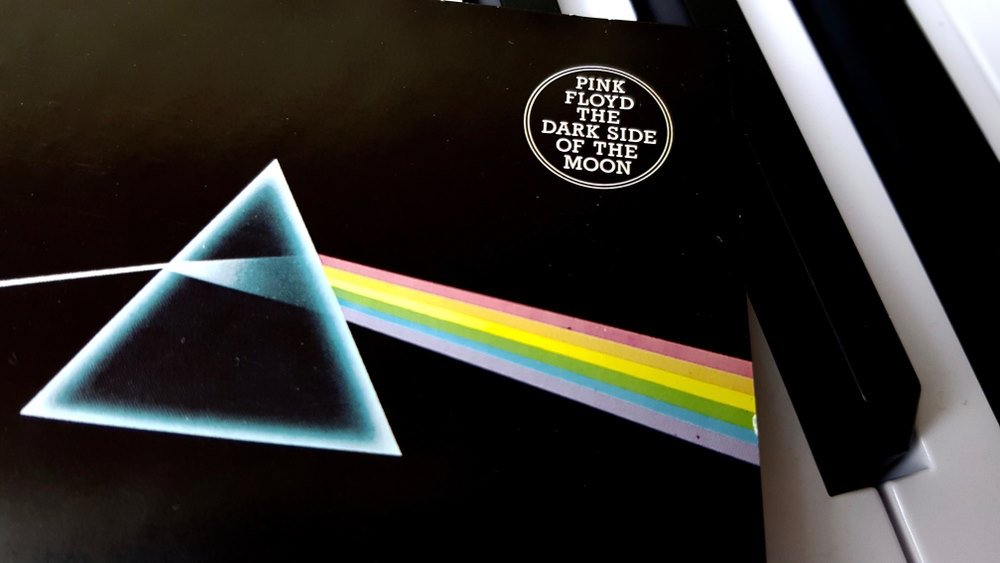
Formed in London in 1965, Pink Floyd evolved from the psychedelic underground whimsy of founding visionary Syd Barrett into the undisputed architects of progressive concept-rock.
Masterminded by bassist and conceptual lyricist Roger Waters, guitarist and melodic maestro David Gilmour, keyboardist Richard Wright, and drummer Nick Mason, Pink Floyd transformed recorded albums into philosophical sonic voyages.
10. Money
The breakthrough single from 1973’s landmark opus The Dark Side of the Moon, “Money” opens with an intricate, mechanical tape loop of clinking coins, cash registers, and tearing paper created manually by Roger Waters in his garden shed. Written in an unconventional, swaggering 7/4 time signature, the song is a cynical critique of capitalist greed.
When the rhythm section smoothly shifts to a standard 4/4 blues tempo, David Gilmour unleashes a searing, four-track overdubbed guitar solo followed by Dick Parry’s roaring tenor saxophone, producing one of the most iconic radio hits in classic rock history.
9. Us and Them
Originally written on piano by Richard Wright under the title “The Violent Sequence” for Michelangelo Antonioni’s 1970 film Zabriskie Point, Wright and Waters transformed the piece into a sublime, floating meditation on warfare, racism, and artificial societal divisions. Wright’s warm Hammond organ chords and Dick Parry’s breathy saxophone glide like velvet beneath David Gilmour’s hushed vocals before exploding into a majestic, gospel-tinged chorus.
It remains one of the most musically sophisticated compositions in rock history.
8. High Hopes
The major final track on 1994’s The Division Bell, “High Hopes” was composed by David Gilmour with lyrics co-written by his wife, novelist Polly Samson. Centered around a mournful church bell ringing continuously in the distance, the song is a bittersweet, nostalgic reflection on youth, lost dreams, and the inevitable passage of time in Cambridge.
The track culminates in an astonishing, weeping lap-steel guitar solo by Gilmour that ranks among his finest late-career achievements, bringing Pink Floyd’s studio journey to a noble, poetic conclusion.
7. The Great Gig in the Sky
Composed on piano by Richard Wright to explore human mortality, the band invited British session singer Clare Torry into Abbey Road studios in January 1973. Instructed to think about death and express wordless emotion without lyrics, Torry delivered a spine-tingling, vocal improvisation that soared from quiet, mournful sighs to gut-wrenching, soul-baring operatic heights.
Initially apologizing to the band for her performance, Torry had inadvertently created one of the most famous, emotionally extraordinary vocal improvisations in the history of recorded music.
6. Echoes
Clocking in at over twenty-three minutes on 1971’s Meddle, “Echoes” is the grand sonic bridge connecting early psychedelic Pink Floyd to the major concept albums of their golden era. Beginning with Richard Wright’s famous grand piano note fed through a Leslie rotary speaker to create an underwater sonar “ping,” the composition explores deep human empathy.
Famously performed in the ancient, deserted Roman amphitheater of Pompeii in 1972, the piece shifts from tranquil ocean imagery into a terrifying, seagull-screeching guitar duel and a soaring celestial finale.
5. Time
Opening with a deafening cacophony of ringing alarm clocks and chimes recorded by audio engineer Alan Parsons in an antique shop, “Time” confronts the terrifying realization that life is slipping away unnoticed. Roger Waters penned the lyrics when he realized at age twenty-eight that he was no longer preparing for life, life was already happening.
David Gilmour’s blistering, expressive guitar solo, dripping with blues distortion and emotional weight, is universally celebrated as one of the greatest guitar solos ever recorded, capturing the desperate panic of wasted years.
4. Another Brick in the Wall, Pt. 2
The centerpiece single of 1979’s rock opera The Wall, this protest against rigid, abusive boarding-school education gave Pink Floyd their only number-one single in both the US and UK. Producer Bob Ezrin famously convinced a reluctant Roger Waters and David Gilmour to adopt a tight 4/4 disco beat inspired by Chic.
Featuring a choir of school children from Islington Green School shouting “We don’t need no education!”, and Gilmour’s razor-sharp, direct-injected 1954 Fender Stratocaster guitar solo, the song became a global anti-authoritarian anthem, famously banned in apartheid South Africa.
3. Shine On You Crazy Diamond (Pts. 1-5)
A staggering, thirteen-minute tribute to their tragic founding frontman Syd Barrett, whose mental breakdown and LSD-induced withdrawal forced him out of the band in 1968. Opening 1975’s Wish You Were Here, the piece is anchored by Gilmour’s haunting, four-note guitar arpeggio (the “Syd’s theme”).
During the mixing sessions at Abbey Road, an unrecognizable, overweight man with shaved head and eyebrows wandered into the studio clutching a plastic bag, it was Syd Barrett himself.
2. Wish You Were Here
The title track of their 1975 masterpiece opens with the sound of someone searching through car radio frequencies before landing on David Gilmour’s delicate, 12-string acoustic guitar melody, recorded to sound like a lonely musician playing along with the radio. Roger Waters’ lyrics examine emotional numbness, alienation from one’s own soul, and the longing for authentic connection.
“How I wish, how I wish you were here / We’re just two lost souls swimming in a fish bowl, year after year.” The track is an immortal, universal hymn of longing that comforts millions across the globe.
1. Comfortably Numb
Taking the crown as Pink Floyd’s supreme artistic achievement, “Comfortably Numb” from 1979’s The Wall is a dramatic dialogue between an indifferent doctor injecting a paralyzed, sedated rock star with stimulants before shoving him onto the stage. Waters’ somber, clinical verses contrast with Gilmour’s ethereal, nostalgic choruses recounting childhood fevers.
Then comes the climax: David Gilmour’s second guitar solo, played on his legendary “Black Strat” through a Big Muff pedal and Hiwatt amplifiers.
Which choice on this list is your personal favorite? Share your thoughts and rankings in the comments below.