The electric guitar is the defining acoustic and electronic symbol of modern musical rebellion, sonic innovation, and rock-‘n’-roll freedom. In the hands of a true virtuoso, the wooden instrument and its vibrating steel strings cease to be simple hardware, transforming into a direct lightning rod for the human soul.
Across the golden eras of blues, psychedelic rock, heavy metal, progressive rock, and fingerstyle roots, certain guitarists have rewritten the laws of harmony, invented revolutionary playing techniques (from finger-tapping and controlled feedback to fingerstyle thumb-picking), and sculpted immortal guitar tones that echo across generations.
10. Mark Knopfler
As the frontman and musical mastermind of Dire Straits, Mark Knopfler crafted one of the most distinctive, instantly recognizable guitar voices in rock history. Completely eschewing the traditional plastic guitar pick in favor of an intricate, claw-hammer fingerstyle technique utilizing his bare thumb, index, and middle fingers on his red 1961 Fender Stratocaster, Knopfler produced a clean, biting, and lyrical tone that sang with vocal clarity.
On “Money for Nothing,” he forged one of the crunchiest, most iconic rock riffs of the 1980s using a Gibson Les Paul through a cocked wah-wah pedal, while his acoustic and National steel resonator work on “Romeo and Juliet” and “Brothers in Arms” reveals a deeply poetic, soulful master of phrasing.
9. Chuck Berry
If rock-‘n’-roll had a single founding architect, it was Chuck Berry. In the mid-1950s, Berry synthesized jump blues, hillbilly country, and swing into a kinetic, electrifying six-string vocabulary that became the foundational DNA of modern guitar playing.
Every rock band that has ever plugged into an amplifier, from The Beatles and The Rolling Stones to AC/DC, is playing directly from Chuck Berry’s textbook.
8. Carlos Santana
Bursting onto the global stage during an electrifying, hallucinogen-fueled performance at the 1969 Woodstock Festival, Mexican-American guitarist Carlos Santana pioneered a revolutionary fusion of Afro-Cuban percussion, jazz-rock modal improvisation, and soaring blues-rock melodies. Santana’s tone is so distinct that a connoisseur can identify him after hearing a single sustained note.
Playing custom Paul Reed Smith (PRS) guitars through hot-rodded Mesa/Boogie amplifiers, Santana extracts a singing, violin-like sustain that seems to hold indefinitely.
7. B.B. King
Reigning supreme as the undisputed “King of the Blues,” Riley B. King was the master of musical economy.
While lesser players relied on hundreds of rapid-fire notes, B.B. King could reduce an entire auditorium to tears with a single, perfectly timed note.
6. Slash
Donning his iconic black top hat, aviator shades, and low-slung Gibson Les Paul plugged into a roaring Marshall stack, Saul “Slash” Hudson single-handedly rescued hard rock from the synthetic, sterile glam-metal clichés of the late 1980s. As the lead guitarist of Guns N’ Roses, Slash injected raw street blues, swaggering groove, and melodic brilliance back into rock guitar.
Slash’s playing on 1987’s Appetite for Destruction, the best-selling debut album in American history, is a tour-de-force of memorable riffs and soaring solos.
5. David Gilmour
As the sonic architect and lead guitarist of Pink Floyd, David Gilmour is universally celebrated as the supreme master of atmospheric tone, exquisite note choice, and soaring emotional majesty. Playing his iconic modified “Black Strat,” Gilmour utilized delay, fuzz, and modulation effects not to mask his playing, but to paint vast, cosmic soundscapes that transport the listener to another dimension.
Gilmour’s legendary second guitar solo on 1979’s “Comfortably Numb” is consistently voted by music critics, magazines, and fellow guitarists as the greatest guitar solo ever recorded in rock history.
4. Eddie Van Halen
When Van Halen’s debut album dropped in 1978, the 102-second instrumental track “Eruption” detonated like an atomic bomb across the musical world. Dutch-born guitar revolutionary Eddie Van Halen permanently rewrote the physical possibilities of the electric guitar, popularizing two-handed fretboard tapping, screaming artificial pinch harmonics, and radical whammy bar dive-bombs.
Beyond his staggering technical wizardry, Eddie was a brilliant tinkerer and luthier: he created the “Frankenstrat”, cobbling together a Fender Stratocaster body with a hot Gibson PAF humbucker pickup and a Floyd Rose double-locking tremolo system, which became the blueprint for the modern “Superstrat.”
3. Jimmy Page
As the founder, producer, and sonic wizard of Led Zeppelin, Jimmy Page was the grand master architect of heavy metal and hard rock. Honing his craft as Britain’s most sought-after studio session guitarist in the 1960s before joining The Yardbirds, Page possessed a staggering encyclopedic mastery of acoustic Celtic folk, Delta blues, Middle Eastern modal tunings, and crushing distorted power chords.
Page’s genius lay in his major guitar orchestrations, layering acoustic 12-strings, pedal steels, and bowed electric guitars into a massive “guitar army” that revolutionized studio recording.
2. Eric Clapton
In 1965, graffiti famously appeared on walls across London declaring: “CLAPTON IS GOD.” The only musician in history to be inducted into the Rock and Roll Hall of Fame three separate times (with The Yardbirds, Cream, and as a solo artist), Eric Clapton stands as the ultimate, pristine conduit of the electric blues guitar tradition.
With Cream, Clapton pioneered heavy psychedelic rock improvisation and invented the legendary “woman tone”, a warm, singing overdrive achieved by rolling the tone knobs on his Gibson SG through cranked Marshall stacks.
1. Jimi Hendrix
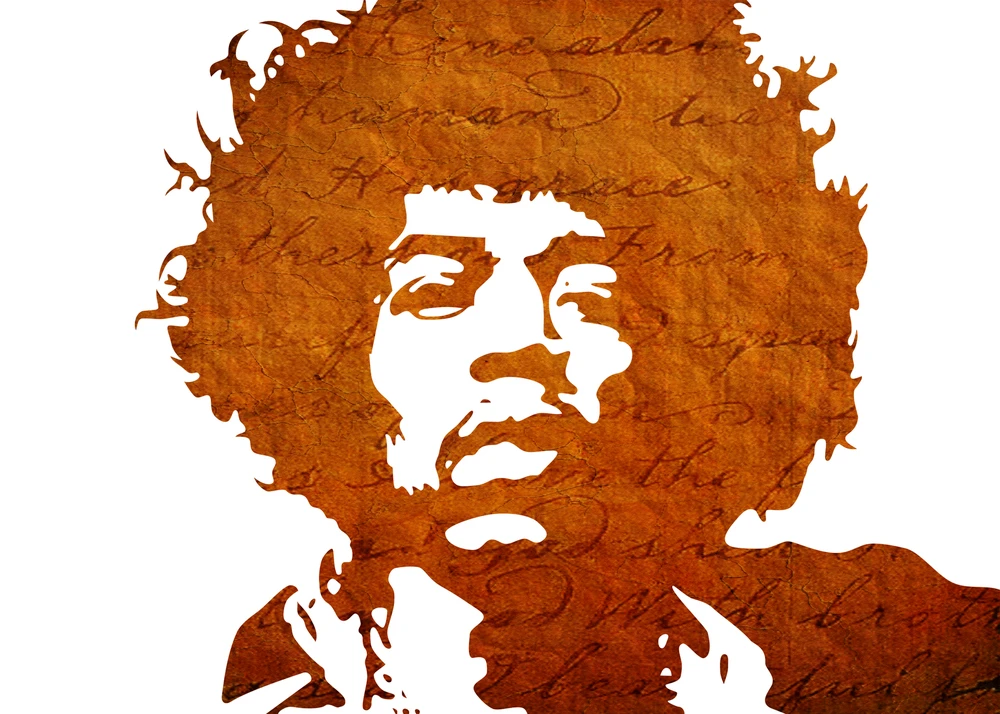
Standing completely unchallenged as the undisputed, immortal supreme deity of the electric guitar, James Marshall “Jimi” Hendrix did not merely play the instrument; he unleashed an elemental, cosmic force that permanently shattered all known musical boundaries. Arriving in London in 1966 with a flipped upside-down right-handed Fender Stratocaster strung for a lefty, Hendrix stunned Eric Clapton, Pete Townshend, and The Beatles into absolute reverence within forty-eight hours.
Hendrix transformed electronic feedback, fuzz distortion, and the wah-wah pedal from unwanted sonic flaws into high-art expressive tools.
Which choice on this list is your personal favorite? Share your thoughts and rankings in the comments below.