Inventors rarely get to decide what the world does with their ideas. An explosive for mining becomes a weapon of war, an advertising trick ruins half the internet, and a handy coffee pod ends up filling landfills.
Some inventors struggled with that for the rest of their lives. Others refused to accept any blame at all. These are ten inventions that came back to haunt their creators, and what those creators said about them.
1. Dynamite: Alfred Nobel
Alfred Nobel patented dynamite in 1867, and his motive was genuinely about safety. Liquid nitroglycerin exploded at the slightest shock, and in 1864 it had killed his younger brother Emil. By binding it to a porous earth called kieselguhr, Nobel made it safe to handle. Tunnels, canals and mines were blasted out with it.
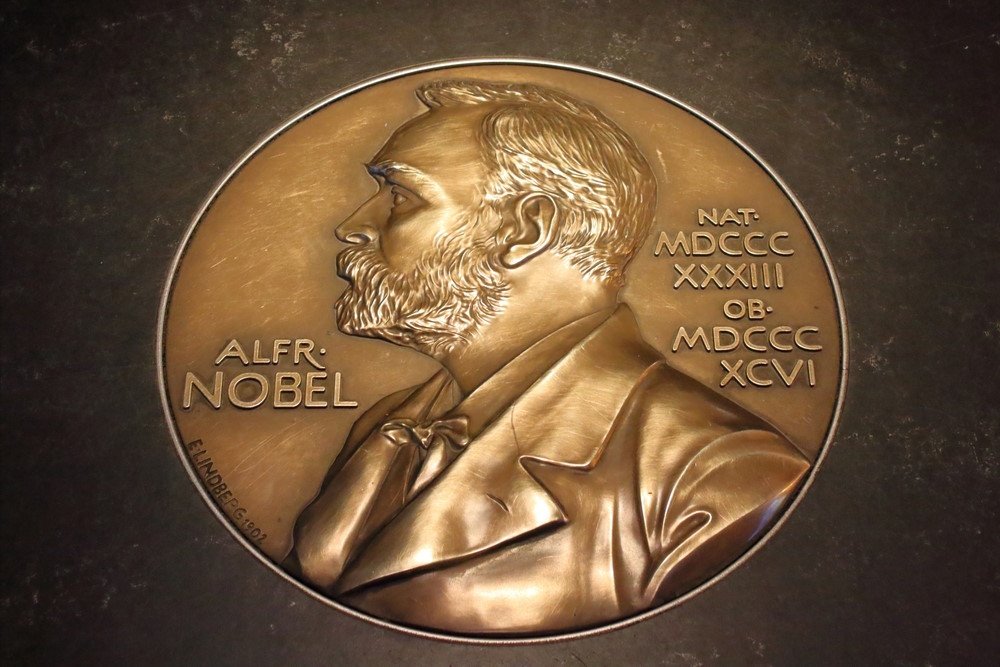
The famous story goes that in 1888 a French newspaper mistakenly printed his obituary under the headline “The merchant of death is dead”, and that Nobel then rewrote his will. Historians have never found that clipping, and the anecdote only shows up in a biography from decades later. What is certain: in 1895 Nobel signed a will leaving almost his entire fortune to a set of prizes, including one for peace.
2. The AK-47: Mikhail Kalashnikov

Mikhail Kalashnikov designed his assault rifle for the Red Army after being wounded at the front in World War II. It was copied all over the world, often without a license, and with an estimated 100 million made it is the most widespread firearm ever. It even appears on the flag of Mozambique.
In public, Kalashnikov always said politicians were to blame, not him. In private, it was different. In 2012 he wrote to the head of the Russian Orthodox Church about his “unbearable” spiritual pain, asking whether he was guilty of all the deaths his rifle had caused. He died the following year. He had also said that he would rather have invented a lawnmower to help farmers.
3. Pop-up ads: Ethan Zuckerman
In the mid-1990s, Ethan Zuckerman worked at Tripod, a site where users could build free web pages. When a car company complained that its banner appeared next to explicit user content, Zuckerman came up with a solution: put the ad in a separate window, apart from the page. The pop-up was born.
In 2014 he wrote a long essay in The Atlantic apologizing for it. His point went beyond annoyance: by making advertising the business model of the web, collecting personal data became the engine of the entire internet. He called it the web’s “original sin”.
4. K-Cups: John Sylvan
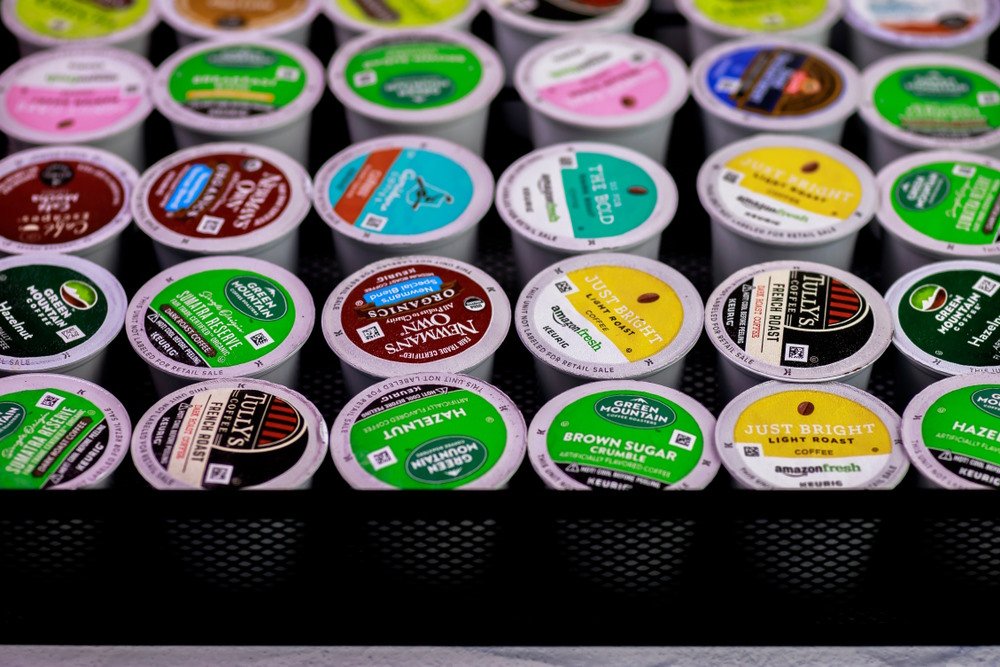
John Sylvan invented the single-serve coffee pod for offices, so workers would not be stuck with a pot of stale coffee all day. He sold his stake in Keurig in 1997 for 50,000 dollars, long before the company started selling billions of pods a year. For years, the plastic pods were almost impossible to recycle.
In 2015, Sylvan told The Atlantic that he sometimes regrets it and does not own a Keurig machine himself. He also thinks they are too expensive. Most pods are now recyclable, though whether they actually end up in the right bin is another matter.
5. Leaded gasoline: Thomas Midgley Jr.
In 1921, Thomas Midgley Jr. solved the problem of engine knock by adding tetraethyl lead to gasoline. Later that decade he also helped develop CFCs, the “safe” refrigerant gases. Two inventions, two global environmental disasters: lead that lowered the IQ of generations of children, and gases that tore a hole in the ozone layer.
He never expressed regret. After workers at leaded fuel plants died of lead poisoning in 1924, Midgley washed his hands in the chemical at a press conference and inhaled its fumes for a minute to prove it was harmless. He had already needed months off work the year before to recover from lead poisoning himself. Environmental historian J.R. McNeill later wrote that he had more impact on the atmosphere than any other single organism in Earth’s history.
6. The atomic bomb: J. Robert Oppenheimer
Oppenheimer led the Manhattan Project at Los Alamos and watched the first nuclear explosion in the New Mexico desert on 16 July 1945. Two decades later he said on camera that a line from the Bhagavad Gita had come to mind at that moment: “Now I am become Death, the destroyer of worlds.”
After Hiroshima and Nagasaki, he told President Truman he felt he had blood on his hands. Truman later called him a “cry-baby scientist” and did not want to see him again. Oppenheimer then fought hard against the hydrogen bomb, but never said that building the atomic bomb itself was a mistake. His position was more complicated than regret: he said physicists had “known sin”, and that this knowledge could not be lost.
7. Pepper spray: Kamran Loghman
In the 1980s, Kamran Loghman worked with the FBI to develop a police version of pepper spray and wrote the training program for it. The idea was a tool officers could use instead of a baton or a gun, and as a non-lethal alternative it was a real improvement.
In November 2011, he watched on television as a police officer at UC Davis sprayed a row of seated, peaceful students in the face at close range. Loghman told The New York Times he had never seen such an inappropriate and improper use of the chemical agents. The footage went viral and the university paid out around a million dollars in settlements.
8. Military drones: Abraham Karem

Abraham Karem built the Albatross in his garage in Los Angeles, an unmanned aircraft that could stay in the air for 48 hours. Through the Amber and the Gnat, that design grew into the Predator, which entered service in 1995 and later got missiles under its wings.
Karem is the odd one out on this list, because he has no regrets. He did not put missiles on the Predator, he has said; he only wanted unmanned aircraft that were as reliable as manned ones. He even argues that a drone that watches for hours before firing causes less damage than other weapons. Critics point to the thousands of civilians killed in drone strikes.
9. Agent Orange: Arthur Galston
As a graduate student in 1943, Arthur Galston studied a chemical meant to make soybeans flower faster, so they could be grown in colder regions. He found that a higher dose did the opposite: the plant lost all its leaves. The US military saw something very different in that than a farming tool.
His work helped lead to the defoliants sprayed over the jungles of Vietnam. The infamous Agent Orange turned out to be contaminated with dioxin, causing cancer and birth defects. Galston felt partly responsible, campaigned in Washington for years and helped get it banned in Vietnam in 1971. He devoted the rest of his career to bioethics.
10. The Segway: Dean Kamen
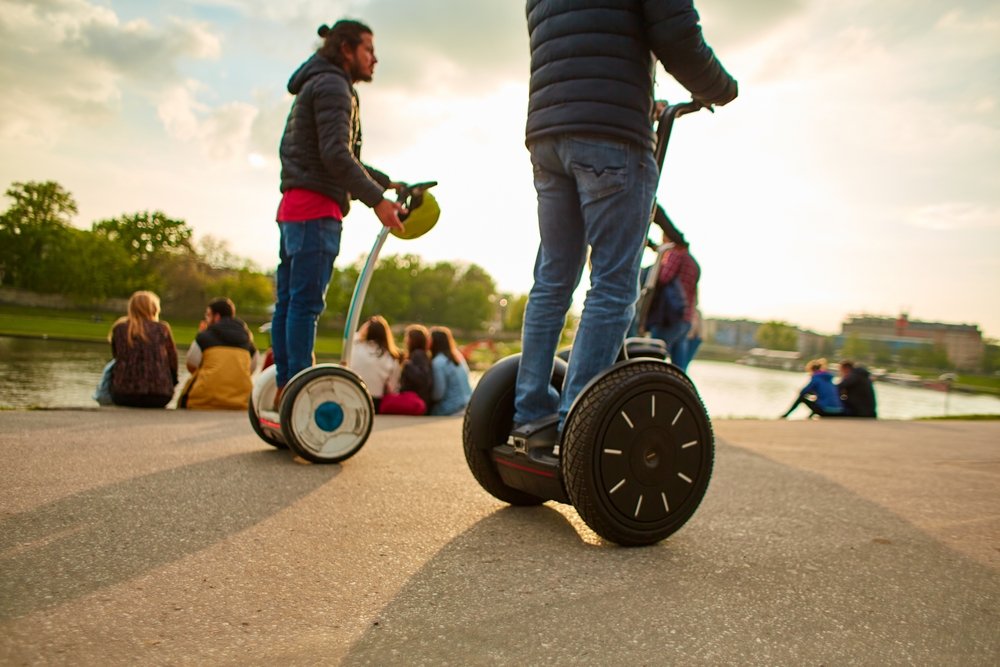
Few products were ever as hyped as the Segway. Before its unveiling in December 2001, investors suggested it would be bigger than the internet and that cities would be redesigned around it. Kamen himself expected to sell 10,000 a week.
In almost 20 years, only about 140,000 were sold in total, mostly to tour companies and mall security. The PR disaster was complete when the company’s new owner died in 2010 after riding a Segway off a cliff. Production ended in 2020. Kamen never spoke of regret about the machine itself, but he was clearly disappointed by how little the world did with it.
What connects these ten stories is not so much regret as powerlessness. Once an invention leaves the lab, it takes on a life of its own, steered by armies, marketers and users the inventor never met. Some tried to make up for it later, others looked the other way.