We find babies cute partly because their eyes are large compared to the rest of their face. That same effect makes us go “aww” at puppies, kittens and plenty of other animals with big eyes.
But big eyes are not just about looking adorable. In nature, being able to see well, especially in the dark, is a huge advantage in the struggle for survival. This list is not about the cutest big-eyed animals, but about the most bizarre, from our primate relatives to some truly strange creatures of the deep.
10. Gibbons
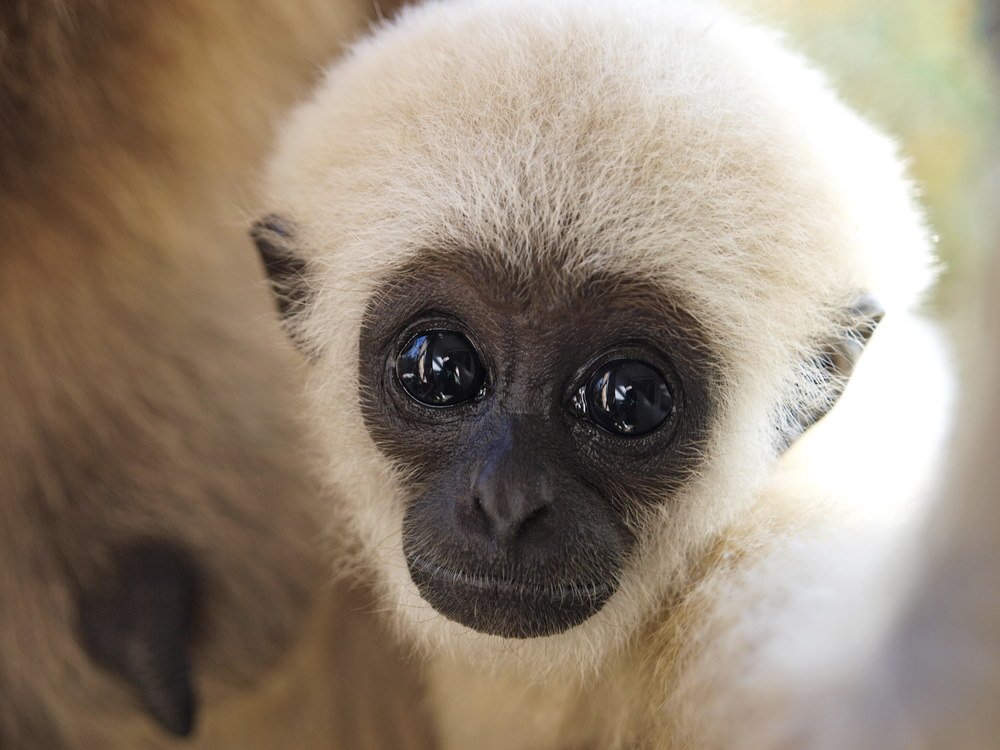
Gibbons are apes, known as the “lesser apes” to distinguish them from great apes such as chimpanzees and orangutans. They are best known for swinging through the treetops with incredible speed and grace.
Gibbons usually live in small family groups, and pairs often stay together for years. Their large, dark eyes, set in a pale-ringed face in some species, give them a gentle and soulful look.
9. Tarsiers
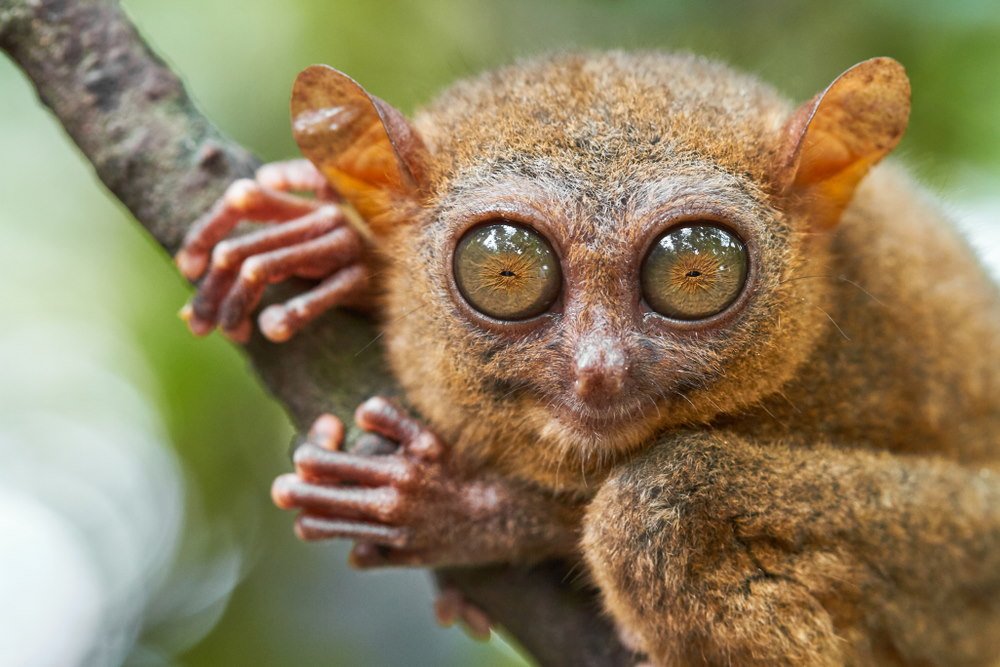
With its long, thin fingers and toes, the tarsier looks a bit like a tiny alien. But it is the eyes that steal the show. Relative to body size, tarsiers have the largest eyes of any mammal: each eyeball is about as big as its entire brain.
These small primates live in the forests of Southeast Asia and, unlike most primates, eat only animals, hunting insects, lizards and even small birds at night. Their eyes are so large that they cannot move in their sockets, so to look around, a tarsier turns its head, and it can rotate it nearly 180 degrees in each direction.
8. Kinkajou
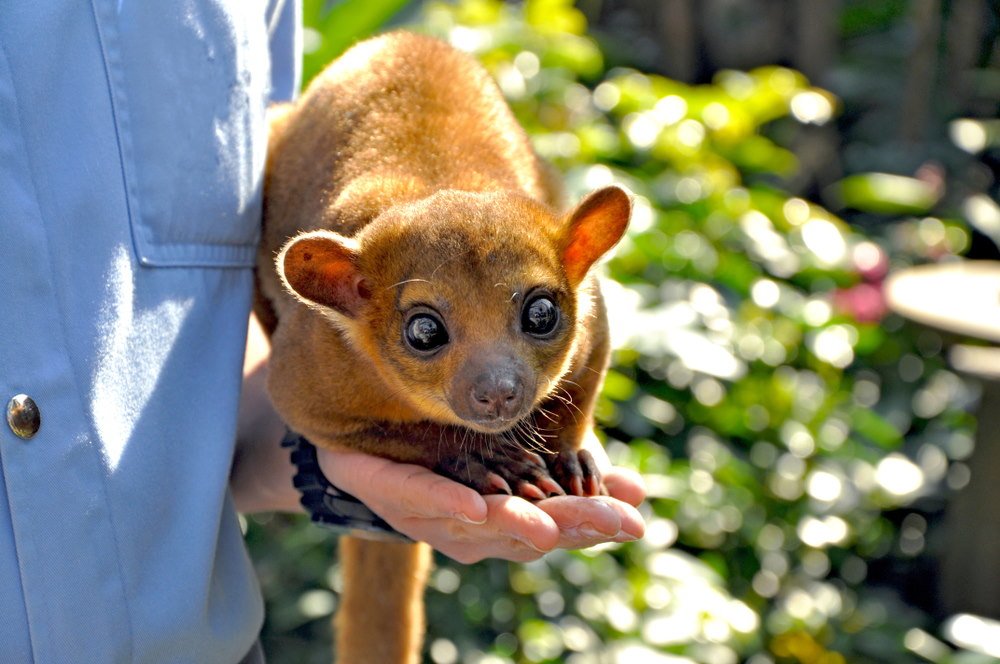
The kinkajou is a rainforest mammal from Central and South America. It looks a bit like a monkey or a ferret, but it is actually related to raccoons.
Kinkajous have a prehensile tail they use as a fifth hand, can turn their hind feet backwards to climb down trees head-first, and can live for up to 40 years in captivity. Their large, shining dark eyes help them find fruit and nectar at night. They do have sharp teeth, but they mainly eat fruit.
7. Slow loris
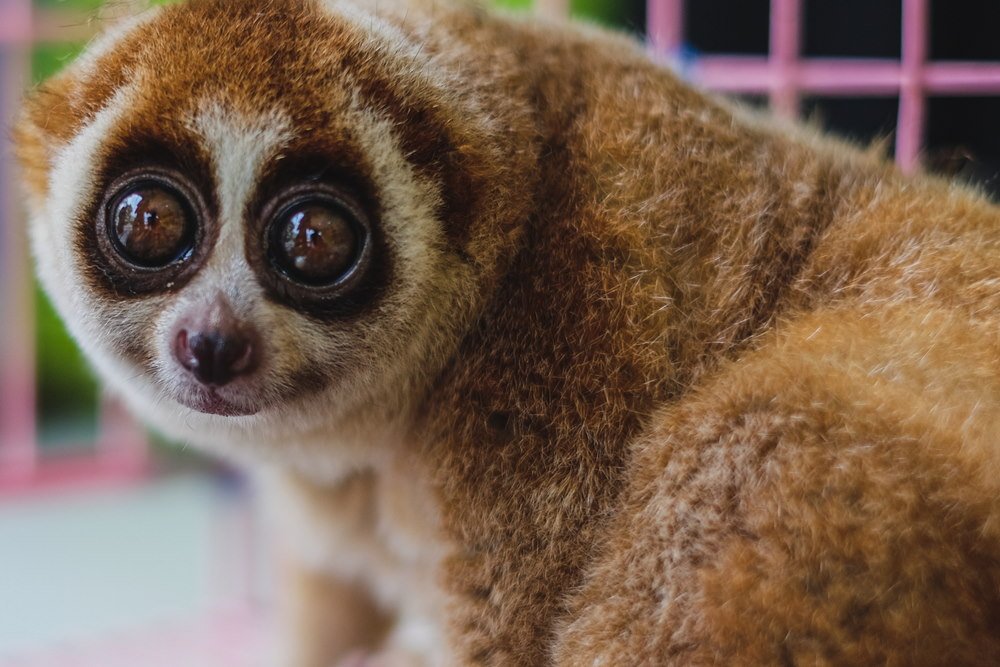
With its huge round eyes and soft fur, the slow loris looks like a living cuddly toy. Don’t be fooled. Slow lorises are one of the very few venomous mammals. They produce a toxin in a gland on the inside of their upper arm, mix it with saliva and deliver it with a bite.
The venom is mainly used in fights with other lorises, but a bite can cause severe pain and swelling in humans, and in rare cases a dangerous allergic reaction. Sadly, their cute looks have made them popular in the illegal pet trade, where their teeth are often cut out.
6. Owls
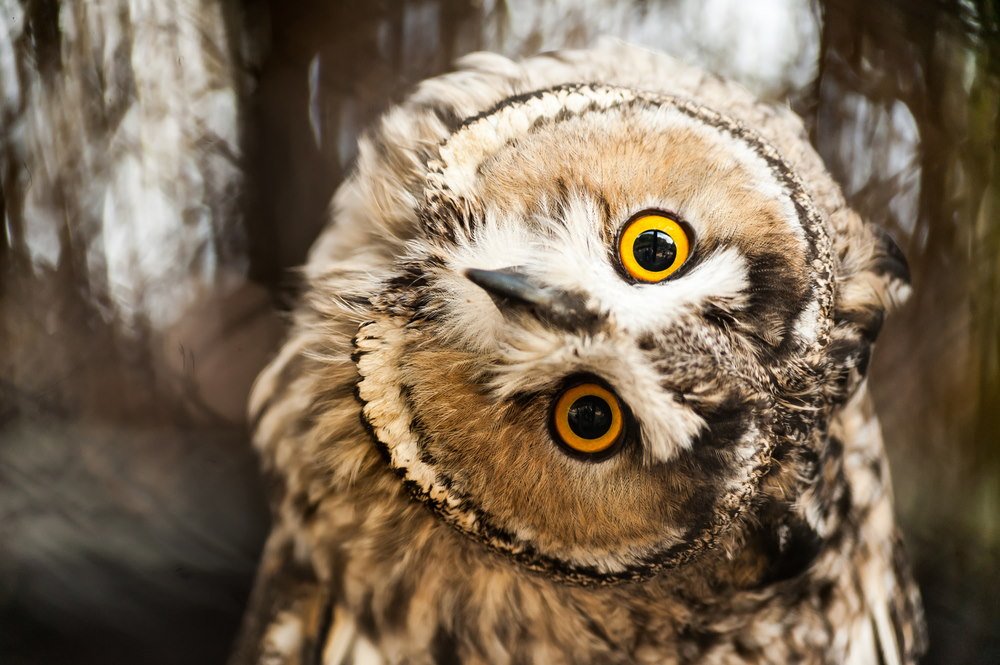
There are around 250 species of owl, and they all have one thing in common: enormous eyes. As nocturnal hunters, they need to see well in very little light.
Owl eyes are not actually balls but elongated tubes, held in place by bony rings. That shape lets in more light and gives them excellent vision, but it means they cannot move their eyes at all. To compensate, owls can rotate their heads up to 270 degrees, thanks to extra vertebrae and special blood vessels in the neck.
5. Henkel’s leaf-tailed gecko
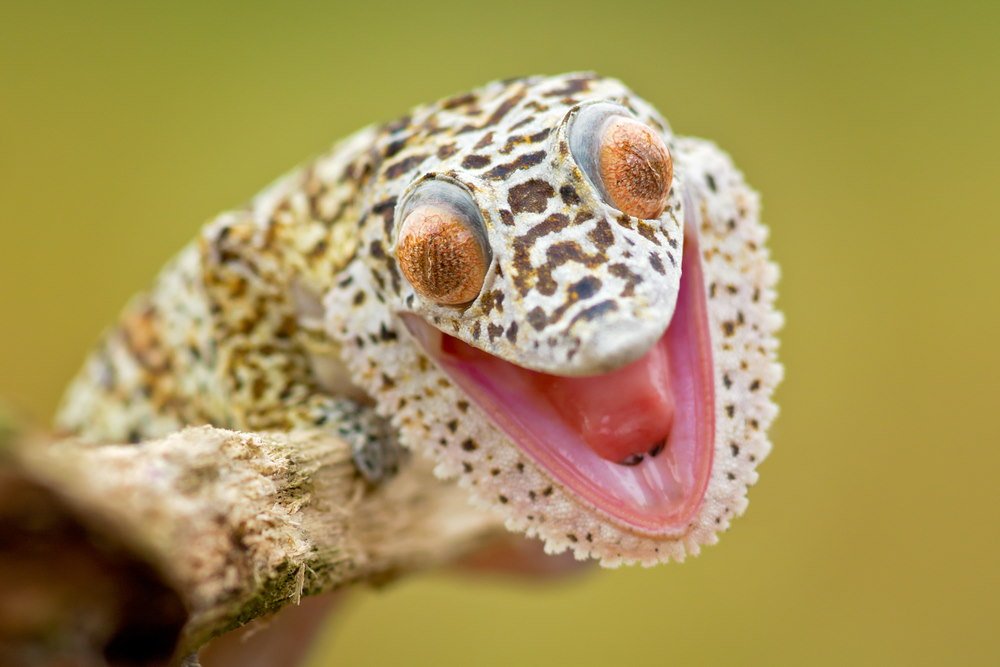
This lizard from Madagascar can reach around 28 centimeters in length and is a master of camouflage: its skin and flattened tail make it almost invisible against tree bark.
Its eyes are both large and strange. The vertical pupils open very wide at night to let in as much light as possible. Nocturnal geckos have extraordinary night vision: studies of related species suggest they can see colors in light hundreds of times dimmer than humans can. Like most geckos, it has no eyelids and keeps its eyes clean by licking them.
4. Four-eyed fish
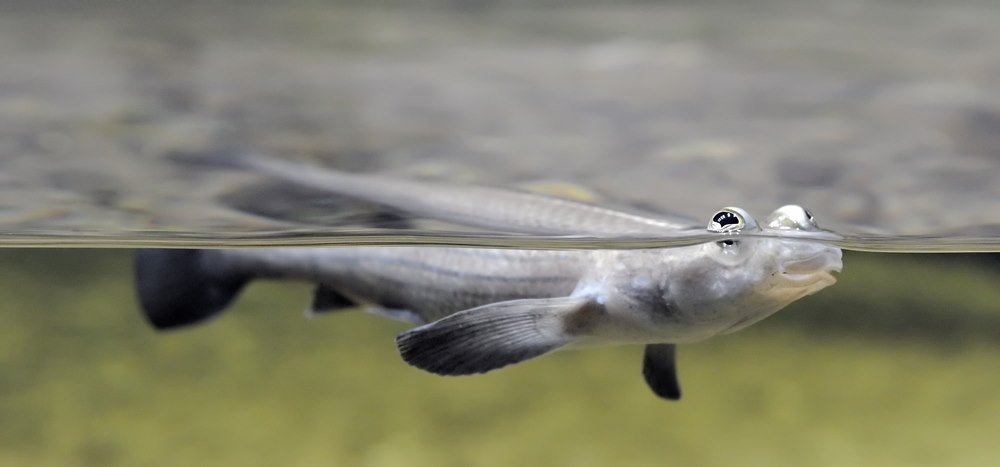
Despite its name, the four-eyed fish (genus Anableps) has just two eyes. But each eye is divided in two, with separate pupils for looking above and below the water at the same time.
The fish swims right at the surface, with the top half of its eyes in the air. That lets it spot insects to eat above the water while watching out for predators below. Because the upper halves can dry out, it regularly dips its head to keep them wet.
3. Red-eyed tree frog
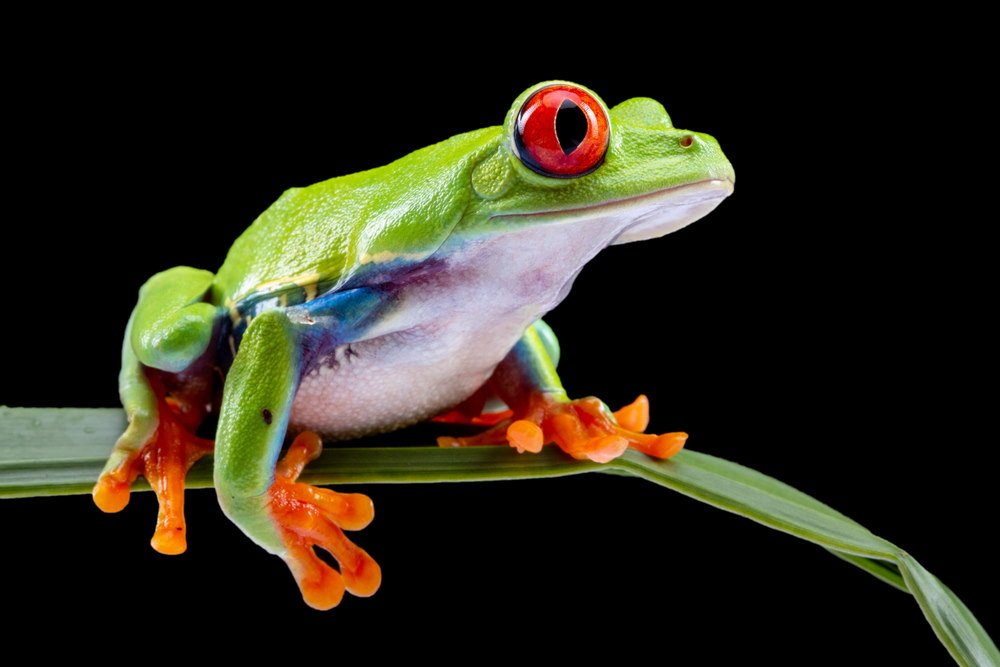
Many tree frogs have large eyes, but the most striking example is the red-eyed tree frog from Central America. Its bright green body, blue and yellow flanks and huge red eyes make it one of the most photographed frogs in the world.
During the day, it sleeps with its eyes closed and its colorful parts tucked away. If disturbed, it suddenly opens its red eyes, which may startle a predator just long enough for the frog to escape.
2. Dragonflies
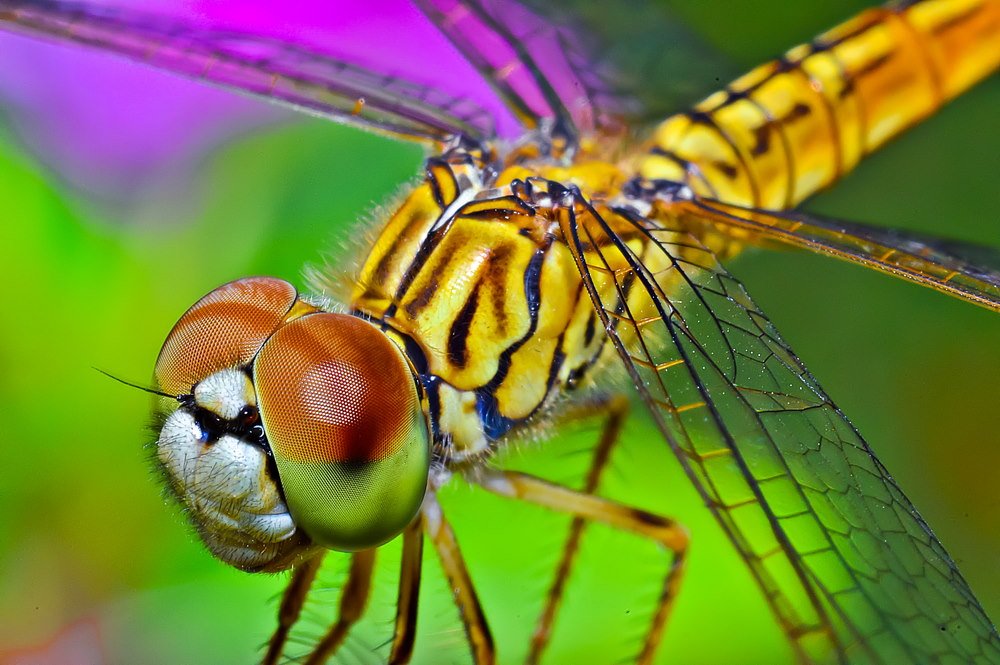
A dragonfly’s eyes are so large that they cover almost its entire head. Each is a compound eye made up of up to 30,000 tiny units called ommatidia, each working like a small separate eye.
Together, they give the dragonfly almost 360-degree vision, so there is hardly any blind spot to sneak up on. They also have three small simple eyes on top of their head that help them stay level in flight. Combined with their speed, this makes dragonflies some of the most successful hunters in the insect world: they catch the vast majority of the prey they chase.
1. Barreleye
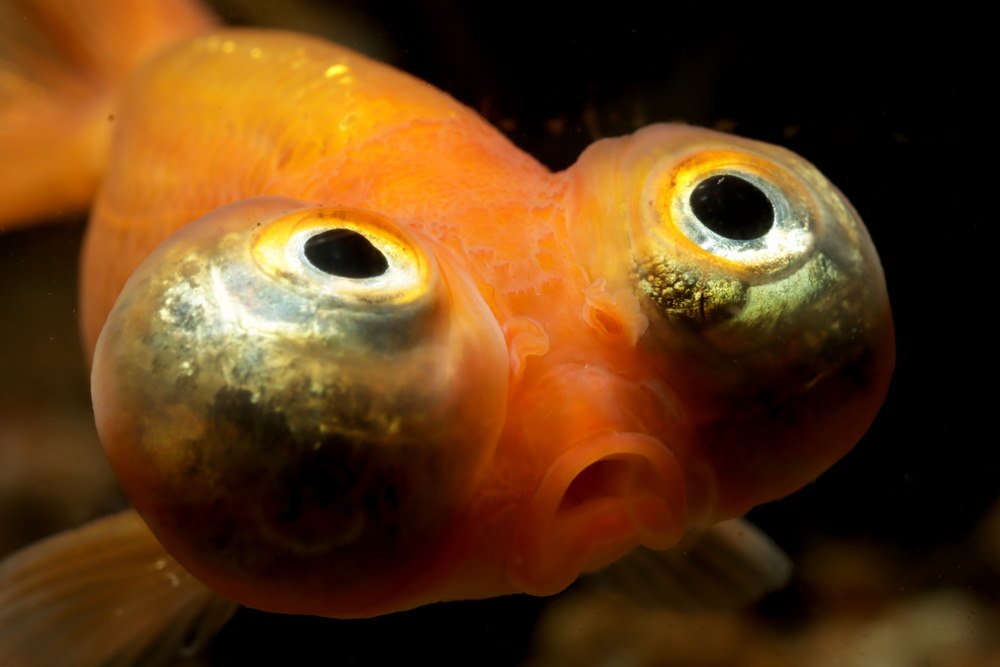
We end with the strangest of all: the barreleye. This fish grows to about 15 centimeters and lives in the deep sea, around 600 to 800 meters below the surface, where hardly any light penetrates.
Its eyes are green, barrel-shaped tubes that sit inside a completely transparent, fluid-filled head, looking up to spot the silhouettes of prey above. For a long time, scientists thought these eyes were fixed, but in 2009 researchers discovered that the barreleye can rotate them to look forward as well. The two dark spots above its mouth, which look like eyes, are actually its nostrils.