High in the cool, misty bamboo forests of the Himalayas lives one of the most charming animals on Earth: the red panda. With its chestnut fur, white ears, fox-like face and huge ringed tail, it melts hearts wherever it goes. But don’t be fooled by its name: it is hardly related to the black and white giant panda at all.
These are 12 surprising facts about the red panda.
1. It is not a bear or a raccoon, but something unique
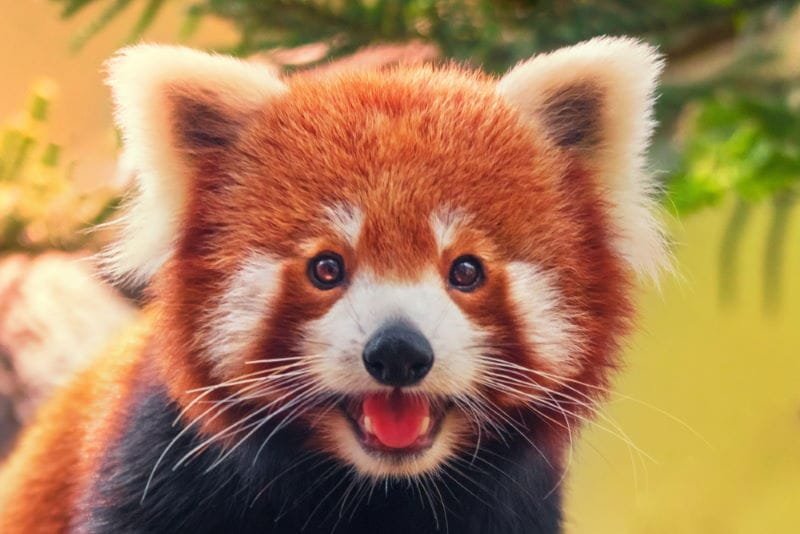
The red panda has puzzled biologists for a long time. It was first placed in the bear family and later with the raccoons. Modern genetic research shows that it belongs to a family of its own, the Ailuridae. The red panda is the only living member of this ancient family, which makes it a true living fossil.
2. It was the original panda
When people hear the word “panda”, they think of the giant panda. But historically, the red panda was the first animal to be called a panda. French zoologist Frédéric Cuvier described it in 1825 and called it one of the most beautiful mammals in the world. The giant panda was only described by Western scientists in 1869, more than forty years later. The word “panda” probably comes from a Nepali name for the animal.
3. It has a secret “false thumb”
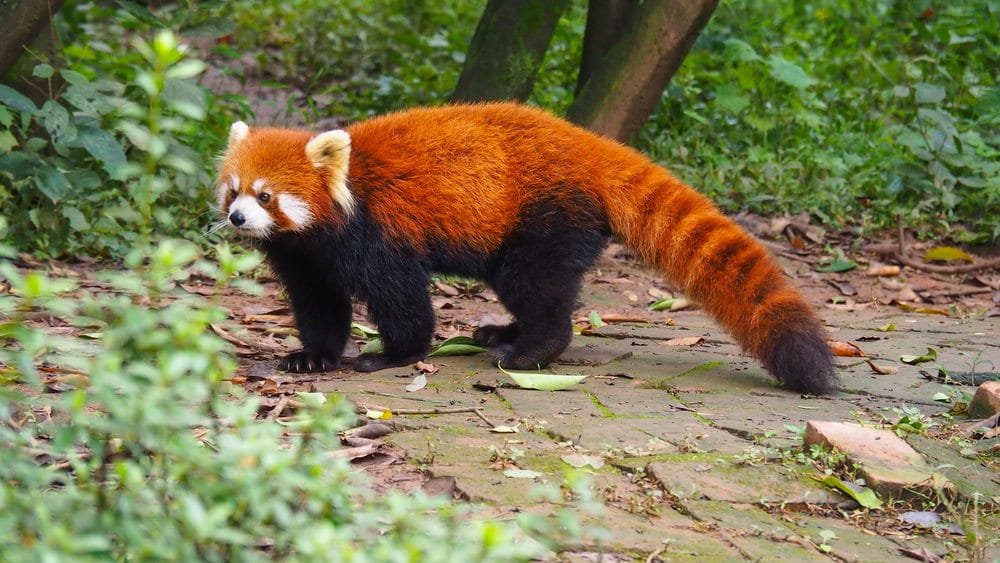
To grab and hold bamboo stems, the red panda has a clever adaptation: a false thumb. It is not a real finger, but an extended wrist bone that works like a thumb, allowing it to hold thin bamboo shoots with surprising skill. The giant panda evolved exactly the same trick independently, a textbook example of convergent evolution.
4. It eats up to 20,000 bamboo leaves a day
Although the red panda belongs to the order of carnivores and its gut is still built to digest meat, bamboo makes up most of its diet. Because it can digest only a small part of the plant, it gets very little energy from each bite. To get enough, an adult red panda can eat up to 20,000 bamboo leaves a day and spends more than 13 hours a day eating.
5. Its tail doubles as a blanket
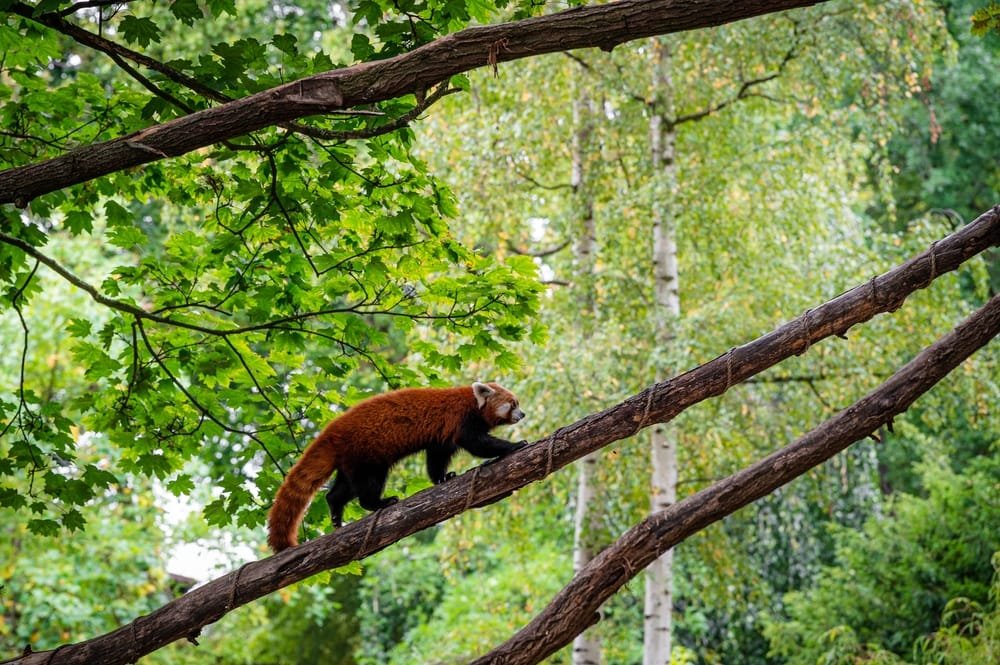
Its thick, bushy tail, with alternating red and pale rings, is almost as long as its body. In the trees, the red panda uses it for balance when climbing along thin branches. On cold mountain nights, it curls up into a tight ball and wraps its tail around its face like a scarf to keep warm.
6. It sleeps high in the trees
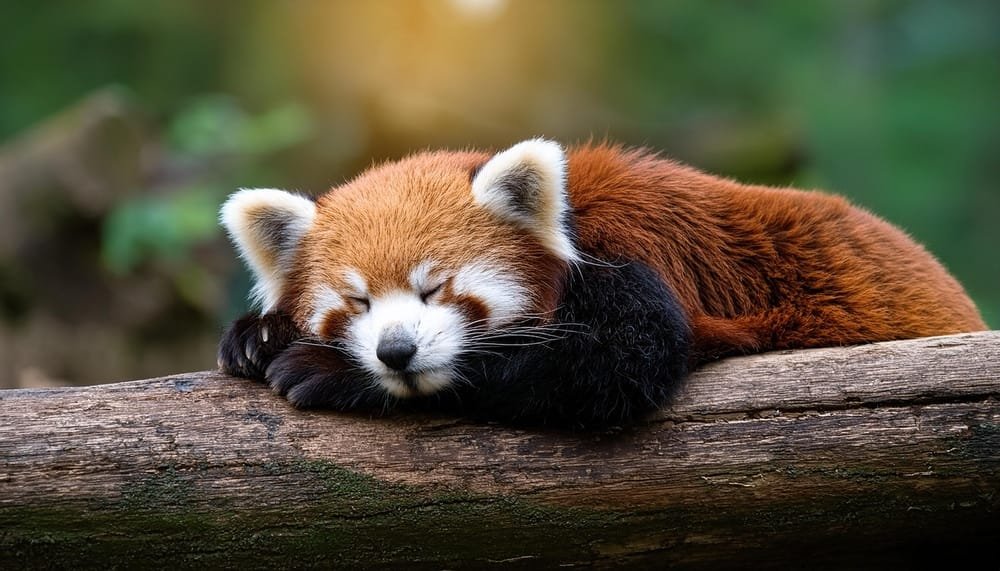
Red pandas spend most of their lives in the trees, where they are safe from snow leopards and other predators. On warm days, you can often see them stretched out on a branch with their legs dangling to cool off. They are most active at dusk and in the early morning.
7. It has furry soles
Look under the feet of a red panda and you will find something special: the soles of its feet are covered with thick fur. These furry pads work like natural snowshoes, keeping its feet warm on ice and snow and providing grip on slippery, moss-covered branches.
8. It stands up when it feels threatened
Videos of red pandas startling each other are hugely popular online. When a red panda feels threatened, it rises up on its hind legs, raises its front paws and makes itself look as big as possible. To a predator, this may look intimidating. To humans, it mostly looks irresistibly cute.
9. It can climb down trees head first
Red pandas have very flexible ankle joints. They can turn their hind feet backwards, hook their claws into the bark and climb down a tree trunk head first, controlling their descent all the way down.
10. It has scent glands between its toes
Red pandas are solitary animals that mark their territory carefully. Besides urine and droppings, they use scent glands on the soles of their feet. As they walk along the branches, they leave a scent trail that tells other red pandas who has passed by, and whether that animal is ready to mate.
11. There may be two species
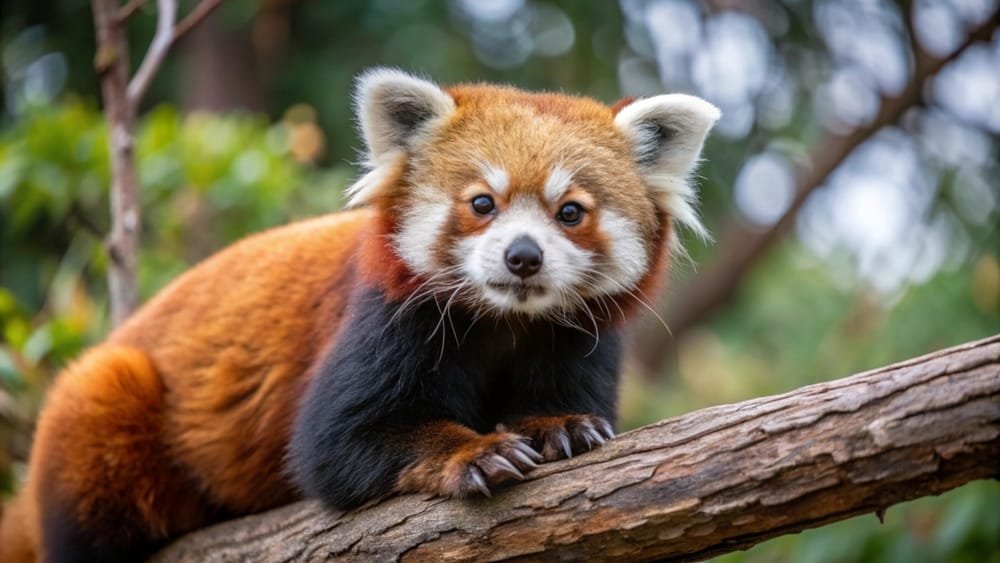
Scientists distinguish two types of red panda: the Himalayan red panda of Nepal, Bhutan and northeastern India, and the slightly larger Chinese red panda, also called Styan’s red panda, from southwestern China and northern Myanmar. A genetic study in 2020 concluded that they are two separate species, though not all experts agree yet. The Chinese red panda tends to have darker red fur and more striking white markings on its face.
12. It is endangered
The red panda is listed as endangered. Estimates of the wild population vary, but there are probably fewer than 10,000 adults left, and possibly far fewer. Deforestation for farming and livestock is breaking up their bamboo forests, which makes it harder for red pandas to find each other. Fortunately, breeding programs in zoos around the world and conservation groups such as the Red Panda Network are working to protect the species and its habitat.