In nature, it is usually the mother who carries the eggs or the young. But nature is full of surprises. In some animals, the roles are completely reversed, and the father takes on the job of carrying the next generation, sometimes in a way that looks a lot like pregnancy.
These are seven animals where the father carries the babies.
1. Seahorses
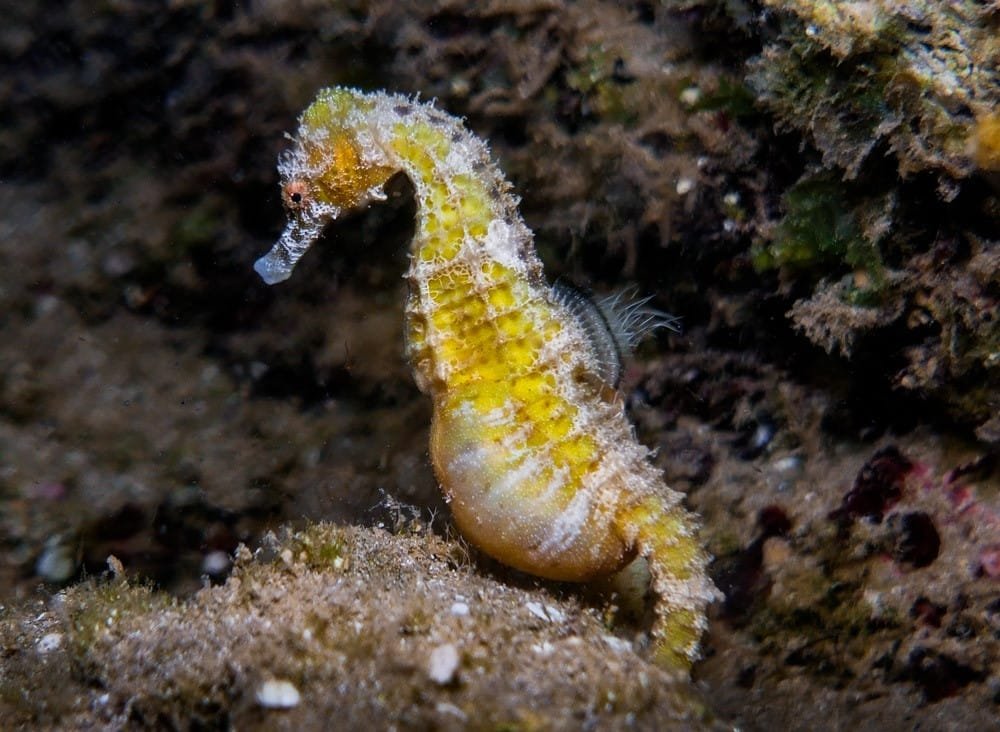
The seahorse is the most famous example of male pregnancy. During mating, the female transfers her eggs into a special brood pouch on the male’s belly, where he fertilizes them. The inside of the pouch is rich in blood vessels and works a bit like a womb: it supplies the embryos with oxygen and nutrients and regulates the salt balance around them.
Depending on the species and water temperature, the male is pregnant for about two to four weeks. When the young are ready, he “gives birth” with strong muscular contractions that push them out of the pouch. In some species, more than a thousand tiny seahorses can be born at once.
2. Pipefish
Pipefish are close relatives of the seahorse and also have male pregnancy, though often in a simpler form. In some species, the female simply glues her eggs onto a patch of skin on the male’s belly or tail. In others, the male has flaps of skin that partly or completely cover the eggs, forming an open or closed pouch. Scientists study pipefish to understand how the seahorse’s sophisticated pouch may have evolved step by step.
3. Seadragons
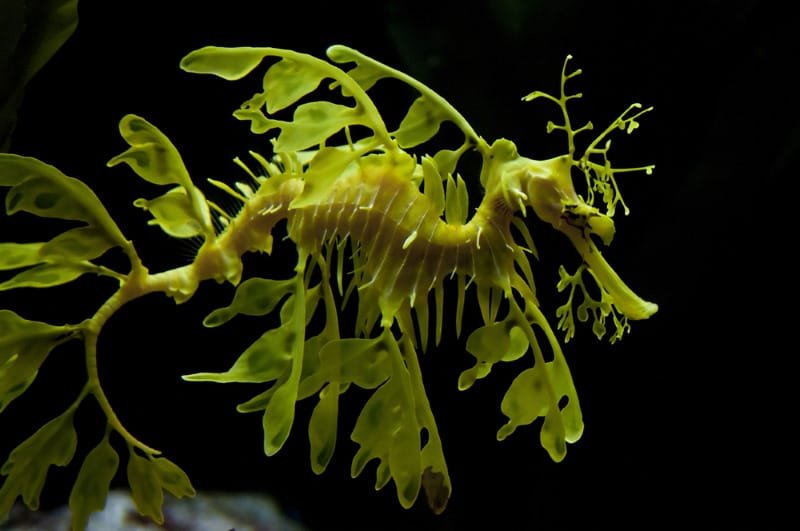
The spectacular seadragons of southern Australia, such as the leafy seadragon and the weedy seadragon, are also part of the seahorse family. The female lays her bright pink eggs on a special brood patch under the male’s tail, made up of tiny cups that hold each egg in place. The male carries them for about a month until the baby seadragons hatch. His amazing camouflage among the seaweed helps keep the eggs safe.
4. Cardinalfish
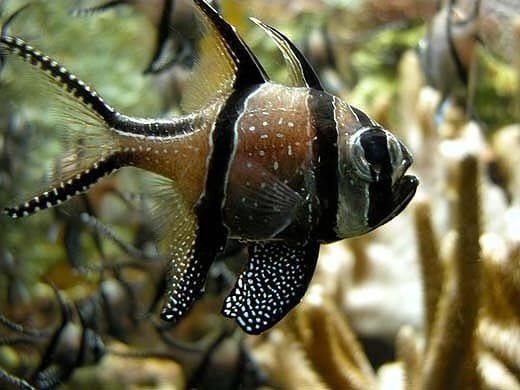
In cardinalfish, the male takes the fertilized eggs into his mouth and keeps them there until they hatch, a strategy called mouthbrooding. During this time, he cannot eat properly and lives off his reserves. Some males even eat part of the eggs when food is scarce. In some cichlids and in the arowana, a popular aquarium fish, it is also the father who keeps the eggs and young safe in his mouth.
5. Darwin’s frog
Darwin’s frog, discovered by Charles Darwin in Chile during the voyage of the Beagle, has one of the strangest ways of raising young in the animal kingdom. After the eggs have developed for a few weeks, the male swallows the tadpoles into his vocal sac. There they keep growing, until he “coughs up” fully formed little frogs about six weeks later. Sadly, the species is endangered, partly because of the deadly chytrid fungus.
6. Midwife toad
The common midwife toad of Western Europe owes its name to the father’s care. After mating, the male wraps the strings of eggs around his hind legs and carries them with him for several weeks. He keeps them moist by visiting damp places and sometimes taking a dip. When the tadpoles are ready to hatch, he takes them to the water and releases them.
7. Giant water bugs
In some species of giant water bug, a large predatory insect that lives in ponds and streams, the female lays her eggs on the male’s back and glues them in place. The male then carries up to more than a hundred eggs for several weeks. He regularly brings them to the surface for air and moves his body to keep fresh water flowing over them. While he is loaded with eggs, he cannot mate again, which makes this a real investment in fatherhood.
Why do fathers take over?
Why some fathers take on this role is still being studied. One theory is that it allows the female to start producing new eggs sooner, which increases the number of offspring. Another is that carrying the eggs gives the father certainty that the young are really his. Either way, these animals show that nature has many different solutions for raising the next generation.