Life at high altitude, in mountain ranges such as the Himalayas, the Andes or the Alps, makes extreme demands on animals. They have to cope with thin air with little oxygen, intense cold, strong ultraviolet radiation, scarce food and rugged terrain. Yet many species have adapted remarkably well to these conditions. These are 12 animals that feel at home high in the mountains.
1. Snow leopard

This elusive and beautiful cat lives in the rocky, steep mountain ranges of Central and South Asia, often at altitudes of 3,000 to 5,500 meters. Its thick, pale coat with dark rosettes provides perfect camouflage and insulation. A large nasal cavity warms the cold air, wide paws act like snowshoes, and its extraordinarily long, thick tail helps with balance and serves as a warm blanket when it sleeps.
2. Yak
Wild and domestic yaks are inseparable from the high plateaus of the Himalayas and Tibet, where they live at altitudes of over 5,000 meters, and in summer even higher. They have larger hearts and lungs than lowland cattle, special hemoglobin that binds oxygen efficiently, and a dense, long coat with a woolly undercoat that protects them against extreme cold. They are so adapted to the cold that they suffer in temperatures above around 15 degrees.
3. Andean condor
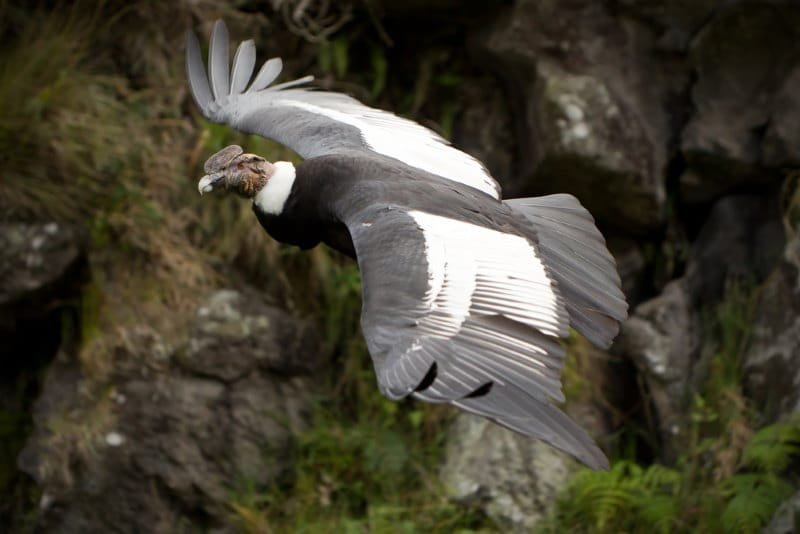
With a wingspan of up to around 3.2 meters, the Andean condor is one of the largest flying birds in the world. It is a master of soaring: research has shown that it can fly for hours, and more than 170 kilometers, without flapping its wings at all, using rising warm air and wind over the mountain slopes. It soars over the Andes at altitudes of up to around 5,000 meters, searching for carcasses.
4. Alpacas and llamas

These domesticated relatives of camels come from the high Altiplano of the Andes, where they live at altitudes of up to around 5,000 meters. Their blood has special hemoglobin that binds oxygen very efficiently in the thin air. They can live on tough mountain grasses, and their thick wool protects them against the cold nights. Their wild relative, the vicuña, has one of the finest wools in the world.
5. Alpine ibex
The Alpine ibex is an iconic resident of the European Alps, living on steep, rocky slopes above the tree line. Its hooves have a hard outer rim and a soft, rubbery inner pad, giving it excellent grip on rock. Ibex are such good climbers that they have even been photographed climbing almost vertical dam walls in Italy to lick salt from the stones. Around 1900, the species was almost extinct, with only around a hundred animals left in Italy, but thanks to protection it has recovered.
6. Chamois
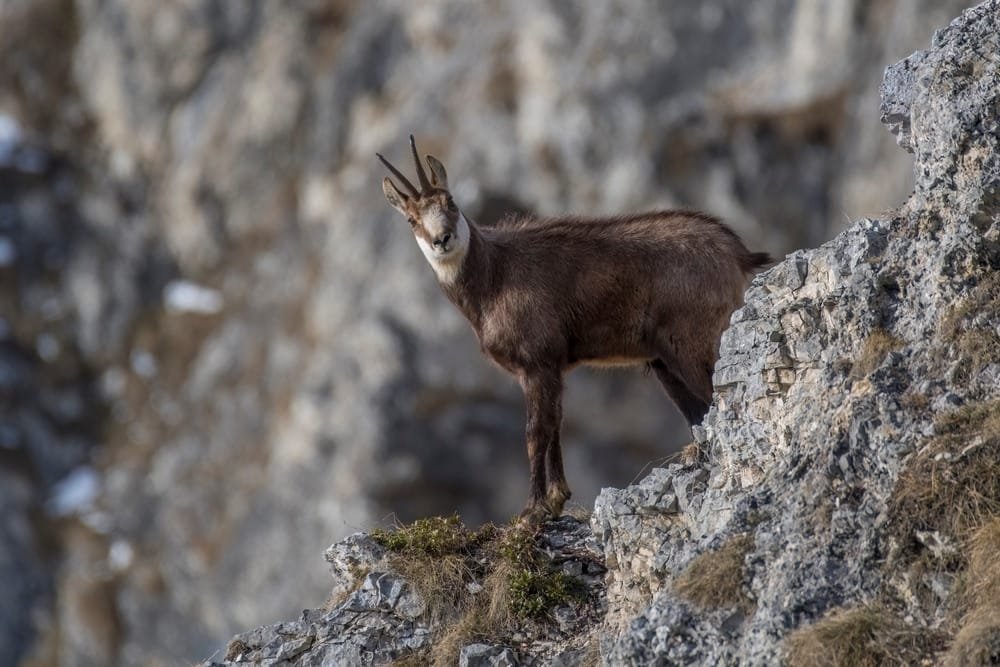
Like the ibex, the chamois is a master climber, found in the mountains of Europe and Asia Minor. It lives on alpine meadows and rocky slopes and is extremely agile and fast, able to make big leaps to escape predators such as lynx and wolves. Its coat changes with the seasons: light brown in summer and dark, almost black, and much thicker in winter.
7. Himalayan tahr
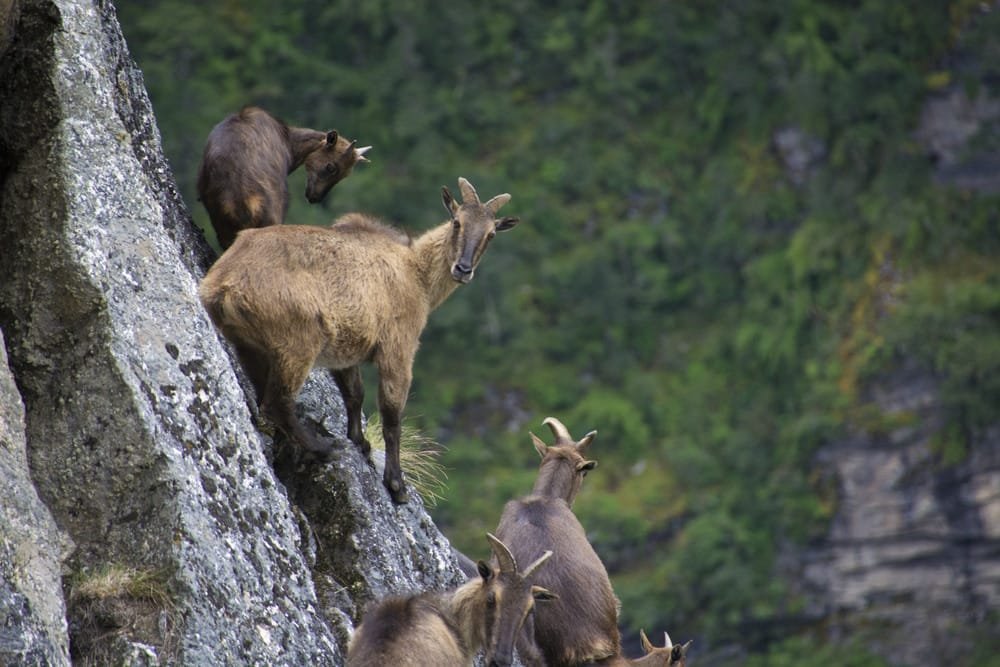
This sturdy wild goat lives on the steep slopes and cliffs of the Himalayas, usually at altitudes of 2,500 to 5,000 meters. Males have a thick, shaggy reddish-brown mane. Like ibex and chamois, they have special hooves that provide excellent grip on difficult terrain.
8. Pikas
Pikas are small, round relatives of rabbits that live in cold, rocky mountain areas in North America and Asia. Some species live at altitudes of more than 6,000 meters in the Himalayas. They do not hibernate. Instead, they spend the summer collecting grasses and flowers, which they dry in “haypiles” between the rocks as a winter food store. They are known for their high-pitched whistling calls.
9. Bearded vulture
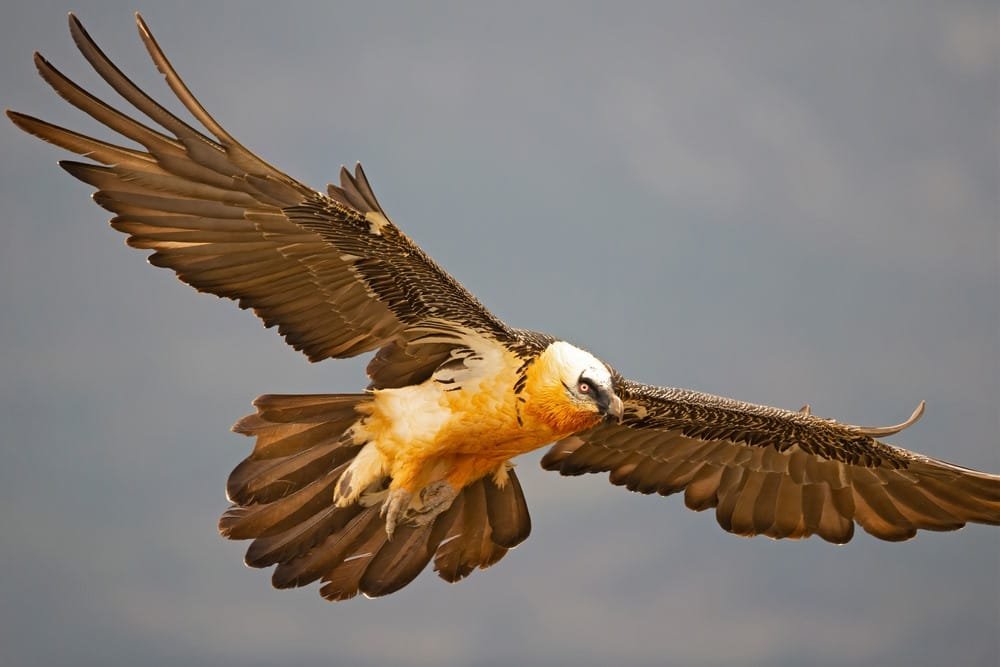
This impressive vulture, with its striking “beard” of feathers, lives in mountainous regions of Europe, Africa and Asia. It is the only animal in the world whose diet consists mainly of bones, up to 70 to 90 percent. It swallows smaller bones whole, and drops larger ones from a great height onto rocks to break them. Its orange-red color does not come from its feathers, but from bathing in iron-rich mud.
10. Bar-headed goose
The bar-headed goose migrates twice a year across the Himalayas, between Central Asia and India. Tracking studies show that it can fly at altitudes of more than 6,000 meters and, in rare cases, even higher, where the air contains less than half the oxygen at sea level. Its lungs, blood and muscles are specially adapted to make the most of every breath.
11. Himalayan jumping spider
One of the highest-living permanent residents on Earth is a tiny jumping spider. In 1924, members of a British Everest expedition found it at an altitude of around 6,700 meters. It was later named Euophrys omnisuperstes, meaning “standing above everything”. It survives by eating insects that are blown up the mountain by the wind.
12. Yellow-rumped leaf-eared mouse
In 2020, researchers set a remarkable record: on the summit of the Llullaillaco volcano, on the border between Chile and Argentina, at an altitude of around 6,700 meters, they caught a yellow-rumped leaf-eared mouse. It is the highest-living mammal ever recorded, at an altitude where the air contains less than half the oxygen at sea level, and where hardly any plants grow. Mummified mice were later found on other high summits in the Andes too.