In modern football, a home stadium is sacred ground. It represents club identity, local pride, and the shared memories of generations of passionate supporters. Yet constructing and maintaining modern sports arenas involves monumental capital expenditure, complex municipal planning, and urban real-estate constraints, occasionally compelling fierce cross-town rivals to share the exact same pitch.
From legendary Italian derby cauldrons to Scandinavian municipal arenas, here are ten famous football clubs that share, or historically shared, their home stadium.
10. IF Elfsborg and Norrby IF: Borås Arena (Sweden)
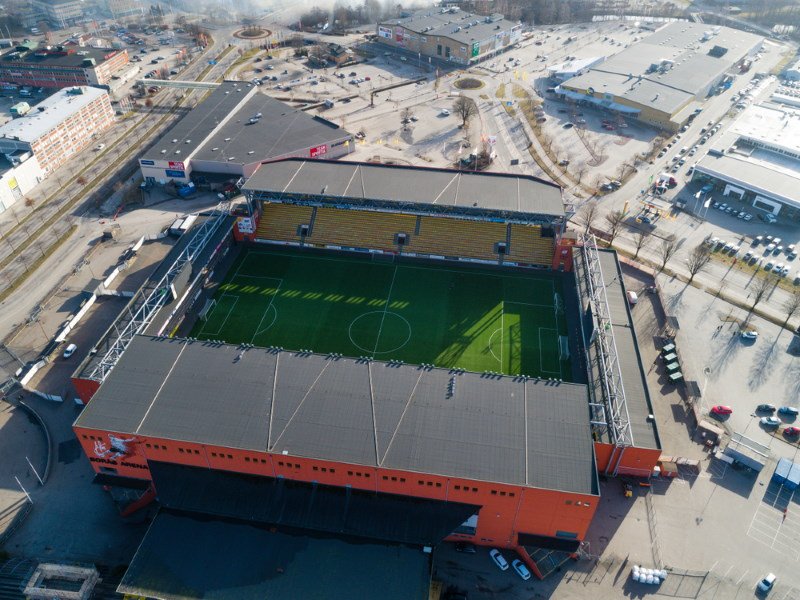
Constructed in 2005, Borås Arena is an artificial-turf stadium located in western Sweden that hosts both Allsvenskan champions IF Elfsborg and their local neighbors Norrby IF. The compact sixteen-thousand-capacity venue provides municipal efficiency in a smaller Swedish city, allowing both squads to operate modern training infrastructure under one roof.
The ground was one of the first top-flight venues in Sweden to utilize synthetic turf, allowing constant year-round use through freezing Nordic winters.
9. Atalanta Bergamo and UC AlbinoLeffe: Gewiss Stadium (Italy)
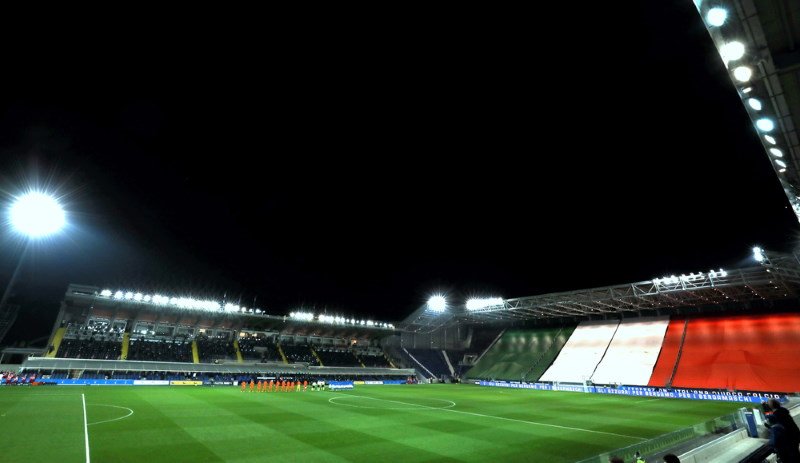
For sixteen years between 2003 and 2019, Atalanta shared the Stadio Atleti Azzurri d’Italia with local Lombardy side UC AlbinoLeffe. While Atalanta eventually purchased and renovated the stadium into the modern Gewiss Stadium, the shared arrangement allowed smaller AlbinoLeffe to compete in Serie B for over a decade.
AlbinoLeffe eventually relocated to their own modern stadium in nearby Zanica in 2019, but the shared era in Bergamo remains an interesting chapter in Italian football history.
8. SK Sturm Graz and Grazer AK: Merkur Arena (Austria)
The city of Graz in southern Austria is divided between black-and-white Sturm Graz and red Grazer AK. Both clubs call the sixteen-thousand-capacity Merkur Arena (Stadion Liebenau) home. When the two sides meet in the Grazer Derby, the stands are sharply divided between the southern and northern curves.
The shared stadium creates electric derby atmospheres, with club logos, banners, and ticketing areas completely transformed depending on which team holds home advantage.
7. Djurgårdens IF and Hammarby IF: 3Arena (Sweden)
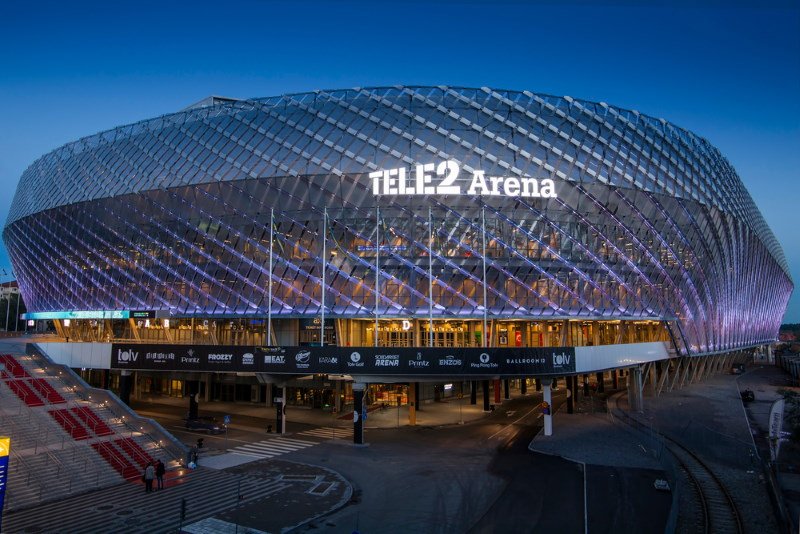
Located in the Johanneshov district of Stockholm, this modern thirty-thousand-seat retractable-roof arena (formerly Tele2 Arena) is shared by two of Sweden’s biggest clubs: Djurgårdens IF and Hammarby IF. Cross-town Stockholm derbies played on its synthetic surface feature massive tifo displays and intense local rivalry.
With both clubs enjoying enormous season-ticket bases, matchdays convert the venue from Djurgården’s dark blue and yellow into Hammarby’s vibrant green and white within hours.
6. Genoa CFC and UC Sampdoria: Stadio Luigi Ferraris (Italy)
Set in the Marassi district of Genoa, the Stadio Luigi Ferraris is an English-style ground featuring steep stands close to the touchline. Shared by Italy’s oldest club Genoa CFC and their bitter rivals UC Sampdoria, the Derby della Lanterna is renowned for incredible flares and passionate vocal displays.
Supporters treat the stadium as sacred ground, with Genoa occupying the Gradinata Nord and Sampdoria holding court in the Gradinata Sud.
5. Hellas Verona and Chievo Verona: Stadio Marcantonio Bentegodi (Italy)
For nearly two decades in Serie A, historic champions Hellas Verona shared the thirty-nine-thousand-capacity Bentegodi stadium with suburban upstarts Chievo Verona. The Derby della Scala became famous as the “flying donkeys” of Chievo challenged the larger, historic fanbase of Hellas for local dominance.
While Hellas represented the historic soul of the city, Chievo’s remarkable European campaigns brought continental giants to Verona under the same floodlights.
4. CR Flamengo and Fluminense FC: Maracanã (Brazil)
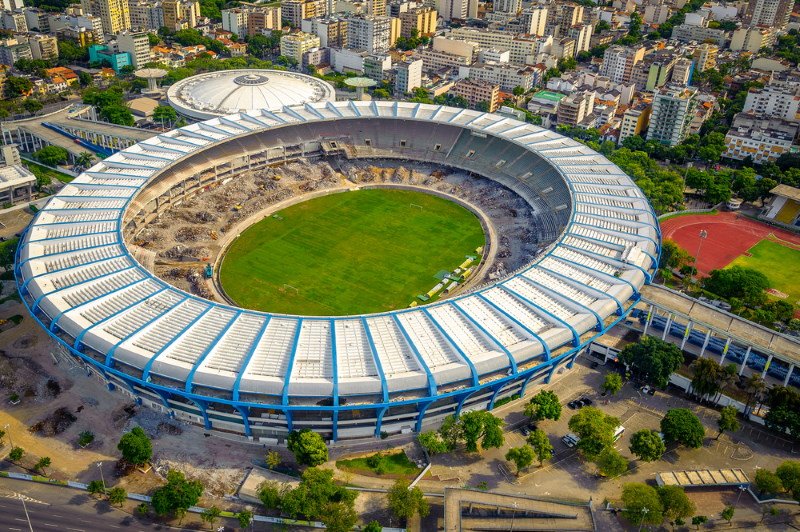
Rio de Janeiro’s legendary Maracanã is jointly managed by Flamengo and Fluminense. Their historic cross-city derby, the Fla-Flu, is one of the most romantic fixtures in world football, filling the cavernous stands with samba percussion, waving banners, and colorful smoke bombs.
Both clubs share stadium management responsibilities, ensuring that the legendary eighty-thousand-seat arena remains the beating heart of Brazilian football culture.
3. Club Brugge and Cercle Brugge: Jan Breydel Stadium (Belgium)
Since opening in 1975, the twenty-nine-thousand-seat Jan Breydel Stadium has been shared by Belgian league leaders Club Brugge and city rivals Cercle Brugge. The municipal stadium hosts alternate home fixtures every weekend, with locker room decorations and pitch branding swapped over between matches.
While Club Brugge enjoys larger crowds and Champions League nights, Cercle maintains a dedicated, loyal community following on the same pitch.
2. SS Lazio and AS Roma: Stadio Olimpico (Italy)
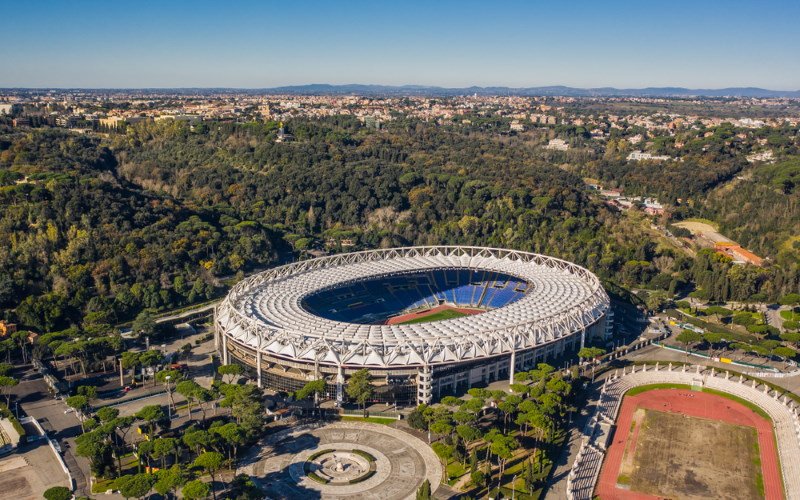
Rome’s seventy-thousand-seat Stadio Olimpico is shared by SS Lazio and AS Roma. The Derby della Capitale is widely regarded as one of the fiercest municipal fixtures in European football, with Lazio’s Curva Nord and Roma’s Curva Sud producing legendary artistic choreographies and intense tension.
The municipal stadium has hosted World Cup finals and European Cup finals, standing as an architectural landmark of Roman sporting passion.
1. AC Milan and Inter Milan: Stadio Giuseppe Meazza / San Siro (Italy)
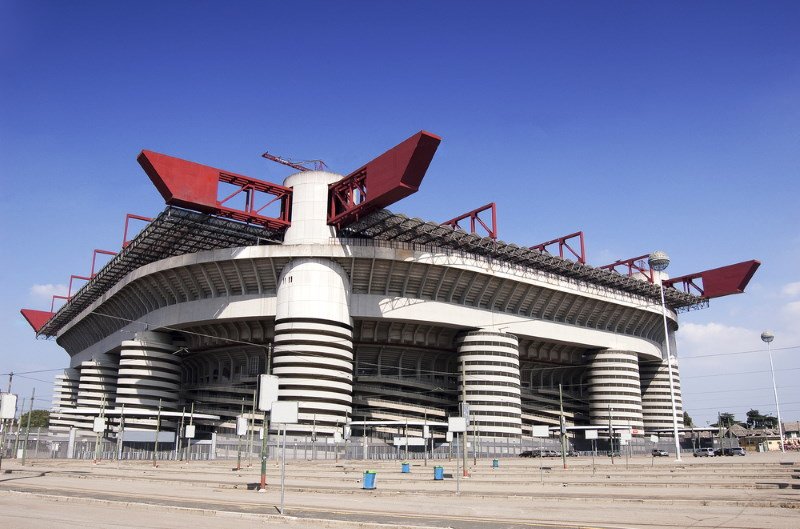
The cathedral of Italian football, Milan’s San Siro has been shared by AC Milan and Inter Milan since 1947. Named after Giuseppe Meazza, who starred for both clubs, the eighty-thousand-seat arena with its cylindrical concrete towers hosts the Derby della Madonnina, representing the gold standard of shared sporting heritage.
When Milan hosts, the Curva Sud erupts in red and black; when Inter takes the field, the Curva Nord transforms into a sea of blue and black, showcasing European football at its most magnificent.