Woolly mammoths are close relatives of today’s elephants. They belonged to the mammoth genus, Mammuthus, which first appeared in Africa around five million years ago. Their closest living relative is the Asian elephant.
These huge, shaggy animals disappeared from most of the world more than 10,000 years ago. Yet thanks to the drawings that prehistoric people left on cave walls, and to the frozen remains found in Siberia, we know surprisingly well what they looked like. Scientists are even working on bringing mammoth-like animals back. Here are ten facts about the woolly mammoth.
1. Tusks more than 4 meters long
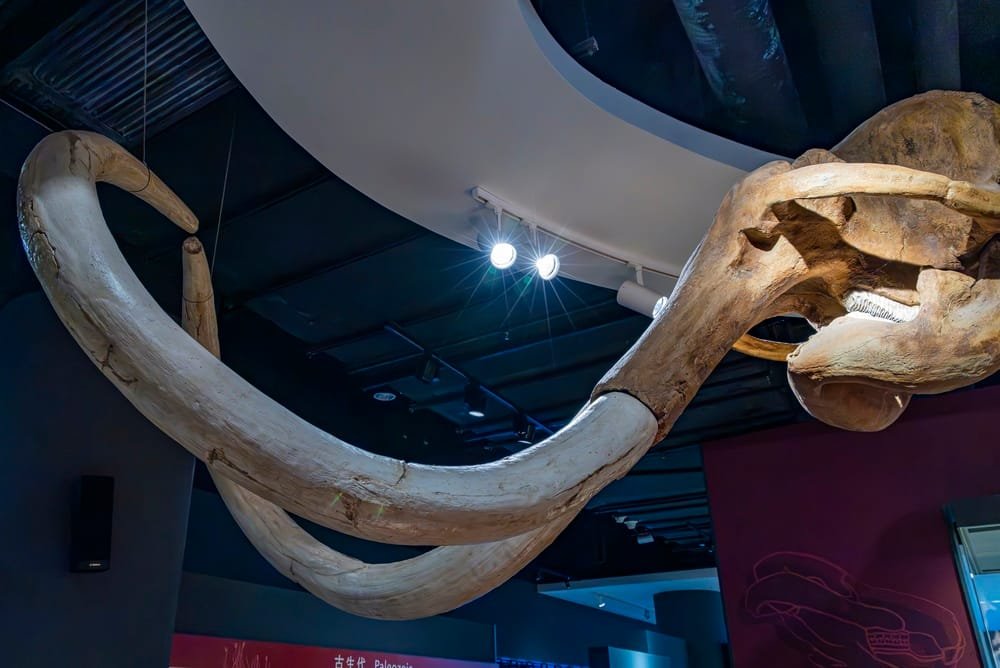
Besides its long, shaggy coat, the woolly mammoth was known for its huge, curved tusks, which could reach more than 4 meters in large males. They were probably used to impress females and to fight rivals, but also to sweep snow away from the grass and plants they ate. Tusks grew throughout the animal’s life, and like tree rings, they record its growth year by year.
2. Not as big as you might think
Woolly mammoths were impressive, but they were not the giants of their family. Adults stood around 3 to 3.5 meters tall at the shoulder and weighed about 6 tonnes, roughly the size of an African elephant. Other mammoth species were much larger. The steppe mammoth, an ancestor of the woolly mammoth, was one of the largest land mammals ever, with big males possibly weighing more than 10 tonnes.
3. Several mammoth species
What we call the woolly mammoth is one specific species: Mammuthus primigenius. It was not the only mammoth species. The Columbian mammoth (Mammuthus columbi) lived in North America, as far south as Mexico and Central America, and the steppe mammoth roamed Eurasia earlier. Recent DNA studies suggest that the Columbian mammoth may even have descended from a mix of woolly mammoths and an older mammoth lineage.
4. Fat and fur against the cold
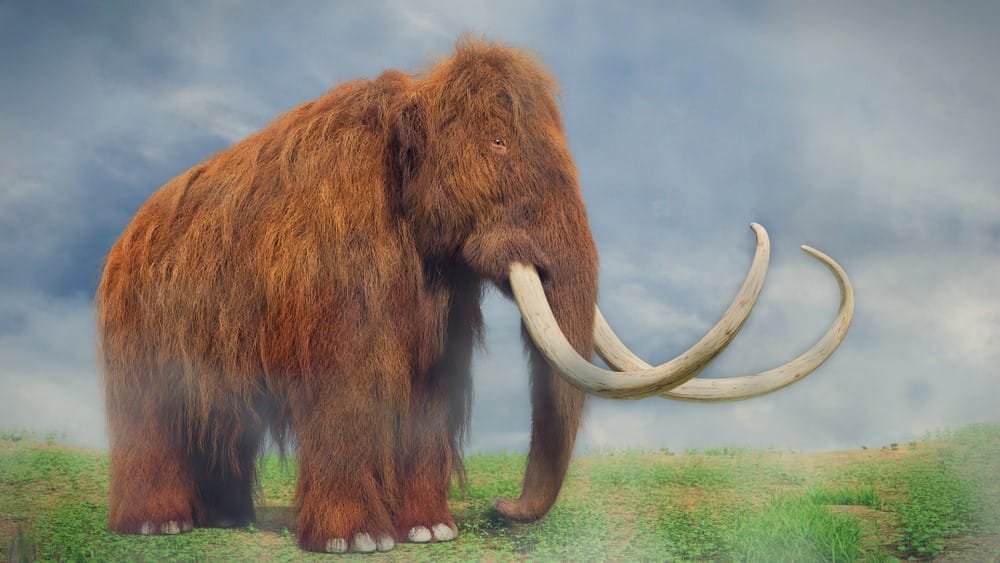
Even the thickest coat is not enough protection against the extreme Arctic cold. That is why the woolly mammoth also had a layer of fat under its skin, up to around 10 centimeters thick. It also had small ears and a short tail, which limited heat loss. Its coat consisted of a woolly undercoat and long outer hairs that could be up to a meter long. Preserved hair shows colors from light to dark brown.
5. Hunted by early humans
Despite its size, the woolly mammoth was hunted by prehistoric people. Its meat and fat were an important source of food, and its fur, bones and tusks were also used. In parts of Ukraine and Russia, archaeologists have even found the remains of huts built from hundreds of mammoth bones, although some of these bones may have been collected from animals that died naturally.
6. Immortalized in cave art
Between around 35,000 and 12,000 years ago, the woolly mammoth was one of the favorite subjects of prehistoric artists. In caves in France and Spain, they painted and engraved hundreds of mammoths on the walls. The Rouffignac cave in France is even nicknamed the “Cave of a Hundred Mammoths”. Why people made these images is still debated: they may have been linked to hunting rituals, stories or beliefs.
7. More woolly animals
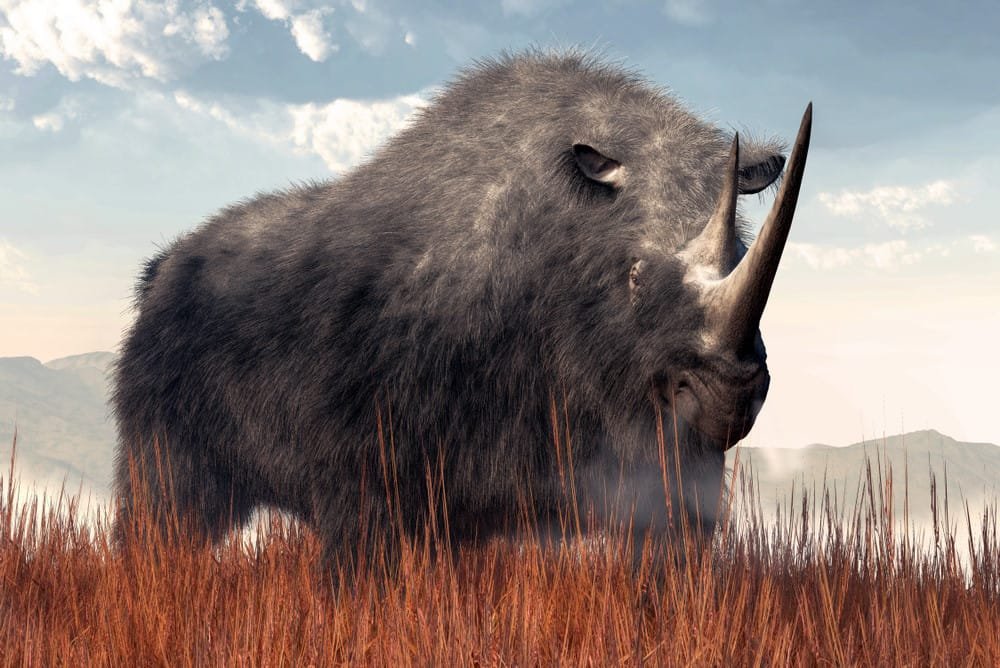
The woolly mammoth was not the only animal with a thick coat in the Ice Age. The woolly rhinoceros is less famous, but it also roamed prehistoric Eurasia. It had a long, flattened front horn, and it too was hunted by people. It was smaller than the mammoth, but still weighed around two tonnes. It died out around 14,000 years ago.
8. The last mammoths lived until 4,000 years ago
By the end of the last Ice Age, around 10,000 years ago, mammoths had disappeared from almost everywhere, probably because of a combination of a warming climate, shrinking habitat and hunting by humans.
There was one exception. On Wrangel Island, off the northeast coast of Siberia, a small population survived until around 4,000 years ago. That means mammoths were still alive when the Great Pyramid of Giza was built. For a long time, it was thought that these last mammoths had shrunk into dwarfs, but that turned out to be a myth: they were normal-sized. Their DNA shows that the small population suffered from inbreeding, although that was probably not the direct cause of their extinction.
9. Preserved in the permafrost
The far north of Siberia, Alaska and Canada is still extremely cold today. Thanks to the permanently frozen ground, a surprising number of mummified, almost intact mammoths have been found. One of the most famous is Lyuba, a baby mammoth found in Siberia in 2007, so well preserved that her stomach still contained her mother’s milk. Finding these carcasses is the easy part. Preserving them is much harder, because they start to decay as soon as they thaw.
10. Bringing back the mammoth?
Because the woolly mammoth died out relatively recently and is so closely related to the Asian elephant, scientists have been able to reconstruct its genome from ancient DNA. In 2021, the American company Colossal Biosciences announced that it wants to create elephants with mammoth traits, such as a thick coat and fat layer, by editing elephant DNA. In 2025, it presented genetically modified “woolly mice” with long, thick fur as a first step. Whether a mammoth-like elephant calf will ever really be born, and whether that is a good idea, is still the subject of fierce debate.