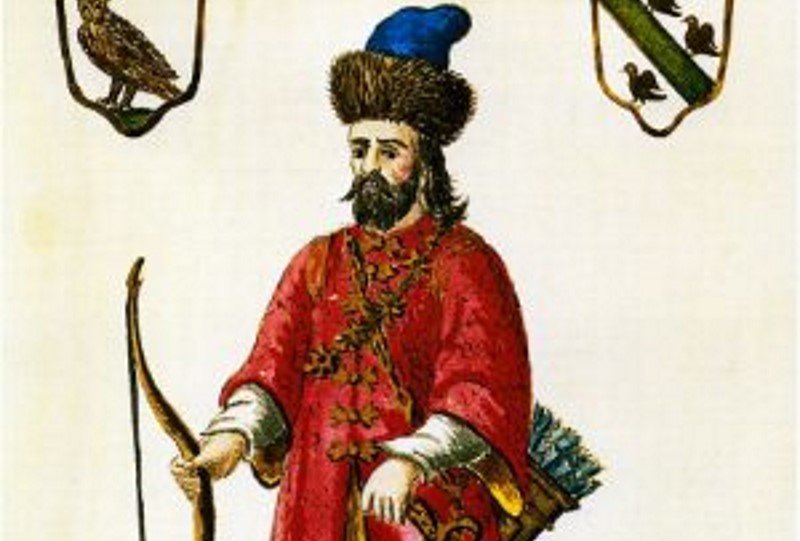
Marco Polo is one of the most famous travelers in history. This 13th-century Venetian merchant traveled across Asia to the court of the Mongol ruler Kublai Khan and returned to Europe after almost a quarter of a century.
A journey like that took years and was far from safe. Yet Polo survived it, and his stories about the riches of China fascinated Europeans for centuries. Remarkably, he never wrote down his adventures himself: he told them to a fellow prisoner, Rustichello da Pisa, a writer of romances, who turned them into a book. These are ten facts about the life and travels of Marco Polo.
1. He barely knew his father when he left
Marco Polo was born in Venice around 1254. His father Niccolò and uncle Maffeo were successful merchants who had already left for the East before he was born. They reached the court of Kublai Khan and only returned to Venice in 1269, when Marco was about 15 years old and his mother had died.
In 1271, aged around 17, Marco set off with his father and uncle on the journey that would make him famous. They would not return until 1295, after a journey of tens of thousands of kilometers over land and sea.
2. He was not the first European in the Mongol Empire
Many people see Marco Polo as the man who discovered the Silk Road, but that is not true. Trade along these routes is many centuries older. Marco Polo is simply the most famous traveler on them, largely because his story was written down and widely read.
Other Europeans had gone before him. The Franciscan friar Giovanni da Pian del Carpine reached the Mongol court near Karakorum in 1246 and met the Great Khan Güyük. A few years later, the Flemish friar William of Rubruck made the journey too. And Marco’s own father and uncle had been there before him.
3. He served the Great Khan
According to his book, Marco Polo gained the trust of Kublai Khan, the founder of the Yuan dynasty in China. The Khan sent him on missions throughout his vast empire, and Polo claims he even governed a city for several years, although historians doubt some of these claims.
The Polos traveled with a paiza: a tablet of gold or silver with an inscription in the Khan’s name. It worked as a kind of early passport, guaranteeing them protection, horses and lodging throughout the Mongol Empire.
4. He described things Europe had never seen
Marco Polo’s book introduced Europeans to wonders that sounded unbelievable at the time. He described paper money, which the Mongols used throughout their empire while Europe still paid with coins. He wrote about “black stones” that burned like wood, in other words coal. And he described the impressive Mongol postal system, with relay stations where messengers could change horses, allowing messages to cross the empire in days.
A popular legend claims that he brought pasta back to Italy from China, but that is a myth: Italians were already eating pasta before he returned.
5. He never mentioned the Great Wall of China
One of the most surprising things about Marco Polo’s book is what it does not contain. He never mentioned the Great Wall of China, chopsticks, tea drinking or the custom of foot binding. Skeptics have used this as evidence that he never actually went to China. Most historians, however, believe he did: the Great Wall as we know it today was largely built later, under the Ming dynasty, and his book contains many details about China that could only have come from someone who was there.
6. The journey home was a deadly voyage
Kublai Khan was reluctant to let the Polos leave. They finally got their chance around 1291, when they were asked to escort a Mongol princess, Kököchin, by sea to Persia, where she was to marry the ruler of the Ilkhanate.
The voyage took around two years and was disastrous. According to Polo’s account, of the hundreds of people who set out, only a few dozen survived. When they finally arrived in Persia, the prince she was supposed to marry had died, so she married his son instead.
7. They hid their wealth in their clothes
On the way home, the Polos lost part of their goods: in Trebizond, on the Black Sea coast of what is now Turkey, they were robbed of a considerable amount. Still, they did not arrive in Venice as poor men.
According to a famous story, told in the 16th century, they arrived home in shabby clothes, and their relatives did not recognize them. Then they ripped open the seams of their coats, and out poured jewels that they had sewn into them for safekeeping. Whether the story is true or not, the Polos were rich men.
8. He dictated his book in prison
A few years after his return, Marco Polo was captured during a war between Venice and Genoa, and in 1298 he ended up in a prison in Genoa. There he met Rustichello da Pisa, an author of chivalric romances, and dictated his story to him. The book became known as The Travels of Marco Polo, or “The Description of the World”.
Without this chance encounter, we might never have known about his travels. In 1299, Polo was released and returned to Venice for good. There he married Donata Badoer, with whom he had three daughters.
9. Many people thought he was a liar
Many of his contemporaries did not believe Marco’s stories. His descriptions of the summer palace of Kublai Khan at Shangdu, better known as Xanadu, and the huge city of Quinsai, now Hangzhou, sounded far too fantastic. The book was nicknamed “Il Milione”, “The Million”, possibly because of the countless exaggerations people thought it contained.
Polo himself stuck to his story. According to a later account, when friends urged him on his deathbed to take back his “lies”, he replied: “I have not told half of what I saw.”
10. His book inspired Columbus
Marco Polo died in Venice in January 1324, aged around 69. His influence on world history was enormous. His book inspired generations of travelers and mapmakers, including Christopher Columbus, who owned a copy filled with his own handwritten notes and hoped to reach the riches of Asia that Polo had described by sailing west.
Today, Polo’s name lives on in many ways: in a wild sheep from Central Asia, the Marco Polo sheep, which he described; in Venice’s international airport; and in the swimming pool game that children around the world play.