On August 6, 1945, the world entered the atomic age when the United States dropped a uranium bomb on the Japanese city of Hiroshima, followed three days later by a plutonium bomb on Nagasaki. Instead of remaining a one-time wartime weapon, nuclear arms sparked a Cold War race that saw global stockpiles peak at more than 70,000 warheads in the mid-1980s.
According to recent assessments by the Stockholm International Peace Research Institute (SIPRI) and the Federation of American Scientists (FAS), roughly 12,100 nuclear warheads remain in existence today. Only nine sovereign nations possess their own nuclear arsenals, while five additional European countries host American nuclear bombs on their soil under NATO sharing agreements.
10. Netherlands, Belgium, Germany, Italy, and Turkey (NATO Nuclear Sharing)
Although none of these five countries manufacture or own nuclear weapons of their own, all five store United States B61 tactical nuclear gravity bombs on their territory as part of NATO’s nuclear sharing policy. Roughly 100 American warheads are distributed across six airbases: Volkel in the Netherlands, Kleine Brogel in Belgium, Buchel in Germany, Aviano and Ghedi in Italy, and Incirlik in Turkey.
In peacetime, these weapons remain under strict US Air Force custody and codes. In the event of a major war authorized by both the US President and NATO’s Nuclear Planning Group, dual-capable fighter jets operated by the host nations are trained to carry and deliver them.
9. North Korea (approx. 50 Warheads)

After withdrawing from the Treaty on the Non-Proliferation of Nuclear Weapons (NPT) in 2003, North Korea conducted its first underground nuclear test in 2006 and has carried out five more tests since, including what appeared to be a thermonuclear weapon in 2017. Despite sweeping United Nations sanctions, Pyongyang has continued producing fissile plutonium and highly enriched uranium.
Independent researchers estimate that North Korea has assembled around 50 nuclear warheads and possesses enough fissile material for up to 70 or 90 in total. Alongside these warheads, the regime has tested solid-fuel intercontinental ballistic missiles capable of reaching the continental United States.
8. Israel (approx. 90 Warheads)
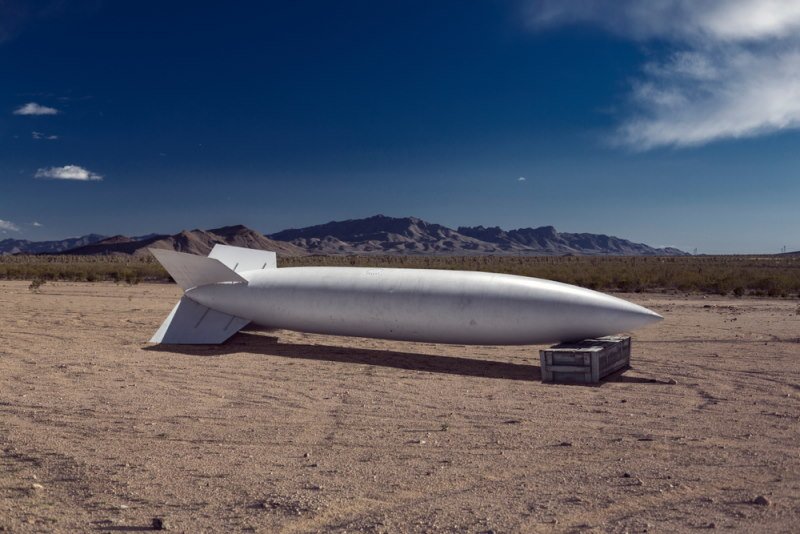
For more than half a century, Israel has maintained a strict policy of deliberate nuclear ambiguity (amimut), refusing to officially confirm or deny that it possesses atomic weapons. Nevertheless, its nuclear program centered at the Negev Nuclear Research Center near Dimona has been an open secret since technician Mordechai Vanunu leaked photographs of the facility to the British press in 1986.
Defense analysts estimate that Israel holds roughly 90 nuclear warheads. These can be delivered via land-based Jericho ballistic missiles, F-15 and F-35 fighter aircraft, and likely German-built Dolphin-class submarines equipped with cruise missiles, giving Israel a survivable second-strike capability in the Middle East.
7. India (approx. 172 Warheads)
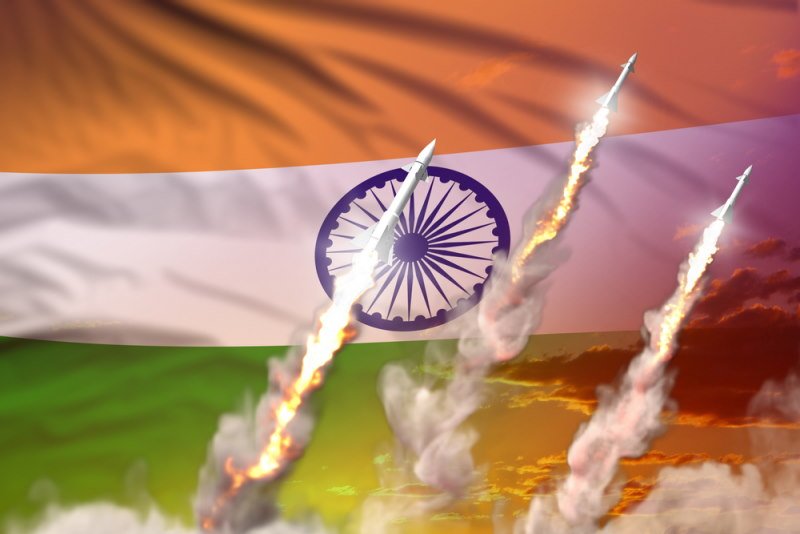
India carried out its first nuclear detonation, codenamed Smiling Buddha, in 1974 and declared itself a full-fledged nuclear weapon state after a second series of tests in May 1998. Developed to deter both neighboring Pakistan and China, India’s stockpile has grown recently to an estimated 172 warheads.
India officially maintains a No First Use doctrine, pledging only to launch nuclear weapons in retaliation for a nuclear attack on Indian territory or forces. In recent years, New Delhi has expanded its nuclear triad with longer-range Agni-V ballistic missiles capable of reaching all of China and indigenous Arihant-class ballistic missile submarines.
6. Pakistan (approx. 170 Warheads)
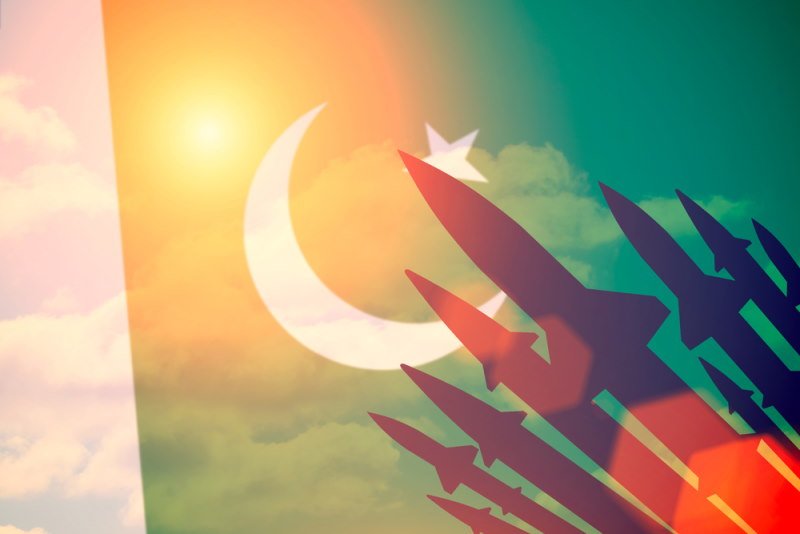
Just weeks after India’s 1998 nuclear tests, Pakistan detonated its own nuclear devices in the Chagai Hills, culminating decades of covert enrichment research led by metallurgist Abdul Qadeer Khan. Today Pakistan holds an estimated 170 nuclear warheads, keeping virtual parity with its larger eastern neighbor.
Unlike India, Pakistan does not subscribe to a No First Use policy. Because India’s conventional military is significantly larger, Islamabad relies on a doctrine of full-spectrum deterrence, which includes short-range tactical nuclear missiles designed to deter a conventional armored invasion across the border.
5. United Kingdom (approx. 225 Warheads)

In 1952, the United Kingdom became the third country in the world after the United States and the Soviet Union to test an independent atomic bomb. Having retired its air-dropped nuclear bombs in the 1990s, Britain is now the only declared nuclear power that relies entirely on a single sea-based delivery system.
The Royal Navy operates four Vanguard-class ballistic missile submarines out of HMNB Clyde in Scotland, armed with Trident II D5 missiles. At least one submarine remains on continuous patrol beneath the ocean at all times, ensuring that the UK’s arsenal of roughly 225 warheads can never be wiped out in a surprise attack.
4. France (approx. 290 Warheads)
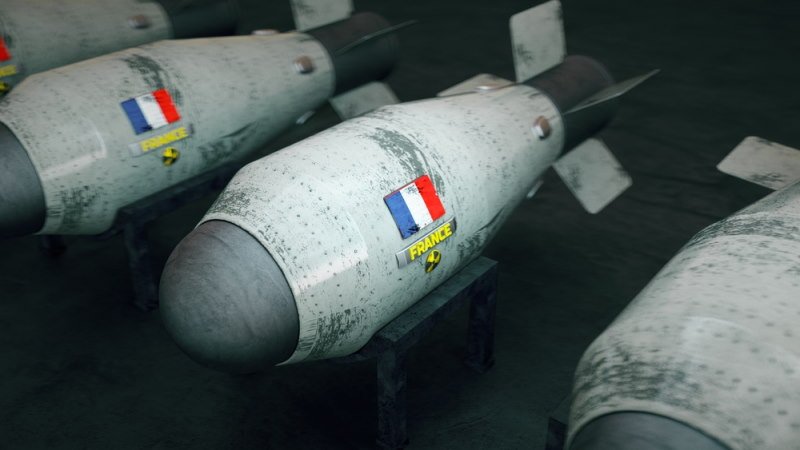
During the Cold War, President Charles de Gaulle insisted that France build its own independent nuclear deterrent, known as the Force de dissuasion (or Force de frappe), arguing that Paris could never be 100 percent certain Washington would risk New York or Chicago to defend Western Europe. France tested its first atomic bomb in the Algerian Sahara in 1960.
Following the United Kingdom’s departure from the European Union, France is now the sole nuclear-armed member state inside the EU. Its arsenal of roughly 290 warheads is split between four Triomphant-class ballistic missile submarines and air-launched nuclear cruise missiles carried by Rafale fighter jets.
3. China (approx. 500 Warheads)
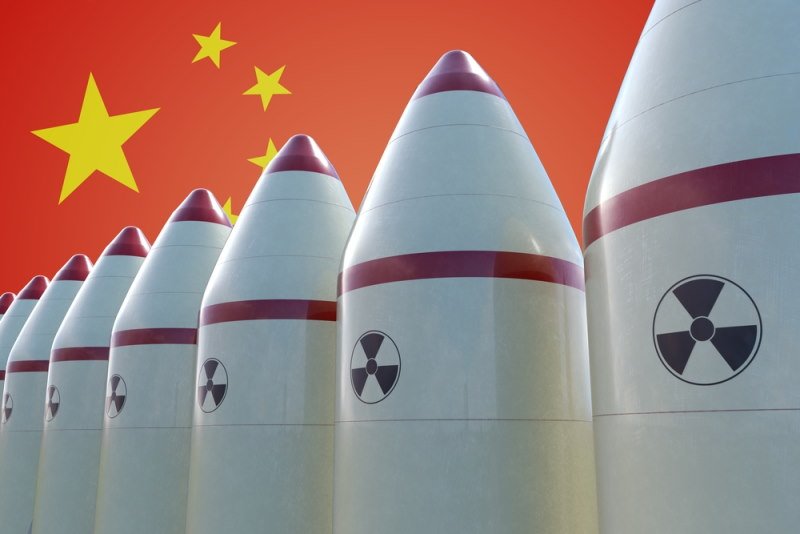
China tested its first atomic bomb at Lop Nur in 1964 and for decades maintained a relatively modest arsenal of around 200 warheads, guided by a doctrine of minimum deterrence and an official No First Use pledge. Over the past five years, however, China has embarked on the fastest nuclear expansion of any country on Earth.
Satellite imagery has revealed hundreds of new intercontinental ballistic missile silos under construction across northern and western China. SIPRI and US Department of Defense estimates place China’s current stockpile at roughly 500 warheads, with projections suggesting Beijing could field more than 1,000 operational warheads by 2030.
2. United States (approx. 5,044 Warheads)

As the pioneer of the Manhattan Project and the only nation to have used nuclear weapons in combat, the United States maintains a total inventory of roughly 5,044 nuclear warheads. About 1,770 of those warheads are actively deployed on missiles and bomber bases, around 1,938 are held in reserve, and the remainder are retired warheads awaiting dismantlement.
America’s strategic deterrent rests on the classic nuclear triad: land-based Minuteman III intercontinental ballistic missiles in underground silos, Ohio-class ballistic missile submarines patrolling the oceans, and long-range strategic bombers such as the B-2 Spirit and B-52H Stratofortress.
1. Russia (approx. 5,580 Warheads)

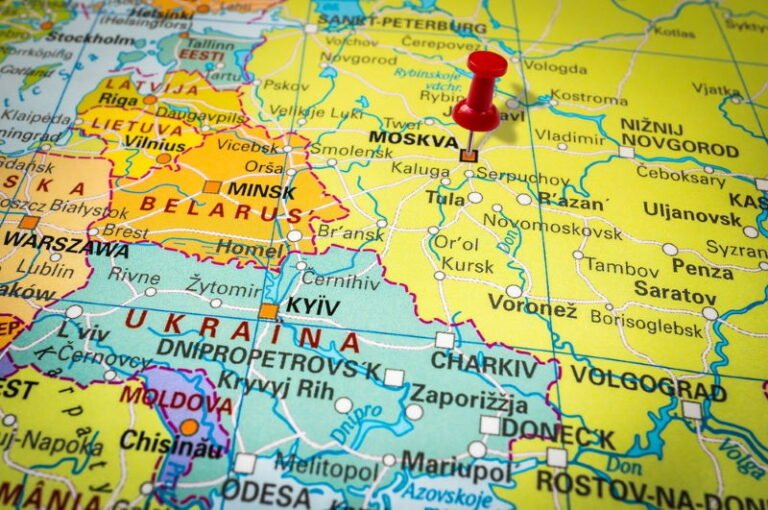
After the Soviet Union broke apart in 1991, all Soviet nuclear weapons stationed in Ukraine, Kazakhstan, and Belarus were transferred to Russia under the Budapest Memorandum, leaving Moscow with the largest nuclear stockpile on the planet. Together, Russia and the United States still hold nearly 90 percent of all nuclear weapons on Earth.
Russia’s total inventory stands at approximately 5,580 warheads, including roughly 1,710 deployed strategic warheads, more than 2,600 reserve warheads (including a large stockpile of non-strategic tactical nuclear weapons), and around 1,200 retired warheads slated for dismantlement. Since the start of the war in Ukraine, Moscow has suspended participation in the New START arms-control treaty and repeatedly highlighted its nuclear triad as a warning to Western nations.