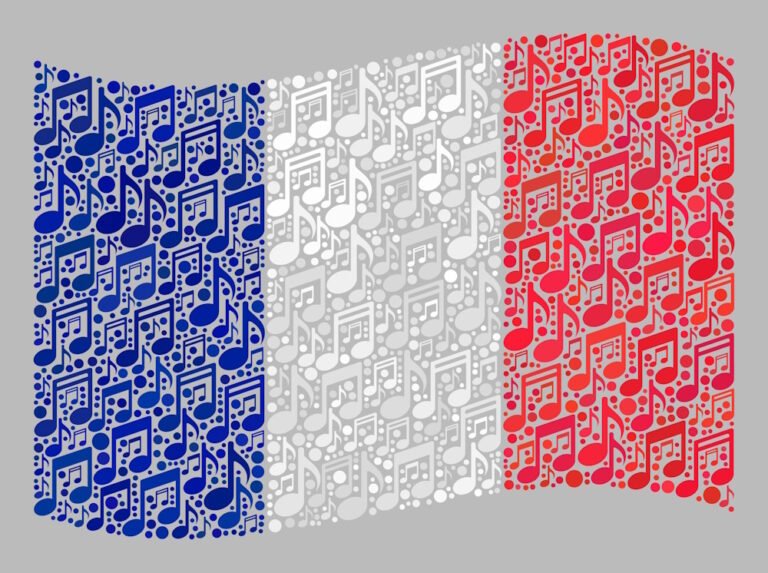
From the electronic synthesizer revolutions of Düsseldorf that laid the bedrock for all modern techno, hip-hop, and pop music, to the post-punk anarchism of Neue Deutsche Welle (NDW), Neue Deutsche Härte industrial metal, and profound singer-songwriter Liedermacher poetry, German music defies simple categorization.
Whether commanding massive global stadium tours in German without translating a single syllable, creating timeless protest anthems during the tensest days of the Cold War, or topping the American Billboard charts, German songs possess an unmistakable sonic power and lyrical depth.
20. Da Da Da – Trio
Released in 1982 by Großenkneten minimalist trio Trio, “Da Da Da ich lieb dich nicht du liebst mich nicht aha aha aha” became an accidental, historic international phenomenon. Armed with a cheap Casio VL-1 toy keyboard preset rhythm, Peter Behrens’s single-snare drumming, and Stephan Remmler’s deadpan, spoken-word monotone, the track stripped pop music down to its absolute bare skeleton.
Selling millions of copies in over thirty countries, it stands as the ultimate triumph of Neue Deutsche Welle minimalism.
19. Atemlos durch die Nacht – Helene Fischer
Written by Kristina Bach and released in 2013 on Helene Fischer’s album Farbenspiel, “Atemlos durch die Nacht” single-handedly modernized the traditional German schlager genre for the twenty-first century. Merging high-octane modern EDM synth production with an undeniably infectious, soaring vocal melody, the song spent an astonishing 117 weeks on the German charts.
It became the ubiquitous soundtrack to Germany’s triumphant 2014 World Cup victory celebration at Berlin’s Brandenburg Gate.
18. Skandal Im Sperrbezirk – Spider Murphy Gang
Released in 1981 by Munich outfit Spider Murphy Gang, this explosive rock-and-roll track caused an immediate political and social uproar in conservative Bavaria. Chronicling the story of “Rosie,” a fictional sex worker operating outside Munich’s government-enforced exclusion zones (Sperrbezirk), conservative radio stations initially banned the record due to the taboo word “Nutten” (prostitutes).
The controversy only accelerated its popularity, propelling it to number one across Germany, Austria, and Switzerland.
17. Codo (…Düse im Sauseschritt) – DÖF
A delightfully eccentric slice of Austro-German synth-pop comedy from 1983, “Codo” was created by DÖF (Deutsch-Österreichisches Feingefühl), featuring cabaret artists Joesi Prokopetz, Manfred Tauchen, and singers Annette and Inga Humpe. Telling the surreal sci-fi tale of alien hate-beast Codo who lands on Earth to spread love (“Und ich düse, düse, düse im Sauseschritt…”), the track became an inescapable, multi-million-selling summer anthem across Europe.
16. Hier Kommt Alex – Die Toten Hosen
The major 1988 punk-rock anthem that propelled Düsseldorf’s Die Toten Hosen into mainstream stardom, “Hier Kommt Alex” is a literary, hard-hitting conceptual piece inspired by Anthony Burgess’s dystopian novel A Clockwork Orange. Opening with an electric adaptation of Beethoven’s Ninth Symphony before detonating into driving punk power chords, Campino delivers a fierce critique of teenage alienation, senseless violence, and societal decay.
15. Verpiss’ dich – Tic Tac Toe
Released in 1996 by all-female Ruhr Valley hip-hop/pop trio Tic Tac Toe (Lee, Ricky, and Jazzy), “Verpiss’ dich” shattered taboos in the German music industry. An uncompromising, profanity-laced kiss-off to an abusive, unfaithful partner, the track went straight to number one in Germany and Switzerland, selling over a million copies and establishing female-led German rap as a dominant commercial force.
14. Autobahn – Kraftwerk
The major 1974 epic that birthed modern electronic dance music: Ralf Hütter and Florian Schneider crafted “Autobahn” to replicate the hypnotic, rhythmic sensation of driving down the German federal highway system from Cologne to Bonn. Using custom-built Moog and Minimoog synthesizers, electronic vocoders, and rhythmic motoric pulses, Kraftwerk bridged classical music, German postwar modernism, and pop.
It broke into the US Billboard Top 25 and permanently changed the history of music.
13. Kristallnaacht – BAP
Written by Wolfgang Niedecken and released in 1982 by Cologne rock outfit BAP, “Kristallnaacht” is one of the most profound political rock masterpieces in German history. Sung in Kölsch (the dialect of Cologne), the song uses the 1938 Nazi pogrom of Kristallnacht as a chilling warning against rising modern right-wing xenophobia, fascism, and middle-class complacency.
12. Du – Peter Maffay
The definitive romantic schlager ballad of all time, “Du” was recorded in 1970 by twenty-year-old Romanian-born singer Peter Maffay. Propelled by dramatic strings, acoustic guitars, and Maffay’s passionate, rasping delivery, the song spent 28 weeks on the German charts and sold over a million copies.
The song transformed Maffay into one of Germany’s most enduring rock icons, who would go on to hold the record for the most number-one albums in German chart history.
11. Haus Am See – Peter Fox
The runaway triumph from Seeed frontman Peter Fox’s multi-platinum 2008 solo album Stadtaffe, “Haus Am See” is a striking blend of Berlin hip-hop, reggae, and full orchestral instrumentation. Featuring live strings from the Babelsberg Film Orchestra and explosive marching-band drums from Cold Steel, Fox envisions growing old surrounded by family and peace in a house by the lake.
It remains one of the most beloved modern German pop songs of the century.
10. 99 Luftballons – Nena
One of the greatest anti-war protest anthems ever written, “99 Luftballons” was released in 1983 at the terrifying peak of European Cold War tensions. Guitarist Carlo Karges was inspired after watching balloons released at a 1982 Rolling Stones concert in West Berlin, wondering what would happen if they drifted over the Berlin Wall and triggered automated radar defenses into World War III.
Driven by an irresistible, upbeat New Wave synth-pop groove and Nena’s youthful, clear vocals, the contrast between sunny melodic hooks and apocalyptic annihilation, leaving the world in ruins, reached listeners worldwide.
9. Halt Mich – Herbert Grönemeyer
Culled from his landmark 1988 album Ö, “Halt Mich” is widely revered as the most vulnerable, emotionally raw love declaration in German pop history. Renouncing all protective ego and defensive posturing, Grönemeyer simply begs his partner for emotional sanctuary and human warmth: “Halt mich, nur ein bisschen, bis ich schlafen kann…”
Framed by weeping piano chords and saxophone solos, his gravelly, unadorned vocal delivery aches with profound truth.
8. Der Weg – Herbert Grönemeyer
In November 1998, Herbert Grönemeyer endured an unspeakable double tragedy: his brother Wilhelm and his beloved wife Anna died of cancer within four days of each other. Channelling his unbearable grief into his 2002 album Mensch, “Der Weg” is his devastating, sacred tribute to Anna.
Accompanied only by a hushed, weeping acoustic piano and subtle strings, Grönemeyer chronicles their shared life, her courage in the face of death, and his resolve to continue walking life’s path despite the void she left behind: “Ich gehe nicht weg, hab meine Frist verlängert / Neue Zeitreise, offene Welt.”
7. Mutter – Rammstein
The title track of Rammstein’s groundbreaking 2001 album, “Mutter” showcases the Berlin industrial metal titans at their most theatrical, operatic, and emotionally harrowing. Written from the agonizing perspective of a child created artificially in a laboratory test-tube, having no mother, navel, or natural warmth, the song explores alienation, unnatural birth, and vengeance.
The composition begins in hushed acoustic guitars and a weeping child’s voice before erupting into a colossal wall of down-tuned, distorted guitars and soaring orchestral strings.
6. Sonne – Rammstein
Originally commissioned as an entrance walk-out theme for Ukrainian heavyweight boxing champion Vitali Klitschko, “Sonne” was released in 2001 as the lead single for Mutter. Built upon a terrifying, mechanized guitar riff and an ominous counting sequence from one to ten, the track simulates the crushing knockout blow of a heavyweight champion.
Contrasting Lindemann’s subterranean, guttural roar with an ethereal, sampled operatic female vocal hook, the track’s dynamic force is overwhelming.
5. Du Hast – Rammstein
The song that conquered the planet and introduced German Neue Deutsche Härte into global consciousness: “Du Hast” was released in 1997 on their breakthrough album Sehnsucht. The song is built around an ingenious linguistic play on words: “Du hast” (you have) sounds identical to “Du hasst” (you hate) until the marriage vow is introduced.
Christian “Flake” Lorenz’s infectious techno-synth keyboard loop and Christoph Schneider’s martial, four-on-the-floor beat combine with pulverizing dual guitar riffs.
4. Jeanny – Falco
The most controversial and daring pop single in German music history: released in December 1985 on Falco’s Falco 3, “Jeanny” was produced by Dutch hitmaker brothers Rob and Ferdi Bolland. Conceived as a psychological thriller ballad, the song is told from the perspective of an obsessive stalker holding a nineteen-year-old girl named Jeanny, featuring chilling spoken-word “News Flash” radio interludes detailing police search operations.
The song sparked immense controversy across Germany and Austria, leading to boycotts by major radio stations who accused it of glorifying abduction. The bans backfired completely, driving the single to number one across Germany, Austria, and the Netherlands for months.
3. Gute Nacht Freunde – Reinhard Mey
Recorded in 1972 on his album Mein achtel Lorbeerblatt (originally written under the pseudonym Alfons Yondraschek for Eurovision contestants Inga and Wolf), “Gute Nacht, Freunde” is the timeless peak of the German Liedermacher tradition. A gentle, poetic ode to the quiet closing hours of an evening spent among cherished friends, the song bids farewell: “Gute Nacht, Freunde, es wird Zeit für mich zu gehen / Was ich noch zu sagen hätte, dauert eine Zigarette…”
Accompanied only by Mey’s pristine classical acoustic guitar picking and warm, comforting baritone, the song captures pure nostalgia, warmth, and fraternal affection.
2. Das Model – Kraftwerk
Featured on Kraftwerk’s landmark 1978 album Die Mensch-Maschine (The Man-Machine), “Das Model” is widely recognized as the single most influential synth-pop track ever recorded. Lyrically dissecting high-fashion commercialism, beauty standards, and male voyeurism, Ralf Hütter delivers his clinical, detached vocals with deadpan precision.
Built upon an unforgettable, sparkling analog synthesizer melody and Karl Bartos’s tight electronic drum programming, the track laid the exact blueprint for 1980s New Wave, directly inspiring Depeche Mode, Human League, New Order, and Gary Numan.
1. Rock Me Amadeus – Falco
The undisputed, history-making triumph of German-language music: released in 1985 and inspired by Miloš Forman’s Academy Award-winning film Amadeus, Austrian pop visionary Falco teamed up with Dutch producers Rob & Ferdi Bolland to portray Wolfgang Amadeus Mozart not as a stiff historical relic, but as the world’s very first punk rock star, a rebellious, debt-ridden, womanizing pop idol adored by Vienna’s youth. Driven by an explosive, stuttering synth-funk beat, orchestral stabs, and Falco’s rapid-fire Austrian-German rap cadence, the track was an absolute sonic revolution.
In March 1986, “Rock Me Amadeus” accomplished the impossible: it surged to number one on the US Billboard Hot 100, remaining to this day the only German-language song in history to ever top the American charts.
Which choice on this list is your personal favorite? Share your thoughts and rankings in the comments below.