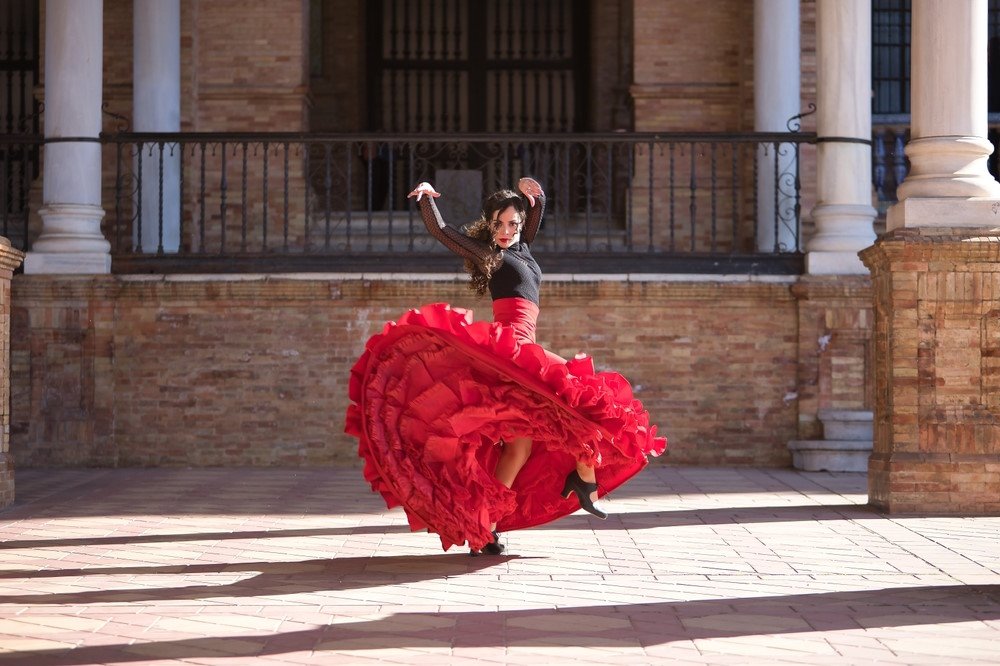
Spanish-language music is one of the richest, most emotionally vibrant, and globally dominant artistic forces in cultural history. Spanning traditional flamenco roots in Andalusian taverns, Cuban son, Puerto Rican reggaeton, Mexican ranchera, and cutting-edge Latin pop, Spanish songs carry an unmatched passion for romance, drama, social rebellion, and irresistible rhythm.
In recent decades, Spanish-language songs have completely obliterated linguistic borders, conquering global streaming charts, filling massive stadium tours across six continents, and becoming the definitive heartbeat of modern popular music. From flamenco legends and Latin crooners to the unstoppable pioneers of modern urban music, here are the top 20 best Spanish songs of all time.
20. Ay Mamá – Rigoberta Bandini
Bursting into Spanish cultural consciousness during the 2022 Benidorm Fest, “Ay Mamá” by Catalan singer-songwriter Rigoberta Bandini (Paula Ribó) became an instant feminist anthem. Celebrating motherhood, female bodily autonomy, and maternal strength, the song questions why female bodies and breasts are perpetually sexualized and censored: “Why are our breasts so feared?” Powered by soaring electronic synth-pop and anthemic vocal chants, it resonated deeply across Spain and international feminist movements.
19. Malamente – Rosalía
The revolutionary breakthrough track that catapulted Rosalía onto the global stage in 2018, “Malamente (Cap.1: Augurio)” completely reimagined centuries-old flamenco traditions for the twenty-first century. Seamlessly fusing traditional flamenco palmas (handclaps) and vocal melisma with trap percussion and bass-heavy modern R&B, Rosalía constructed a breathtaking sonic hybrid. Its Grammy-winning production and visual symbolism established her as a generational visionary.
18. Gasolina – Daddy Yankee
Released in 2004 from his album Barrio Fino, “Gasolina” is the undisputed Big Bang of modern reggaeton. Produced by Luny Tunes, the track’s explosive dembow beat and infectious call-and-response refrain—“A ella le gusta la gasolina / ¡Dame más gasolina!”—shattered regional boundaries, taking Puerto Rican underground urban street music into mainstream global clubs, radios, and MTV countdowns, permanently altering international pop music.
17. Sofia – Álvaro Soler
A dazzling blast of Mediterranean summer pop released in 2016, “Sofia” by Spanish-German singer Álvaro Soler became an omnipresent European smash hit. Despite its deceptively upbeat acoustic guitars, infectious whistling hooks, and celebratory handclaps, the lyrics explore the pain of heartbreak and unrequited love. The single went multi-platinum across Europe and Latin America, garnering over 800 million views.
16. Quiero – Julio Iglesias
Julio Iglesias is the best-selling Latin music artist in world history, with more than 300 million records sold across 14 languages. “Quiero,” released in 1975 from his album El Amor, represents the peak of his romantic crooning artistry. Backed by lush string orchestration and delicate Spanish nylon guitars, Julio delivers an agonizingly intimate declaration of romantic devotion, demonstrating the seductive vocal restraint that made him an international icon.
15. Hijo de la Luna – Mecano
Released in 1986 by Madrid synth-pop pioneers Mecano, “Hijo de la Luna” is a haunting, theatrical masterpiece of Spanish musical storytelling. Written by José María Cano and sung with crystalline beauty by Ana Torroja, the song tells a tragic mythological folktale: a Roma woman makes a pact with the Moon to win the love of a Caló man, in exchange for giving up her firstborn child. The lush waltz arrangement and tragic narrative make it one of Spain’s most enduring pop ballads.
14. Chan Chan – Buena Vista Social Club
Composed in 1987 by Cuban maestro Compay Segundo and popularized internationally on the legendary 1997 Ry Cooder-produced album Buena Vista Social Club, “Chan Chan” is the timeless soul of traditional Cuban son. With its hypnotic four-chord progression, sultry muted trumpet solos by Manuel “Guajiro” Mirabal, and Eliades Ochoa’s warm acoustic guitar, the track paints a nostalgic portrait of pre-revolutionary rural Cuba that captivated the entire world.
13. Despacito – Luis Fonsi feat. Daddy Yankee
Released in January 2017, “Despacito” became a historic cultural phenomenon of unprecedented proportions. Written by Luis Fonsi and Erika Ender and featuring Daddy Yankee’s dynamic reggaeton verses, the song’s seamless blend of Puerto Rican cuatro guitars, urban dembow beats, and sensuous melodic hooks spent 16 consecutive weeks at number one on the Billboard Hot 100 (tying the all-time record). With over 8 billion YouTube views, it redefined the reach of Spanish pop.
12. Volare (Nel Blu Dipinto Di Blu) – Gipsy Kings
Originally written as an Italian ballad by Domenico Modugno in 1958, “Volare” was transformed into a fiery rumba flamenca fiesta by the Franco-Spanish Romani virtuosos the Gipsy Kings in 1989. Fueled by seven furiously strummed nylon-string acoustic guitars, Nicolas Reyes’s passionate, rasping vocals, and infectious handclaps, this celebratory anthem brought the intoxicating spirit of Andalusian flamenco pop to millions across the globe.
11. Bailamos – Enrique Iglesias
Commissioned for the soundtrack of Will Smith’s 1999 blockbuster Wild Wild West, “Bailamos” catalyzed Enrique Iglesias’s explosive English-Spanish crossover triumph. Blending sultry Latin flamenco acoustic guitar flourishes with a pounding late-90s European dance groove, the track vaulted to number one on the Billboard Hot 100, inaugurating the late-90s “Latin Pop Explosion” and proving Enrique could conquer the English-speaking world on his own terms.
10. Suerte (Whenever, Wherever) – Shakira
The monumental Spanish-language counterpart to her global smash “Whenever, Wherever,” “Suerte” was released in 2001 from Shakira’s fifth album Servicio de Lavandería (Laundry Service). Incorporating traditional Andean instrumentation—including panpipes (zampoña) and charango—alongside driving rock guitars and Middle Eastern percussion, Shakira showcased her extraordinary genre-blending artistry and poetic lyricism, cementing her status as Colombia’s premier global icon.
9. Hips Don’t Lie (feat. Wyclef Jean) – Shakira
Released in 2006, “Hips Don’t Lie” remains one of the best-selling singles of the twenty-first century. Built upon an irresistible horn sample from Jerry Rivera’s salsa classic “Amores Como el Nuestro” and Wyclef Jean’s hip-hop groove, Shakira infused the song with her native Barranquilla carnival rhythm (cumbia). Singing in both English and Spanish, Shakira delivered an intoxicating celebration of dance, rhythm, and Colombian pride that topped charts in over 55 nations.
8. La Camisa Negra – Juanes
A brilliant synthesis of traditional Colombian guasca folk rhythms and infectious modern pop-rock, “La Camisa Negra” was released in 2005 from Juanes’s diamond-certified album Mi Sangre. The “black shirt” serves as a metaphor for the mourning of a betrayed lover’s deadened heart. With its biting acoustic strumming, witty double-entendres, and infectious hook, the track topped charts across Europe and Latin America, establishing Juanes as a premier Latin rock visionary.
7. Un Canto A Galicia – Julio Iglesias
Released in 1972, “Un Canto A Galicia” is Julio Iglesias’s deeply emotional tribute to his father’s ancestral homeland in Galicia, northwestern Spain. Sung partly in the Galician language, the ballad captures the intense, melancholic longing (morriña) experienced by Galician emigrants scattered across the world. The song was a massive emotional triumph across Europe, especially among Spanish diasporas, cementing Julio’s enduring cultural authority.
6. Héroe (Hero) – Enrique Iglesias
Released in 2001 on his album Escape, “Héroe” is widely regarded as Enrique Iglesias’s crowning ballad achievement. A sweeping, acoustic guitar-driven romantic epic, the song promises protection, emotional sanctuary, and unconditional love. Following the 9/11 attacks in late 2001, the song took on universal significance as an anthem of comfort and heroism for first responders, spending multiple weeks atop Latin charts.
5. Bamboléo – Gipsy Kings
The iconic signature song of the Gipsy Kings, “Bamboléo” was released in 1987 and instantly became a worldwide phenomenon. Adapting the Venezuelan folk classic “Caballo Viejo” into a dizzying rumba flamenca whirlwind, the song celebrates living life with wild, uninhibited freedom (“Bamboléo, bambolea / Porque mi vida yo la prefiero vivir así”). The explosive acoustic guitars and fiery vocals remain an eternal party standard on every continent.
4. Porque Te Vas – Jeanette
Composed by Jose Luis Perales and recorded in 1974 by English-born Spanish singer Jeanette, “Porque Te Vas” achieved immortality when acclaimed Spanish film director Carlos Saura featured it as the recurring theme in his 1976 masterpiece Cría Cuervos. Contrasting cheerful acoustic strums and sunny horns with Jeanette’s fragile, melancholic whisper about departing childhood and political mourning, the track became a symbol of Franco-era transition and remains a beloved global pop classic.
3. Me Gustas Tú – Manu Chao
The runaway international hit from former Mano Negra frontman Manu Chao’s 2001 album Próxima Estación: Esperanza, “Me Gustas Tú” is a masterclass in minimalist musical joy. Built over an intoxicating, relaxed reggae-bossa acoustic guitar loop and playful radio soundbites, Chao delivers a whimsical catalog of everything he loves in life (planes, marijuana, mornings, dreams)—punctuated by the hypnotic refrain: “¿Qué voy a hacer? Je ne sais pas…” It became an inescapable soundtrack across European cafes and Latin American travels.
2. Oye Como Va – Santana
Originally written in 1963 as a mambo by the legendary “King of Latin Music” Tito Puente, “Oye Como Va” was transformed into a psychedelic Latin rock landmark by Carlos Santana on the 1970 album Abraxas. Driven by Gregg Rolie’s smoking Hammond B3 organ grooves, Jose “Chepito” Areas’s blistering timbales, and Carlos Santana’s singing, weeping Gibson Les Paul guitar solos, the song broke down all racial and musical boundaries, showing the world how Latin rhythms could electrify rock music.
1. Entre dos aguas – Paco de Lucía
The undisputed, towering masterpiece of Spanish music history: “Entre dos aguas” was recorded almost by accident in 1973 by guitar visionary Paco de Lucía. Needing one more track to finish his album Fuente y caudal, Paco improvised a rumba flamenca in the studio, named after his birthplace of Algeciras where the Mediterranean Sea meets the Atlantic Ocean.
Incorporating bongos from Pepe Ébano and an electric bassline from Carles Benavent—radical innovations that scandalized flamenco purists—Paco de Lucía unleashed lightning-fast picado runs and soulful melodic phrasing that left listeners spellbound. The instrumental became a runaway number-one hit in Spain, revitalized flamenco for the modern era, and cemented Paco de Lucía as arguably the greatest guitarist to ever walk the earth. It is the purest sonic essence of Spain.