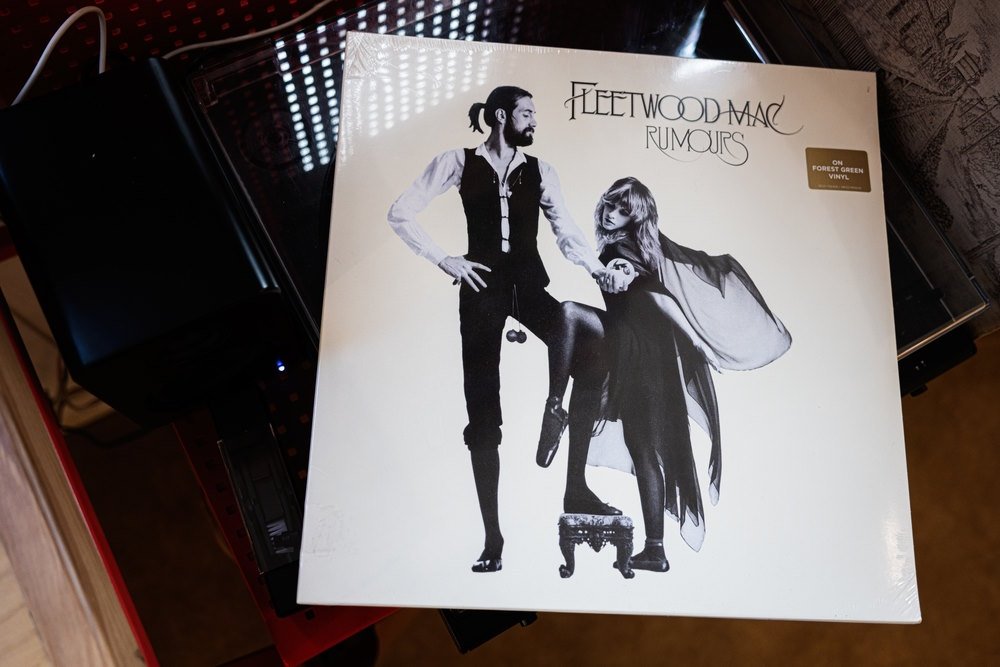
Few rock bands in history have transformed their identity as dramatically, or navigated personal turmoil as brilliantly, as Fleetwood Mac. Formed in London in 1967 by guitar virtuoso Peter Green as a purist British blues outfit, the band weathered numerous lineup convulsions before relocating to California in the mid-1970s.
The fateful inclusion of American folk-rock duo Lindsey Buckingham and Stevie Nicks alongside founding rhythm section Mick Fleetwood and John McVie, paired with the sublime pop songwriting of Christine McVie, birthed one of the most prolific, commercially unstoppable, and emotionally candid supergroups of all time.
20. Second Hand News
Serving as the opening salvo of 1977’s era-defining Rumours, “Second Hand News” immediately plunges the listener into Lindsey Buckingham’s rapid-fire emotional recovery following his bitter breakup with Stevie Nicks. Built around an irresistible, galloping acoustic groove and whimsical vocal scatting (“bow-bow-bow”), the track delivers a buoyant exterior masking biting lyrical dismissiveness.
Buckingham initially demoed the track under the working title “Strummer,” obsessively refining its rhythmic punch by having Mick Fleetwood play percussion on an overturned leather chair to achieve a unique thumping cadence.
19. Gold Dust Woman
Closing out Rumours with an ominous, desert-folk mystique, “Gold Dust Woman” is Stevie Nicks’ haunting allegorical exploration of severe cocaine addiction, fame-induced burnout, and romantic disillusionment. Recorded during nocturnal sessions at Record Plant in Sausalito, California, Nicks reportedly wrapped a black velvet scarf around her head to channel the track’s eerie emotional resonance.
Musically, the song is built upon a brooding, hypnotic progression underscored by Buckingham’s distorted Dobro resonator guitar and Mick Fleetwood breaking sheets of glass in the studio to generate unsettling percussive crashes.
18. Don’t Stop
Written by Christine McVie following the painful collapse of her eight-year marriage to bassist John McVie, “Don’t Stop” serves as the irrepressible, optimistic counterweight to the bitter recriminations dominating Rumours. Rather than wallowing in regret, Christine penned a sunny, forward-looking manifesto urging both herself and her bandmates to embrace tomorrow’s possibilities.
Lindsey Buckingham shares lead vocal duties with Christine, trading verses across a buoyant boogie-woogie shuffle anchored by McVie’s tack piano and Buckingham’s blistering, blues-infused guitar licks.
17. Gypsy
Appearing on 1982’s Mirage, “Gypsy” is Stevie Nicks’ nostalgic, wistful retrospective on her pre-fame youth in Los Angeles with Lindsey Buckingham, living in impoverished freedom with a mattress on the floor decorated with lace. The song also took on deep personal grief following the tragic death of Nicks’ closest childhood friend, Robin Anderson, from leukemia.
Lindsey Buckingham’s delicate acoustic fingerpicking, Christine McVie’s atmospheric keyboards, and John McVie’s melodic bass runs weave an enchanting tapestry around Nicks’ smoky, poetic lead vocals.
16. Silver Springs
Originally recorded for Rumours but notoriously cut from the vinyl release due to time constraints and Lindsey Buckingham’s objections, a decision that broke Stevie Nicks’ heart and fueled years of bitter resentment, “Silver Springs” finally received its rightful coronation on the 1997 live reunion album The Dance. Written as Nicks’ devastating open letter to Buckingham (“I’ll follow you down ’til the sound of my voice will haunt you”), the track builds from a fragile country-folk ballad into an apocalyptic emotional climax.
In the immortal 1997 live performance, Nicks turns directly toward Buckingham, locking eyes and singing the furious, soaring outro with raw, terrifying intensity while Buckingham furiously shreds his guitar.
15. Never Going Back Again
Demonstrating Lindsey Buckingham’s peerless mastery of acoustic fingerpicking, “Never Going Back Again” is a delicate, deceptively intricate jewel nestled on Rumours. Tuning his acoustic guitar to drop D with a capo on the sixth fret, Buckingham spent painstaking days in the studio attempting to record a flawless take, often having guitar strings replaced every 20 minutes to preserve bright harmonic ring.
Written after a brief rebound relationship soured in the wake of his split with Nicks, the lyrics are remarkably brief and economical.
14. You Make Loving Fun
Written by Christine McVie about her burgeoning romance with the band’s lighting director, Curry Grant, a fact she diplomatically concealed from ex-husband John McVie by claiming it was inspired by her dog, “You Make Loving Fun” is a breezy, sophisticated pop-funk. Released as the fourth single from Rumours, the song soared into the Billboard Top 10.
Musically, the track is anchored by Christine’s intoxicating Hohner Clavinet groove, played through a wah-wah pedal to give it a sharp, syncopated rhythm.
13. Say You Love Me
From the self-titled 1975 album that introduced Buckingham and Nicks to the world, “Say You Love Me” announced the dawn of Fleetwood Mac’s unstoppable commercial era. Penned by Christine McVie, the song is a joyful, mid-tempo soft-rock gem driven by rolling barrelhouse piano chords and a bouncy backbeat.
Lindsey Buckingham’s twelve-string guitar work and vocal harmonizing with Christine and Stevie provided the instant signature sound that transformed the band overnight from cult British blues survivors into American radio royalty.
12. Seven Wonders
The standout single from 1987’s Tango in the Night, “Seven Wonders” captures Fleetwood Mac at the pinnacle of polished 1980s pop production. Co-written by Sandy Stewart with revisions and lyrical adaptations by Stevie Nicks, the song features some of Nicks’ most ethereal, emotive vocal deliveries of the decade.
Lindsey Buckingham’s production touches, cascading digital synthesizers, layered vocal textures, and punchy drum programming blended with Fleetwood’s organic cymbals, create a lush, atmospheric landscape.
11. Big Love
Conceived during the chaotic, nocturnal sessions of Tango in the Night as a Lindsey Buckingham solo track before being absorbed into the Fleetwood Mac catalog, “Big Love” is an astonishing showcase of studio innovation and obsessive sonic engineering. The track’s iconic rhythmic foundation is driven by panting, primal vocal grunts (“ooh, aah”) which listeners assumed were a duet between Buckingham and Nicks, but were actually entirely Buckingham’s voice, pitch-shifted using an Eventide sampler to mimic both male and female timbres.
Beyond its glossy 1980s studio iteration, Buckingham later stripped the track down to a solitary acoustic guitar for live performances, transforming it into an awe-inspiring of furious flamenco-style fingerpicking and raw emotional desperation that routinely brought concert arenas to their feet.
10. Little Lies
Co-written by Christine McVie and her then-husband Eddy Quintela, “Little Lies” was the crowning commercial achievement of Tango in the Night, reaching number four on the US Billboard Hot 100. The song represents the ultimate realization of Christine’s sophisticated pop sensibility, exploring the universal human desire to believe comforting illusions over harsh romantic realities (“Tell me lies, tell me sweet little lies”).
The arrangement is an absolute marvel of pop layering: glistening synth chords, intricate guitar filigrees, and sublime call-and-response vocal harmonies between Christine, Stevie, and Lindsey.
9. Tusk
Following the commercial success of Rumours, Warner Bros. executives expected an exact replica. Instead, Lindsey Buckingham rebelled, immersing himself in the burgeoning punk and new wave movements of Talking Heads and The Clash to produce the sprawling, experimental 1979 double album Tusk.
The title track was unlike anything rock radio had ever witnessed: a feral, avant-garde tribal march driven by primal drums, whispered threats, and discordant guitar bursts.
8. Everywhere
Few songs capture the euphoric, dizzying rush of falling in love as effortlessly as Christine McVie’s “Everywhere.” Released in 1987 as the fourth single from Tango in the Night, the track opens with an enchanting, chime-like keyboard intro created by Lindsey Buckingham using a half-speed acoustic guitar recording paired with synthesizer arpeggios.
Christine’s rich, contralto vocal is wrapped in warm, lush production, supported by Stevie Nicks and Buckingham singing ethereal background harmonies that seem to float weightlessly through the mix.
7. Landslide
Written by Stevie Nicks in Aspen, Colorado, in late 1974 while staring out at the snow-covered Rocky Mountains, “Landslide” is a timeless meditation on aging, mortality, fear of the unknown, and personal courage. At the time, Nicks and Buckingham were dropped by Polydor after their debut duo album flopped, leaving Stevie contemplating whether to abandon her musical dreams and return to school.
Nestled on the 1975 self-titled album, the recording is deceptively simple: Buckingham’s tender acoustic guitar fingerpicking and subtle bass accompaniment supporting Nicks’ raw, profoundly mature vocal (“Can the child in my heart rise above? / Can I sail through the changin’ ocean tides?”).
6. Sara
Clocking in at over six minutes on Tusk, “Sara” is Stevie Nicks’ mystical, sprawling magnum opus of the late 1970s. Weaving references to her complex affair with Mick Fleetwood, her friendship with model Sara Recor (who later married Fleetwood), and the phantom grief of an unborn child, the song is a labyrinth of intimate confessions draped in metaphorical grandeur.
The arrangement drifts with hypnotic, dreamlike grace.
5. Rhiannon
Inspired by Evangeline Walton’s fantasy novel Triad, and later discovering the character’s roots in ancient Welsh mythology as the goddess of birds and horses, Stevie Nicks wrote “Rhiannon” in just ten minutes at a piano. Released on 1975’s Fleetwood Mac, the song became Stevie’s defining artistic calling card, introducing her chiffon-draped “charmed Welsh witch” stage persona to the world.
Lindsey Buckingham’s driving, hypnotic guitar riff and John McVie’s nimble bass groove propel the song forward with relentless momentum.
4. Songbird
Composed by Christine McVie in the middle of the night in just thirty minutes, waking up with the melody and chords fully formed as if channeled from another dimension, “Songbird” is the fragile, beating heart of Rumours. Producer Ken Caillat wanted to capture the song’s ethereal intimacy in a grand acoustic environment, renting the historic Zellerbach Auditorium at UC Berkeley for an all-night recording session.
Surrounded by fifteen microphones placed throughout the empty concert hall and a single vase of red roses placed atop the nine-foot Steinway grand piano, Christine performed the song live, accompanied only by Buckingham’s gentle acoustic guitar flourishes.
3. Dreams
Written by Stevie Nicks in about ten minutes in Sly Stone’s secret studio room at the Record Plant, a plush sanctuary featuring a circular velvet bed, “Dreams” stands as Fleetwood Mac’s only number-one single on the US Billboard Hot 100. Conceived as Nicks’ philosophical response to Lindsey Buckingham’s scathing “Go Your Own Way,” the song offers a cool, detached, yet deeply wounded warning to her former partner (“Thunder only happens when it’s rainin’ / Players only love you when they’re playin'”).
The musical foundation is astonishingly economical, built on a hypnotic two-chord progression (F and G) that drifts like morning mist.
2. The Chain
The only song on Rumours credited to all five band members (Buckingham, Nicks, C. McVie, and Fleetwood), “The Chain” is the ultimate monument to the band’s unbreakable musical bond amidst the ashes of their personal relationships.
The track was assembled like a jigsaw puzzle from disparate musical ideas: Christine’s earlier demo “Keep Me There,” Stevie’s lyrics, and Lindsey’s resonator guitar licks.
1. Go Your Own Way
Standing as the undisputed zenith of Fleetwood Mac’s creative catalog, “Go Your Own Way” is Lindsey Buckingham’s searing, defiant breakup anthem that paved the way for Rumours. Written in a rented house in Florida while taking a break from tour rehearsals, Buckingham poured all his raw pain, betrayal, and indignation into three minutes and thirty-eight seconds of blistering pop-rock perfection.
The song’s genius is forged in technical friction.
Which choice on this list is your personal favorite? Share your thoughts and personal rankings in the comments below.