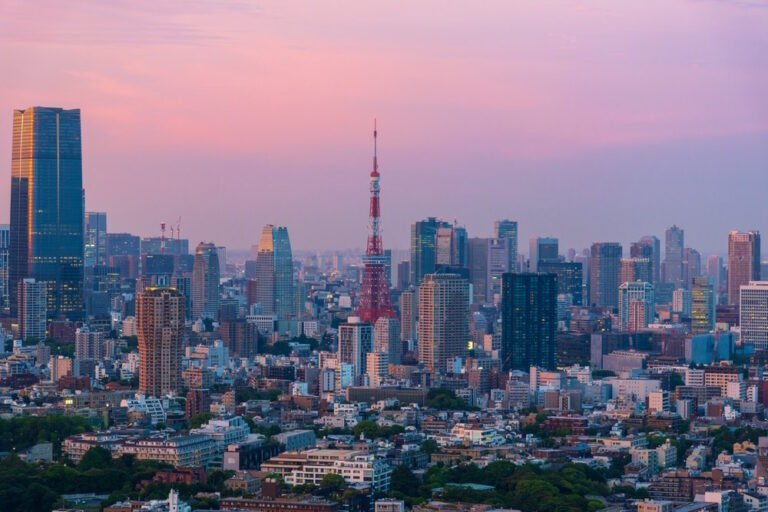
While France, Spain, and the United States each welcome between 65 million and 100 million international visitors a year, a handful of sovereign nations at the other end of the spectrum see fewer foreign tourists in an entire year than the Eiffel Tower or the Louvre receives before lunch on a Tuesday.
Tracking international tourist arrivals alongside flight schedules and visa rules reveals two very different types of unvisited countries: remote Pacific and Atlantic island nations that take days and thousands of dollars to reach, and conflict-torn or authoritarian states where governments actively keep outsiders away. Here are the ten least visited countries on Earth.
10. Afghanistan
During the 1960s and 1970s, thousands of young Western backpackers rode buses through Kabul, Bamyan, and Herat along the famous overland Hippie Trail between Europe and India. Decades of war and the return of Taliban rule in 2021 brought standard tourism to a near-complete halt, though a small trickle of extreme adventure travelers still applies for permits to visit the turquoise lakes of Band-e-Amir and the Hindu Kush mountains despite blanket travel warnings from Western governments.
9. Sao Tome and Principe
Unlike conflict zones, the twin volcanic islands of Sao Tome and Principe in the Gulf of Guinea off Central Africa are peaceful, democratic, and lushly green.
Often called the Galapagos of Africa for their endemic birds, orchids, and deserted palm-fringed beaches, the islands receive only around 15,000 to 30,000 visitors a year simply because direct flights from Europe and mainland Africa are scarce and expensive, making this former Portuguese cocoa colony one of the world’s best-kept travel secrets.
8. Turkmenistan
One of the most secretive republics on Earth, Central Asia’s Turkmenistan rejects the vast majority of tourist visa applications unless travelers book a pre-approved itinerary accompanied every day by a state guide. Those who make it inside encounter two surreal sights: the capital city of Ashgabat, which holds the world record for the highest density of white-marble-clad buildings, and the Darvaza gas crater (the Door to Hell), a 70-meter pit in the Karakum Desert that has been burning continuously since a Soviet drilling rig collapsed into an underground methane cavern in 1971.
7. The Marshall Islands
Scattered across 29 coral atolls and five islands midway between Hawaii and Australia, the Marshall Islands welcome roughly 6,000 visitors a year. Reaching the capital atoll of Majuro typically requires riding the famous United Airlines Island Hopper flight across Micronesia, rewarding intrepid scuba divers with Bikini Atoll, where warships sunk during 1940s and 1950s US nuclear tests now form an eerie underwater wreck-diving museum.
6. Equatorial Guinea
As the only sovereign country in Africa where Spanish is an official language, oil-rich Equatorial Guinea has gleaming highways and government ministries on Bioko Island and the mainland territory of Rio Muni, yet virtually no tourism industry. Obtaining a tourist visa requires weeks of paperwork and security clearances, and strict rules against street photography keep annual leisure visitors in the low thousands.
5. South Sudan
Since gaining independence in 2011 as the world’s newest nation, South Sudan has been plagued by civil conflict, seasonal flooding along the vast Sudd wetlands, and an almost total lack of paved highways outside the capital, Juba. Aside from United Nations personnel, aid workers, and a handful of specialized wildlife photographers visiting Boma and Bandingilo national parks, foreign tourists are virtually nonexistent.
4. Kiribati
Stretching across 33 coral atolls straddling both the Equator and the International Date Line, Kiribati covers an ocean area the size of India while holding barely 811 square kilometers of dry land. Fewer than 5,000 foreign visitors make the long journey from Fiji or Honolulu each year, mainly fly-fishermen heading to Kiritimati (Christmas Island) and travelers eager to see the first inhabited islands on Earth to welcome each new calendar day.
3. Tuvalu
With no war, no dictatorship, and almost no crime, the Polynesian nation of Tuvalu is the least visited peaceful country on Earth, welcoming roughly 2,000 to 3,700 visitors per year.
The entire country has just one small airport on the narrow coral strip of Funafuti Atoll, served by a handful of propeller flights a week from Fiji. On days when no plane is scheduled to land, locals use the paved airport runway as a neighborhood park for afternoon soccer, volleyball, and bicycle rides.
2. Yemen
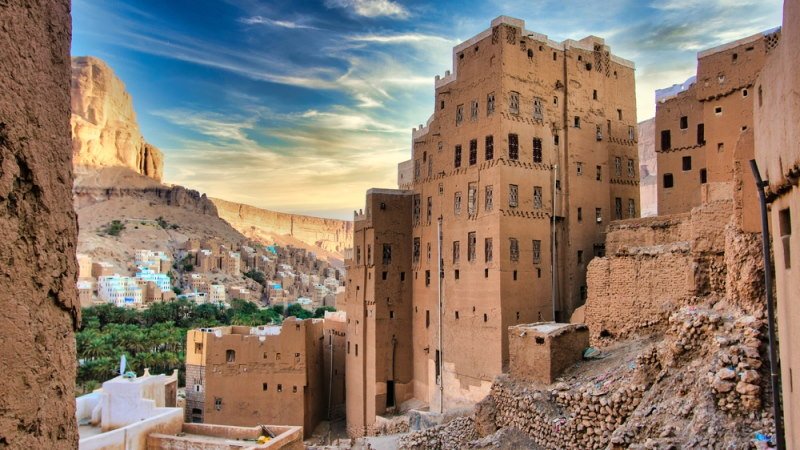
Mainland Yemen boasts some of the most extraordinary historical architecture in the Middle East, from the multi-story mud-brick tower houses of Old Sana’a to the sixteenth-century desert skyscrapers of Shibam. Tragically, a devastating civil war since 2014 has made mainland travel impossible for tourists, though a few thousand adventurous travelers each year still fly to the remote Yemeni island of Socotra in the Arabian Sea to camp beneath its alien-looking dragon’s blood trees.
1. Nauru
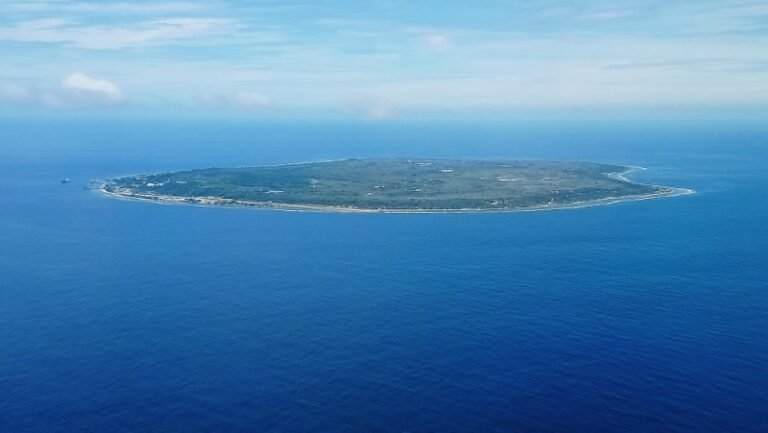
Welcoming an estimated 200 foreign tourists a year, the tiny Micronesian island of Nauru is the least visited country in the world.
Measuring just 21 square kilometers (small enough to walk around in a single afternoon), Nauru has no capital city, only one airline connecting it to the outside world, and a strict visa process. During the twentieth century, strip-mining for bird-droppings phosphate briefly gave Nauruans one of the highest per-capita incomes on Earth, before the phosphate ran out and left 80 percent of the island’s interior a jagged wasteland of limestone pinnacles.