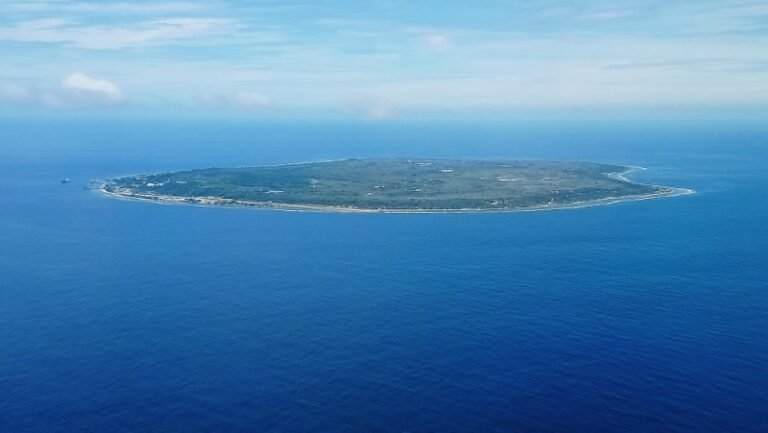
Soaring mountain cordilleras, sweeping plateaus, and jagged peaks piercing the clouds demonstrate the vertical extremes of our planet. While nations like the Netherlands and Tuvalu sit mere inches above ocean swells, other states are perched so high that even their lowest valleys sit miles above sea level.
Mean elevation calculations divide a nation’s total land area across topographic contours, accounting for both soaring summits and low-lying plains. Drawing upon verified spatial models from the United States Geological Survey alongside comparative terrain analyses in the CIA World Factbook, these are the ten highest sovereign countries on Earth by average elevation.
10. Armenia (1,792 meters / 5,879 feet)
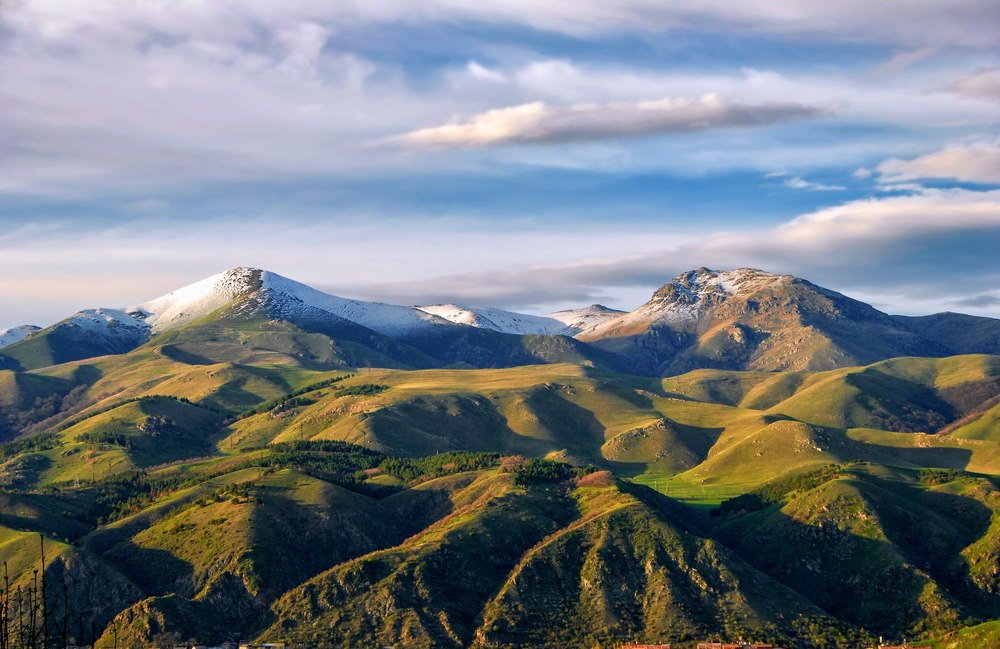
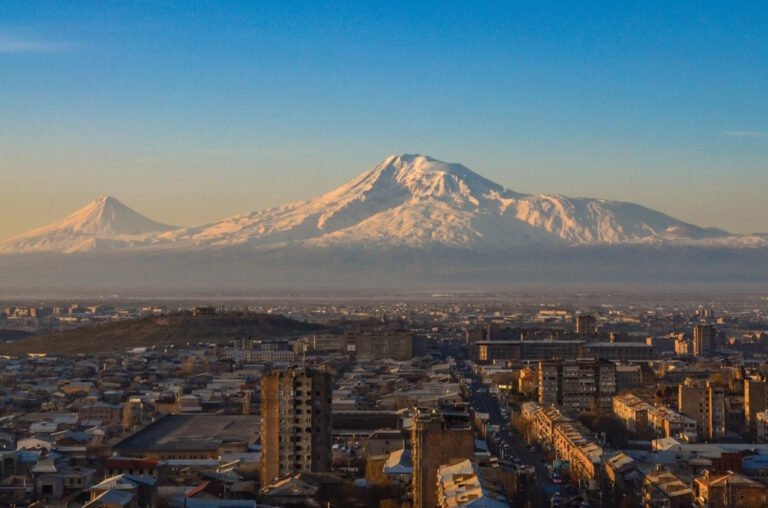
Situated in the Lesser Caucasus, landlocked Armenia possesses virtually no flat lowlands. More than ninety percent of the country sits above 1,000 meters, characterized by rocky volcanic plateaus and steep river gorges.
Lake Sevan, the country’s largest body of water, rests at a high altitude of 1,900 meters. The highest peak, Mount Aragats, reaches 4,090 meters, creating a pronounced highland continental climate of bitter winters and crisp summers.
9. China (1,840 meters / 6,037 feet)
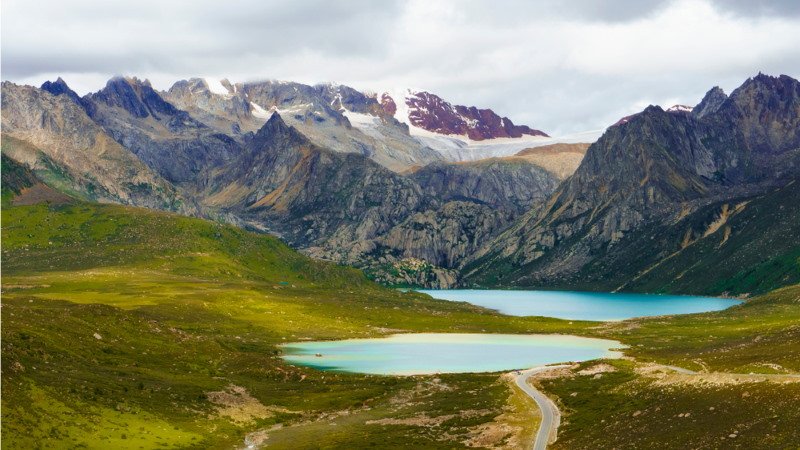
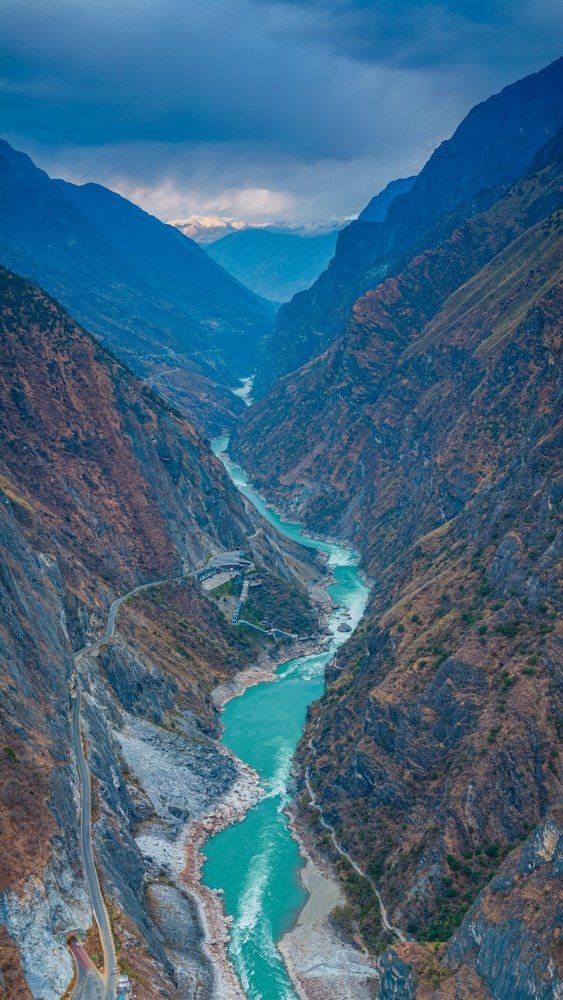
That a nation with thousands of kilometers of sea-level coastal plains maintains an average elevation over 1.8 kilometers is due to a massive geographic feature: the Tibetan Plateau. Known as the Roof of the World, this immense highland covers an area nearly five times the size of France at an average height of 4,500 meters.
In the southwest, China shares the Himalaya range with its neighbors. The northern face of Mount Everest towers at 8,848 meters on the border, balancing out low-lying eastern river deltas.
8. Chile (1,871 meters / 6,138 feet)
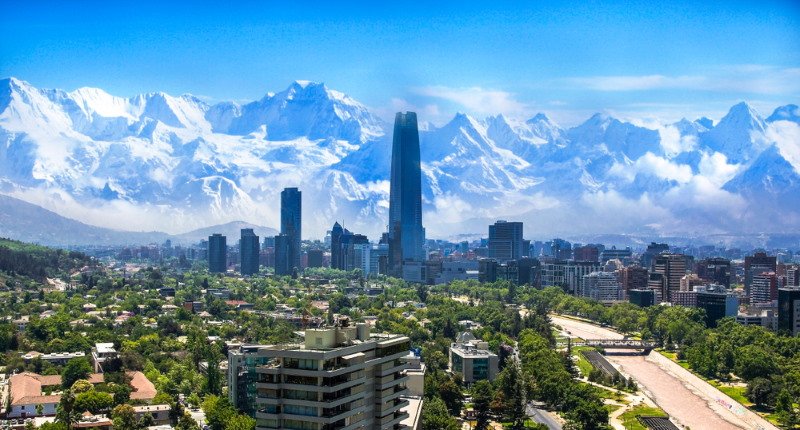
Stretching 4,300 kilometers along South America’s western edge, Chile is hemmed between the Pacific Ocean and the continental spine of the Andes. Even in the hyper-arid northern Atacama Desert, visitors walk across vast high-altitude plateaus.
Rising to 6,893 meters, Nevado Ojos del Salado stands as the highest peak in Chile and the tallest active volcano on the planet. With lowlands confined to a narrow coastal fringe, towering peaks push the national average upward.
7. Afghanistan (1,885 meters / 6,184 feet)
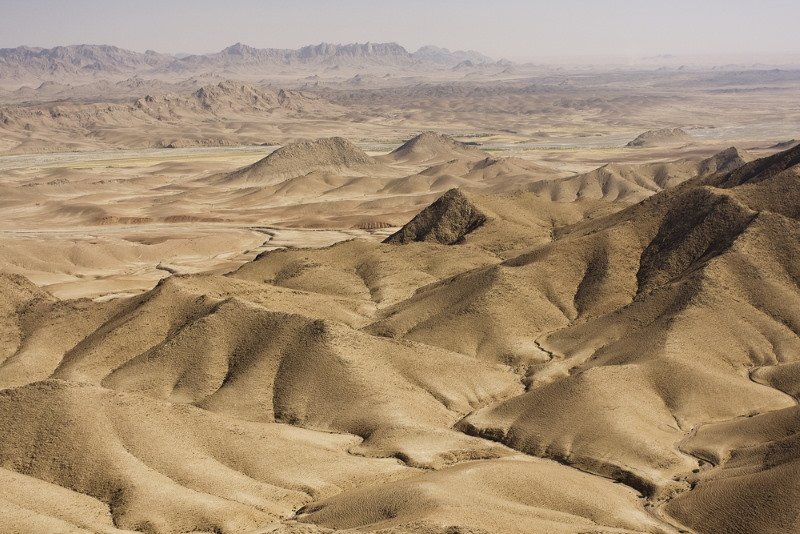
Landlocked and rugged, roughly three-quarters of Afghanistan consists of mountain terrain. From the northeast, the formidable Hindu Kush cuts across the territory like a wedge, featuring dozens of peaks exceeding 6,000 meters.
The highest summit is Mount Noshaq at 7,492 meters in the Wakhan Corridor. Throughout history, these imposing passes shaped military campaigns, repeatedly blunting foreign incursions in formidable alpine redoubts.
6. Andorra (1,996 meters / 6,549 feet)
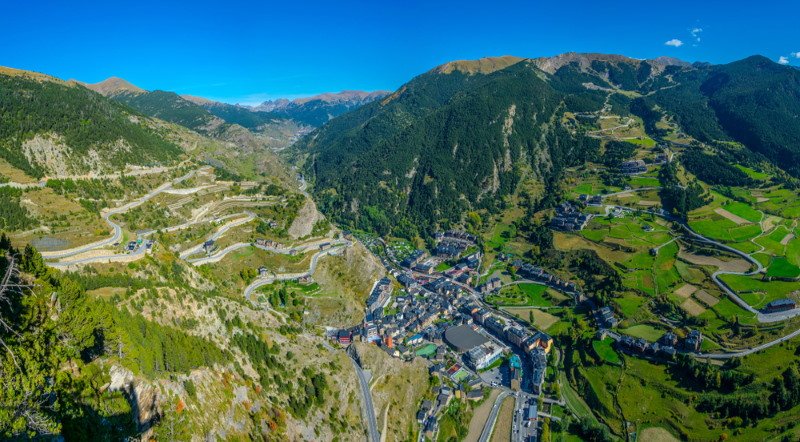
Covering less than 500 square kilometers, the microstate of Andorra in the eastern Pyrenees outclimbs every other European nation. The country consists almost entirely of jagged peaks, glacial cirques, and alpine valleys, with its lowest point resting at 840 meters.
Capital Andorra la Vella sits at 1,023 meters, ranking as the highest capital city in Europe. The summit of Coma Pedrosa reaches 2,943 meters, drawing skiers from across the continent.
5. Lesotho (2,161 meters / 7,090 feet)
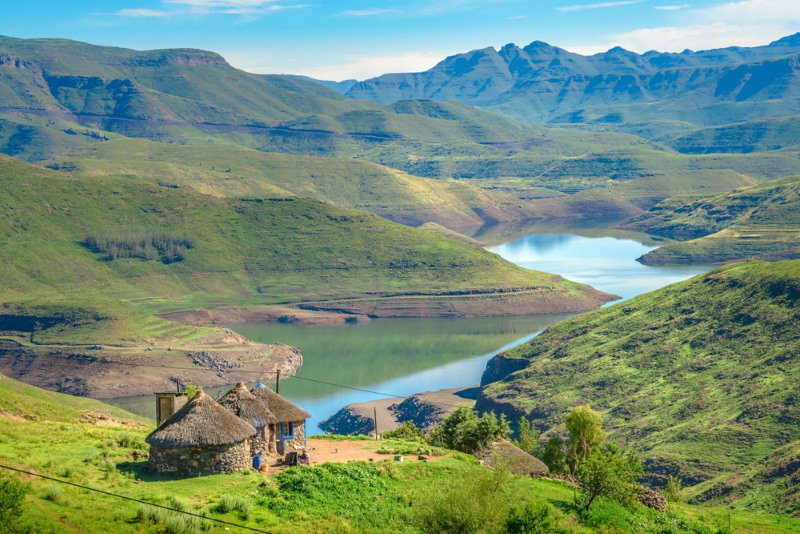
The southern African Kingdom of Lesotho is proudly called the Kingdom in the Sky. Encircled completely by South Africa, it holds a unique global record: it is the only sovereign state on Earth whose entire territory lies above 1,000 meters.
Its lowest point sits at 1,400 meters, which is the highest lowest point of any nation. The Maloti and Drakensberg ranges culminate at Thabana Ntlenyana at 3,482 meters, enabling regular winter snowfall and ski tourism.
4. Kyrgyzstan (2,988 meters / 9,803 feet)
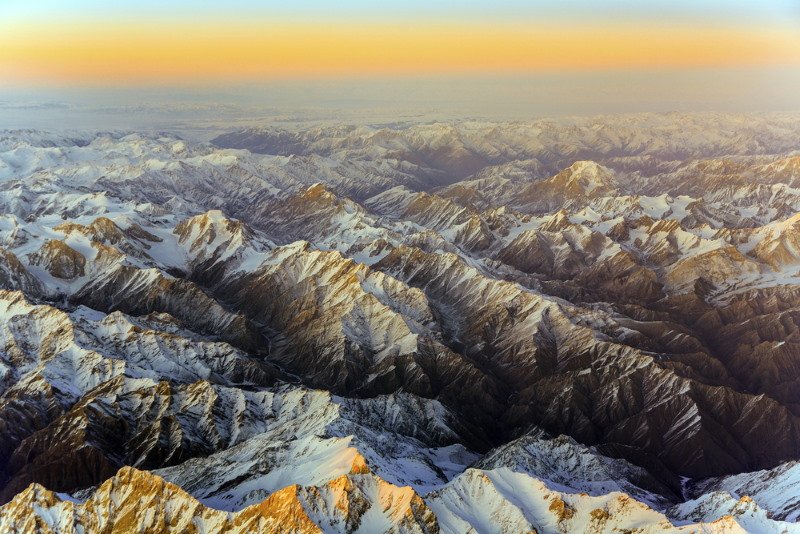
Dominated by glaciers, perpetual snowfields, and knife-edge ridges, Central Asian Kyrgyzstan is pure alpine wilderness. More than ninety percent of its landmass sits above 1,500 meters, where the Tian Shan and Pamir ranges collide.
The highest point is Jengish Chokusu at 7,439 meters on the Chinese border. Thousands of massive glaciers, including the 60-kilometer-long Engilchek Glacier, act as vital freshwater towers for the surrounding arid lowlands.
3. Tajikistan (3,186 meters / 10,453 feet)
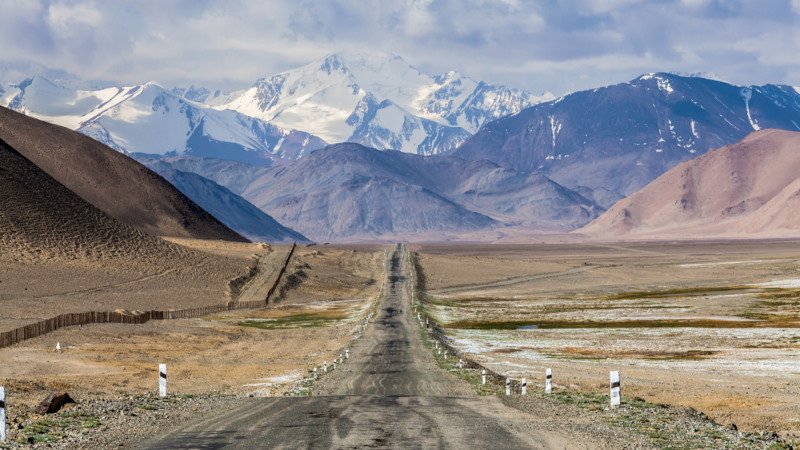
Travelers navigating the famous Pamir Highway in Tajikistan spend days in thin, oxygen-poor air. Mountains cover 93 percent of the country, with more than half the national territory situated above 3,000 meters.
Ismoil Somoni Peak rises to 7,495 meters above sea level. In addition, Tajikistan hosts the 77-kilometer Fedchenko Glacier, the longest glacier outside the polar ice sheets.
2. Nepal (3,265 meters / 10,712 feet)
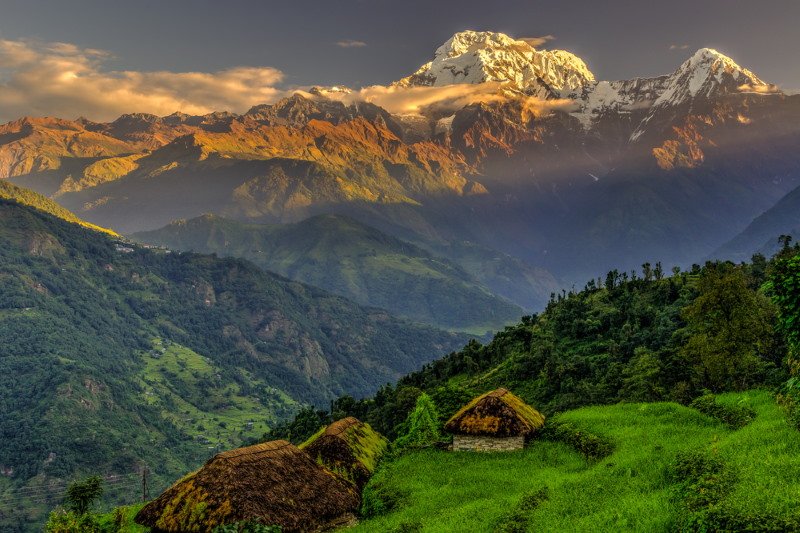
Nepal contains eight of the world’s fourteen peaks exceeding 8,000 meters. Although a narrow strip of subtropical lowland (the Terai) lies at just sixty meters elevation in the south, the terrain rises with dramatic abruptness toward the clouds.
Mount Everest anchors the northern border at 8,848 meters alongside giants like Kanchenjunga, Lhotse, and Annapurna, attracting trekkers from every corner of the globe.
1. Bhutan (3,280 meters / 10,761 feet)
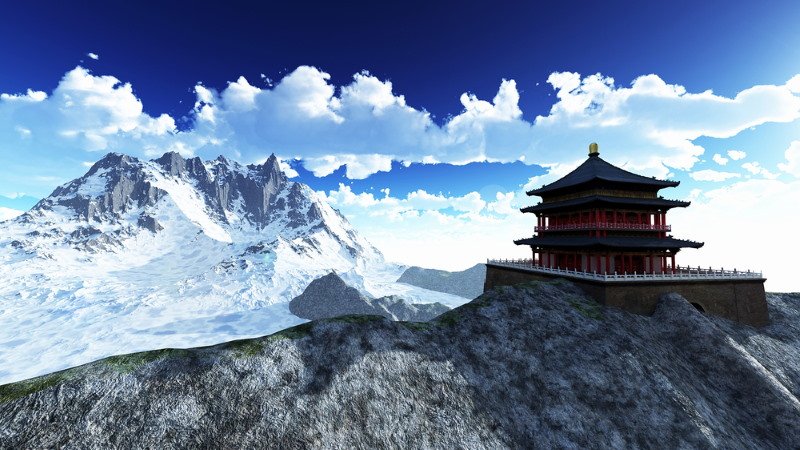
The Buddhist Kingdom of Bhutan edges out Nepal to claim the title of highest country on Earth by mean elevation at 3,280 meters. Unlike its neighbor, Bhutan lacks extensive lowlands, consisting almost entirely of steep valleys, deep forests, and towering Himalayan cordilleras.
Its highest peak, Gangkhar Puensum, rises to 7,570 meters and is the highest unclimbed mountain in the world. The royal government has strictly prohibited mountaineering above 6,000 meters, preserving the peaks as sacred ancestral sanctuaries.